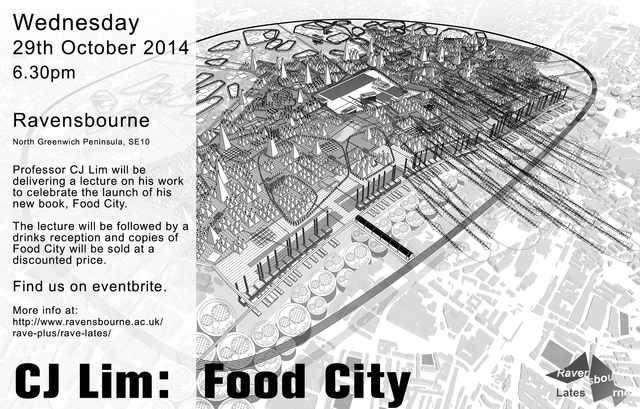
As part of the launch of his latest book, Food City, Professor CJ Lim of the Bartlett School of Architecture will present a lecture at Ravensbourne in Greenwich, London. Food City follows on from professor Lim's previous book, Smartcities and Eco-Warriors, exploring the role that food production and distribution has historically played in day-to-day life, and how we might once again reinstate it as an integral part of our cities through essays on 25 cities around the globe.
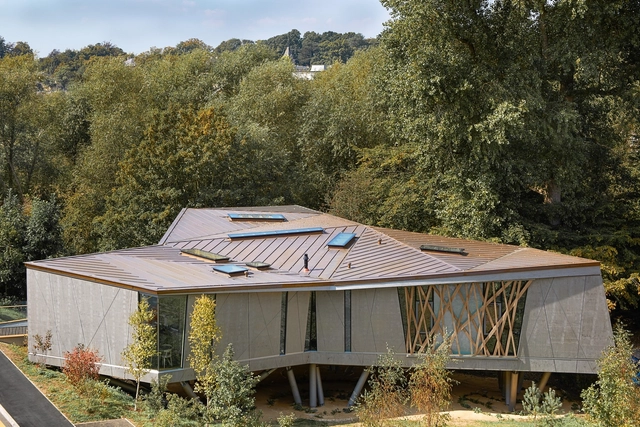
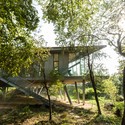
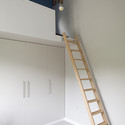
The Bothy Project - Pig Rock Bothy. Scottish National Gallery of Modern Art, Edinburgh, Scotland. 2014. Image Courtesy of The Building Centre
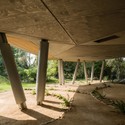
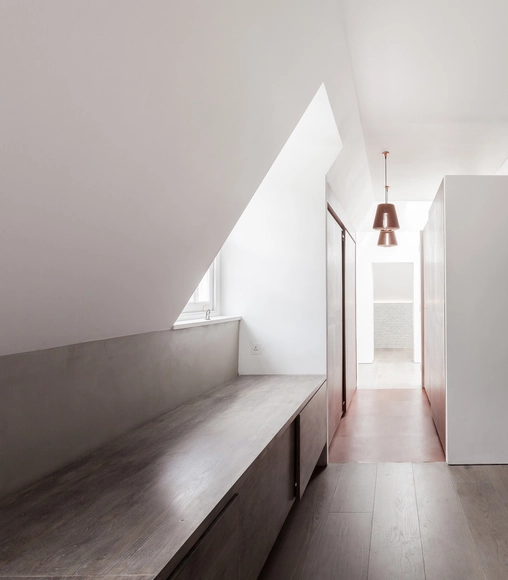
As part of the Dylan Thomas in Fitzrovia festival, The Building Centre is examining the space Dylan Thomas and other writers depend on to create their work. A Shed of One's Own is a photographic exploration of unique sheds with architectural significance and literary connections. From award-winning studios in Central London to weathered bothies in Scotland, this exhibition explores the importance of space for creativity and inspiration.
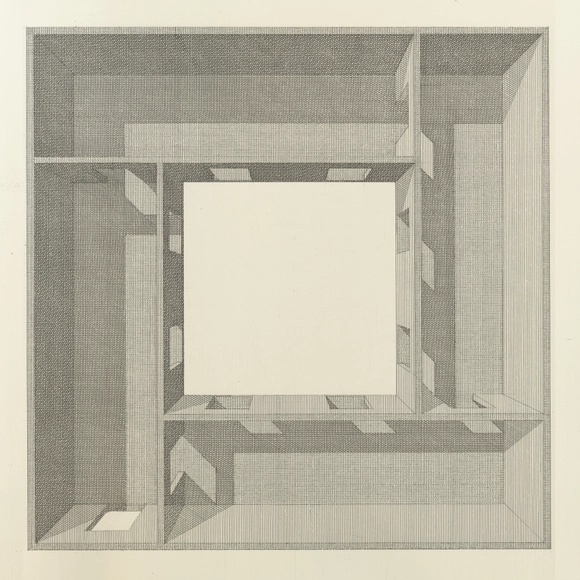
Pier Vittorio Aureli's collection of thirty 'non-compositional' drawings, exhibited as part of a series entitled The Marriage of Reason and Squalor, will open at London's Betts Project architecture gallery tomorrow (8th October 2014). The drawings, in development since 2001, are part of an ongoing investigation into "what, in the absence of a better definition, Aureli has described as ‘non-compositional architecture’." This term, referring to the work of art historian Yve-Alain Bois who was himself prompted by the ambitions of the constructivist artist Alexander Rodchenko, is used to describe works that "aspire to the abandonment of composition and even the self of the artist." This will be Aureli's second recent exhibition in London following Dogma: 11 Projects, which was presented at London's Architectural Association in 2013.
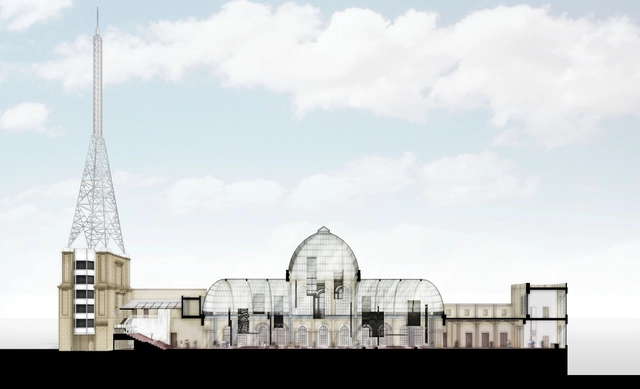
Proposed design of eastern end. Image Courtesy of Alexandra Palace
The soaring glass roofs of London's Alexandra Palace are about to receive a major overhaul thanks to a £23.8m ($38.6m USD) fundraising project focused on the revitalization of the 139 year old palace. Images of Feilden Clegg Bradley Studios 2014 revitalization are on display for the first time in an exhibition showcasing the upcoming changes to the public palace, including extensive renovations to reopen derelict sections of the building. Find out more about the exhibition after the break.
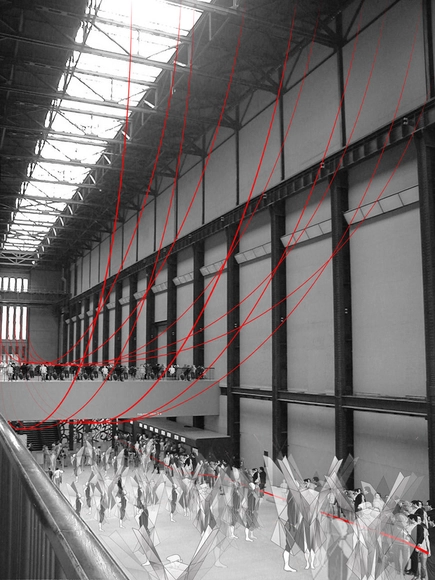
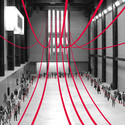
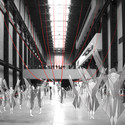
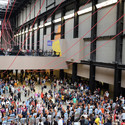
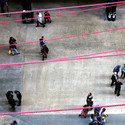
Text description provided by the architects. What happens when a designer decides to turn a classic Herzog & de Meuron masterpiece into a carnival space? That's precisely what happened when architect Gia Wolff was asked to create an installation - part of which doubled as a performance piece - for the show Up Hill Down Hall: An Indoor Carnival in the Tate Modern's Turbine Hall. How did she approach transforming such a cultural icon? Three words: red-pink rope.
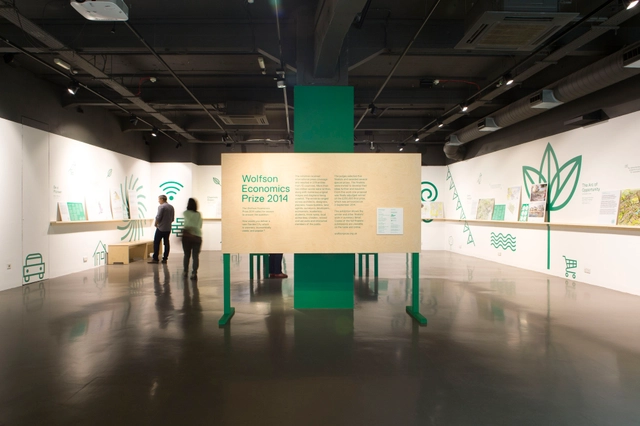
On September 3, 2014, urban design consultancy URBED was announced winner of the 2014 Wolfson Economics Prize. The competition has spurred unprecedented conversation and debate over the concept of Garden Cities in the UK, while the finalists call for the development of theoretical ideas and implementation of practical solutions. ArchDaily brought you the winning proposal earlier, and The Building Centre, an independent forum of the built environment, teamed up with the Wolfson Prize organizers to bring you an exhibit further exploring the broad range of design solutions from over 200 brilliant entries.
Zaha Hadid Architects has constructed an experimental structure on the grounds of London’s V&A Museum, just in time for the London Design Festival. The temporary installation is the practice’s thinnest shell structure to date, testing new design and construction technologies for achieving minimal material thickness while “investigating the relationship between formal arrangement and structural performance.”
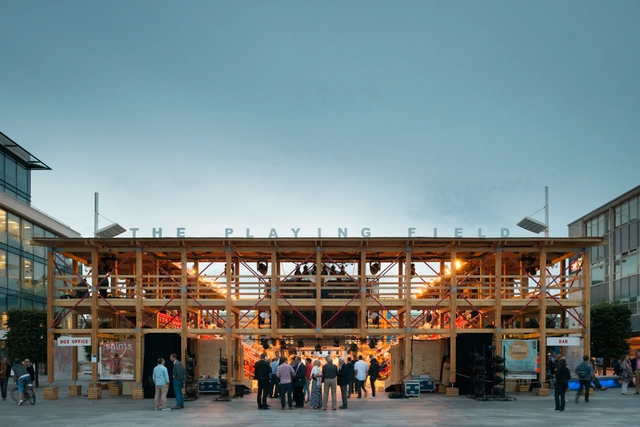
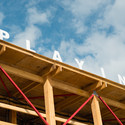
The Playing Field, a 450-seat "high tech Tudor theatre" in the heart of the British city of Southampton, represented a major collaboration between the city’s arts organisations and was realised through a collaborative effort between engineers Structure Workshop and Assemble Studio, the London based practice known for innovative interventions within the public realm. Their Cineroleum, coupled with a bold renovation of a yardhouse, are part of a small canon of cultural buildings designed to temporarily reimagine the urban landscape on a small scale.