



-
Architects: PuertoyMartín - Arquitectura e Interiorismo
- Area: 1453 ft²
- Year: 2018
-
Manufacturers: Cosentino, Aromas del Campo, Finsa, Keops

What first strikes you about the Cultural Heritage Institute is the enigmatic uniqueness of its headquarters. Affectionately known by Madrid locals as the “crown of thorns,” the building comes into view at the entrance to Madrid from the La Coruña highway. To the right, guarding the Moncloa Palace, stands this timeless artifact; boldly resting on Madrid’s University City, entirely detached from the rationalist architecture of its surroundings. An expressive formal hybrid, the result of combining the features of a fortress, a bullring, and a spaceship. It does not go unnoticed, nor does it seek to. It surprises and impresses us, unsettling to a certain extent, yet always carrying the intuition that this is an important work—an architecture that deserves, at the very least, our interest.


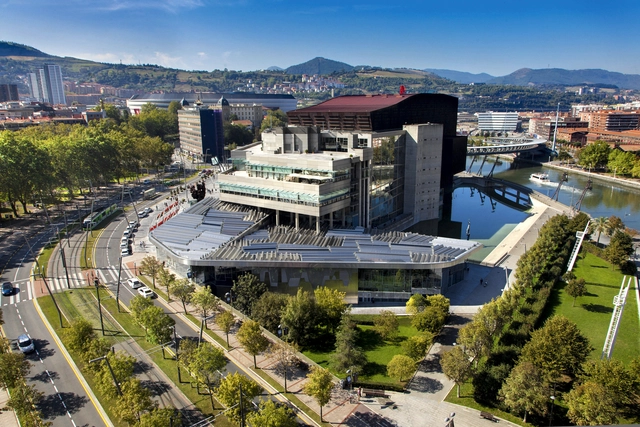
Abandoibarra is now the heart of Bilbao. Years ago, the former shipyards and Renfe railway depots prevented this stretch of land along the Bilbao estuary from revealing the full potential it enjoys today. Part of this area, the now-defunct Euskalduna shipyard, withstood the passage of time until 1992, when the widespread demolition of the facility that gave the site its name began. A total of 8.4 hectares of land were cleared to make way for new public uses—specifically, the creation of a “general equipment network.” Initiated in 1993, the intervention was subsidized by the Basque Government's Industrial Ruins Demolition Program, with a budget of 83,403,157 pesetas. The construction of the Guggenheim Museum at one end; the development of the Conference and Music Center [1994–1998], or Euskalduna Palace, on these vacant lots; and the open dialogue established with the University of Deusto and the Museum of Fine Arts created a dynamic relationship among four architectural pieces that activates the site, shaping a new cultural enclave.

"Formentera was unique. The sea, and a little rock in the sea, and I was on this little-known rock because there was nothing there. [...] Being warm in winter when it is cold, being cool in summer when it is hot, and conserving water—that is all that is necessary to live. The wind, the sun, and the rain were what I needed, nothing more," summarized Henri Quillé in 2016, from Paris, after a career dedicated to building some 30 houses on Formentera, the smallest of the Balearic Islands.

On June 4th and 5th, Knauf’s exclusive international event, 'Room For Expression'—which has already been successfully held in other parts of Europe—arrives in Spain to discuss acoustic comfort. It will take place at Las Alhajas Palacio, a historic and iconic building in Madrid. The event will be attended by prominent professionals from the worlds of architecture, design, acoustics, performing arts, and gastronomy, as well as representatives from the country’s leading institutions in these sectors.










.jpg?1559101177&format=webp&width=640&height=580)
.jpg?1559100643 "© MÍNIMO")
.jpg?1559100713 "© MÍNIMO")
.jpg?1559101448 "© MÍNIMO")
.jpg?1559101902 "© MÍNIMO")
.jpg?1559101177)