The Journal of Traditional Building, Architecture and Urbanism is aimed at individuals and institutions interested in traditional building, architecture, and urbanism. Published articles address the theory and practice of these disciplines. Its objective is to promote the creation of places and buildings that harmonize with local culture and tradition while respecting the environment and its natural resources. Furthermore, it seeks to foster a deeper understanding of traditional construction cultures worldwide, thereby encouraging greater respect for them and contributing to their preservation and continuity.
Shifting Ground logo. Credit: The Architectural League of New York
2020 has radically reconfigured our relationship with our immediate surroundings. The outbreak of COVID-19 and subsequent shutdown of cities around the world have kept many people confined to their homes and neighborhoods, prompting them to observe both their domestic spaces and the surrounding streets at a new level of detail. A few months later, the murder of George Floyd led to protests on a scale not seen since the civil rights movement, with people around the world taking over public spaces to demand justice for Black and brown communities.
As students dedicated to exploring the relationship between people and the places they inhabit, we were profoundly impacted by the shift to staying at home which the COVID-19 pandemic necessitated. This shift has forced us to contemplate now more than ever, how we use the spaces we call home, and how we adapt, and adapt to, these spaces under unique circumstances.
We are hiring! ArchDaily's Content Team is constantly working for our readers from all over the world in a platform that operates in four languages —Spanish, English, Portuguese and Chinese Mandarin. Our main goal is to ensure that the most important discussions about architecture and the city reach the maximum possible global audience.
'Taiwan Lantern Festival' is an important event in Taiwan, each city in Taiwan will take turns to host the festival by different years. In 2021, will be arranged by the wind-city, "Hsinchu City," and Hsinchu City Government wants to try different forms for our traditional event, thus planned one of the venue to be in an open-call modus.
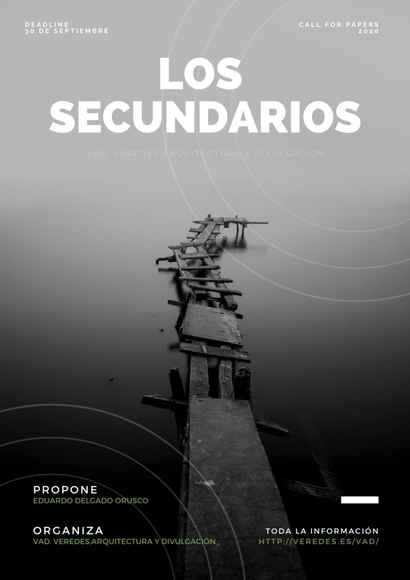
It has been 20 years since Professor Carlos Sambricio proposed the idea of recovering, within the Spanish landscape, what we wish to call "the secondary figures"—those architects who, for various reasons, did not enjoy significant critical success during their professional practice, but whose work, when revisited in light of the years that have passed, raises issues of interest to us today.
Frequency is the number of occurrences of a repeating event per unit of time. The time frame is the duration of cycles in a recurring event, where the time frame is the reciprocal of the frequency.
Tbilisi Architecture Biennial will accept proposals for its International Open Call from June 22 through July 31, 2020. The winning proposals will be realized during the event in October/November 2020 digitally and physically in selected locations in Tbilisi and around the world.
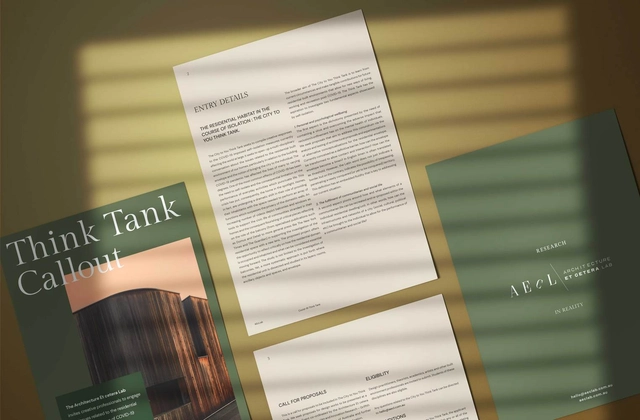
The Architecture Et cetera Lab is launching a call for proposals to be included in The City to You Think Tank. The call seeks proposals for design works to be presented at a Round Table Event co-ordinated by the Architecture Et cetera Lab (Griffith University, Australia) and the Design Institute of Australia and further disseminated through a professional design publication.
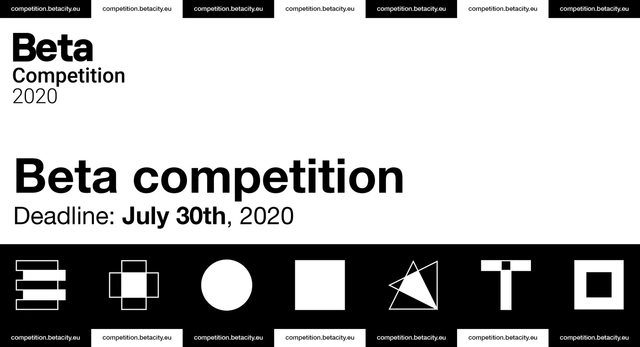
The Timisoara Biennial of Architecture (Beta) is a platform for dialogue and collaboration, whose ultimate goal is to improve the processes through which we build our cities. Beta 2020 aims to generate a responsible dialogue on architectural education, training and professional practice, as well as to stimulate the involvement and professionalization of methods of dialogue and collaboration between the representatives of the trinomial administration – professional body – civil society.
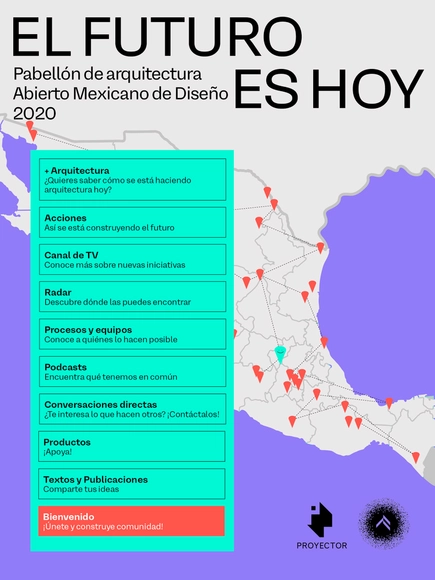
The Abierto Mexicano de Diseño is an international festival that gathers and celebrates the design community in Mexico every year, in all its breadth and diversity. It focuses on promoting, exhibiting, supporting, and disseminating Mexican design.
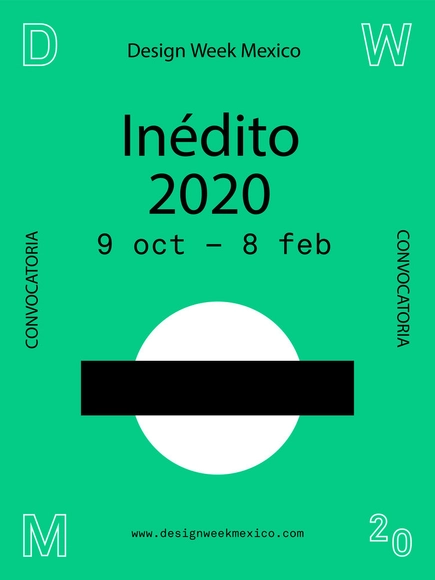
Design Week Mexico invites you to participate in the sixth edition of Inédito, which will take place at Espacio CDMX from October 9, 2020, to February 8, 2021. In this new reality, design will be more important than ever.
Architects have always been asked to breathe new life into ancient architectures inherited from the past or into historical –often monumental– artefacts that no longer respond to the customs and needs of the contemporary society. Nevertheless, the ancient architectures tell our story, therefore deserve to be restored with interventions that bring along a hint of modernity and show the trace of the design activity. The Architecture for Heritage course has been created on these premises.
We at ArchDaily have a great passion for building and broadening the worldwide architecture community and supporting architects from every corner on our Planet. Unfortunately, sometimes there are obstacles on our way, such as lack of communication, language barriers, or simple uncertainty of some peers from our community about the value of their potential contribution to the architecture scene. And here is where we need help from you, our readers — active, crucial elements of the ecosystem we are all building together. Joining forces, we will be able to give the necessary reassurance to the ones that have been unfairly overlooked and let them know that we can't wait to hear their voices, opinions, and ideas.
We call for you to let us know about your favorite architecture publications with local focus -- whether they are created by you or you just think they are worth checking out -- for a potential Content Exchange Partnership with ArchDaily. This will help us create a strong network of local architecture communities, so we can all learn from each other and spread the word about the little steps on our way to a better world, internationally.
Today, the majority of people in the developed and developing world live either in cities that are the legacy of colonialism, capitalism, and other patriarchal structures, or in landscapes drawn and redrawn by the enterprises of colonial and corporate expansion. Given the magnitude of resources and capital needed to bring architectural design into fruition, the values and objectives of institutional stakeholders will inevitably continue to shape architecture. In other words, the built environment is never apolitical; it is persistently fashioned as a socioeconomic artifact.
MIRA and MASSIVart invite national and international artists to develop a proposal for a permanent public artwork to be located in the public plaza of MIRA’s latest real estate development in Mexico City: Neuchâtel’s Cuadrante Polanco.
The Professional Council of Architecture and Urbanism (CPAU) and the Central Society of Architects (SCA) invite architects to participate in the "Arquitectura Argentina Solidaria" open call. The initiative aims to gather ideas and initiatives from work, projects, built works, and research conducted over the last five years by architects with a focus on solidarity and social inclusion.
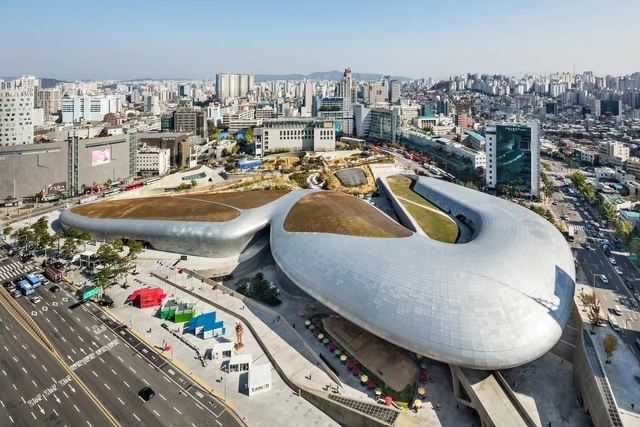
DDP+Kyungsub Shin Studio. Image Courtesy of Seoul Biennale of Architecture and Urbanism 2021
Exploring the evolution of the world’s cities and metropolises, the third edition of the Seoul Biennale of Architecture and Urbanism (SBAU 2021), will be led by Dominique Perrault. Scheduled to be held from September to November 2021, the biennale entitled “CROSSROADS Building the Resilient City” is holding an International Call for Proposals from May 29th till July 31st, 2020.
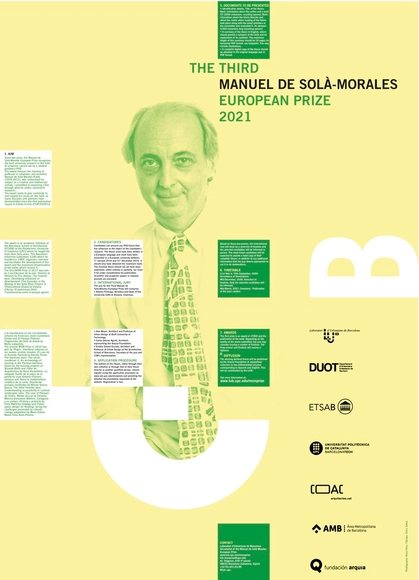
Every two years, the Manuel de Solà-Morales European Prize recognizes the best university research in the field of urbanism carried out by a student granted a PhD.
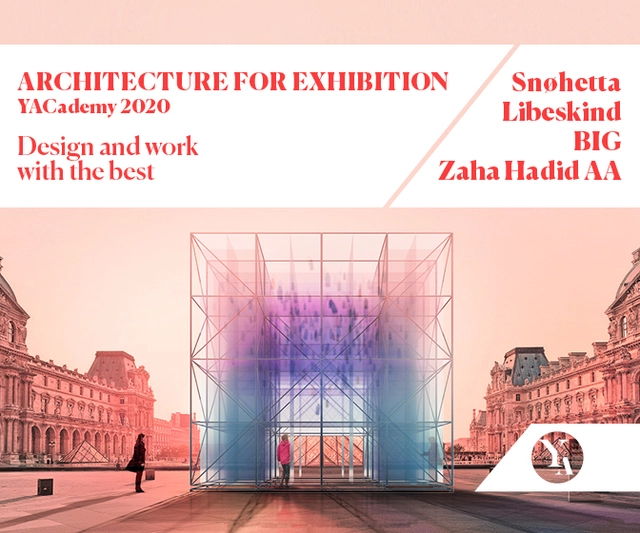
Due to the recent pandemic situation, for the courses held between September 2020 and January 2021, YAC has taken extraordinary measures to ensure the best performance of its activities and to facilitate access to its courses. In accordance with safety criteria, participation in the courses will be possible through a remote connection. Five scholarships are available for the full cost of enrollment and the full rules of the course are available on YAC's website.
Tania Quirarte, Mariana Quirarte, and Cinthia Neri
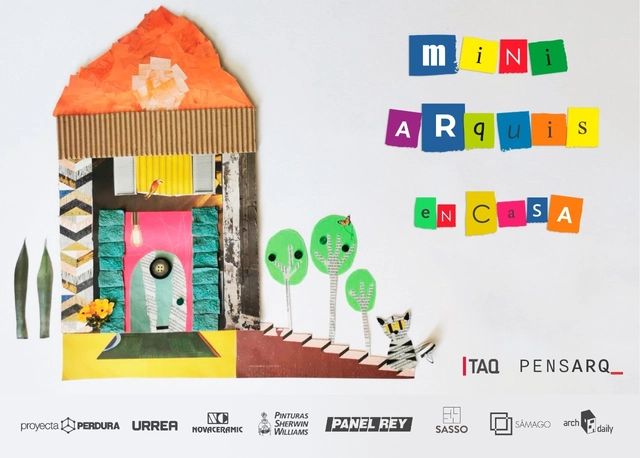
Through its cultural project Pensarq_ and in collaboration with Espacio EMA, TAQ Arquitectura has created Mini Arquis at Home, a free online architecture activity for children aged 3 to 9, designed to be completed at home, from any country, at any time. The premise of the activity is to highlight the importance of architecture listening to what children have to say about their spaces, as they also inhabit and claim them as their own; for them, architecture can serve as the framework for their memories, play, and education. The activity consists of two parts; Mini Arquis can choose to complete one or both. The first part involves creatively answering a short series of questions about their thoughts on their home and how they have felt spending more time in it. The second stage is to build a model of your ideal home. There are no rules; you can use whatever you find at home. The goal is to have fun, recycle materials, and enjoy quality family time while reflecting on how children perceive and experience their homes. Participants may choose to complete either of the two activities. Supervising adults should document the work through video or photographs—the participant's face does not need to be visible—and email the files to pensarq@taqarquitectura.com to be featured in a gallery of all the Mini Arquis projects. The deadline for participation is May 31, 2020. The first 20 children to submit their responses will receive a digital copy of the book Pedro Perfecto Arquitecto. This initiative will be promoted in countries including Spain, Italy, Argentina, Ecuador, Mexico, and others. Visit www.miniarquis.com to participate and learn more.




.jpg?1592595648)

.jpg?1591973323&format=webp&width=640&height=580)