Former Head of Content. Prior to assuming her role at ArchDaily, Becky worked as an editor for leading architecture firms OMA/AMO, BIG (Bjarke Ingels Group) and Reiser + Umemoto. She also worked as an editor for Princeton University School of Architecture and Harvard University's Graduate School of Design. She holds degrees from Princeton University, Harvard University and the School of Visual Arts.
ArchDaily is looking for a motivated and highly-skilled architecture-lover to join our team of interns for Spring 2018! An ArchDaily Content internship provides a unique opportunity to learn about our site and write engaging, witty and insightful posts.
Interested? Then check out the requirements below.
It's time to get into the Holiday Spirit! As we've done for the past few years, we're seeking holiday cards with an architectural spin to feature on ArchDaily. We expect abundant puns and festively decorated classic buildings. :)
With the 3rd Call for Ideas the Future Architecture platform invites multi-disciplinary emerging creatives who work on transformative projects and ideas for the future of architecture to apply for participation in the European Architecture Program in 2018.
The Future Architecture platform acts as a key platform for exchange and networking for European architecture and integrates some of Europe’s most important architectural events. The platform enables architecture museums, festivals, producers, publishers, agencies, academic institutions and multi-disciplinary emerging professionals to easily connect and build joint projects.
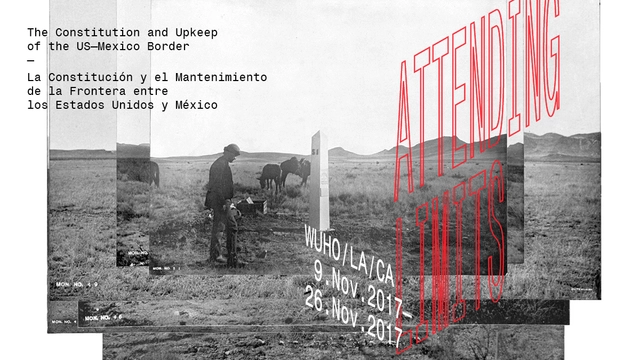
277 obelisk monuments mark the US–Mexico boundary line. Constructed in three distinct phases (1849–1856, 1891–1912, and 1964–1968), these monuments were the product of territorial negotiations, disputes that were settled ranging from the violent expansion of sovereign limits to the shifting course of a historic boundary river. Commissioned, inscribed, and placed by both the United States and Mexico, they served as unique bilateral artifacts that operated across and reflected on separate territories, forms of settlement, and philosophies of nationhood. Attending Limits: The Constitution and Upkeep of the US–Mexico Border presents the international boundary through a history of its material artifacts and the modes of representation they have motivated. Through the display of original text, animation, photographs, scale models, and maps, the exhibition theoretically frames an evolution of the US–Mexico border from single line to geopolitical territory.
Have you registered for your free library card? If you haven't, you're missing out on some serious perks! The Internet Archive has a lending feature that allows users to electronically "borrow" books for 14 days. With over 2,000 borrowable books on architecture, patrons from across the globe can read works by Reyner Banham, Walter Gropius, Ada Louise Huxtable and Jonathan Glancey. There are also helpful guides, dictionaries and history books.
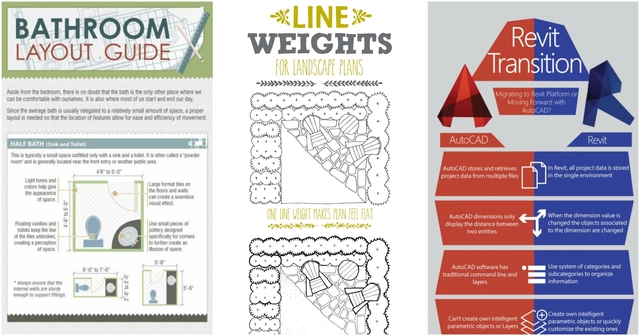
If you find yourself always looking up the same information, or if you're just starting out and you need to have the basics handy, this post is for you. There are hundreds of these helpful guides floating around on Pinterest—and if you want to venture further into interior design or more towards engineering, you're covered! We selected the best and most useful architecture and interior design infographics so that your next project is on point.
The Museum of Contemporary Art Chicago presents the first-ever museum exhibition of breakout Chicago artist Amanda Williams, featuring a new addition to her highly acclaimed project, Color(ed) Theory, which debuted at the first Chicago Architecture Biennial. The bright, monochromatic houses painted as part of Color(ed) Theory bring attention to the overwhelming number of vacancies on Chicago’s South Side, reflecting Williams’ perspective that architecture serves as a microcosm for larger social issues. Together with new works such as A Dream or Substance, a Beamer, a Necklace or Freedom? -- where Williams invited Englewood-based collaborators to gild a room in imitation gold leaf in the same proportion of a Chicago lot, and then sealed off the room with just a small gap for viewing the gleaming interior -- Williams’ solo debut creates an experience that comments on race, class, and urban space. Chicago Works: Amanda Williamsis organized by MCA Curatorial Assistant Grace Deveney and is on view from July 18 to December 31, 2017.
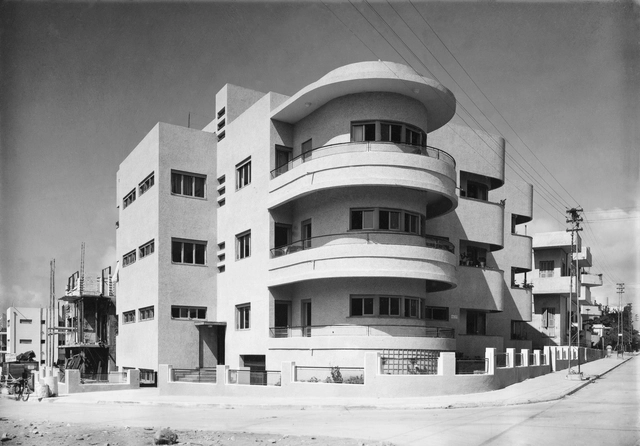
The exhibition Social Construction: Modern Architecture in British Mandate Palestine, tracing the influence of international Modernism on the architectural vernacular that developed in Palestine during 1917–48, is on display at the Yale Architecture Gallery from August 31to November 18, 2017. Originally organized by the Israel Museum, in Jerusalem, the show draws inspiration from the extensive research of architects Ada Karmi-Melamede and Dan Price, whose accompanying book, Architecture in Palestine during the British Mandate, 1917–1948, explores not only the functional aspects of this new architecture but also the social values that shaped the defining language of this new architectural style. The original exhibition was curated and designed by Oren Sagiv, chief of exhibition design at the Israel Museum, with Eyal Rozen.
Not many people would consider augmented reality particularly useful; it makes for fun dog selfies and other filtered images. But our tunes will probably change with the release of AR Measure™, an app that turns your phone into an accurate ruler. Using augmented reality, the app can calculate distances in 3D spaces captured with your phone's camera.
Created by Laan Labs, the same company who brought us FaceSwap, the app is developed on top of Apple's ARKit framework. How does it work, you ask?
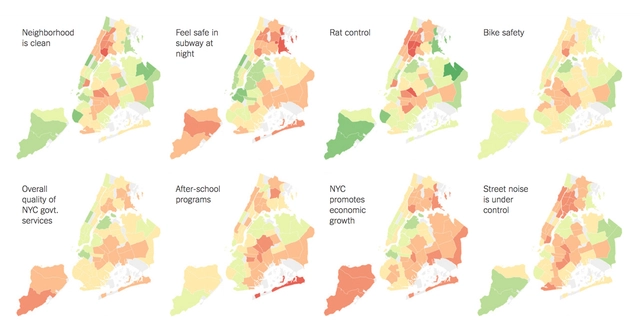
How satisfied are you with your city’s garbage service? Its parks? The way it handles pest control? What about homelessness? In the USA’s largest metropolis, which covers a total of 468.484 square miles (1,213.37 km2) and is home to over 8.5 million people, New Yorkers’ perception of their city and the services it provides reveals the “uneven distribution of New York’s opportunities,” according to a survey conducted by The New York Times.
The project also shows relative accord and satisfaction with fire and emergency medical services and agreement that use of tax dollars, public housing and traffic can be improved.
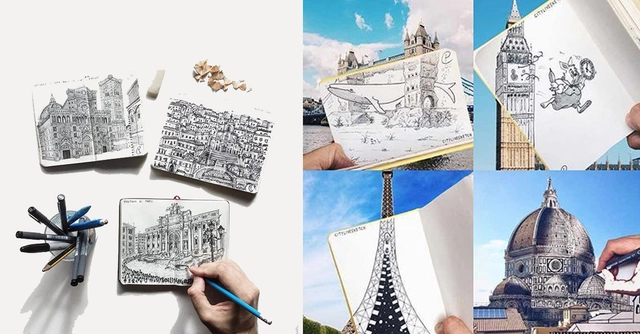
Moleskine notebooks, sketching, architecture photography, imagination, and Instagram—these are all curiosities that arouse the interest of a stereotypical architecture lover. So it's hard to believe that Pietro Cataudella, author of the CityLiveSketch project, is neither a trained artist or architect, but a student of geophysics.
In the summer of 2014, the Italian began a project to "describe the land in an alternative way by the combined use of photographs and drawings that represent the landmarks of splendid Italian towns (and beyond)." He has traveled from Pisa to Rome, London to Barcelona, and sketched famous buildings that include Stefano Boeri's Bosco Verticale and the Eiffel Tower.
In 1990, China, then a country with a population of just over 1.1 billion inhabitants, had only three metro systems—located in Beijing, Hong Kong and Tianjin. Fast forward a mere 27 years later and the number of urban transit systems has grown more than ten-fold.
Designing a museum is always an exciting architectural challenge. Museums often come with their own unique needs and constraints--from the art museum that needs specialist spaces for preserving works, to the huge collection that requires extensive archive space, and even the respected institution whose existing heritage building presents a challenge for any new extension. In honor of International Museum Day, we’ve selected 23 stand-out museums from our database, with each ArchDaily editor explaining what makes these buildings some of the best examples of museum architecture out there.
Are you planning an architectural odyssey between the months of June and August? If so, we’ve got some exciting news! We want to equip two ArchDaily readers with a full set of virtual reality products from Samsung--a Galaxy S8 phone, a Gear 360 camera, and a Gear VR headset! With this top-of-the-line, brand new technology you can record, 30 minutes of live stream, and share your site visits between a wide range of devices.
For the past year we have been committed to exploring and furthering the potential of Virtual Reality for architectural applications. As part of this initiative, we are thrilled to partner with Samsung, creating the opportunity to collect and disseminate 360 experiences of important projects with the help of the ArchDaily mind hive.
Applying for a chance to take the gear on the road is simple!
You may know about Lynda.com, the online education platform that hosts thousands of video courses for learning how to use software. But did you know that Lynda also has some great drawing, animation, and design courses? The best part (if you're a current student or local library card owner)? Lynda can be accessed for free from many universities, colleges, and libraries! If your backpack-toting, library-visiting days are behind you, the platform offers a free 10-day trial.
If you're looking to perfect your ability to capture or project building interiors and exteriors, Amy Wynne's hour-long course "Drawing 2-Point Perspective" is a solid option.
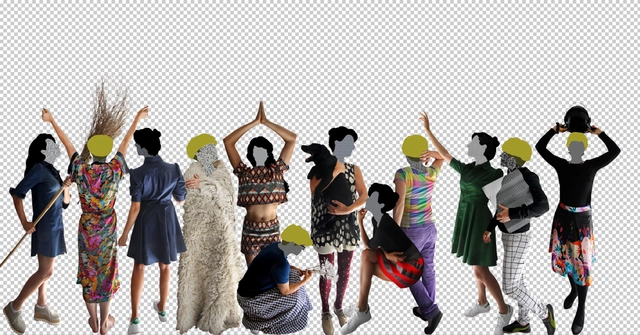
Italian architect and photographer Francesca Perani decided it was time to address the issue of garbled copyrights and tired stereotypes in architecture cutouts. With her site cutoutmix, she explains that she and her "creative gang" of female designers are, "improving the rendering visualization world with the help and talent of international artists." Right now users can access two of the collections for free, under a creative commons license.
Posted on the OMA website with the description, "Presentation on how S, M, L, XL intends to both undermine and simultaneously reinforce architecture," this lecture delivered by a then-51-year-old Rem Koolhaas delves into the "intentions" behind the 1400-page behemoth monograph. The Dutch architect laments that he must spoil the experience of the book's nuanced relationships and surprises, stating "I'm exposing connections now that I would have preferred to remain hidden for you to discover or ignore."
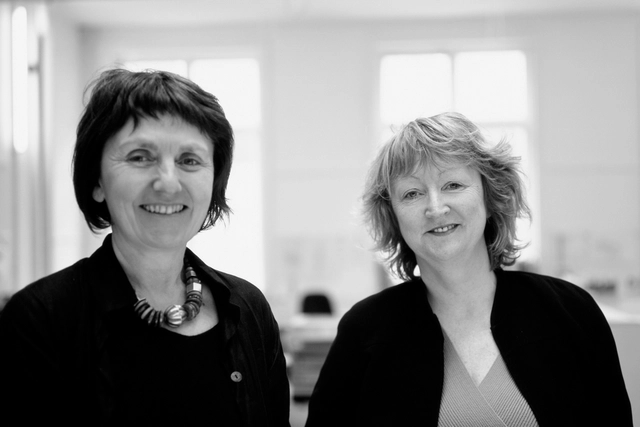
In a meeting yesterday, The Board of La Biennale di Venezia appointed Yvonne Farrell and Shelley McNamara of Grafton Architects as curators of the 16th International Architecture Exhibition in 2018. This marks the second time that the Venice Architecture Biennale will be directed by women, after Kazuyo Sejima's role as director for the 2010 Biennale.










.jpg?1484657568&format=webp&width=230&height=230&crop=true)
