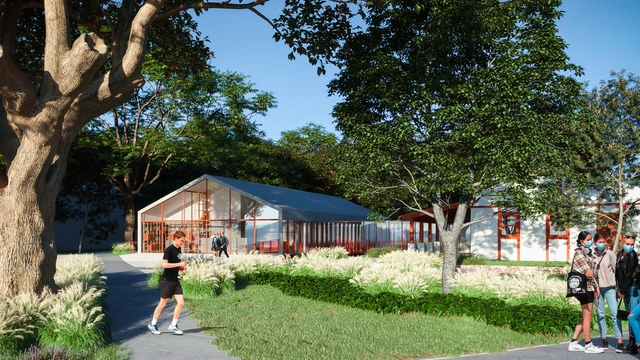
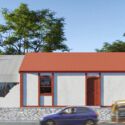
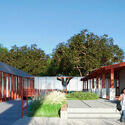
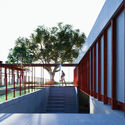
The firms Gênesi and EVO Arquitetos were awarded third place in the national competition Iconicidades, organized by the Government of the State of Rio Grande do Sul and launched in April this year. The initiative sought to select the best proposals for transforming public spaces into areas that stimulate the creative economy in the cities of Pelotas, Rio Grande, Santa Maria, Cachoeirinha, and São Leopoldo.
https://www.archdaily.com/1132427/genesi-and-evo-arquitetos-awarded-in-the-requalification-competition-for-the-casa-da-feitoria-and-immigrant-museum-in-sao-leopoldoArchDaily Team
Bringing fire indoors is something many people want during winter. In addition to warming the environment, fire creates a unique sensation that goes back to the beginnings of human habitation, leading us to a certain emotional comfort. Before, a chimney and a stock of firewood were needed to guarantee this, nowadays there are ecological fireplaces, which can be built-in or portable: a great choice for those who live in apartments or do not like the smoke generated by the fire.
https://www.archdaily.com/987019/what-are-ecological-fireplaces-and-how-do-they-workArchDaily Team
The use of bicycles in urban areas has been steadily increasing. Health, leisure, cost savings, convenience—there are numerous reasons and benefits driving this choice. However, for people to choose cycling, a fundamental factor must be met: safety during the ride, which is primarily provided by bike paths and lanes. To highlight this, we present a ranking of which Brazilian capitals prioritize cyclists and the quality of their routes, fostering the construction of a better city through active mobility.
https://www.archdaily.com/1132001/ranking-of-bike-paths-and-lanes-in-brazilian-capitalsArchDaily Team
To honor the life and work of architect Armando Franco—who passed away last June at the age of 100—Clásicos Mexicanos presents the book Armando Franco COLECCIÓN COFRAN (1955-2022). This publication, the result of extensive research by the Clásicos Mexicanos team, brings together biographical data, plans, sketches, designs, and photographs of the most iconic works from the career of Franco, one of the most original and enigmatic Mexican modern architects of the 20th century.
https://www.archdaily.com/1131938/clasicos-mexicanos-presents-the-book-armando-franco-cofran-collection-1955-2022ArchDaily Team
Every day, architects and designers from around the world send us their latest projects, products, news, and opinions. We collect, curate, and publish the best information, delivering our platform to over 17 millions of monthly readers. Since 2008 we have been sharing inspiration, knowledge, and tools with the goal to help everyone who makes architecture happen to create better cities and quality of life.
At ArchDaily, we are always improving your experience on our platform, which is why we have prepared a survey to gather your feedback, and better understand the topics that are most relevant to our readers.
https://www.archdaily.com/985557/help-us-improve-your-archdaily-experienceArchDaily Team
An empty wall is not always a breath of air, at times it can give a cold feeling of missing something. And that is why it presents itself as a space to be occupied to bring more originality and greater character to your space. The question is: how can we intervene in it? Below, we have gathered some ideas from various projects to inspire you.
At the end of the 19th century, skateboarding emerged in the United States. Officially patented in 1936, the sport has already faced several prejudices, but like the social and urban dynamics of which it is a part, it has lasted to demonstrate that its experience goes far beyond conservative views and brought a new way of experiencing the city by trying movements of our own bodies in light of the urban or architectural design.
Álvaro Joaquim de Melo Siza Vieira, or simply Álvaro Siza, was born in Matosinhos, Portugal, on June 25, 1933. His first work – four houses in Matosinhos – was built in 1954, even before completing his studies at the School of Fine Arts from the University of Porto (current Faculty of Architecture of the University of Porto – FAUP), which happened a year later.
In the current scenario of a climate crisis, thinking about an architectural project without defining ecological guidelines has become practically unacceptable. One of the main emitters of carbon dioxide and other pollutants, the construction sector is increasingly looking for new ways and means that can make works more sustainable and, in some way, mitigate damage to the environment. Thinking about ecological materials can be one of the fundamental steps, but, which materials are these?
In May, the same month that the 13th São Paulo International Architecture Biennale begins, SescTV will make five selected episodes from two series—Arquiteturas and Coleções - Mestres da Arquitetura—available on-demand on the channel's website. These episodes prompt a reflection on architectural and historical heritage and depict the vision of architects and other professionals in the field, offering different perspectives on several iconic projects. All of this content, along with other programming spanning various artistic expressions, is part of the channel's collection and is available on-demand on the SescTV website.
https://www.archdaily.com/1132231/sesctv-offers-free-thematic-series-on-architecture-and-citiesArchDaily Team
Being square sucks! At least, that's what the trends of 2022 tell us. The report carried out by Pinterest points out the curved design as the future of decoration, whether in objects or even from architecture. For that reason, we looked for Brazilian residential projects that trace curved walls in their designs. The reasons are the most varied and the results offer a unique composition: as an architectural party, to contrast with the orthogonality of other walls or to create unique spaces.
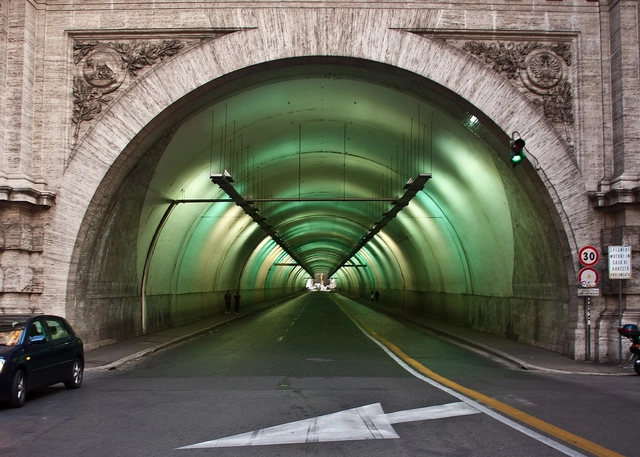
Umberto I Tunnel in Rome. Photo: Andrés Nieto Porras from Palma de Mallorca, España, CC BY-SA 2.0 , via Wikimedia Commons
Smart buildings are more and more on the agenda. For their elaboration, some materials have been developed to meet specific objectives during their use without the need to be operated by any person or equipment. Self-maintenance, cleaning the air, working with the comfort of space, energy efficiency, are just some of the benefits that can be achieved by adopting them.
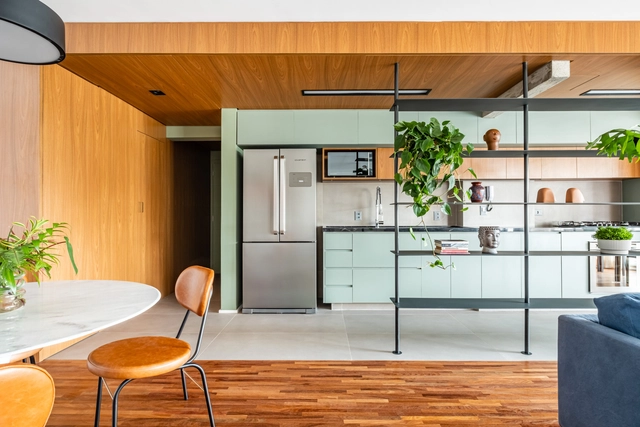
No matter what your kitchen type is, one thing is for sure: the need for cabinets. Designing a project that is functional and can incorporate all the equipment, food and ingredients can be a difficult task depending on the available area. Often, along with countertops and other coverings, cabinets are responsible for setting the tone of this environment, revealing the importance of a good design.
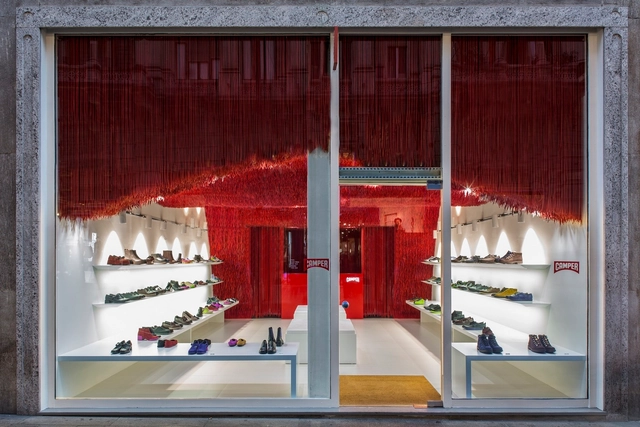
Creating a showcase is more than just displaying products, just as designing a store goes beyond a showcase. Both charges reinforce the concept of a collection, attract customers and improve a brand’s image. It is no coincidence that many architects work in the Visual Merchandising area along with graphic and interior designers, retailers, and stylists, to design a spatial experience that generates a unique narrative and brings greater customer engagement to the store.
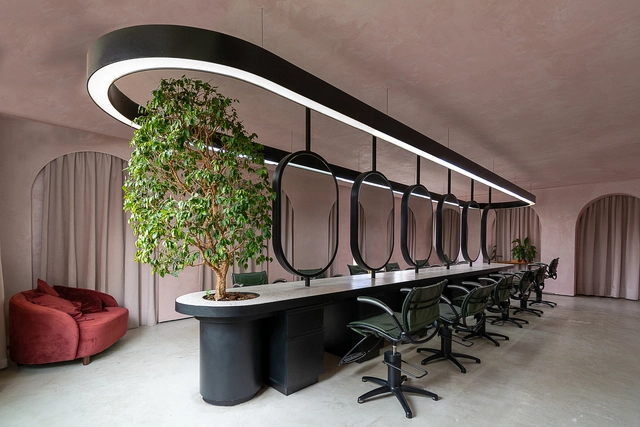
Usually, people look for a beauty salon to leave transformed. In addition to the aesthetic changes, the environment itself can trigger different sensations that change the mood of customers. That being said, some establishments hire architects and interior designers to think of ways to innovate their spaces. Relaxing, having fun, surprising, are just some of the actions that can be passed through a project that thinks about different ways to bring comfort to users.
The 13th edition of the Architecture Biennial, organized by IAB-São Paulo, will open on May 27. It emerges from a reality of intense transformations brought about by the Covid-19 pandemic worldwide, which demanded major efforts to reorganize urban, social, and professional dynamics for survival.
Travessias (Crossings), the theme of this edition, recognizes that the pandemic reinforces socio-spatial inequalities that were already established, not only in Brazil but globally, understanding that these structures undergo physical and symbolic fragmentations rooted in violent processes of colonization and historical erasure. As a result, they trigger numerous manifestations of oppression – such as racism, sexism, ableism, and coloniality – in Brazil and other territories.
https://www.archdaily.com/1131944/francis-kere-banga-nossa-and-dele-adeyemo-among-the-participants-of-the-13th-sao-paulo-architecture-biennialArchDaily Team
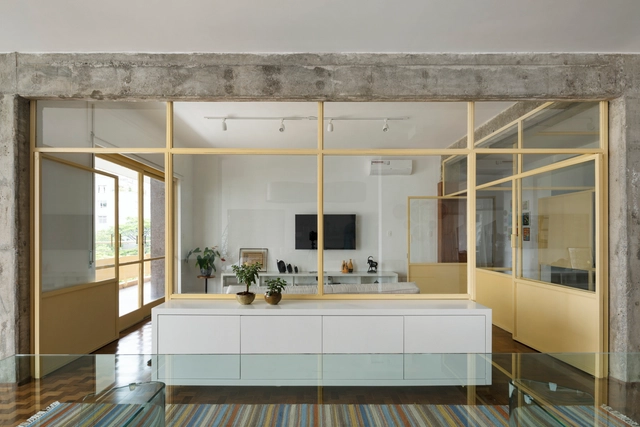
Defining spaces in apartments is a challenge often imposed by their limited footprints. To address this, many projects utilize metal framing and custom furniture to delineate areas, connecting the architectural program through visual permeability while allowing natural light to flow throughout the home.
https://www.archdaily.com/1123613/metalwork-elements-as-room-dividers-in-brazilian-apartmentsArchDaily Team
Housing will always be a theme and challenge for architects. Thinking about it in a way that serves the entire population, including the most precarious contexts, is one of the most complex, and perhaps impossible, tasks to be fully consolidated. Each place and family will always place different priority points on a project, which is why resorting to a standard solution is not ideal. However, several proposals present intervention possibilities that create an intricate seam between the most different factors: basic infrastructure, program, self desires, aesthetics, budget. For this reason, we have gathered here some Brazilian examples of affordable housing, ranging from a single-family house to large residential blocks.