Today, the availability of information and data has vastly expanded our ability to analyze, interpret, and understand life in our cities. In urban planning, some of the most valuable and highly sought-after data for analyzing urban mobility dynamics comes from the use of the SUBE system (the Unified Electronic Ticket System, used in Argentina to pay for public transit). By gathering this information, millions of digital footprints can be aggregated and visualized, allowing us to interpret and anticipate citizen transit behavior. This, in turn, helps us understand urban trends based on the time of day and the day of the week.
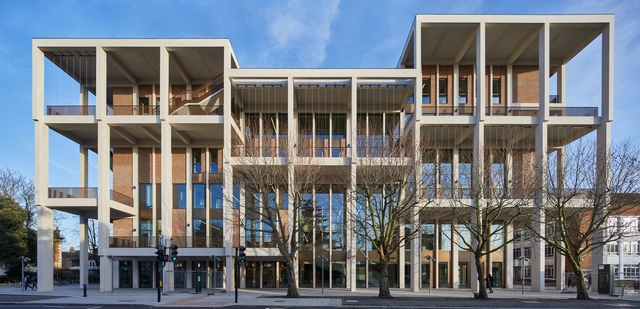
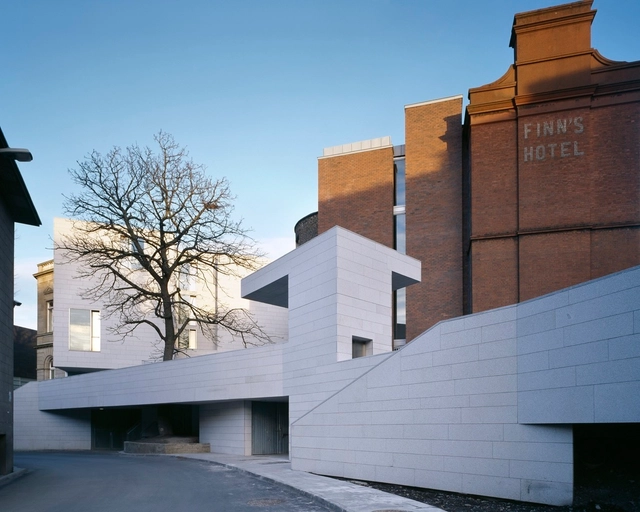
Pritzker Prize 2020 Laureates, Irish architects Yvonne Farrell and Shelley McNamara are known for their powerful yet delicate approaches. In this exclusive video for ArchDaily, Martha Thorne, executive director of the Pritzker Architecture Prize and Dean of IE School of Architecture and Design, shares some of the reasons why Grafton Architects has won the Pritzker Prize 2020.
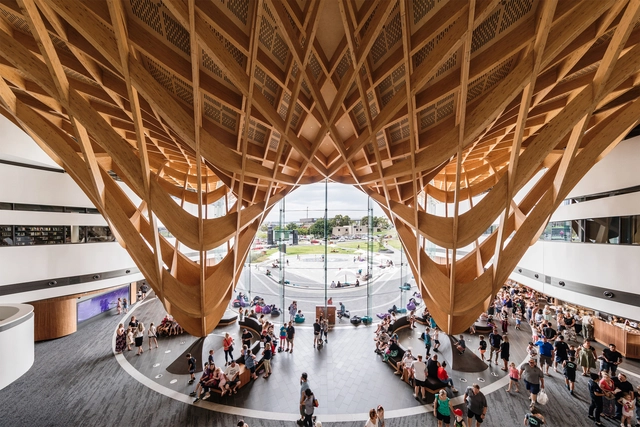
“When you read Love in the Time of Cholera you come to realize the magic realism of South America.” Yvonne Farrell, Shelley McNamara and I were in a corner of the Barbican Centre’s sprawling, shallow atrium talking about the subject of their most recent accolade, the Royal Institute of British Architects inaugural International Prize, awarded that previous evening. That same night the two Irish architects, who founded their practice in Dublin in the 1970s, also delivered a lecture on the Universidad de Ingeniería and Tecnologia (UTEC)—their “modern-day Machu Picchu” in Lima—to a packed audience in London’s Portland Place.
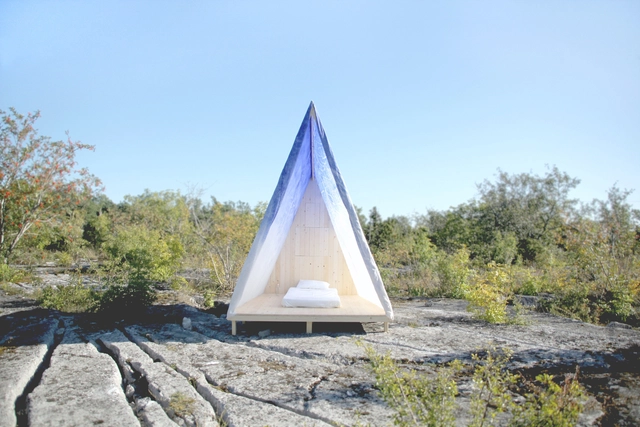
Space Saloon and Designers on Holiday have announced DeSaturated, a week-long interdisciplinary community-in-residence design festival in California's Cuyama Valley. Following the success of the first two iterations, LANDING and FIELDWORKS, the team is returning to California once more. The community-in-residence program will bring together designers, artists and researchers to address issues of water scarcity.
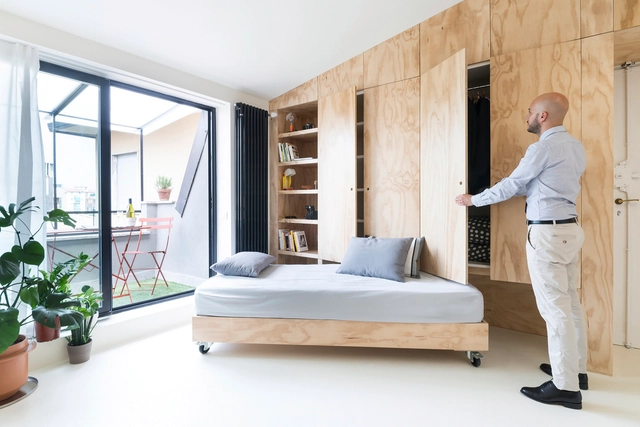
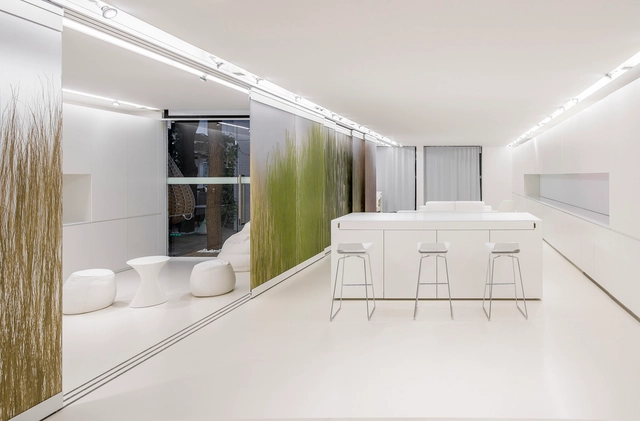
With residential developments offering ever-smaller housing units, the challenge for architects and interior designers to develop compact and multifunctional solutions for interior projects increases. From this perspective, it is increasingly common for professionals to focus on their clipboards in creating new solutions for joinery and multifunctional furniture that allow the space to transform completely in a few seconds, such as strategic cabinets and bookcases to supply the lack of storage space; sliding furniture on rails or pulleys; cabinets that turn into beds through vertical rotation; drawers in stairways, etc.
Yvonne Farrell and Shelley McNamara founded Grafton Architects in 1978, after they met each other at the School of Architecture at University College Dublin. The practice, named after the street where the duo's first office was located, has been awarded this year’s prestigious 2020 Pritzker Award. Grafton's built work reflects the continued search of architectural excellence, in buildings ranging from small scale housing to large public volumes.
https://www.archdaily.com/934727/grafton-architects-get-to-know-2020-pritzker-winners-built-workAD Editorial Team
With more than 40 years of professional experience, Yvonne Farrell and Shelley McNamara, partners and co-founders of Dublin-based Grafton Architects, are the first women to be jointly awarded the architecture’s highest honor, the Pritzker Prize. In addition to a very welcoming breath of hope towards greater female representation in the field, the selection also cast light over an equally urgent theme in the profession: recognizing architecture practice as a collective effort.
Australian architecture is rooted in the land. From environmental and climatic concerns to the country's unique cultural background, the built environment down under is defined by a history of connections to local contexts. Today, Australian architecture has also come to embrace a multicultural identity, with a new class of cultural projects showcasing how contemporary buildings and structures are being designed for the future.
Door handles are a ubiquitous part of daily life, being used constantly in almost every space but rarely given thought by the passing user. Nevertheless, the chosen material of each handle can vary widely in terms of aesthetics, durability, and sustainability, with good choices going noticeably right and poor choices going noticeably wrong. For objects that are seen and used multiple times every day without fail, it’s imperative that designers get the choice right.
To deepen this topic, FSB helps us to lay out the properties of four of the most common handle materials below, allowing you to make an informed decision on which material aligns best with your project’s needs.
https://www.archdaily.com/929360/stainless-steel-bronze-brass-or-aluminum-how-to-choose-handle-materialsLilly Cao
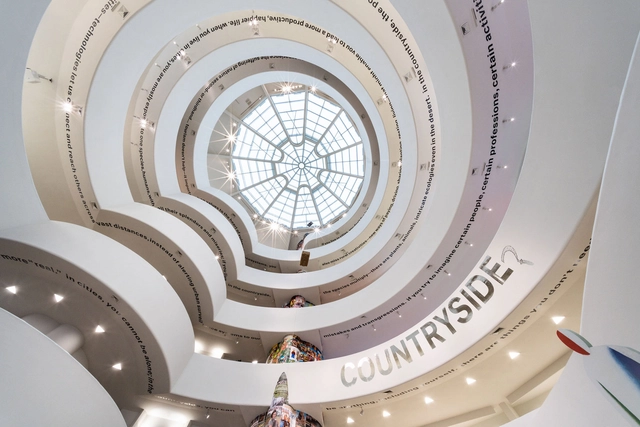
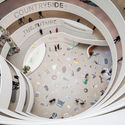
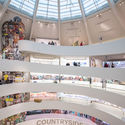
Entering the Guggenheim Museum, visitors find themselves surrounded by a feast of vivid colors and mismatched fonts. Passing the gigantic green tractor at the entrance, they move across the ground floor, littered with stickers, like a lunchbox, or a lid of a laptop. A thick pillar that pierces the internal atrium has become a garish advertising column. A bale of hay, a drone, and some other object (impossible to identify) levitate high overhead. A cardboard cutout of Joseph Stalin on robot wheels moves down the ramp, scaring off visitors. Big reflective letters say: “Countryside, The Future”.
Architect Rem Koolhaas, the founder of the Office of Metropolitan Architecture (OMA) and Samir Bantal, director of OMA’s internal think-tank AMO, created this utterly confusing environment to exhibit years of research on the space beyond the boundaries of the 21st-century city.
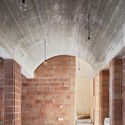
While brick is one of the preferred construction methods within the architectural culture of several Latin American countries, Uruguay's unique history with this material has been deeply shaped by the contributions of the renowned engineer Eladio Dieste. His work pushed brick to its ultimate lightness, creating curved surfaces through a pioneering technology he termed reinforced ceramics. In doing so, Dieste offered the country—and the world—a new perspective on the structural possibilities of brick, strengthening its role in local identity and inspiring further exploration and design with the material.
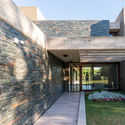
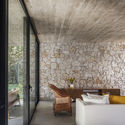
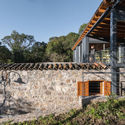
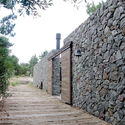
Historically, stone materials have offered ancient cultures the ability to build robust structures by interlocking stones of various shapes and sizes. The simplicity of the technique and its ability to deliver efficient, durable results have sustained the transmission of this construction method over time, enabling multiple contemporary architectural variations and reinterpretations.
Humans have mastered ceramic manufacturing for about 15,000 years. Even today, it remains a widely used material in fields such as civil construction, crafts, and even high-tech industries.Because they are durable, cost-effective, and offer an immense variety of dimensions, patterns, and finishes, ceramic tiles are extremely popular finishes. Versatile, they can be used on horizontal or vertical surfaces, indoors or outdoors, in wet or dry areas. They are produced from a mixture of clay and inorganic raw materials; after being dried and fired at high temperatures (above 1,000 °C), the pieces acquire waterproof, easy-to-clean surfaces with a wide range of finishes and colors.
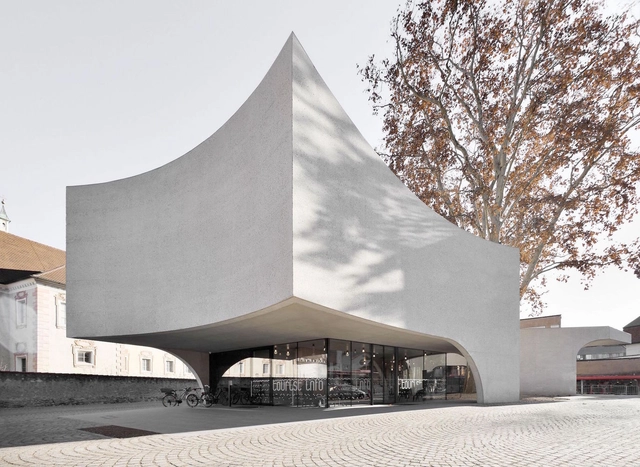
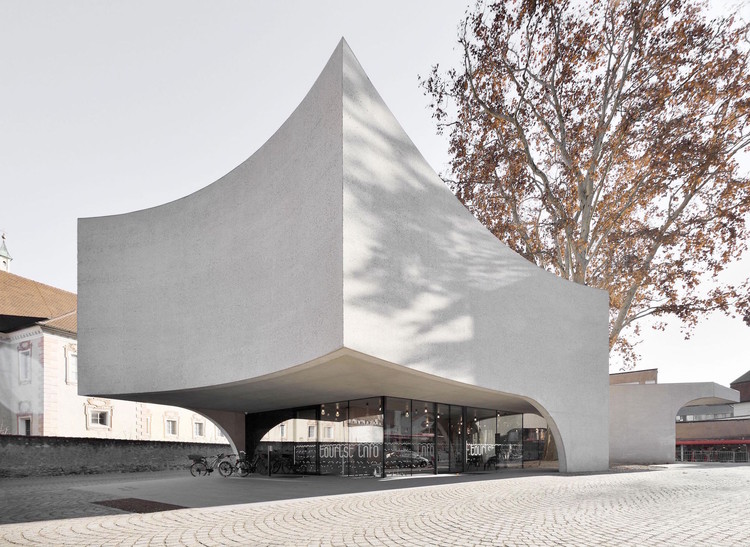
Tourist Information Center by MoDus Architects, awarded selection in the ICONIC AWARDS 2019: Innovative Architecture. Image Courtesy of German Design Council
Today marks the start of the registration phase for the international ICONIC AWARDS 2020: Innovative Architecture. These awards recognize the best of architecture and innovative interior and product design, as well as outstanding communication concepts and singularly innovative materials. The winners will be honored at the awards ceremony on 5 October 2020 at the Pinakothek der Moderne, Munich, where they will have ample opportunity to network with other players on both the national and international scene.
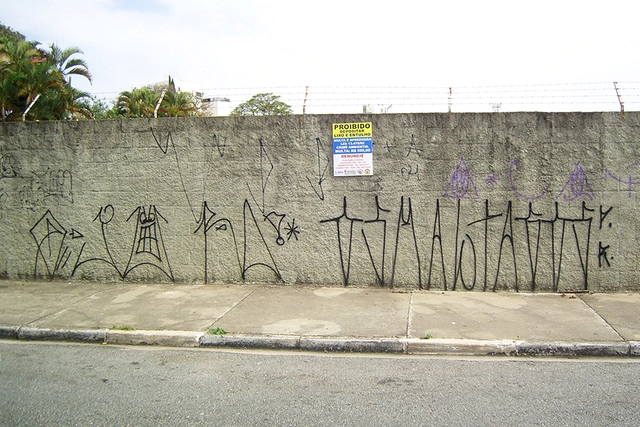
Since the second half of the twentieth century, Brazil has become globally recognized for urban insecurity. Since then, the problem has intensified, with extraordinarily high homicide rates—comparable, in many cases, to countries at war. In 2018, 17 Brazilian cities ranked among the 50 most dangerous cities in the world.
https://www.archdaily.com/1123980/how-urban-violence-shaped-brazilian-citiesPaulo Sa Vale
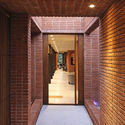
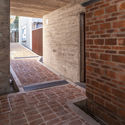
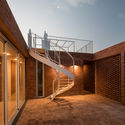
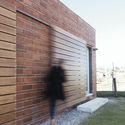
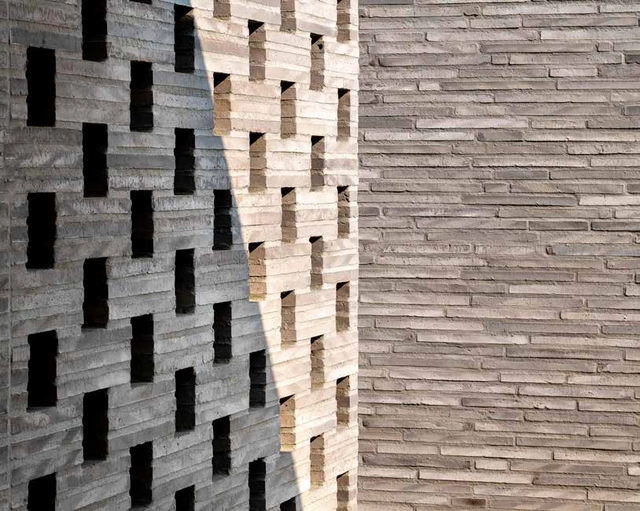
As one of the oldest building materials, dating back to at least 7500 BCE, brick is often thought of as a traditional, classic option for a building facade. Throughout its long history, however, the brick industry has changed and modernized to remain architecturally relevant. Innovations in brick construction continue to provide new opportunities for designs that combine the warmth and character of a natural material with the efficiency and aesthetics of a modern building.
Robotics and automation are a staple of any vision of how we will live in the future. Among architects and designers, this trend crosses a variety of scales, from smart cities to smart kitchens. As we outlined in our Trends That Will Influence Architecture in 2019, recent years has seen a strengthening in how interior spaces are being transformed by technologies, with searches for Domotics soaring by 450% in twelve months.
The Guadalajara region in Mexico is home to one of the country's most prominent cities, ranking as one of the most populous urban areas alongside Mexico City, Tijuana, the State of Mexico, and Monterrey. However, the exponential growth experienced by cities in the 20th century resulted in an urban sprawl that expanded far beyond traditional geographic boundaries. The capital of the state of Jalisco was no exception, ultimately leading to the definition of the Guadalajara Metropolitan Area, which integrates the key municipalities surrounding the capital.
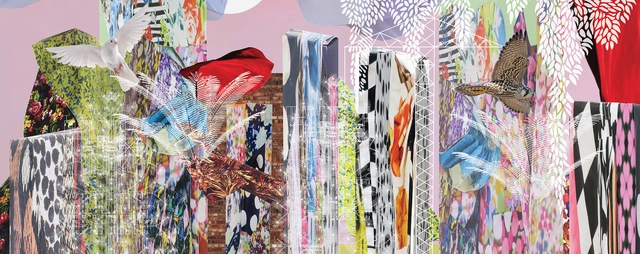
Concealed City, mixed-media composite drawing by Monica Hutton.
Deception, concealment, camouflage. Nature's numerous examples of disguising as a strategy to survive have provided humankind with plenty of inspiration for military unobtrusiveness throughout history. Today, disguise appeals as a way to protect one's private life in the City with Eyes. In a time when monitoring and surveillance systems are increasingly pervasive, Monica Hutton reflects on concealment strategies that are being developed, and which agencies they can deploy as part of complex urban ecologies.
On Design with Justyna Green brings you insightful conversations with the arts & design's most inspiring figures - from designers to architects, editors to creative directors and everybody in between. If you want to know what inspires them, how they work and how they see the world, this is the podcast for you. Listen to the On Design podcast now on Apple Podcasts, Spotify and Google Play.
On Design podcast host, Justyna Green met Adam Nathaniel Furman at his apartment in the vicinity of Regent's Park. In their conversation, they discuss Furman’s multicultural upbringing and its effects on his notions of identity. With roots in Argentina, Japan and Israel, Furman’s views on design, aesthetics and the society derive from numerous cultures, traditions, and religions, resulting in an open mind and a wealth of informed viewpoints.
The stories of the buildings of the United States have been built by the undeniable culture that its inhabitants have been creating. That is why architecture is more than a physical object, it evokes moments that express the wishes of its inhabitants in different political and economic contexts. In all cases, these buildings represent the daily struggle that comes with a monumental legacy of those who lived there.
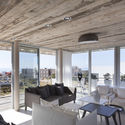
The use of concrete as a construction material offers distinct advantages in terms of structural strength and construction timelines. These benefits, combined with its plasticity, versatility, and aesthetic value, have led many architects to choose this system to bring their projects to life. The resurgence of trends surrounding exposed concrete applications—that is, without additional coatings—has simultaneously sparked numerous explorations of its expressive qualities, giving rise to new projects that experiment with the material's finishes in interior spaces.
The Midnight Charette is an explicit podcast about design, architecture, and the everyday. Hosted by architectural designers David Lee and Marina Bourderonnet, it features a variety of creative professionals in unscripted conversations that allow for thoughtful takes and personal discussions. A wide array of subjects are covered with honesty and humor: some episodes provide useful tips for designers, while others are project reviews, interviews, or explorations of everyday life and design. The Midnight Charette is also available on iTunes, Spotify, and YouTube.
This week David and Marina discuss strategies and share their stories about passing the AREs (Architects Registration Examination). The two cover everything from the best study materials, how to study and how much time to allow, why the exam is difficult, the best time to take the exams, what to do if you fail, what to expect the 'day of', tips for taking the exam, and more! If you have any questions call or text the hotline at 213-222-6950.
https://www.archdaily.com/934548/tips-on-passing-the-architect-registration-examinationThe Second Studio Podcast
Hundred-year floods. Record-breaking Antarctic heat. Wildfires and drought. The stories appear with numbing regularity. And though the details differ, they all point to the same grim conclusion. We’re failing to address climate change. With carbon emissions continuing to rise, what were once dismissed as worst-case scenarios now look like the best we can hope for.
https://www.archdaily.com/934538/if-plan-a-is-to-mitigate-climate-change-whats-plan-bMartin C. Pedersen, Steven Bingler

.jpg?1583109973 "Cortesía de Martin Alalu")
.jpg?1583109981 "Cortesía de Martin Alalu")
.jpg?1583109965 "Cortesía de Martin Alalu")


.jpg?1484680102&format=webp&width=640&height=580)



























.jpg?1581563559 "Fredrikstad office. Image © Randers Tegl")
.jpg?1581563494 "Mosevænget. Image © Randers Tegl")
.jpg?1581563220 "Eufemia. Image © Randers Tegl")





.jpg?1582052291)