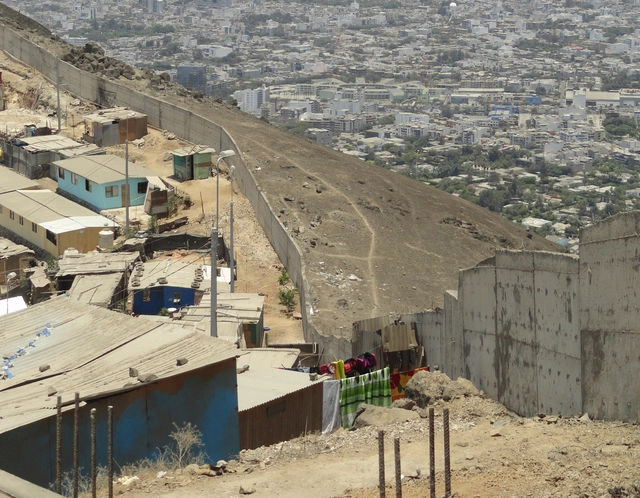
The initial question—and with it, the proposed discussion—stems from the original title of the article War-chitecture: How guilty are architects in urban violence? by Tomas Beverina, one of our readers in Argentina, who invites us to reflect on urban violence and prompts an even broader, collective debate.
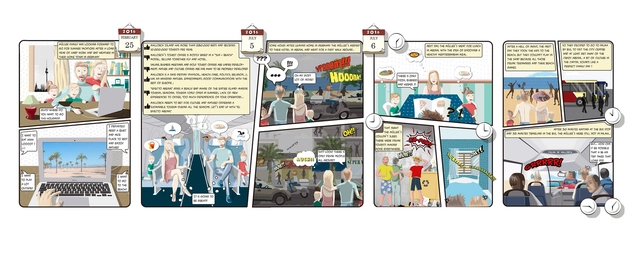
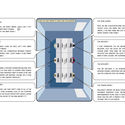
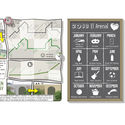
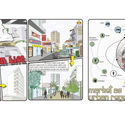
Cómic parte 1. Europan 14. Image Cortesía de OOIIO Arquitectura
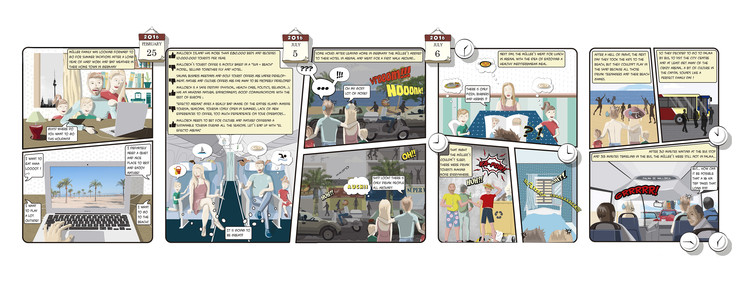
La propuesta El Final del “Efecto Arenal” presentada por el equipo de OOIIO Arquitectura ha obtenido una Mención Especial en el “Europan 14”, el concurso de urbanismo para jóvenes arquitectos más importante a nivel internacional en la actualidad. El proyecto destaca por su representación gráfica a través de un cómic, explorando nuevas formas de comunicación arquitectónica.
El emplazamiento propuesto por el concurso es uno de los ejes marcados por el Plan General vigente de la localidad de El Arenal (Playa de Palma de Mallorca) para su peatonalización y su puesta en valor, mejorando la conexión de la playa con el barrio en el que viven permanente sus habitantes. En el entorno hay una serie de problemas urbanísticos como un centro comercial en desuso que sin embargo presenta un gran potencial como contenedor de futuras actividades y es el elemento de rótula entre el mundo turístico y el mundo local.
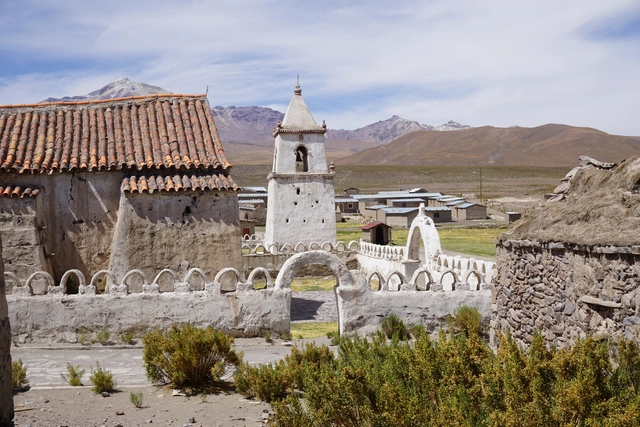
Isluga. Image via Flickr. User Pablo Trincado, Licensed by CC BY-SA 2.0
Chile's history can be read through its towns. Blending the architectural and building traditions of its indigenous peoples with the influence of European immigrants, these small localities reveal how their inhabitants have occupied and appropriated the territory according to their needs, customs, and specific contexts.
With a landscape that changes drastically from north to south, certain patterns emerge, shaped by climate and geography. From the use of adobe and stone in desert regions to meticulous craftsmanship with native woods in the south, along with the rich colonial architecture of the central valleys, these 24 examples offer significant lessons that every architect should study closely. Read on to discover them below.
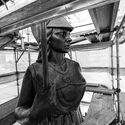
La Minerva is an iconic monumental sculpture in Jalisco's capital, created by Joaquín Arias in 1957 and commissioned by then-governor Agustín Yáñez. Years passed, and it was during the 1986 World Cup in Mexico that, following a victory by the Brazilian team, their coach gave the players the afternoon off, and the celebration ended up taking place there—at the intersection of López Mateos, Vallarta, Golfo de Cortés, and Circunvalación Agustín Yáñez avenues. Since then, La Minerva has become the preferred venue for both celebrations and demonstrations. However, weathering and traffic-induced vibrations took a heavy toll on its structure.
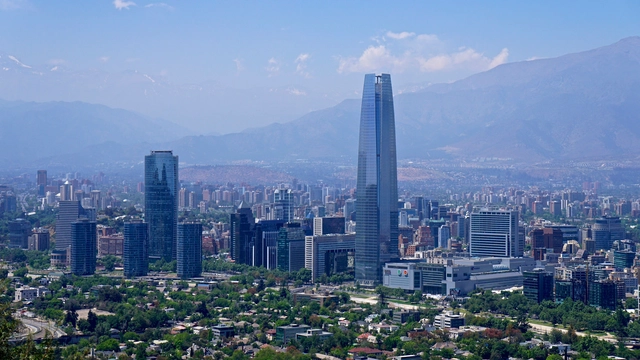
Humanity has always been obsessed with pushing its limits, setting records only to break them time and time again. Consequently, our cities' skylines have always been defined by those who hold power in any given era: once it was churches, then state institutions, and in recent decades, private skyscrapers have arisen to remind us who can reach the highest—literally.
Do you know what the tallest building in Latin America is? Specialized organizations like the CTBUH (Council on Tall Buildings and Urban Habitat) have established parameters to objectively measure a building's height, discounting antennas and other additions used to tack on extra meters. Let's take a look at what the CTBUH says about the tallest skyscrapers in Latin America.
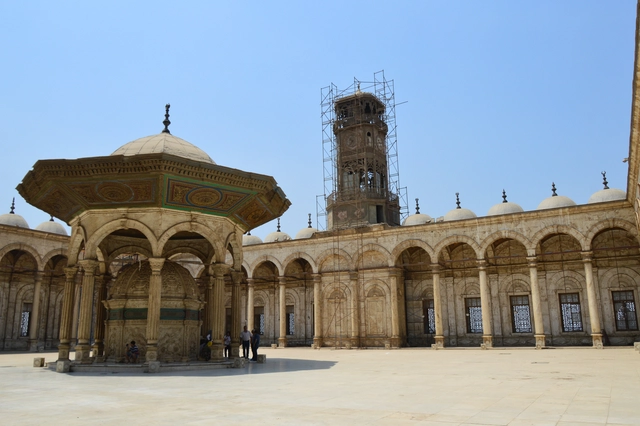
Around one in the morning in Cairo, despite the darkness of the night, everything feels yellow. Arriving in a city of 9 million people, with an airport that handles 3 million daily, is overwhelming, staggering—or, as Lovecraft might describe those lurking in the dark, indescribable and unnameable. In the gloom of a hotel room that saw its glory days long ago, I can see the Great Pyramid of Giza in the distance, shrouded behind the ever-present haze.
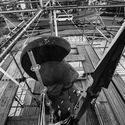
The relentless city devours almost everything in its path; the desert resists, tourism does its part, and, for now, the Sphinx simply watches. Restoration and archaeological work are always underway around the historic sites; you brush the dust off your feet only to uncover ancient remains. Saqqara—the Step Pyramid—is perpetually draped in massive scaffolding of dry wood, weathered from years of waiting for the next discovery that might finally let each prop rest. The heat in Cairo is stifling, and while collective memory associates the city with the pyramids and the Sphinx, its daily life breathes desert, diversity, tourism, commerce, and religion.
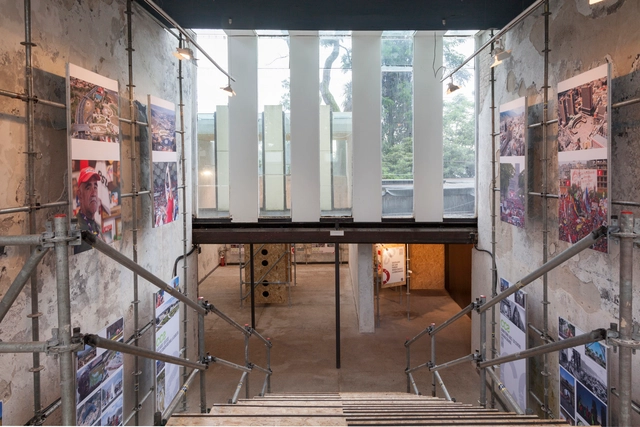
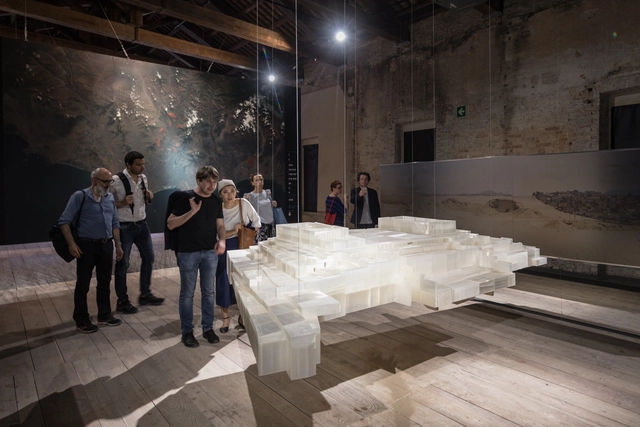
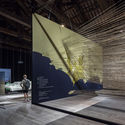
Prison to Prison, Uruguay's official exhibition at the 2018 Venice Biennale, explores the existence of an unprecedented Freespace within the intimate relationship between two different architectural models of prisons.
The exhibition, curated by Sergio Aldama, Federico Colom, Diego Morera, Jimena Ríos, and Mauricio Wood, is an invitation to spark new dialogues and discussions that transcend the objects of study themselves, enriching our perspective and reconnecting us with the cultural dimension of architecture.
We are witnessing a historic moment, standing at the dawn of an inevitable epochal shift. The economic, social, energy, and ecological crises in which we are immersed are some of its most evident symptoms. However, we must confront this bleak context from an optimistic perspective, viewing it as an opportunity to subvert the old paradigms that have led us to this dramatic situation.
But how do we prepare to face the urban challenges of a future that begins today? We certainly cannot do so by relying on outdated frameworks and tools; as Einstein famously said, “We need new ways of thinking to solve the problems created by old ways of thinking.”
The waters of the Gowanus Canal in Brooklyn, New York, still do not smell good, although the problem was once much worse. They carry the remnants of years of industrial pollution and untreated sewage.
The area, which in the 19th and 20th centuries was primarily industrial, has undergone revitalization in recent years through federal investment (see here). New green spaces were created, and service-oriented businesses moved into the neighborhood. Residential property prices also rose, ultimately displacing long-time residents.
It is time to say goodbye to 2018. Following our showcase of the best architecture of the year, we have gathered the Chilean projects that generated the most engagement on our social media platforms. Indeed, in the architectural field, understanding where design is heading requires looking at its key works and observing how the public has responded to them.
Most people today live in cities, which are growing rapidly. We are living in the age of urbanization, an era that began in the early 19th century when vast masses of people decided to be closer to one another rather than close to the land. There is no doubt that sooner or later the vast majority of us, humans, will be living in cities.
https://www.archdaily.com/1114474/it-is-still-not-true-that-eight-out-of-ten-people-live-in-urban-areasWRI Brasil
The future of a city is intimately linked to its open and public spaces, which serve a distinct social function. Open spaces in Caracas are rebel spaces hosting emerging and insurgent uses: reoccupied, reclaimed, and reinhabited for the enjoyment of local communities.
In CCS - Espacio Rebelde, the city is not a matter for expert urban planners, designers, or architects, nor is it a matter for the elites: it is a process of inclusive consensus, collective construction, and community agreements.
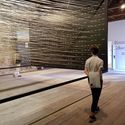
En Reserva, Peru's pavilion at the Venice Biennale 2018, aims to reveal an ancient layer hidden within the city of Lima, showcasing its urban and architectural generosity across different scales.
The exhibition, curated by architects Marianela Castro de la Borda and Janeth Boza, and journalist Javier Lizarzaburu, presents a large volume with a perimeter path, inviting visitors to reconstruct the links between past and present, before imagining the future.
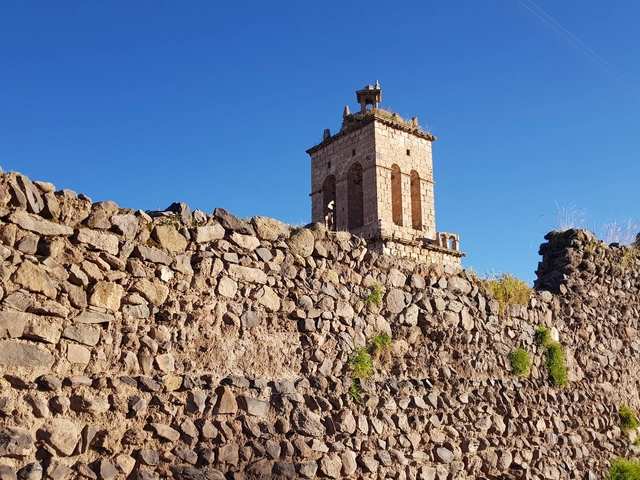
Popularly known as the Ciudad de las Cajas Reales (City of the Royal Coffers), Chucuito is a small Peruvian town located 20 kilometers from Puno at an altitude of over 3,800 meters above sea level. Boasting a privileged location on the shores of Lake Titicaca, it was once part of the ancient pre-Columbian Tiwanaku culture and served as the seat of government for the Lupaca kingdom. During the Spanish colonial era, it became a strategic tax collection center, and today it preserves a valuable architectural legacy throughout its streets.
Following our guide to Puno's must-see landmarks—on the occasion of the recent XV TSL Puno—we recommend seven sites in this town nestled in the Peruvian highlands. Due to the high altitude (and particularly at the San Bartolomé viewpoint), visitors are advised to tour these landmarks with a companion, walk at a measured pace, and chew coca leaves to prevent altitude sickness.
“A thesis is like a pig; everything in it can be put to use,” concluded Umberto Eco in his book How to Write a Thesis. Indeed, these research projects, developed through four or five years of intense effort and sacrifice, become extraordinary tools and inexhaustible sources of information for both students and professionals looking to delve into a specific topic within their field of knowledge.
In Spain, the 2008 economic crisis triggered a notable increase in the number of architects who chose to pursue a doctoral thesis as a way to continue their academic training and expand their career options. Coupled with the rigorous training that Spanish architects typically receive, this has led to a vast body of exceptionally high-quality research, serving as an invaluable reference resource for both students and practitioners.
This article compiles 10 doctoral theses focused on major Spanish architects whose careers spanned the 20th century and who, for various reasons, left an indelible mark on the history of Spanish architecture during this period.
https://www.archdaily.com/1114503/10-doctoral-theses-on-great-architects-of-20th-century-spanish-architectureJavier García Librero
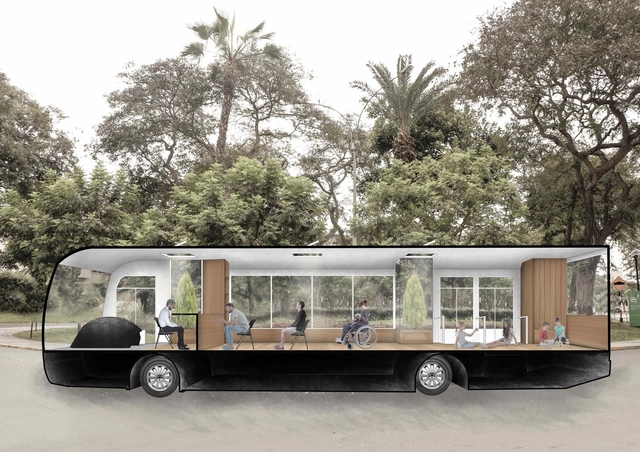
Corte Fugado. Image Cortesía de LLATAS_Municipalidad de Miraflores
If Muhammad will not go to the mountain, the mountain must go to Muhammad. If the elderly do not go to city hall—sparing themselves the clear hassle of tedious paperwork—city hall goes to them. In a largely unplanned city like Lima, where design for older adults and people with disabilities is rarely prioritized, getting around or participating in social activities requires double the effort. Consequently, they often choose to stay home to avoid the hassle.
Bringing services closer through mobile architecture—going beyond static physical buildings—is an idea worth putting into practice. Under this approach, the Municipality of Miraflores is rolling out a bus equipped with diverse functions that are valuable to the neighborhood, and particularly essential for a demographic with limited mobility. Architecture in action is capable of adapting an "ordinary" bus for this "multifunctional" purpose. Once again, the profession demonstrates its power to connect, support, and bring people together...
The LIMPAR SANTANA project involves constructing a sustainable basic sanitation system to clean up the waterways of Quilombo de Santana, in the state of Rio de Janeiro, aiming to improve the quality of drinking water in local homes.
Based on an assessment of the area's topography, geotechnics, and geography, the proposal suggests using evapotranspiration basins—a system that treats effluent through natural filtration and evaporation via banana leaves—and biodigester tank systems that convert wastewater into a usable byproduct for agriculture.
Architects Rafael Pina and Fabián B. Di Giammarino, writing for the ARKRIT Collective, offer an objective critique of a classic of Chilean architecture, the Copelec Building. As the authors of this article assert, beyond the many descriptive accounts surrounding the building, it has earned an unquestionable status precisely because it remains unquestioned.
https://www.archdaily.com/1114607/the-architecture-of-copelec-landmark-and-mythRafael Pina & Fabián B. Di Giammarino
Extensive academic literature documents the detrimental effects that massive, monofunctional public housing complexes, isolated from urban centers, impose on cities. These areas typically become highly segregated and stigmatized, often plagued by deteriorating living conditions. Once occupied, residents frequently begin to modify their surroundings—opening small businesses and adapting spaces in ways that diverge sharply from the original design. Yet, can urban design improve the quality of life within these developments? Consider this proposal developed for João Pessoa:
At more than 3,800 meters above sea level and on the shores of Lake Titicaca, the city of Puno stands as the folklore capital of Peru, where architecture, archaeology, and dance intersect. It is not only home to the Candelaria festival—declared an Intangible Cultural Heritage of Humanity by UNESCO in 2014—but also sits just a few kilometers from the vast archaeological legacy of the Pucará and Tiwanaku cultures. Additionally, visitors can travel to the floating islands of Uros, Amantaní, and Taquile on the world's highest navigable lake.
Before going any further, if you are not accustomed to this altitude, we recommend drinking coca tea regularly or chewing coca leaves, which can be purchased at any local store. Furthermore, the weather can be highly unpredictable; a single day can bring sun, rain, and hail, so keep this in mind when choosing what to wear. Lastly, in Peru, streets that are at least ten blocks long, narrow, and usually one-way are called jirones (abbreviated as Jr.).
Today, companies seek to connect different generations and leverage their unique contributions to the workplace. They aim to maximize innovation through the synergy generated by combining the drive of younger generations with the experience of older workers. Given the specific characteristics of each age group—including differing values, experiences, styles, activities, and expectations—both the workspace and the way we work are being rapidly redefined.
São Paulo, a megacity of over 12 million people, hides many mysteries beneath the feet of those passing through its streets, despite the frantic hustle and bustle of daily commuters.
Unlike our guide to lookout points for experiencing São Paulo from above, we now present a selection of underground sites that are largely unknown to the general public, each preserving a piece of the city's history. Theaters, an aquarium, an unfinished subway station, and artistic and cultural institutions are among these semi-secret spaces. Explore our selection below:
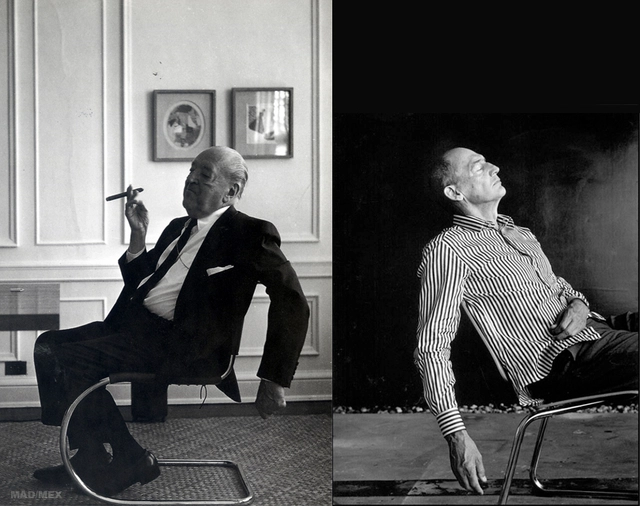
Fotografía de Mies van der Rohe por Werner Blaser & fotografía de Rem Koolhaas por Maartje Geels. Image Cortesía de Jorge Cárdenas
What happens when we juxtapose two works by two renowned architects, Mies van der Rohe and Rem Koolhaas, completed twenty-five years apart? We find the answer in the following article by the Arkrit Collective.
https://www.archdaily.com/1114508/comparing-mies-van-der-rohe-and-rem-koolhaasJorge Cárdenas del Moral
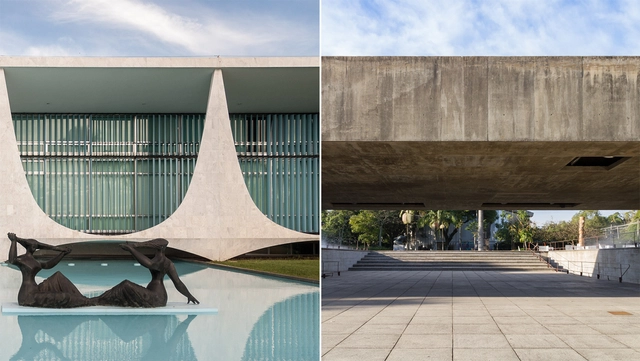
Having already recognized two Brazilian architects—Oscar Niemeyer (1988) and Paulo Mendes da Rocha (2006)—it is surprising that in the prize's 40-year history, no Brazilian had ever been appointed to the jury. On this, Corrêa do Lago notes that "it must be acknowledged, however, that there has always been a diverse regional representation on the jury, including from Latin America."
https://www.archdaily.com/1114521/interview-with-andre-correa-do-lago-the-first-brazilian-to-join-the-pritzker-juryPedro Vada e Romullo Baratto









.jpg?1545322183&format=webp&width=640&height=580)












.jpg?1522507595&format=webp&width=640&height=580)
.jpg?1515252054)