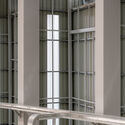
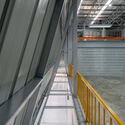
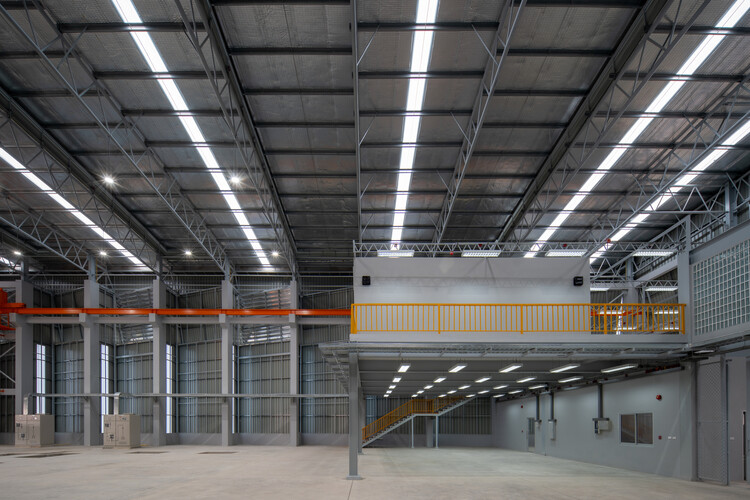
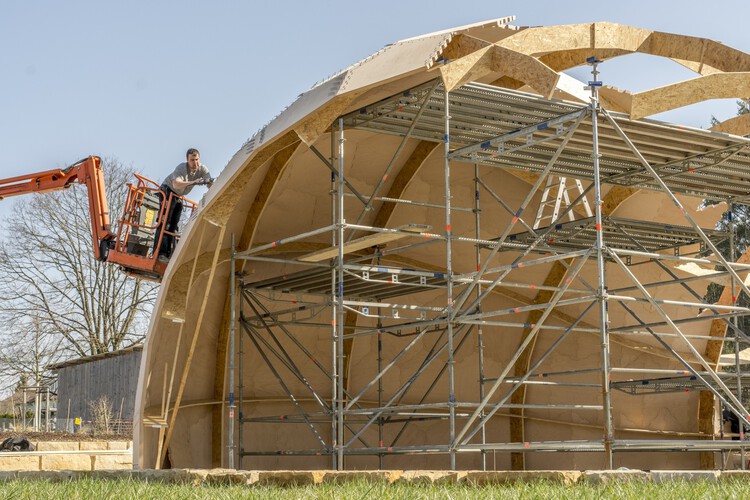
The Industrial Foundry for Marine Vessels. Image Courtesy of Naksit Wisetmora
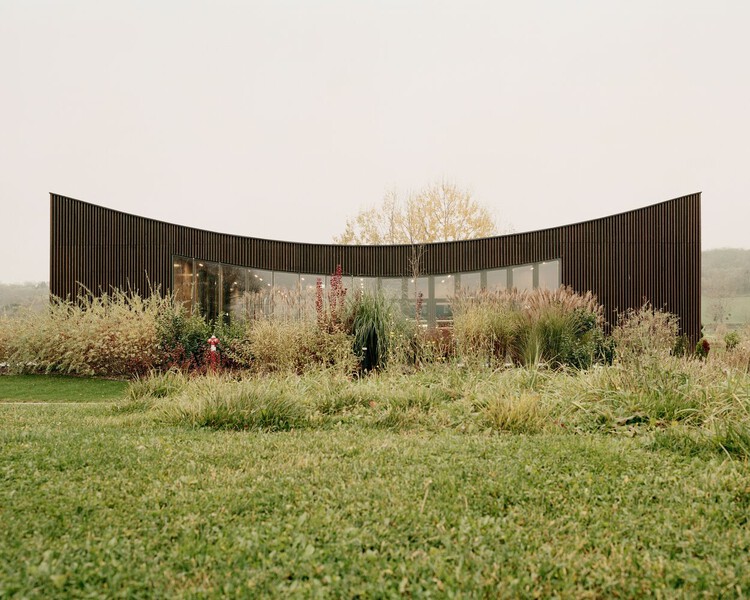
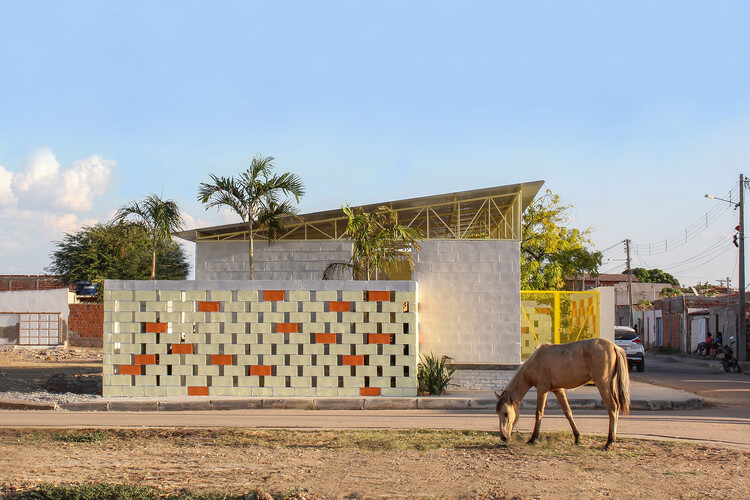
Industrial buildings are often expected to prioritize efficiency, production, and technical performance above all else. As a result, architectural quality is frequently treated as secondary to functional requirements. Advances in material systems, however, allow industrial facilities to balance both, creating buildings that respond to climate, improve working conditions, and establish a distinctive architectural identity.
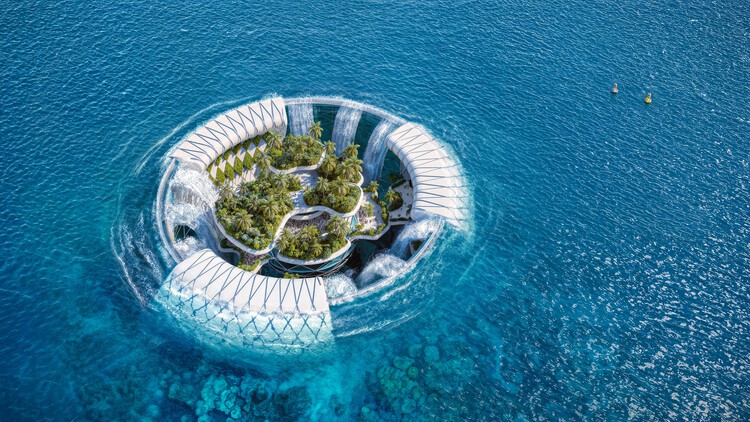
Getting away is a long-held fantasy and desire. In literature, film, and music, people have created imaginary journeys, possible worlds, and settings for enjoyment. It is that fantasy that fuels a specific architectural typology: the hotel. Against a backdrop of scrutiny of tourism, the climate costs of travel, and the competition and externalities associated with short-term rentals, that fantasy takes on even more striking forms. A hotel is no longer just a place to stay, but a space for enjoyment that can encompass a wide range of activities, such as entertainment, relaxation, sharing a meal, and even working. This diverse range of concepts takes on organic and impressive forms in the seven unbuilt projects compiled in this article, which range from urban hotels to beach resorts.
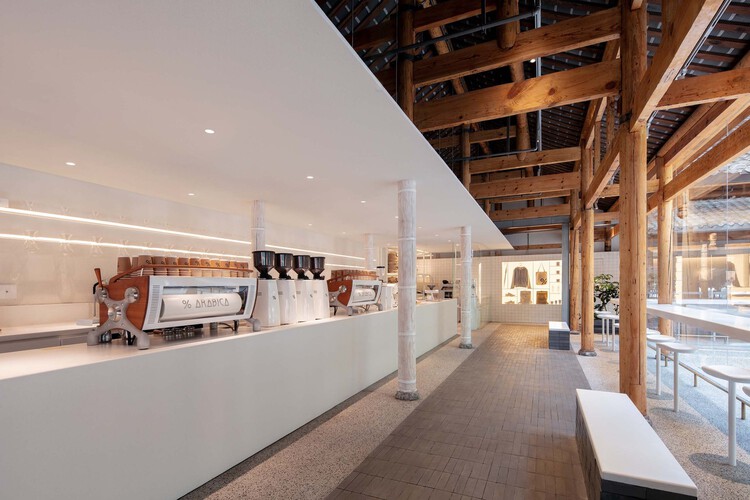
Craft in contemporary interiors is increasingly valuable in the way materials are joined and brought into relation with one another. As the appetite for fast, inexpensive, and profitable retrofitting grows, there is also a parallel desire for interiors that feel thoughtfully resolved: spaces where details are integrated, material assemblies are considered, textures transition with intention, and hardware is treated as part of the architectural language rather than an afterthought. In many contemporary Chinese interiors, craft operates quietly through the treatment of surfaces and structures: timber that retains its irregularity, terrazzo that records aggregate and handwork, or finishes that reveal the care of their making.
This is especially important in an era when digital images increasingly reward smoothness. Rendered interiors often appear seamless, frictionless, and complete before construction has even begun. Craft complicates this image. It introduces tolerance, texture, material resistance, and the sense that a surface has passed through human hands before becoming architecture. Imperfection is not necessarily a failure of precision. To the eye that knows how to read it, it can become evidence of process.
Hungary's architectural landscape spent the socialist decades being redrawn from above, its cooperative farms consolidated out of family plots and its standardized housing blocks distributed across the territory in a form that would have been identical anywhere else. The sociologist Virág Molnár, whose Building the State traces the political uses of architecture in postwar Hungary and East Germany, has made the case that this reshaping of the built environment was one of the political project's primary instruments and not a byproduct of it, a mobilization that carried through socialist modernization and into the transition that followed. The British critic Owen Hatherley, whose Landscapes of Communism explores the housing estates of Budapest alongside those of Warsaw and Kyiv, describes the far end of that same inheritance, where buildings have outlasted the ideology that commissioned them and remain occupied by people with little stake in defending the reasoning behind them.
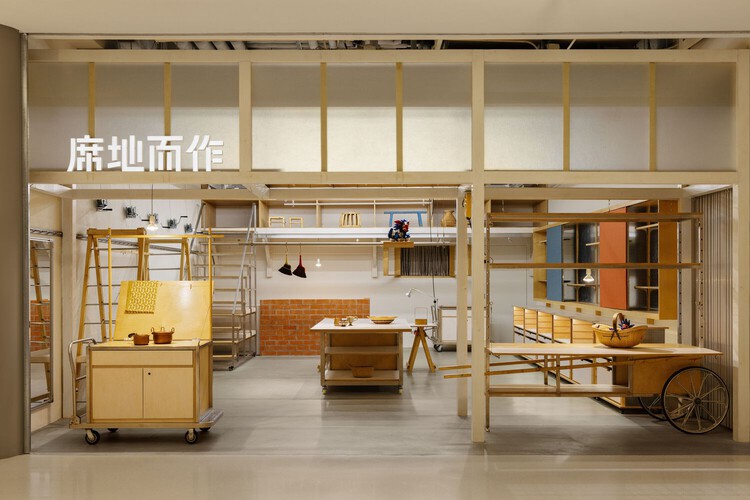
Craftsmanship carries the traces of those who shaped it, revealing how materials respond to different techniques and even offering clues about the tools used to create them. Within the architectural experience, however, craftsmanship can be expressed not only through materials and structures but also through space itself. Seeking to deepen and learn from the connections between design and execution, amass studio has explored the translation of informal, everyday construction methods into spatial systems across several of its projects. By integrating mechanisms, materials, structures, and furniture, the studio creates new spatial narratives in which the dialogue between the handcrafted and the industrial becomes mutually reinforcing. Beyond craftsmanship itself, then, why not make visible the processes that bring it into being?
Founded in Quito in 2017 by Martín Real and Florencia Sobrero, Taller General works across housing, rehabilitation, exhibitions, and community projects. What ties them together is less a type of building than a way of building: architects, builders, craftspeople, students, organizations, and communities move in and out of the process, and each project takes shape from whatever is already there.
This approach grew from direct experience with construction. Before Taller General was formally established, Real and Sobrero became involved with Actuemos Ecuador, one of the civil society initiatives formed in response to the earthquake that affected Ecuador's coast in 2016. Working within the realities of building connected architectural decisions to materials, budgets, available labor, and local knowledge, this established a relationship with construction that has remained central to the practice.
For years, advances in architectural visualization have been measured by image quality. Physically accurate lighting, sophisticated material systems, and real-time rendering have made photorealistic imagery an industry expectation. Yet architectural practice has evolved in a different direction.
Today, clients, consultants, engineers, and design teams contribute earlier and more frequently throughout the design process. Design reviews no longer simply present decisions. They increasingly become part of how those decisions are made.
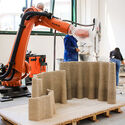
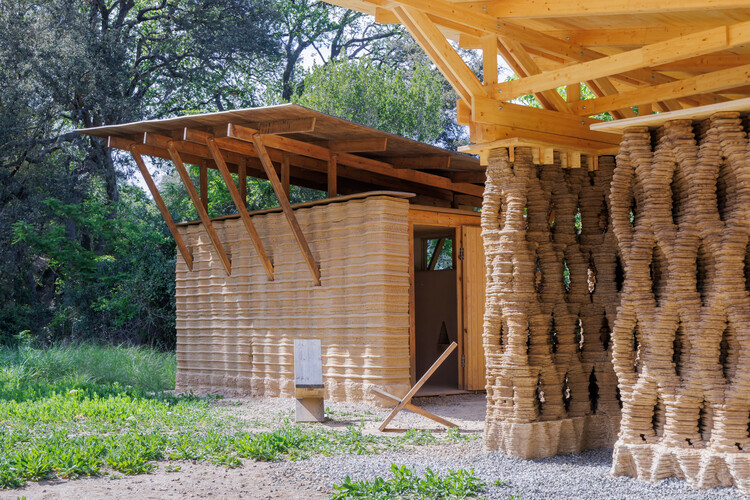
In 2021, a collaboration between the Italian architecture studio Mario Cucinella Architects and WASP, an Italian 3D-printing company, led to the development of TECLA: a house 3D-printed entirely from raw earth. Five years later, the technology behind it has grown, quietly spreading across several continents and design practices. By controlling the speed, angle, and path of the extruder nozzle, architects are able to create more than just walls. Throughout the years, they have been experimenting with how to shape the 3D-printed material into detailed surface motifs, reintroducing relief, texture, and intricate patterns directly into the structure. In this way, they are attempting to bridge earth-building traditions with digital computation, in an era where code is starting to influence form and material expression in architecture.
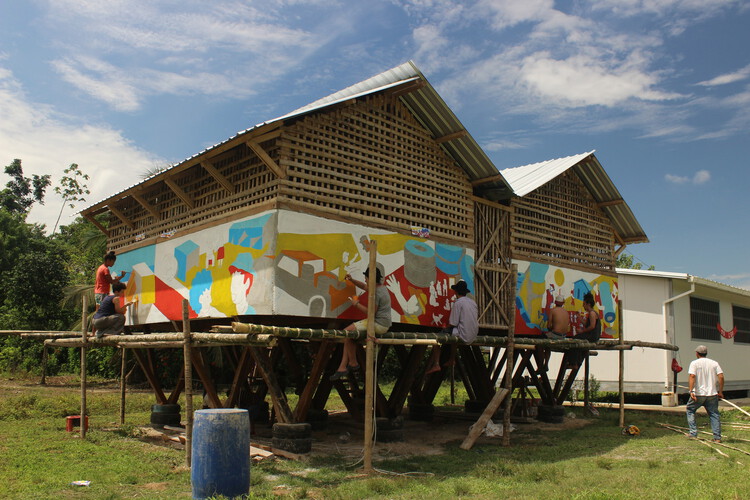
In 2021, the IBGE (Brazilian Institute of Geography and Statistics) released a survey regarding the number of cultural and social facilities in Brazil's cities. The findings were alarming: only 29.6% of Brazilian municipalities had cultural and social facilities such as museums, while theaters and concert halls were present in only 23.3% of cities. This overview speaks volumes about the scarcity of such spaces in Brazilian cities. In this context, when a women's cooperative in Maranhão or a volunteer group in Bahia decides to build their own cultural and community facility, the gesture not only fills a material gap but reclaims, on their own initiative, a right that should be guaranteed by public policy.
Architecture has long been understood as a discipline created by humans and for humans. But in We the Bacteria: Notes Toward Biotic Architecture, Beatriz Colomina and Mark Wigley challenge that assumption, arguing that "microbes invented architecture." From this premise unfolds an alternative history of architecture that shifts the focus away from human exceptionalism and toward the microorganisms that have shaped life, environments, and the built world for billions of years.
The book explores the idea that architecture cannot be understood separately from the microbial worlds that shape it, suggesting that "architecture inhabits humans just as much as humans inhabit architecture." Rather than inert objects, buildings emerge as dynamic ecosystems that Colomina and Wigley go as far as describing as "an expanded gut shared with others," where microbes, materials, people, and countless other forms of life continuously coexist, exchange, and evolve.
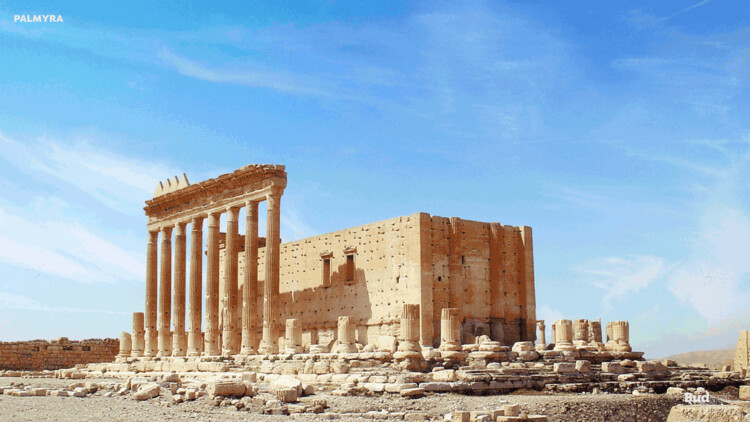
A war can erase a skyline overnight. Roofs collapse, streets become impassable, and landmarks that once oriented everyday life are reduced to rubble. The most profound loss often remains invisible. Buildings can be surveyed, photographed, scanned, and, eventually, rebuilt. The knowledge that produced them is far more fragile. It survives in the hands of stonemasons who understand how a limestone vault carries its load, carpenters who know how timber joints respond to seasonal movement, plasterers who mix lime by memory rather than measurement, and residents whose everyday rituals keep these buildings in use. When these people are displaced, killed, or forced to abandon their trades, reconstruction inherits a problem that no drawing or digital model can solve. Stone can always be quarried again. Recovering the knowledge to shape it takes much longer.
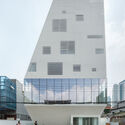
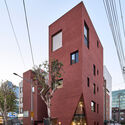
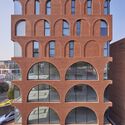
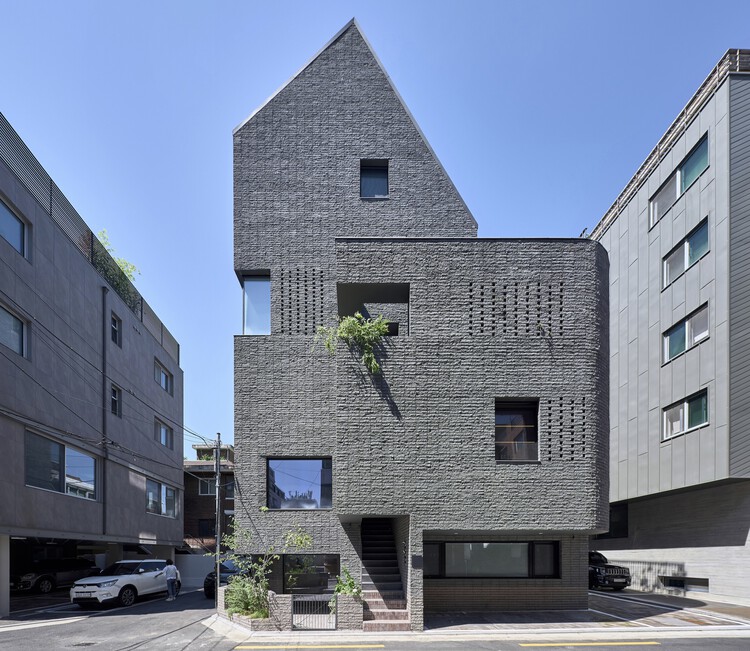
With over 80% of its population living in urban centers and a national density exceeding 500 people per square kilometer — soaring to over 15,000 in Seoul — South Korea faces intense competition for usable land. In response, contemporary Korean architecture offers compelling examples of mixed-use interventions that negotiate tight urban lots to blend public engagement with high-efficiency utility. By vertically stacking distinct programs, integrating public art centers, corporate headquarters, and commercial hubs alongside residential and other functions, these multi-layered developments transform spatial constraints into dynamic urban interfaces.
First Prize Winner: Below Shadows. Image Courtesy of Buildner
Buildner has announced the results of its fourth annual Home of Shadows international architecture ideas competition. The competition series is designed to focus on the vital interplay between light and shadow in creating functional and inviting living spaces. It highlights the importance of natural light in home design, essential for creating comfortable, inviting, and practical environments.
Light is viewed as a language through which architects communicate emotions in their designs, with shadows playing an equally significant role in influencing the ambiance of a space. The balance between light and shadow allows for the creation of spaces with depth and texture, setting different moods for various purposes. Often, this balance can be achieved through the strategic placement of windows and doors.
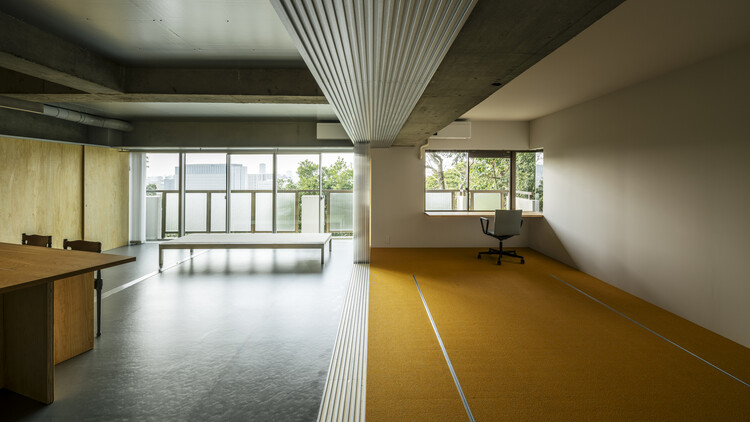
Sliding doors are often discussed through efficiency. They save the swing radius of a conventional door, allow compact rooms to function more easily, and help small apartments borrow a few extra centimeters of usable space. Yet in many interiors, their more interesting role is not only spatial economy. Sliding partitions transform the reading of the room itself. A bedroom, study, guest room, dining area, or workspace can appear when a panel is closed, disappear when it is opened, and remain ambiguous when the boundary is translucent or partial.
This makes the sliding partition especially useful in domestic contexts shaped by density, changing family structures, hybrid work, and climatic negotiation typical of regions like East and Southeast Asia. It allows privacy without permanence, enclosure without full separation, and openness without the loss of control. Unlike the fixed wall, it does not insist that a room has only one identity. Instead, it allows domestic space to respond to time: day and night, guests and family, work and rest, exposure and retreat.
In 1968, the furniture designer and RCA professor David Pye published The Nature and Art of Workmanship, a book built around a distinction between "workmanship of risk" and the "workmanship of certainty." Pye was not writing about architecture, and despite how the phrase gets used today, he was not really writing about hands versus machines either. He pointed out that a printing press, entirely mechanical, still depends on someone judging the ink and the register, while a woodturner working a lathe by hand can follow a template closely enough that almost nothing is left to chance.
Workmanship of risk, in Pye's definition, is any process where the outcome is not fixed in advance but depends on the judgment, dexterity, and attention the maker exercises while the work is still underway. Workmanship of certainty is the opposite condition, as the result is settled before production begins, locked into a jig, a mold, or a program, so that everything downstream is execution. Pye was careful to note that neither mode is inherently superior and that a numerically controlled machine, calibrated to leave room for drift, can sit closer to risk than a hand tool run to a fixed template.
As pillars of our cultural landscape, many masterpieces of the Modern Movement are often demolished, abandoned, or altered regardless of the context in which they are located. Preserving this architectural legacy highlights the role of architecture and design professionals in shaping built environments where continuity between the past and the present reinforces communities' sense of place. On Long Island, a coalition of advocates came together to save the A. Conger Goodyear House, which dates to 1938 and was designed by Edward Durell Stone. Considered one of the notable examples of the International Style in the United States, the house attracted significant attention throughout the 1940s, appearing in specialized journals, books, and popular publications.
Second Prize Winner: A stair, a spiral, or a park. Image Courtesy of Buildner
Buildner has announced the results of its third edition Architect's Stair international architecture ideas competition. The event invited designers to reflect on one of architecture's oldest and most symbolic elements: the stair. Beyond its functional role as a connector of levels, the stair was positioned here as a medium of architectural storytelling—an invitation to explore ideas of procession, sequence, space, and form.
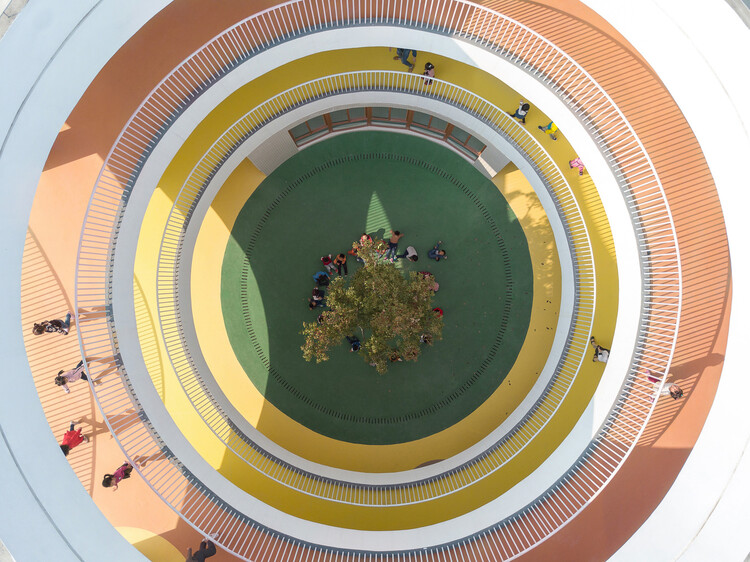
The center of a plan is never simply empty space. Once rooms and routes begin to organize around it, the center starts to structure the entire plan. It may contain a courtyard, a stair, a garden, or a shared room. It can also preserve something already present on the site or support a process that architecture does not fully control. What occupies this position determines how the surrounding spaces are arranged, connected, and used.
In A Pattern Language, Christopher Alexander, Sara Ishikawa, and Murray Silverstein describe shared spaces as most effective when they sit at the center of gravity of everyday life and remain connected to the routes people use most. Their argument suggests that a center matters not because it occupies the geometric middle, but because the surrounding rooms, paths, and activities give it spatial weight. The projects included here extend that idea beyond communal space, showing how the center can organize circulation, collective use, environmental systems, and the relationship between architecture and what already exists on the site.