Premium kitchen brand next125’s award-winning ‘Trolley’ brings multifunctional mobility beyond the kitchen and into other increasingly connected home spaces.
Premium kitchen brand next125’s award-winning ‘Trolley’ brings multifunctional mobility beyond the kitchen and into other increasingly connected home spaces.
.jpg?1612451460&format=webp&width=640&height=580)
In a past life, I completed a master's degree in semiotics, where I learned to pay attention to the words we choose. For example, open any book on Brazilian architecture and you will find subtitles that help organize our built environment chronologically: Indigenous Architecture, Colonial Brazilian Architecture, Imperial Brazilian Architecture, Brazilian Modern Architecture, Contemporary Architecture in Brazil. Notice the subtle difference: the word *Brazil*, which names this land, appears in every post-colonial period, but is absent from the one representing the original way of building in this place.
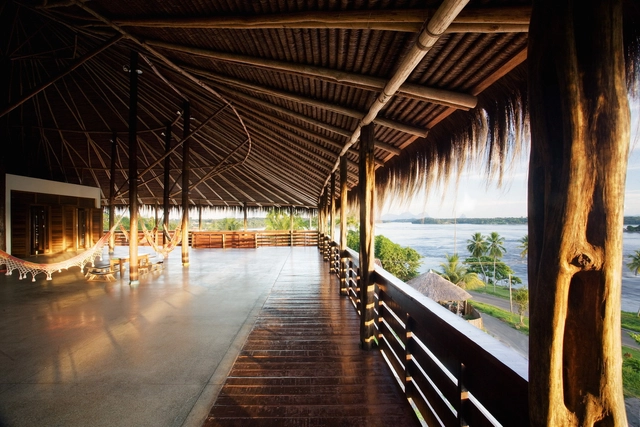
Architects, urbanists, and students in the field have much to learn from the construction models of the first inhabitants of the Brazilian territory, who have long built shelters adapted to their local contexts. Establishing a common set of characteristics for indigenous architectural solutions proves to be a highly superficial approach, as the shapes and dimensions of indigenous ocas or malocas vary depending on the community and the number of people living there. However, by studying the diverse examples of indigenous architecture, it is possible to rethink the notion of “advanced technology” and assimilate sustainable solutions adapted to environmental conditions.
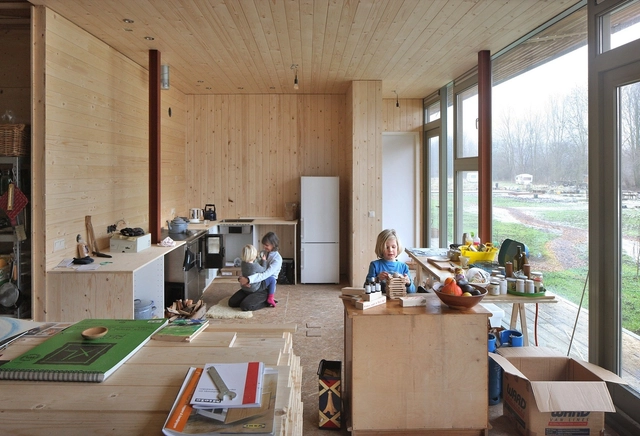
Many of us have already lived, are living, or will live in a shared student house - a good mix of cheap housing and intense socializing with friends and school mates. For a reasonable price, it is possible to have a single private room and share common spaces. In fact, not only university students are living this way nowadays. The concept of co-living is becoming more and more an attractive and effective solution.
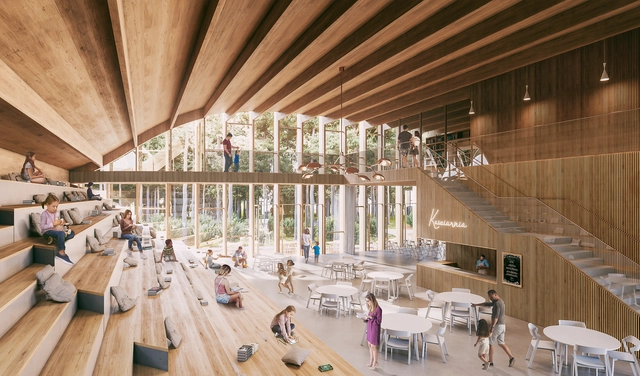
This week’s curated selection of the Best Unbuilt Architecture focuses on projects related to learning, research and culture submitted by the ArchDaily Community. From kindergartens to libraries and universities, the article explores how different spaces of knowledge around the world are designed to inspire their users.
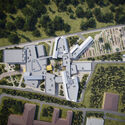
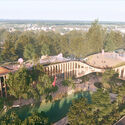
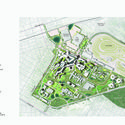
Featuring an array of scales and architectural programs, the list of projects includes a circular library in South Korea, a bridge-like kindergarten in Poland, as well a university in Tel Aviv that creates a series of opportunities for unmediated interactions and unscripted learning. The following are architectural programs that cater to the dissemination of knowledge in all its forms and to all age and social groups.
Occhio+ represents a broadening of the Occhio product portfolio into the larger contract sector, and, as such, is aimed explicitly at architects and planners.
_OMA.jpg?1616763505&format=webp&width=640&height=580)
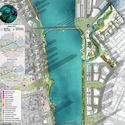
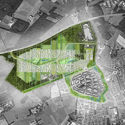
In any planning process, a series of documents—comprising both graphic and textual materials—establishes a framework for future development. In urban planning, the master plan stands out as one of the most common instruments for this purpose.
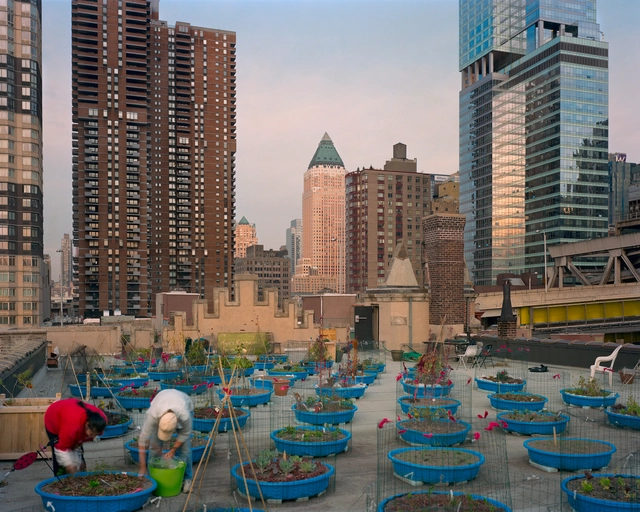
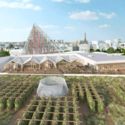
Twelve thousand years ago, our ancestors noticed that wherever a seed or fruit fell, a plant grew. Realizing they could intentionally plant seeds and harvest them later, they stopped migrating in search of food and settled permanently where they could cultivate. In doing so, they began establishing the world's first cities and inventing what we now call agriculture.
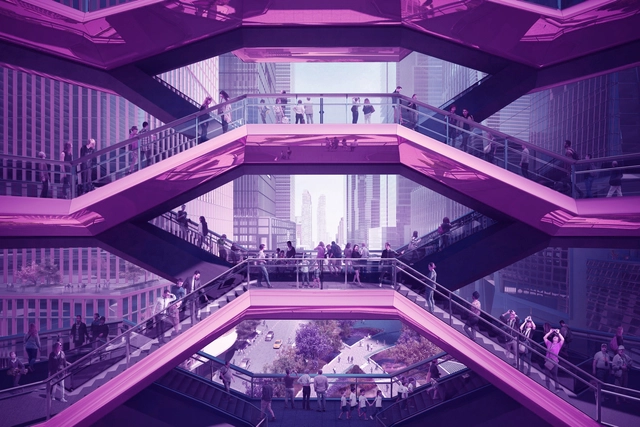
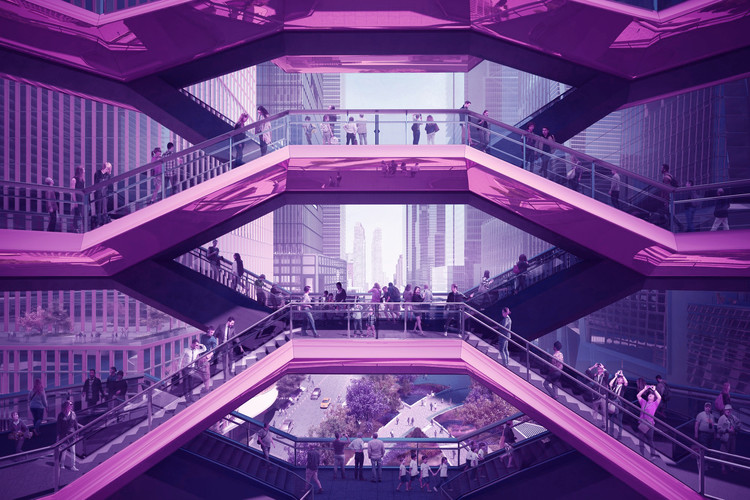
Fifty-one years ago, in 1970, a Japanese roboticist named Masahiro Mori came up with the concept of the “Uncanny Valley”. Around the same time, architectural renderings done using analog methods were still in vogue – collages and photomontages used to get ideas across to clients. A decade later, personal computers came along, and that saw the emergence of CAD and the wider adoption of digital rendering. Today’s architectural renderings are almost imperceptible from reality, with the increase in sophistication of rendering sofware. We struggle to tell the difference between what is a rendering and what is not – or rather we are able to tell a slight difference and it leaves us slightly uncomfortable, which brings us to Mori’s uncanny valley.
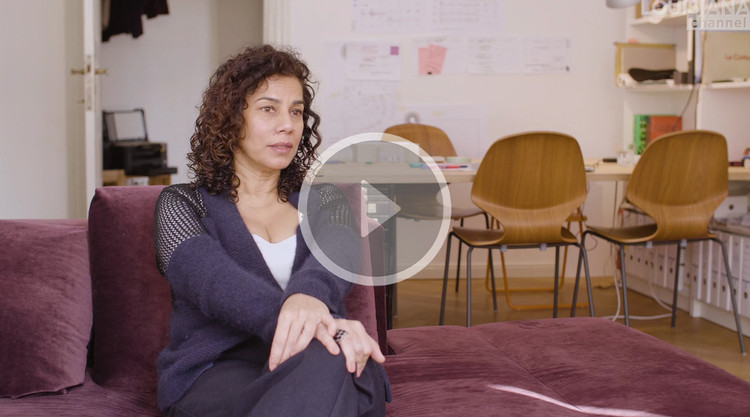
In Louisiana Channel's latest interview, Indian architect Anupama Kundoo shares her thoughts on the importance of balancing between traveling and being in solitude with oneself. "I think travel is important, but if you're not rooted yourself, you will go to a hundred places and not see anything", explained the architect, "traveling helps you step back from what you take for granted".
This episode of Architecture w/ Stewart explores the only five ways of organizing the plan of a building, at least they are the only ones according to Francis Ching as listed in the canonical text Form, Space, and Order. Each of the five: central, linear, radial, clustered, and grid, offer unique benefits and opportunities to architects, clients, or visitors. Some of the strategies are reserved for formal ceremonial buildings, while others are better for providing less rigid and more organic exploration by occupants. Some yield complete and autonomous forms while others can shrink or grow at ease. However, every single building is, in some way, a combination of these five basic strategies. Using paper cutout shapes, plastic human figures, and representative examples from history and recent constructions, Stewart demonstrates the value and possibilities of each organizational strategy.
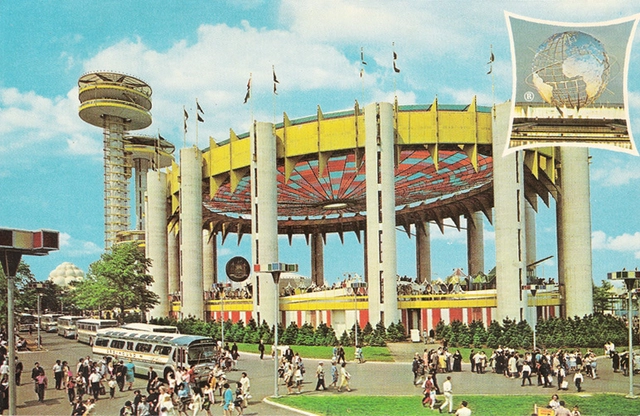
World’s Fairs seem to be a memory of the distant past. These mega-scale events once brought us culinary staples, technological advancements, and introduced some of the most notable examples of architecture and landmarks that impact how we think about design and construction even in the present day. Throughout the numerous fairs and expos that were held, architectural discourse itself significantly advanced and the pomp and circumstance that surrounded these muscular flexes of international innovation reimagined what life would be like in the decades to come.

INCLUSIVE ARCHITECTURAL PRACTICE is a pioneering international firm integrating architecture, interiors, landscape, and graphic design. Composed primarily of designers with extensive study, work, and life experience both in China and abroad, the team is dedicated to creating cutting-edge, inclusive architecture that brings future-oriented change to the educational, cultural, R&D, office, and commercial sectors.

Heritage buildings are precious treasures passed down to us by our ancestors. They are also intangible cultural gifts for all mankind, a discovery of the past. Nevertheless, as time changes, ancient Chinese architecture, either destroyed by the forces of wars or nature, is gradually losing its original glory, making the protection and restoration of ancient buildings an urgent matter in this contemporary world.

This article was originally published on Common Edge as "Living on the Edge."
I am on the edge. Not emotionally or psychologically—although this could be the case—but literally, physically, spatially, geographically. As I write this, I am sitting on the balcony of a hotel room in Miami Beach, overlooking the Atlantic Ocean. Behind me is the whole State of Florida and, indeed, the entire North American continent. In front of me: the boardwalk, a narrow beach, and then a lot of water—and not much else between here and Mauritania, a distance of more than 4,400 miles.

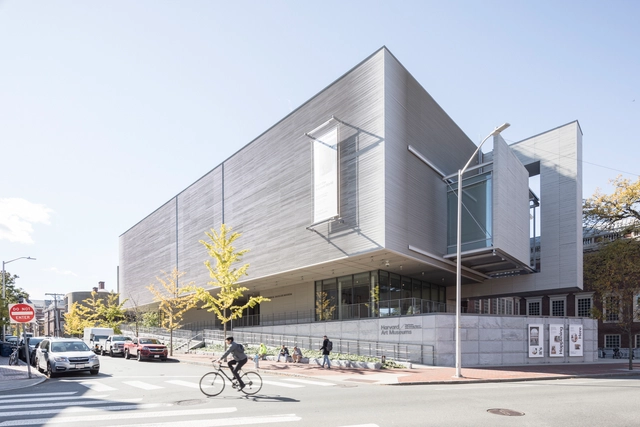
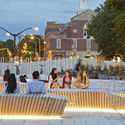
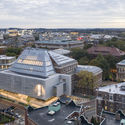
As the oldest institution of higher learning in the United States, Harvard has emerged as one of the world's most well-known universities. Organized into ten academic faculties and the Radcliffe Institute for Advanced Study, it is spread across 200 acres and centers on Harvard Yard in Cambridge. Developed along the Charles River adjacent to the Allston neighborhood of Boston, Harvard has the largest financial endowment of any academic institution. This has supported a number of different campus building projects across the university’s history.
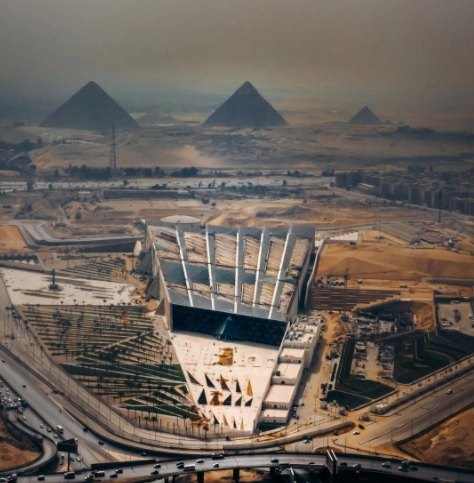
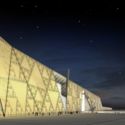
Designed by Irish architecture firm Heneghan Peng, the long-awaited Grand Egyptian Museum devoted entirely to Egyptology is set to open this summer, sitting on the edge of the Giza Plateau, 2 km away from the Pyramids. Considered as the largest museum in the world dedicated to one civilization, the cultural complex will accommodate about 100,000 ancient artifacts, and will include 24,000m² of permanent exhibition space, a children’s museum, conference facilities, educational areas, a conservation center, and extensive gardens inside and around the museum's plan.

Since its inception, Chapman Taylor has grown from a London-based practice into a multi-award-winning international group operating globally, maintaining a steady pace of progressive growth. While adapting to changing times, the practice has refined its founding principles while upholding traditional standards—a philosophy that has driven continuous business expansion and sustained the firm through several challenging periods.
.jpg?1612365973 "Barraca do Bem Viver. Image © Wanny Melo")
.jpg?1612365999 "Barraca do Bem Viver. Image © Wanny Melo")
.jpg?1612366021 "Barraca do Bem Viver. Image © Wanny Melo")
.jpg?1612366053 "Barraca do Bem Viver. Image © Wanny Melo")
.jpg?1612451460)


.jpg?1571925498 "Roof of the Socio-Environmental Institute - ISA / Brasil Arquitetura. © Daniel Ducci")







_OMA.jpg?1616763505)


.jpg?1618071837 "Courtesy of BIG")
.jpg?1618071843 "Courtesy of Alexis Christodoulou")
.jpg?1618576449 "Wall House. Image © Javier Callejas")
.jpg?1618576436 "Wall House. Image © Javier Callejas")