Still from "Ghost in the Shell" (2017) directed by Rupert Sanders. Image Courtesy of Strelka Magazine
In this article, originally published by Strelka Magazine and translated into English by Alexandra Tumarkina, Anton Khitrov sits down with Julia Ardabyevskaya to analyse the urban environment and spectacular world that the blockbuster movie Ghost in the Shell creates.
Ghost in the Shell, a new sci-fi blockbusterstarring Scarlett Johansson, is based on a 1992 manga comic and a more famous 1995 anime adaptation. In the film, humans are presented as obsessed with high-tech prosthetics, spending vast amounts of money on “self-improvement”. The story proceeds to show that the next step for humanity will be complete robotization; this new generation of human machines is represented by the movie's heroine – a female cyborg with an organic brain but a synthetic body. The action takes place in a futuristic city in which almost every surface is covered in holograms the size of a skyscraper, each and every one an advertisement.
For a discipline that thinks of itself as learned, scholarly research eludes the architectural profession. This is a long standing problem. “Failure,” John Ruskin wrote in his 1848 introduction to The Seven Lamps of Architecture, “is less frequently attributable to either insufficiency of means or impatience of labor, than to a confused understanding of the thing actually to be done.”
Roughly 150 years later, Harry Nilsson—surely singing to architects—opined in his song, Joy that if you’re unable to find the answer to a question, you may not have a question worth asking (and probably don’t have a problem worth solving). In between Ruskin and rock and roll, is William Peña, the author of the architectural programming guide, Problem Seeking, who nearly a half-century ago wrote that “you can’t solve a problem unless you know what it is.”
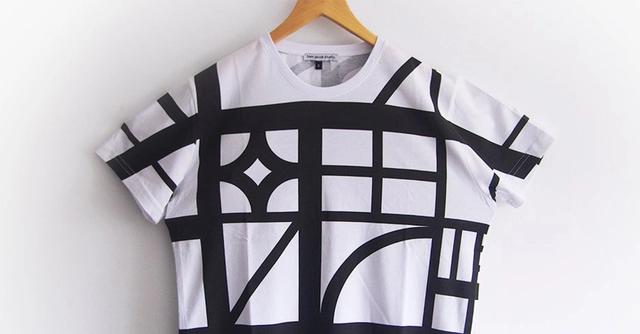
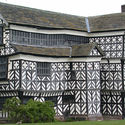
Sam Jacob Studio harbours a long-held fascination with Half-Timbering. In this essay, Jacob examines the historical, cultural, and aesthetic roots of the style.
It’s fair to say that “Mock Tudor”—that black and white facade treatment—has a less than glowing reputation. Take these sneering lines from John Betjeman’s Slough, for instance:
It’s not their fault they often go / To Maidenhead / And talk of sports and makes of cars / In various bogus Tudor bars.
(Perhaps those very same bars that Martin Freeman’s character in The Office notes have “a sign in the toilet saying: Don’t get your Hampton Court”.) “Mock Tudor” is often accused of “bogus”-ness, of lacking authenticity, of fakeness, and many other types of architectural sin.
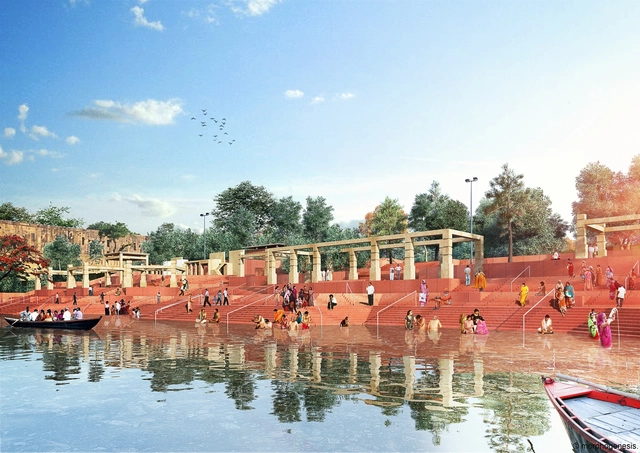
View of the Ghats. Image Courtesy of Morphogenesis
Delhi-based firm Morphogenesis has recently unveiled a proposal for a project that will rehabilitate and develop the ghats (a flight of steps leading down to a river) and crematoriums along a 210-kilometer stretch of the Ganges, India’s longest river. The project, titled “A River in Need,” is part of the larger National Mission of Clean Ganga (NMCG), an undertaking of the Indian Government’s Ministry of Water Resources which was formed in 2011 with twin objectives: to ensure effective abatement of the river’s pollution and to conserve and rejuvenate it.
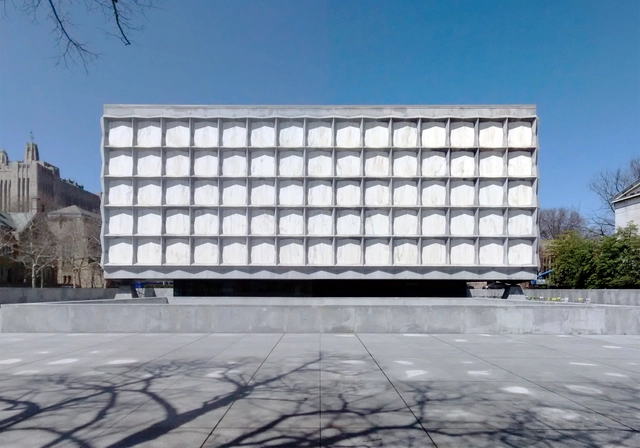
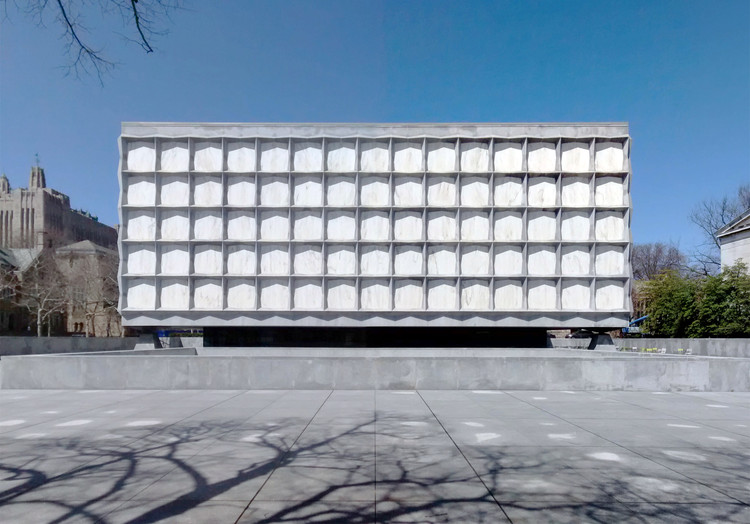
Cloistered by a protective shell of stone, the Beinecke Rare Book and Manuscript Library is one of the world’s foremost collections of rare manuscripts. Opened in 1963, the library is renowned for its translucent marble façade and the world-renowned glass book tower sheltered within – a dramatic arrangement resulting from the particular requirements of a repository for literary artifacts. This unique design, very much in the Modernist lineage but in contrast to the revivalist styles of the rest of Yale’s campus, has only become appreciated thanks to the passage of time; the same bold choices which are now celebrated were once seen as a cause for contempt and outrage.
Publishing is a cultural project, first collecting and condensing ideas and then diffusing them. In the architectural sphere, it is a pursuit which has often struggled to tackle an inherent paradox: is a book, for instance, speaking to an audience entirely “in the know” or one completely fresh to the concepts, ideas, and figures which tend to envelop the discourse – often resonating like records on repeat.
Unplugging architectural publishing from its conventional realm while, at the same time, seeking to challenge existing tropes in discourse, has been made at once easier and more challenging by the dawn—and subsequent acceleration—of online publishing. Yet the book, as opposed to the magazine—printed, bound, and representing a cohesive and finite exploration of thoughts—is beginning to benefit from more innovative models of circulation, responding to the territory presently occupied by it’s ubiquitous counterpart.Archifutures, an initiative of the Future Architecture Platform, has emerged as one of the more ambitious of these projects.
https://www.archdaily.com/876751/archifutures-future-architecture-platform-eu-represents-a-vital-infusion-of-oxygen-into-the-arena-of-architectural-discourseAD Editorial Team
Seniority is infamously important in the field of architecture. Despite occasionally being on the butt end of wage jokes, the field can actually pay relatively well—assuming that you’ve been working for a couple of decades. Even Bjarke Ingels, the tech-savvy, video-producing, Netflix-documentary-starring provocateur and founder of the ultra-contemporary BIG isn’t a millennial; at 42 the Dane is a full nine years older than Mark Zuckerberg.
As a result of this, it's common to lead a rich and complex life before finding architectural fame, and many of the world’s most successful architects started their careers off in an entirely different field. If you haven't landed your dream job yet, you may find the following list of famous architects' first gigs reassuring.
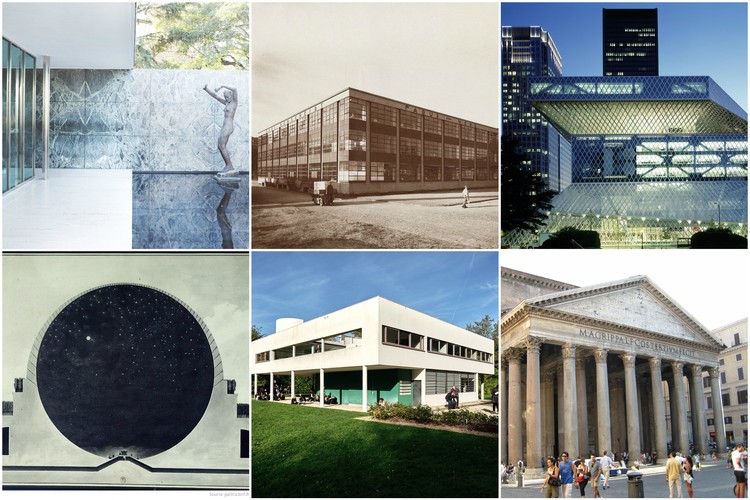
You’re a chipper young first-year student, still soft and tender in the early stages of your induction into the cult of architecture. Apart from fiddling with drafting triangles and furiously scribbling down the newfound jargon that is going to forever change how you communicate, you often find yourself planted in a seat, eyes transfixed to a projector screen as your professor-slash-cult-leader flashes images of the architecture world's masterpieces, patron saints, and divine structures.
Soon, you develop a Pavlovian response: you instinctively recognize these buildings, can name them at once and recite a number of soundbites about their design that have lodged themselves in your brain. Your professor looks on in approval. Since we here at ArchDaily have also partaken in this rite of passage, here are 15 buildings that we all recognize from the rituals of architecture school.
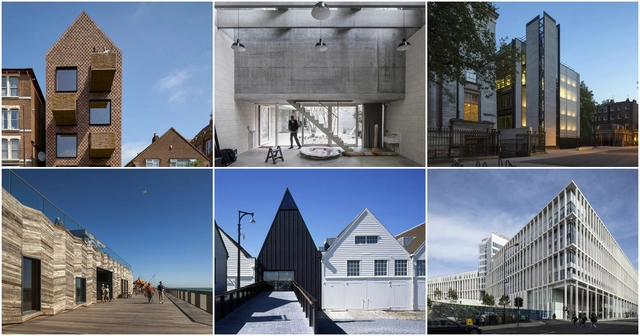
The 2017 winner of the UK’s most prestigious architecture award, the Stirling Prize, will be announced on October 31. Leading up to the main event, The Royal Institute of British Architects (RIBA) has released its list of the six shortlisted buildings, a collection that has left many critics scratching their heads. What the list left out seems to be as noteworthy as what was included, and while critics’ opinions on individual buildings differ, they seem mostly united in finding the overall list uninspiring and underwhelming. Read on to find out what they had to say.
It’s always fascinating when architecture breaks the bounds of the profession and becomes a topic of debate in the wider profession. Fortunately, thanks to the internet, there is no shortage of such occasions: whether it’s the click-seeking cluster of articles that found a client for an improbable cliff-hanging design or the forums that suddenly decided that most modern architecture looks “evil,” the viral trend treadmill ensures that there are plenty of opportunities for the layperson to offer their two cents on the output of our profession.
The flavor of the summer of 2017 is Attika Architekten’s Emoticon Facade. This thoroughly sensible and polite building has caught the public’s attention thanks to its inclusion of emoji-shaped decorative additions. While most of the internet has responded with heart-eyes, there’s no shortage of people for whom these carved emojis are a clear indication that architecture, and by extension society, and by extension all of life as we know it, is doomed, never to recover. Such an opinion is legitimized by articles like this one in Wired by Sam Lubell, who in reporting on the building found two experts willing to take a big old smiley poop on Attika Architekten’s work. Given the role that these experts play in directing the conversation among the public, their arguments bear analysis.
What becomes of public space once violence is normalized in a city? Though it is naive to believe that architecture by itself can present absolute solutions to complex social and political issues, it is also important to explore and understand its possibilities as an agent of social change, however small.
Sarah Williams Goldhagen has taken a big swing. Her new book, Welcome to Your World: How the Built Environment Shapes Our Lives, is nothing less than a meticulously constructed argument for completely rethinking our way of looking at architecture. A longtime critic for The New Republic and a former lecturer at the Harvard Graduate School of Design, Goldhagen has taken a deep dive into the rapidly advancing field of cognitive science, in an attempt to link it to a new human-centered approach to the built world. The book is both an examination of the science behind cognition (and its relevance to architecture), and a polemic against the stultifying status quo. Recently I talked to the author, who was busy preparing for a year-long trip around the world, about the book, the science, and the state of architectural education.
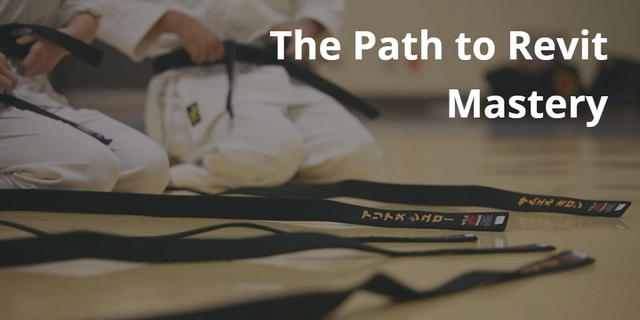
When applying for architecture jobs, it's often necessary to self-evaluate your skill at various tasks. However, with many of these tasks--especially software--it can be difficult to give an accurate assessment since you often don't know what you don't know about the skill. This article, originally published by ArchSmarter as "Where Are You on the Path to Revit Mastery?" will help you come to an objective assessment of your skill level with one of the most complex and powerful pieces of software available.
BAM! I shook my head and peeled my sore body off the mat. “Good,” the instructor said, “Now try it again but with a little more force.” My partner grabbed my arm, twisted his hips and threw me to the mat again. BAM! Fortunately, I remembered to tuck in my chin so my head didn’t slam against the mat.
“Alright, a little better that time”, the instructor commented. “Do it another ten times then take a break. You both need to master this throw for your upcoming belt test.” Just as I started to groan, thinking about how sore I was going to be tomorrow, my partner grabbed my wrist again and tossed me over his hip. BAM!
The UK’s postals service company, the Royal Mail, has launched a new special stamp series celebrating 10 buildings “that represent the renaissance of contemporary architecture in the UK of recent years,” including Zaha Hadid Architects’ London Aquatics Center, Herzog & de Meuron’s Switch House addition to the Tate Modern and Mecanoo’s Birmingham Library.
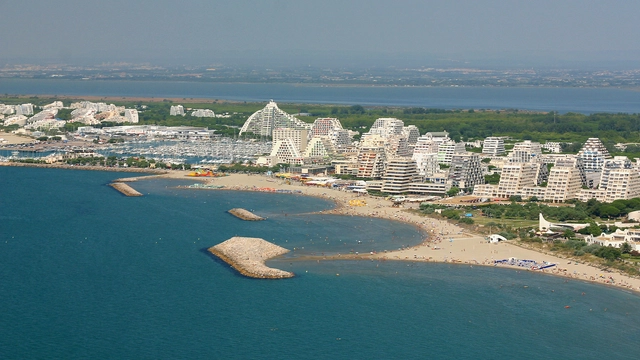
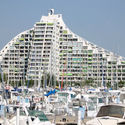
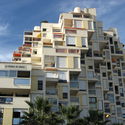
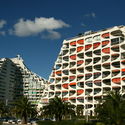
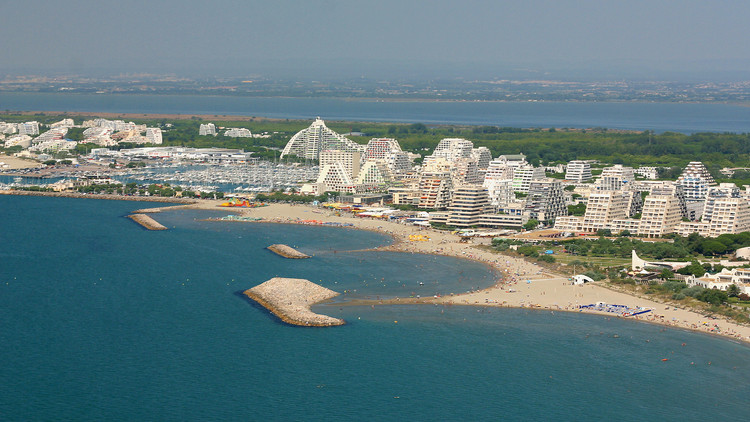
Given a chance to realize the architect’s dream of creating his own utopian city from a blank slate, French architect Jean Balladur was inspired by lost civilizations of the past. His designs recall the architecture of grand Mayan ruins with some added flair from the 1960s, all in the form of a seaside resort village in southern France, La Grande Motte. Balladur devoted nearly 30 years to his life’s work, which today welcomes over 2 million tourists annually.
This interview with the winner of the 2016 Pritzker Prize, Alejandro Aravena, was published last year in Issue 31 of Revista AOA, a Spanish-language magazine published by the Association of Architecture Offices of Chile. The interview was conducted by the editorial committee of Revista AOA—represented by Yves Besançon, Francisca Pulido and Tomás Swett—and is accompanied by photographs by Álvaro González. Aravena's openness and warmth allowed them to deliver a profound questionnaire about his thoughts and architectural projections, especially in light of Aravena's Venice Biennale which took place last year.
The Museo Soumaya, which opened to the public in 2011, is one of the more striking cultural landmarks on the skyline of Mexico City. Designed by FR-EE / Fernando Romero Enterprise, the space accommodates and displays a private art collection of nearly 70,000 works spanning the 15th to the mid-20th Centuries, including the world’s largest private collection of Auguste Rodin sculptures. In this photo-essay, photographer Laurian Ghinitoiu has turned his lens to this – a rotated rhomboid clad in a skin of 16,000 hexagonal mirrored-steel panels.
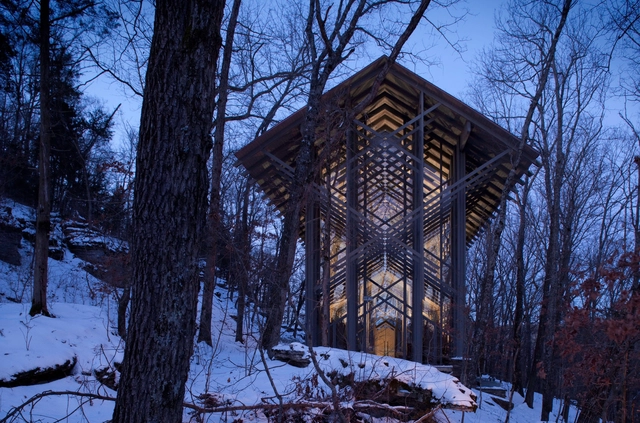
The third Arts & ArchitectureCase Study House has a noticeably different sensibility to that of many of the other designs in the series. While equally engaged with the goal of maximizing enjoyment of the natural surroundings, in this design the architects show more concern for privacy and protection.
The approach from the street is somewhat forbidding; aluminum siding presents an impenetrable front. Besides the front and garage doors, the small, high kitchen windows are the only visible openings, though it is possible to peer over the fence of grape stakes into the children’s private garden.











.jpg?1501324422 "Anne Hathaway's Cottage, England. © <a href=\"https://en.wikipedia.org/wiki/Tudor_architecture#/media/File:Anne_Hathaways_Cottage_1_(5662418953).jpg\">Wikimedia Commons user Tony Hisgett</a> licensed under <a href=\"https://creativecommons.org/licenses/by-sa/2.0/\">CC BY 2.0</a>. Image Courtesy of Tony Hisgett")

















.jpg?1501130282&format=webp&width=640&height=580)











.jpg?1500381046&format=webp&width=640&height=580)
.jpg?1500381347 "© Laurian Ghinitoiu")
.jpg?1500381865 "© Laurian Ghinitoiu")
.jpg?1500382233 "© Laurian Ghinitoiu")
.jpg?1500381480 "© Laurian Ghinitoiu")
.jpg?1500381046)
