With one of his largest installations to date, American artist James Turrell has transformed the rotunda of Frank Lloyd Wright’s iconic Guggenheim Museum into a mesmerizing Skyspace. Shifting between natural and artificial light, Aten Reign - James Turrell’s main attraction - illuminates the central void with a brightly colored, banded pattern that imitates the museum’s famous ramps. This presents a dynamic perceptual experience in which the materiality of light is exposed.
More images of the luminous and immersive Skyspace after the break.
Scheduled for completion later this year, Bosco Verticale, by Boeri Studio, will be the world’s first vertical forest. The project’s inspired many supporters, but also many detractors. Speaking to its controversiality, Lloyd Alter, the architect, sustainable design enthusiast, and managing editor of Treehugger, called it “the rendering that launched a thousand blog posts.”
And perhaps no blogger caused more stir in the architecture community than Tim De Chant, who implored “can we please stop putting trees on skyscrapers”? De Chant’s article set off a maelstrom of comments from ArchDaily users, who vigorously debated both for and against the idea of putting trees on buildings.
To get to the bottom of this, we talked with Lloyd Alter himself about vertical forests and the real challenges and benefits they present. Lloyd is a regular contributor to Inhabitat, The Huffington Post and numerous other publications; he also teaches at Ryerson University School of Interior Design. Read on for Lloyd’s take on this controversial trend, after the break.
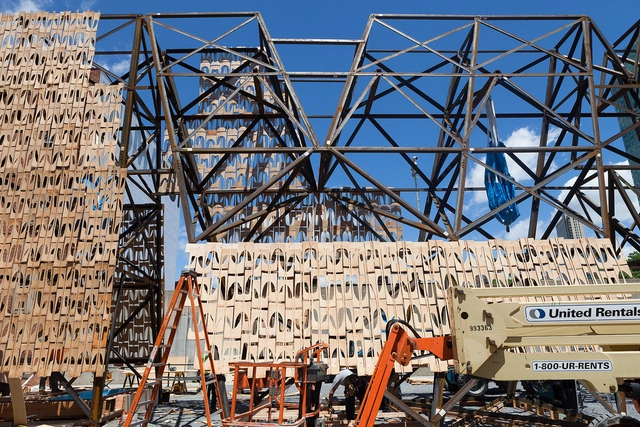
Starting this Saturday, the public will finally be able to admire the winner of this year's Young Architects Program -Party Wall - at the MoMA PS1 courtyard in Long Island City. Every Saturday this summer through September 7, Party Wall will be the multi-functional backdrop (at once wall, water feature, shading and seating storage device) for Warm Up 2013, an outdoor music series.
We spoke with Party Wall's designer, Caroline O'Donnell, principal of CODA, just this morning; she told us that although much has been made of Party Wall's ingenious material (skateboarding scraps) and multi-functionality, it's most important feature is it's referentiality to the urban language of Long Island City.As O'Donnell told us: "we started to understand the relationship between the wall and the other languages—Long Island City, the billboards, the graffiti. We realized we had entered into a dialogue with a bigger urban context."In fact, the wall itself is a legible sign - written in the shadow it forms.
Read our interview with O'Donnell on Party Wall's ingenious design, after the break...
"It's not where you start in life, it's where you end up and all the places you went in between." - United States General Colin L. Powell
For the closing keynote speaker of the stimulating, three-day “Building Leaders” convention in Colorado, the American Institute of Architects (AIA) selected one of America’s most admired public figures to share wisdom and insight to becoming a great leader.
General Colin L. Powell, a first-generation American born from Jamaican immigrants in 1937, is the epitome of the American dream. Starting life in the South Bronx, Powell paved his way to becoming a highly respected, four-star general in the United States Army and the first African American to serve as Secretary of State. A natural storyteller, Powell effortlessly captivated the audience of architects with a series of experiences and lessons he had learned throughout his lifetime of service.
General Colin Powell’s top ten lessons of leadership after the break...
“When you build a beautiful building, people love it. And the most sustainable building in the world is the one that’s loved.” - Cameron Sinclair, Co-founder of Architecture for Humanity
Cameron Sinclair is a man who sustains his passion for helping improve the world, one project at a time, by tapping into the skilled enthusiasm of like-minded architects from all over the globe. Since co-founding of his non-profit organization with Kate Stohr in 1999, Sinclair and his interdisciplinary teams of citizen architects have provided shelter for more than two million people worldwide.
Under his leadership, Architecture for Humanity’s infectious mantra has inspired thousands to join its cause every year, allowing the organization to expand at an unbelievable rate and become the exemplar of public interest design. Considering this, it is no surprise that Sinclair was selected to be the keynote speaker on day two of the 2013 AIA National Convention.
As his speech continued the momentum of yesterday’s inaugural presentation, in which TOMS founder Blake Mycoskie shared his success story of “doing well by doing good,” Sinclair urged architects to hold close the true value of their profession.
Learn what Cameron Sinclair believes to be the true value of architects after the break.
Those of us associated with the building of cities are often asked to do tricky things. Build a 632-meter-high skyscraper and give it the world’s tallest and fastest single elevator, traveling at speeds of more than 40 mph so folks can soar to the top in fewer than 40 seconds with no transfers. Build a data center in Houston that makes its own electricity (handy during a hurricane) and turns rain water into an asset. Design an office building that makes people happy to come to work.
But one of the biggest challenges facing us today requires, perhaps, one of our best magic tricks of all time: Creating open space when there seems to be none left.
How do we give people in cities public spaces (parks, gardens, squares, even wide tree-lined streets) to gather and room to breathe in our increasingly built-up and built-out urban environments?
More on David Gensler's thoughts on reutilizing public space, after the break...
In the 20th century, it was going to be the site of the world's tallest skyscraper, but it became the world's largest hotel. In 2006, the hotel was replaced with a fence, the largest advertising space in all of Europe, enclosing acres of undeveloped, highly valuable land. In 2014, it will become Moscow's first - and most important - park in over 50 years.
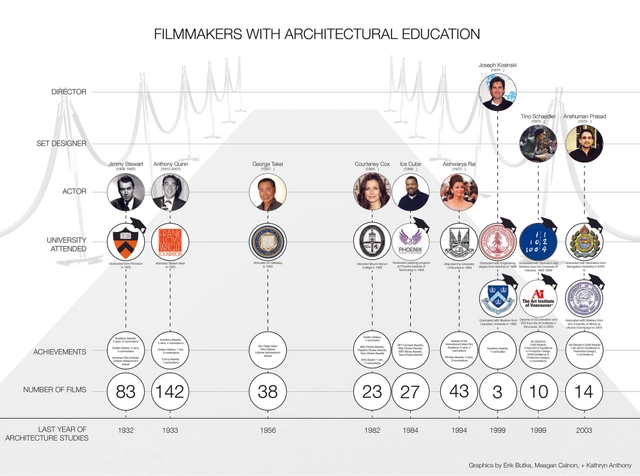
Courtesy of Erik Butka, Meagan Calnon & Kathryn Anthony
In recent years, high profile news outlets like The New York Times and CNN have featured architects’ struggles by citing the dire unemployment statistic of 13.9% for recent graduates, the highest of any college major. Many architecture firms are still reluctant to hire new full-time members to their team, and all too often students and recent graduates remain without work. Since approximately 40% of architecture graduates pursue work outside of the architectural profession, and the National Council of Architectural Registration Boards (NCARB) currently reports 26,850 students enrolled in accredited architecture programs, we can assume that over the following years 10,000 students trained as architects will forge their own path in a variety of other occupations.
One of the most creative, high profile fields that can offer an architect a wide range of positions is the film industry. And, in fact, those with architectural backgrounds have been making the transition into the filmmaking industry for decades. Our timeline showcases a sample of those with an architectural education who have enjoyed enormous success in the filmmaking industry over the last 80 years as actors, set designers, or directors.
You can read more about their stories (including how Jimmy Stewart went from architecture to acting), after the break...
https://www.archdaily.com/388732/star-architects-the-story-of-4-architects-who-made-it-in-hollywoodErik Butka, Meagan Calnon & Kathryn Anthony
In a recent interview, Spiegelspeaks candidly with three architects who have one thing in common: projects in Germany plagued by severe delays and spiralling costs. Christoph Ingenhoven is head of Ingenhoven Architects, designers of train station Stuttgart 21. Meinhard von Gerkan of Gerkan, Marg and Partners is responsible for the Berlin Brandenburg International Airport, and finally Pierre de Meuron represents Herzog & de Meuron, designers of Hamburg's Elbphilharmonie.
These projects are well known in Germany as much for their designs as for their construction costs, and Spiegel is not shy about getting to the bottom of these controversies. Of course, the architects themselves have their own ideas about the bad press (namely that they're being unjustly blamed). Meinhard von Gerkan, for example, says:
"It's a big mistake to voluntarily serve as a figurehead, because then everyone knows whom to target. We are these figureheads, not the clients and not the construction companies. And we are liable for everything."
More of these gems from the architects, after the break....
A preliminary document reveals that, if passed, The Law of Professional Services (LSP) will modify labor regulations in order to allow engineers, or really any one "competent" in construction, to take on the work of architects:
“Exclusivity is eliminated. Architects or engineers with competency in construction will be able to design and direct projects, including residential, cultural, academic or religious buildings. [...] If a professional is competent enough to execute one building’s construction, it is understood that he/she will also be capable of executing other kinds of buildings, regardless of its intended use.”
Unsurprisingly, Spanish architects have risen up against the law, mobilizing both physical protests as well as social media campaigns. Even Pritzker-Prize winner Rafael Moneo has offered his opinion on the matter...Hear what Moneo has to say, after the break...
After the project was announced, we reached out to Christian Sottile, the Dean of the School of Building Arts at the Savannah College of Art and Design,who gave us his takeon why the project is a terrible step for architecture and urban living.
But not everyone is skeptical about Sky City One.Stan Klemanowicz,an architect and planner in Los Angeles with Project Development Associates, reached out to tell us why the project is actually revolutionary. He has allowed us to publish his response to Mr. Sottile's critique.
Read Sottile's and Klemanowicz's conflicting opinions, after the break...
https://www.archdaily.com/389967/china-s-pre-fab-skyscraper-revolutionary-or-mad-two-architects-debateJulie Zeveloff, Business Insider
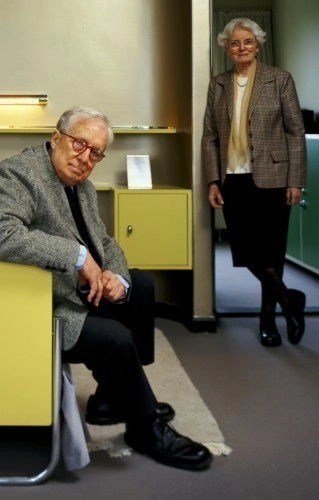
Lord Palumbo, the Chair of The Pritzker Architecture Prize, has responded that this would be impossible due to the way that Pritzker Juries deliberate: "Pritzker juries, over time, are made up of different individuals, each of whom does his or her best to find the most highly qualified candidate. A later jury cannot re-open, or second guess the work of an earlier jury, and none has ever done so."
The letter goes on to suggest that Ms. Scott Brown is, however, still eligible for a Pritzker of her own; it also thanks Assouline-Lichten and James for "calling directly to our attention a more general problem, namely that of assuring women a fair and equal place within the profession. [...] one particular role that the Pritzker Jury must fulfill, in this respect, is that of keeping in mind the fact that certain recommendations or discussions relating to architectural creation are often a reflection of particular times or places, which may reflect cultural biases that underplay a woman’s role in the creative process. Where this occurs, we must, and we do, take such matters into account."
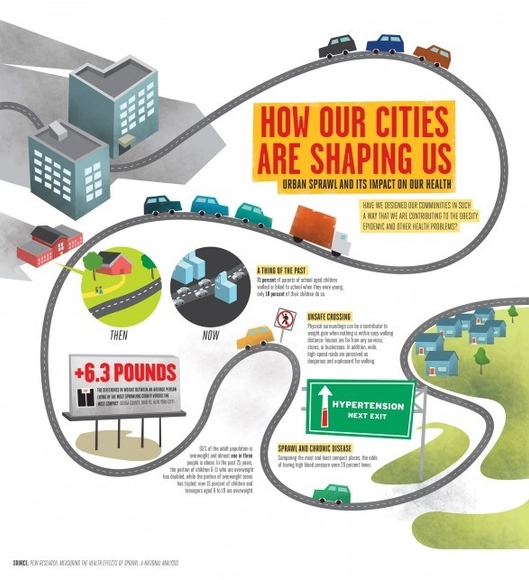
Architects and city planners are becoming more and more familiar with the health effects of our built environment. This to-the-point infographic designed by Chris Yoon cites a few ways in which mid-20th century city planning trends have contributed to a growing obesity problem in the United States. This data has alarmed scientists, planners and city officials into stressing the importance of redesigning the physical spaces so as to encourage physical activity and healthy choices.
Over the last two weeks, the world has witnessed history unfold in a small park in the heart of Istanbul, Taksim Square. What started out as a peaceful protest to save Gezi Park and its trees from destruction has turned into a country-wide (and, to some degree, worldwide) movement that rejects the ever-increasing autocratic tendencies of Prime Minister Recep Tayyip Erdogan.
The urban policies and projects that PM Erdogan and his government have been loutishly implementing in Istanbul offer only a few examples of the way this government has manifested its undemocratic attitudes. In that regard, it would be misleading to consider the protest over Taksim and Gezi Park as an isolated incident. Instead, development over Istanbul’s quintessential square constitutes the last straw in a series of neo-liberal policies, themselves the result of a century of history, that have shaped Istanbul over the course of the last decade.
The Royal Institute of British Architects (RIBA) has unveiled the 2013 RIBA National Award winners, a shortlist of 52 exemplars in design excellence from the UK and EU that will compete for the prestigious RIBA Stirling Prize. This year’s award winners were selected from practices of all sizes and projects of all scales, ranging from a beautifully-crafted chapel in the back garden of an Edinburgh townhouse to the innovative yellow-roofed Ferrari Museum in Italy. Notably, one third of the UK winners are exceptionally designed education buildings.
The 43 UK buildings that have won an RIBA National Award are:
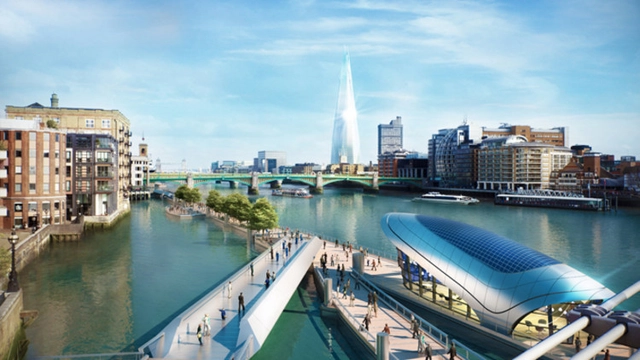
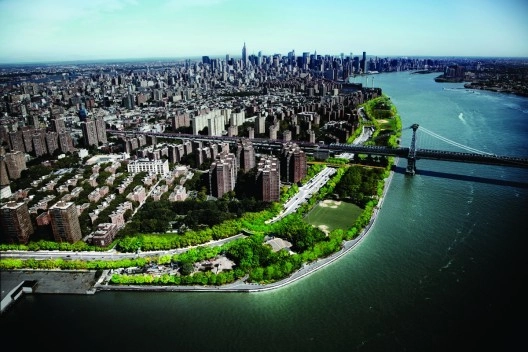
East River Blueway Plan proposed by WXY Studios provides a natural waterfront along the existing and vulnerable FDR in NYC's Lower East Side
Immediately after Hurricane Sandy hit the North American Eastern seaboard last October, NYC embarked on a debate on the ways in which the city could be protected from future storms that climate scientists predict will escalate in frequency. Engineers, architects, scientists from myriad disciplines came up with proposals, inspired by international solutions, to apply to this particular application. We were presented ideas of sea walls, floating barrier islands, reefs and wetlands. Diverse in scope, the ideas have gone through the ringer of feasibility. Should we build to defend or build to adapt?
On Tuesday, NYC Mayor Bloomberg announced a plan that includes $20 billion worth of both: a proposal of removable flood walls, levees, gates and other defenses that would be implemented with adaptive measures such as marshes and extensive flood-proofing of homes and hospitals. We have learned over the years that resilience must come with a measure of adaptability if we are to acknowledge that climatic and environmental conditions will continue to challenge the way in which our cities are currently being developed.
What does this plan entail and what can we imagine for the future of NYC? Find out after the break.
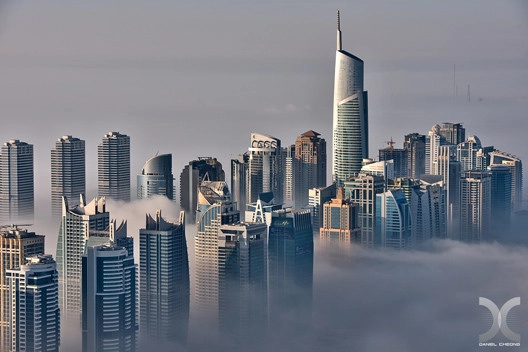
We have entered an era of ‘modernization’, led by the Western world. In our times of unprecedented demographic expansion, infrastructural development is racing to meet demand with supply. As architects and designers, we have been pressured to embrace consumerism. Globalization has been adopted as a solution to the problem. Developing countries have equated economic prosperity and success to the adoption of ‘contemporary architecture’ in a bid to demonstrate leadership and innovation. And voila, we have a palette of sleek buildings to meet the population’s needs, as well as to “modernize” our landscape. Surely, mimicking the formula of technologically advanced countries will project us into the public eye.
Well it certainly does, but not necessarily in a positive way. It is creating a global architectural uniformity as designs promoted by Western ‘architectural gurus’ are being replicated around the world. We are neglecting vibrant contextual elements and hence constructing a generic world lacking humane facets of design. Would it not be a tragedy if Paris, Venice and Barcelona all looked similar? Would we not mourn the vibrancy of Parisian streets around the Eiffel Tower, the romanticism of Venetian waters and the monumental Sagrada Familia that dominates the skies of Barcelona? Do we really want a world that is basically a mirror image of the US?