Have you ever considered working abroad in China? The thought may be daunting, but there are plenty of reasons why you should take that thought and turn it into a reality. Originally published on Arch-Shortcuts, here are five reasons to take the leap -- as written by Arch-Shortcuts founder Chen Tang, an architect currently working in Hong Kong.
Forget about doing houses and deck extensions! Projects in China consist mainly of large schemes and developments – a small/medium sized project in China would be considered a significant project in other countries. You will be more focused on the overall image and conceptual design as opposed to intricate details – due to the short timelines of a project, which leads to our next point.
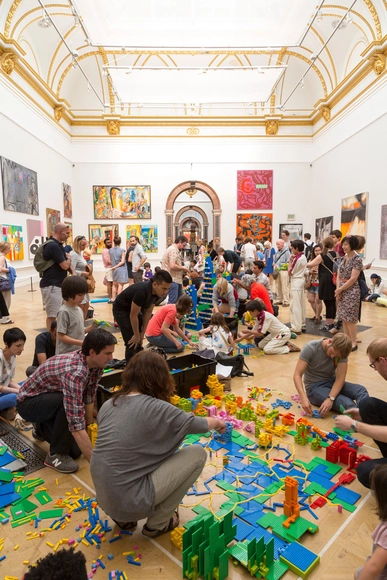
As part of the 2014 London Festival of Architecture, teams of architects from the four of the most recent Stirling Prize winning British practices were challenged with creating the most imaginative piece of a city - out of LEGO. Each team began with a carefully laid out square on the floor of the largest gallery of the Royal Academy Summer Exhibition, at which point they were given just one hour and 45 minutes to create an urban masterpiece out of blocks. Each group of architects worked alongside students from the Royal Academy’s attRAct programme, which offers A-level art students the chance to engage with art and architecture. An esteemed panel of judges ultimately selected the team from Zaha Hadid Architects as victorious, who "considered London on a huge scale and used curving buildings of different typologies which echoed the shape of the Thames."
Read more about the brief and the other participating entries after the break.
The following article, written by Jacob Dreyer and originally published in The Calvert Journal as "Maximum city: the vast urban planning projects of Soviet-era Russia are being reborn in modern China," analyzes a fascinating phenomenon: the exportation of Soviet urbanism — or rather Stalinist urbanism — shaping Chinese cities today.
As I cycled to work on 20 May this year, the Yan’an Expressway — Shanghai’s crosstown artery, named after the utopian socialist city that was Mao Zedong's 1940s stronghold — was eerily silent, cordoned off for a visit by President Vladimir Putin. We discovered the next day that the upshot of his visit was the signing a $400bn contract with China for the export of gas and petroleum. As President Barack Obama had once promised he would, Putin made a pivot to Asia, albeit on a slightly different axis. From Shanghai, the terms of the deal — which was immensely advantageous to China — made it seem as if Russia was voluntarily becoming a vassal-state of the People’s Republic, making a reality of both the predictions of Vladimir Sorokin’s dystopian fantasy novel Day of the Oprichnik and of Russian scare stories about Chinese immigrants flooding into Siberia.
The irony is that models of society imported from Russia during the Soviet period — as realised in popular culture, legal apparatuses and, of particular interest to the cyclist, in architecture and urban planning — are as influential as ever in China. If, as Chinese philosopher Wang Hui observed in his book The End of Revolution, Socialism was the door through which China passed on its voyage into modernity, then it was Russia that opened that door, by exporting models and expertise that laid the foundation for much of what constitutes modern China.
We will be publishing Nikos Salingaros’ book, Unified Architectural Theory, in a series of installments, making it digitally, freely available for students and architects around the world. The following chapter discusses the extent to which architecture can be considered successful, i.e. adaptive to its specific locality. Although recognizing the merits of “Critical Regionalism,” Salingaros here explains why that framework is not enough to analyze architecture in terms of its environmental, cultural and emotional impact. If you missed them, make sure to read the previous installments here.
Suppose that we have successfully documented and catalogued all form languages, including those from vernacular traditions, past times, and contemporary practice. A scientific approach requires the next step, which comprises both analysis and classification. A catalogue is a useful store of information, but it is only the beginning of a systematic study.
What do some form languages have in common, and on what qualities do some of them differ? One measure is their degree of complexity, as documented by the length of description of the form language. Another is adaptation to locality. How far does a form language justify itself as being regional? Here, regional is the opposite of universal.
It is therefore useful to classify form languages by how much they adapt to a certain locality. If it does adapt, each language will, of course, adapt to its own specific locality: what we measure is how good that adaptation is. Success of adaptation is measured if buildings are energy efficient in the low-tech sense, so that the majority population can profit from them. By contrast, high-tech energy efficiency may be very useful, but it usually relies upon imported technology and materials, and is thus global, not regional.
When I set up the Global Architecture Graduate Awards (GAGAs) at The Architectural Review in 2012, it was with the insight that, at its best, the work produced at the start of a career can be its most daring and projective. At that fertile threshold between the academy and practice, uncertain graduates can be years ahead of more assured and mature colleagues in the creative risks they are willing to take.
This time-lapse video, entitled "Above LA," is Chris Pritchard's love letter to Los Angeles. Filmed over the course of two years, Pritchard sought out locations to showcase the city in a way people rarely get to see – from above. Some of the views were easy to seek out, while others involved some exploratory hiking and trespassing. He encourages "everyone - lifelong Angelenos, transplants, visitors - to hit the trails, drive the mountain roads, find a reason to get on top of a high-rise. From the basin to the valley, this city offers so many opportunities to rise above and look down. Never stop exploring."
Talk about Modernist Japanese architecture, and you can hardly fail to bring up Tokyo's Hotel Okura. Built in 1962 under the design direction of Yoshiro Taniguchi, Hideo Kosaka, Shiko Munakata, and Kenkichi Tomimoto, the hotel has long been a landmark not only for the city, but for Japan. Now, however, the hotel's owners have decided that the main building for the hotel will be demolished in September of 2015, with a new hotel taking its place. To learn more - including how to sign the petition for preservation - keep reading after the break.
"I look for inspiration (or opportunities) from people and places rather than looking for people and places to host my ideas." -- Julia King
Regardless of whether or not Shigeru Ban deserved to be awarded the profession's highest prize this year (there are vociferous opinions on both sides of the issue), there is one thing that is certain: architecture is going through some serious growing pains. And perhaps no one encapsulates architecture's shifting direction better than Julia King, AJ's Emerging Woman Architect of the Year.
Pursuing a PhD-by-practice via the Architecture for Rapid Change and Scarce Resources (ARCSR) in the slums of India, Ms. King realized very quickly that the last thing these communities needed was architecture - or rather, what is traditionally considered "architecture." After all, community-members were already experts in constructing homes and buildings all on their own. Instead, she put her architectural know-how towards designing and implementing what was truly needed: sewage systems. And so - quite by accident, she assured me - the title "Potty-Girl" was born.
In the following interview, conducted via email, I chatted with Ms. King about her fascinating work, the new paradigm it represents for architecture, the need to forego dividing the "urban and rural" (she prefers "connected and disconnected"), the serious limitations of architecture education, and the future of architecture itself. Read more, after the break.
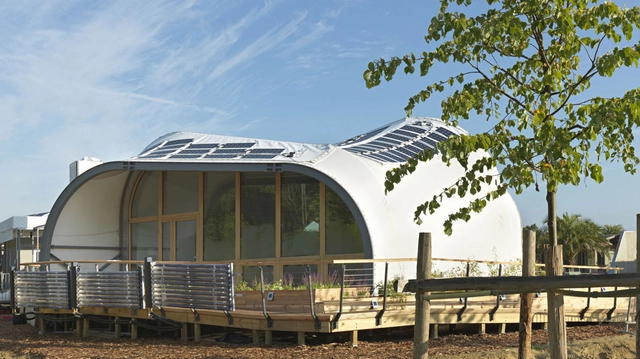
The Rhode Island School Of Design, Brown University and the University of Applied Sciences Erfurt, Germany collaborated on a passive "fabric" house for the 2014 Solar Decathlon Europe (which just wrapped up this month - see the winners here). In the following article, originally published on Metropolis Magazine, Martin Pedersen reviews the remarkable house.
This summer’s 2014 Solar Decathlon Europe is well underway in France, where a solar-powered village of twenty sustainable homes designed and built by college students from all over the country, has emerged on the grounds of the Palace of Versailles. Students from the Rhode Island School of Design (RISD), Brown University, and the University of Applied Sciences Erfurt, Germany, have teamed up for Techstyle Haus, an 800-square-foot house that’s not only a model of energy efficiency but an elegant piece of design as well.
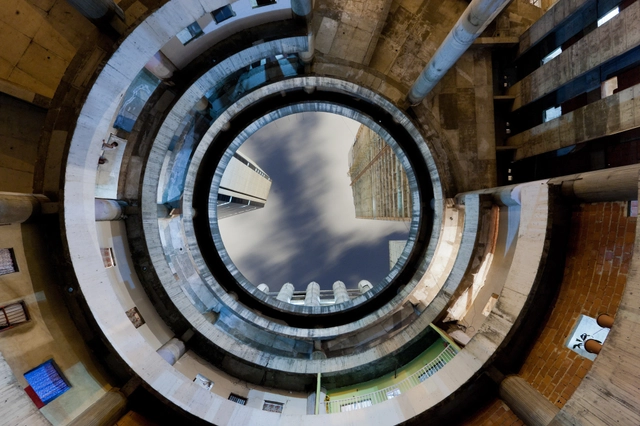
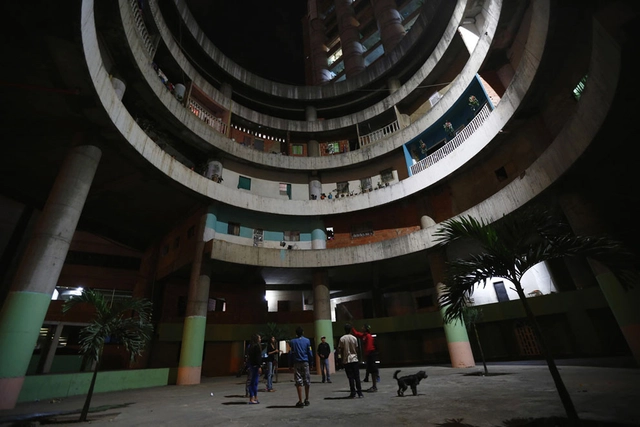
Monday night began the relocation process of thousands of inhabitants living in Venezuela’s Torre de David (Tower of David), the world’s tallest slum, according to reports by Venezuelan newspaper Últimas Noticias, BBC Mundo and tweets from journalists following the coverage. The relocation initiative is being carried out by the Interior and Justice Ministry, and comes just five days after the announcement that the Venezuelan government is in negotiations with Chinese banks interested in purchasing the building.
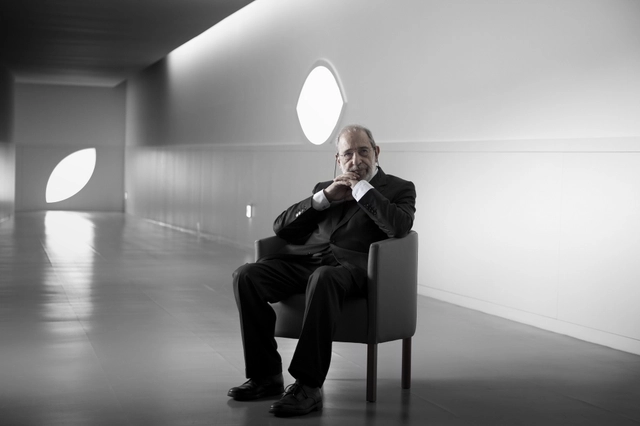
The archives of Álvaro Siza, whose drawings, sketches, and models have been exhibited in the most renowned cultural institutions around the world, may soon be transferred to the Canadian Centre for Architecture (Centre Canadien d'Architecture, CCA) in Montreal.
The architect confirmed on Wednesday to Portuguese paper PÚBLICO that he has been "in talks" with the CCA, as well as other un-named institutions from different countries, in order to "decide the future" of his archives.
The urban heat island effect - the hot, overwhelming temperatures that a city's concrete produces - has a huge impact on livability and comfort within the city. Now, an elegant cooling system has been designed that not only reduces energy usage, but - should it be installed on multiple buildings - could even lower the overall temperature of a city itself. Learn more, after the break.
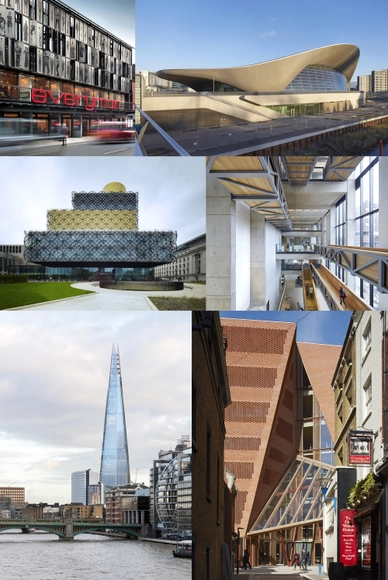
The Royal Institute of British Architects (RIBA) has now announced the six projects that form this year's Stirling Prize Shortlist, the award that is the ultimate prize for any British building. As the RIBA's most publicly prominent award, the Stirling Prize is often a prime demonstration of the tension between architecture that is widely appreciated by the general populace, and that which is lauded by architectural critics and practitioners.
This year is no exception, with perhaps the country's highest-profile project in years - the Shard - just part of the controversy. What did the critics make of the RIBA's selection? Find out after the break.
“A painter is a magician that immobilizes time.” - Iberê Camargo
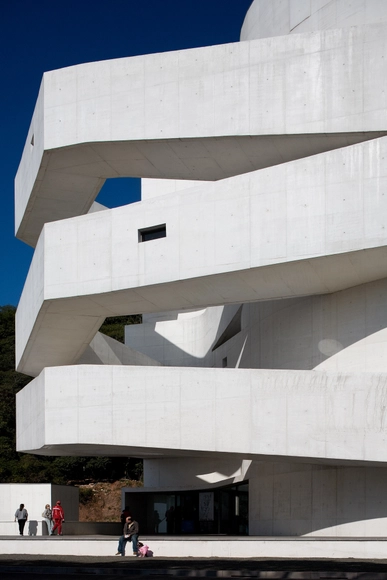
The Fundação Iberê Camargo, which received a Golden Lion at the 2002 Venice Biennale of Architecture, is Portuguese architect Álvaro Siza's first project in Brazil. It serves as an architectural exemplar not only for the city of Porto Alegre, but also for the entire country of Brazil. Defined by Siza as "quasi-arquitecture" -- with careful explorations of light, texture, movement and space--the building cultivates a direct relationship between the viewer and the artwork, and, in turn, allows visitors to richly come into contact with Iberê's (one of the great names of twentieth-century Brazilian art) work.
"Architects don't invent anything, they just transform reality." - Álvaro Siza
The first in Brazil to use white concrete--seen around the entire exterior-- the building does not use any bricks. The visitor is guided through a trajectory of descent throughout the building via ramps in the nine exhibition halls. The monolith is supported by massive slabs, pillars and beams. No detail escaped the hands of the architect; the furniture and signage were also designed by Siza.
With this news, we are presenting an extensive set of photos of this important project, realized and generously shared by one of the world's most important architecture photographers: Fernando Guerra of FG+SG - Últimas reportagens.
Story written by Joanna Helm for ArchDaily Brasil. Translated by Becky Quintal.
Scroll to see Guerra's beautiful images of the Fundação Iberê Camargo:
In their fifth Beyond the Building video, "Building Better Builders," MASS Design Group goes behind the scenes of their projects in Haiti to speak with local architects and metalworkers and show how incorporating local talent can engage the local community to develop innovative solutions.
Patrick McLoughlin is one of the two founders of Build Abroad, a volunteer organization that offers architectural and construction services to developing nations. In this article, originally published on Archi-Ninja, McLoughlin shares five reasons why architects should get involved with organizations like his own.
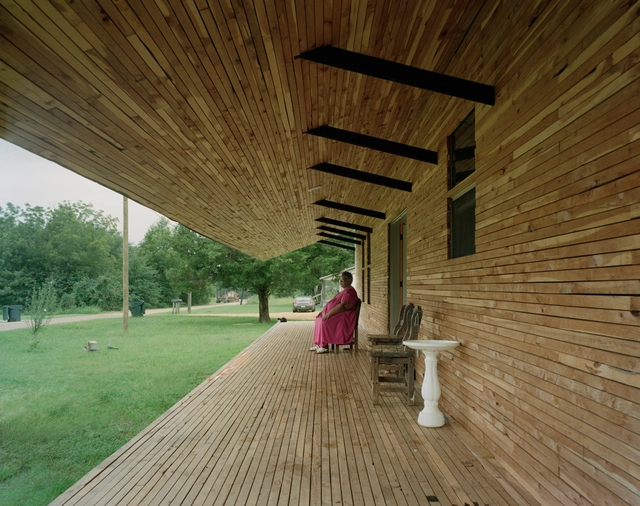
Many architecture firms collaborate with non-government organisations to help in developing nations. A.gor.a Architects for example, are currently designing and building a new health clinic to provide free healthcare to Burmese refugees and migrants. Auburn University Rural Studio works with architects and students to build homes in rural communities while instigating community-action, collaboration, and sustainability.
A number of organisations also facilitate construction volunteering. Architecture for Humanity provides architecture, planning and project management services for disaster reconstruction. Architects without Borders is a global operation to provide ecologically sensitive and culturally appropriate design assistance to communities in need.
Over the past decade, volunteering abroad has become an increasingly popular and important part of the architecture and construction industry. Volunteering abroad offers short to long term opportunities to experience a new culture while giving back to the community. Construction volunteering offers the potential for a lasting impact on the affected community. Patrick McLoughlin, co-counder of Build Abroad describes the following benefits and how you can help to make a difference:
The RIBA has announced the six projects that will compete for the 2014 Stirling Prize, the award for the building that has made the greatest contribution to British architecture in the past year. The six nominees will now be judged head to head for British architecture's highest honour, based on "their design excellence and their significance in the evolution of architecture and the built environment," with a winner announced on October 16th. See the full shortlist after the break.








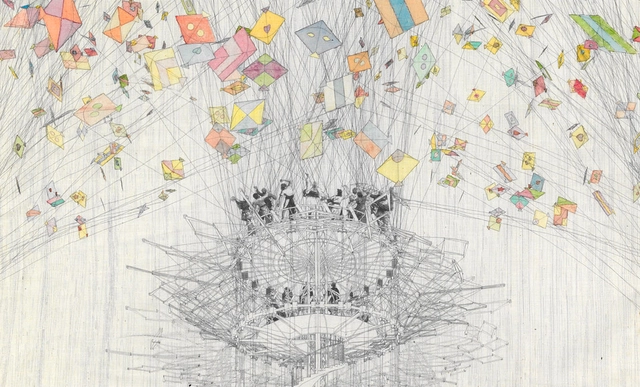


assembly_of_suburbia.jpg?1406067449 "Post-Graduate Runner-up, GAGA 2013. Adrienne Lau - (Dis)assembly of Suburbia")


.jpg?1406047165&format=webp&width=640&height=580)

Harunori_Noda.jpg?1405963457)