.jpg?1498819294&format=webp&width=640&height=580)
.jpg?1498819885 "© Namgoong Sun")
.jpg?1498819908 "© Namgoong Sun")
.jpg?1498820944 "© Namgoong Sun")
.jpg?1498820868 "© Namgoong Sun")
.jpg?1498819294)
-
Architects: Chang-jo Architects
- Area: 219 m²
- Year: 2016
-
Manufacturers: Alto, Haewon MSC, Hankuk BM, LG Hausys


_main_view.jpg?1498798129&format=webp&width=640&height=580)

_.jpg?1499430796&format=webp&width=640&height=580)
.jpg?1498446549&format=webp&width=640&height=580)
.jpg?1499213435)
.jpg?1498029050)
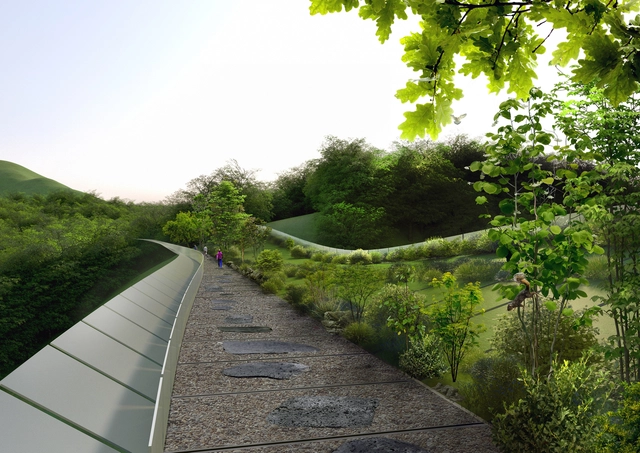
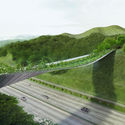
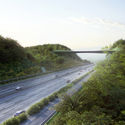
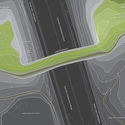
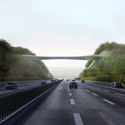
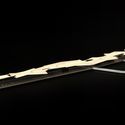
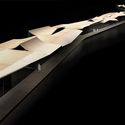
In response to the Yangjaegogae Eco Bridge Design Competition commissioned by the Seoul Metropolitan Government, SLOPEWALK is a mountain-inspired bridge designed by a Lithuanian team, KILD, proposing a structure evoking the “pictorial passage through the southern slopes of the two discontinued mountain peaks of Mt. Umyeon and Maljukgeori Parks.” Seeing a current infrastructural void, the project aims to unite the two neighboring mountain parks over the Gyeongbu Expressway, as a continuation of the sloped landscape.
.jpg?1498727537&format=webp&width=640&height=580)
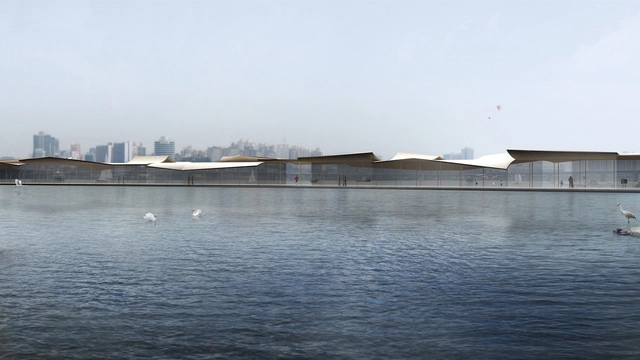
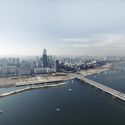
Hong Kong based architecture firm Cheongvogl has won an international competition to build the Yeoui-Naru Ferry Terminal in Seoul, South Korea. Founded by Judy Cheung and Christoph Vogl in 2008, the international practice aspires to “touch human hearts with poetic senses” through their projects. With that in mind, their winning design impressed an illustrious jury including architects Ryue Nishizawa (SANAA, Nishizawa, and Associates) and Alejandro Zaera Polo of APML. Using an approach called “Poetic Pragmatism” – the design aims to enhance the flatness and monochrome characteristics of the Han River site through its architecture. The masterplan connects the entire design to the city’s existing infrastructure while creating a sense of place along the riverbank.


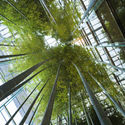
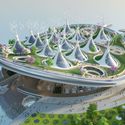
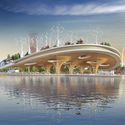
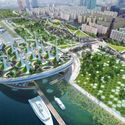
Vincent Callebaut Architectures have developed a design plan reimagining the riverbank of Yeouhido Park, Seoul. The park is envisioned as an experimental urban space dedicated to sustainable development through a series of interventions - including a floating ferry terminal. Named the “Manta Ray,” the ambition of the proposal is to transform the park into an ecological forest of trees, enhancing its natural irrigation and strengthening the banks from floods. The “permeable landscaping” seeks to reduce floods and rehabilitate urban ecosystems that have become fragmented through Seoul’s rapid built expansion. The vegetation-dominated strategy also seeks to reduce the urban “heat island” effect Seoul has been experiencing due to climate change over the past decades.
.jpg?1497395183&format=webp&width=640&height=580)

.jpg?1499740368 "© Yoon Junhwan")
.jpg?1499740860 "© Yoon Junhwan")

.jpg?1498798632 "© Shin Kyungsub")
.jpg?1498798154 "© Shin Kyungsub")
.jpg?1498798289 "© Shin Kyungsub")
.jpg?1498798319 "© Shin Kyungsub")
_main_view.jpg?1498798129)
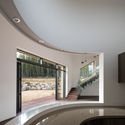
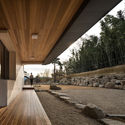
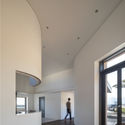
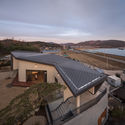


_%E2%98%85.jpg?1499431697 "© Yoon Dong-gyu")
_%E2%98%85.jpg?1499431469 "© Yoon Dong-gyu")
_%E2%98%85.jpg?1499431859 "© Yoon Dong-gyu")
_%E2%98%85.jpg?1499431157 "© Yoon Dong-gyu")
_.jpg?1499430796)
.jpg?1498446792 "© Yong-joon Choi")
.jpg?1498447103 "© Yong-joon Choi")
.jpg?1498447442 "© Yong-joon Choi")
.jpg?1498446850 "© Yong-joon Choi")
.jpg?1498446549)



.jpg?1499214374 "© Kyungsub Shin")
.jpg?1499214174 "© Young Kim")
_yellow.jpg?1499212967 "© Young Kim")
.jpg?1499214017 "© Young Kim")
.jpg?1499213435)
.jpg?1498028818 "© AN NEWS - Hansuk Kim")
.jpg?1498028956 "© AN NEWS - Hansuk Kim")
.jpg?1498029030 "© AN NEWS - Hansuk Kim")
.jpg?1498028897 "© AN NEWS - Hansuk Kim")
.jpg?1498029050)


.jpg?1498728328 "© Youngchae Park")
.jpg?1498727633 "© Youngchae Park")
.jpg?1498728438 "© Youngchae Park")
.jpg?1498728355 "© Youngchae Park")
.jpg?1498727537)






.jpg?1497395122 "© Eui-tae park")
.jpg?1497395934 "© Eui-tae park")
.jpg?1497395433 "© Eui-tae park")
.jpg?1497395549 "© Eui-tae park")
.jpg?1497395183)