

-
Architects: Sim Ateliers
- Area: 1200 m²
- Year: 2020
-
Manufacturers: Crestron, Poliform, Trimble
-
Professionals: Plontur Incorporated, VC Building Trades & Woodworks, Nadzcorp

Anthology Architecture and Design Festival began in 2016 with over 2000 guests and 65 leading built environment practitioners from seven countries. Since then, the three-day forum about architecture and design has been consistently growing in participants, speakers, lectures and panel discussions. Heading into its fifth year, the Anthology Architecture and Design Festival is a platform that seeks to launch an inquiry into the basis of architecture and how it is adapting to our changing world.


Be part of history.
Together with the Bases Conversion and Development Authority (BCDA), the Philippine Senate aims to develop its permanent home in an 18,320 square meter lot situated in the heart of the Philippines’ premier business and residential districts.

Anthology Architecture and Design Festival 2017 is a three-day celebration of architecture and design to be held on March 31 to April 2, 2017 at the Puerta del Parian in the historic walled city of Intramuros, Manila, Philippines.

The University of Santo Tomas’ Architecture Network (ARCHINET), a recognized student organization, is hosting the 2nd National Architecture Jamboree in the Philippines in order to connect students and professionals from around the country to those around the globe. The National Architecture Jamboree is a four-day event, with the Dynamic Solutions: 9th National Architecture Symposium as its main event to be held on April 21, 2017 at the SMX Convention Center, Pasay City, Philippines.

Arch360 is short for Architecture in 360°. It aims to explore the various facets of the field through a series of symposium and discourses among professionals and undergraduates. This year, ASAPHIL focuses on the inclusion of the Filipino community members in creating a sustainable and progressive built environment. Arch360 intends to engage architecture, engineering, and design students – the future leaders and builders of the Philippine built environment – to participate in a forum aimed at creating a sense of nationalism and unity, equipping them with the sufficient knowledge to design structures and landscapes that can bring together the diverse Philippine society.
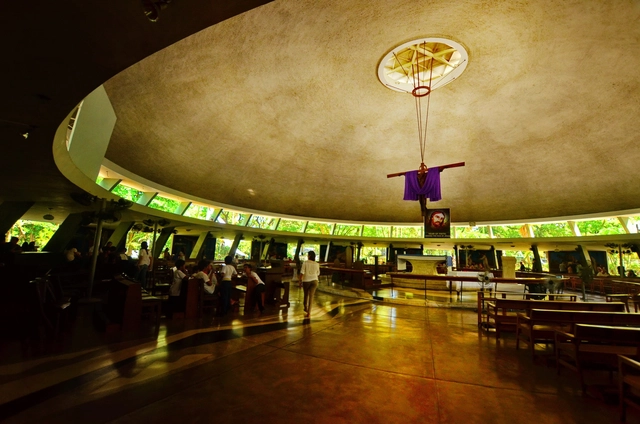
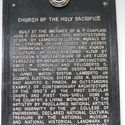
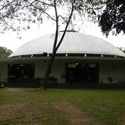
Once dubbed a “flying saucer,” the Parish (Church) of the Holy Sacrifice is a Modernist expression which embodies the complex colonial history of the Philippines. Located on a university campus in Quezon City (formerly the capital of the nation, now a part of the Metro Manila National Capital Region), the domed concrete church was the product of Filipino architect Leandro Locsin, and of three other national artists who contributed to the building’s interior.[1] Locsin’s design, which combines elements of traditional Filipino architecture with postwar International aesthetics, is a potent symbol of a newly-independent nation following centuries of imperial control.
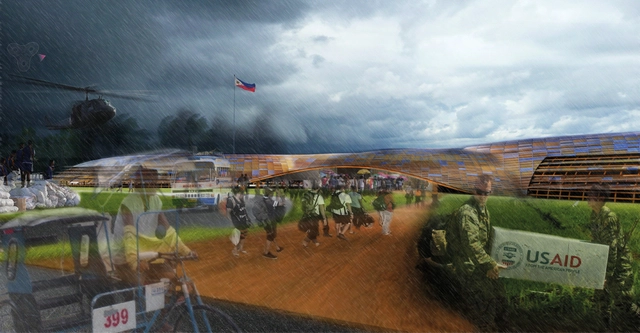
Major natural disasters caused by climate change are becoming an unfortunate certainty worldwide. Prevention of these events is something that no single architect can accomplish, but preparation for them can be. To that end, Open Online Academy (OOAc) has challenged architects worldwide to design disaster-resistant architecture with their online course "Designing Resilient Schools." Architecture firm MAT-TER has responded to this challenge with a new design for Guiuan National High School in the Philippines, an area hit especially hard by last year’s Typhoon Haiyan. The design is a singular, compact structure designed to better withstand the forces of major storms, doubling as both a school and a community emergency shelter.