
1. ArchDaily
  2. Chicago

Chicago: The Latest Architecture and News

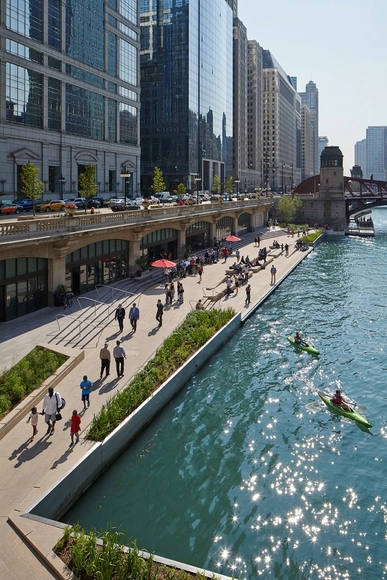
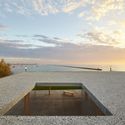
Chicago Riverwalk / Chicago Department of Transportation

Chicago Riverwalk / Chicago Department of Transportation - Public Space, Facade, CityscapeChicago Riverwalk / Chicago Department of Transportation - Public Space, Fence, Facade, Handrail, CityscapeChicago Riverwalk / Chicago Department of Transportation - Public Space, CityscapeChicago Riverwalk / Chicago Department of Transportation - Public Space, Facade, CityscapeChicago Riverwalk / Chicago Department of Transportation - More Images+ 23

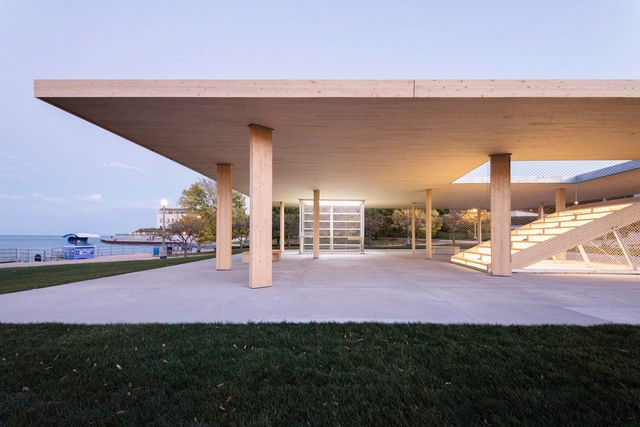
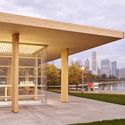
Lakefront Kiosk / Ultramoderne

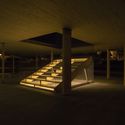
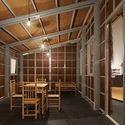
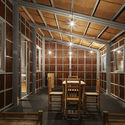
Lakefront Kiosk / Ultramoderne - Pavilion, Facade, Door, TableLakefront Kiosk / Ultramoderne - Pavilion, Lighting, CoastLakefront Kiosk / Ultramoderne - Pavilion, Deck, Facade, Beam, ColumnLakefront Kiosk / Ultramoderne - Pavilion, Handrail, StairsLakefront Kiosk / Ultramoderne - More Images+ 28

  • Architects: Ultramoderne
    : Yasmin Vobis & Aaron Forrest
  • Year Completion year of this architecture project Year:  2015
  • Manufacturers Brands with products used in this architecture project
    Manufacturers:  FH Paschen, Mule-Hide, Neon Shop Fishtail, Nordic Structures, TAH Construction, +3

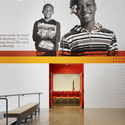
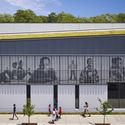
Chinatown Branch Library / SOM

Chinatown Branch Library / SOM - Library, Column, Facade
© Jon Miller _ Hedrich Blessing

Chinatown Branch Library / SOM - Library, ChairChinatown Branch Library / SOM - Library, FacadeChinatown Branch Library / SOM - Library, Facade, Door, Chair, TableChinatown Branch Library / SOM - Library, Facade, Arch, Bench, CityscapeChinatown Branch Library / SOM - More Images+ 17

Atelier 2B's "Soft in the Middle" Rethinks Modernism for An Age of Collaboration and Sharing

In his book We Have Never Been Modern, philosopher Bruno Latour concludes that an inability to make humanity and nature inherently separate is one of Modernism’s most misguided tropes. Thus, contemporary designers that hope to riff on or have continuity with modernism must understand that architecture, even at its most aestheticized, is not hermetically sealed off from the outside world - and that therefore modernism is not a plateau of design, but another base camp on the road to further refinement.

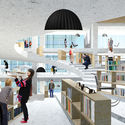
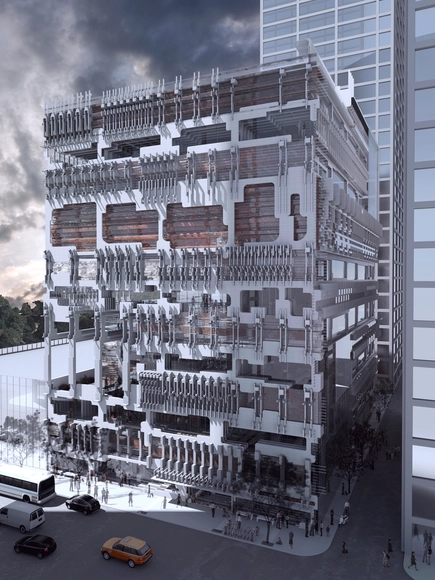
In Chicago, the city where Modernism reached both its metaphoric and physical peak, Atelier 2B, a team of Yewon Ji, Nicolas Lee, Ryan Otterson, recently shared the top-five prize of the Chicago Architecture Foundation's ChiDesign Competition (part of the Chicago Architecture Biennial) for their project Soft in the Middle: The Collaborative Core. Indebted to the legacy of Mies and the International Style, Atelier 2B proposed a Modernist-tower-redux that (externally at least) is composed of three stacked rectangular volumes bisected with terraces, set back from the street by a large public plaza. The project brief called for “a new center for architecture, design and education,” in a competition judged by critics including Stanley Tigerman, David Adjaye, Ned Cramer, Monica Ponce de Leon, and Billie Tsien.
Atelier 2B's "Soft in the Middle" Rethinks Modernism for An Age of Collaboration and Sharing - Facade, CityscapeAtelier 2B's "Soft in the Middle" Rethinks Modernism for An Age of Collaboration and Sharing - Facade, ChairAtelier 2B's "Soft in the Middle" Rethinks Modernism for An Age of Collaboration and Sharing - Facade, ArchAtelier 2B's "Soft in the Middle" Rethinks Modernism for An Age of Collaboration and Sharing - StairsAtelier 2B's Soft in the Middle Rethinks Modernism for An Age of Collaboration and Sharing - More Images+ 3

mcdowellespinosa’s "Layered Intelligence" Challenges the Typology of Mixed Use Buildings

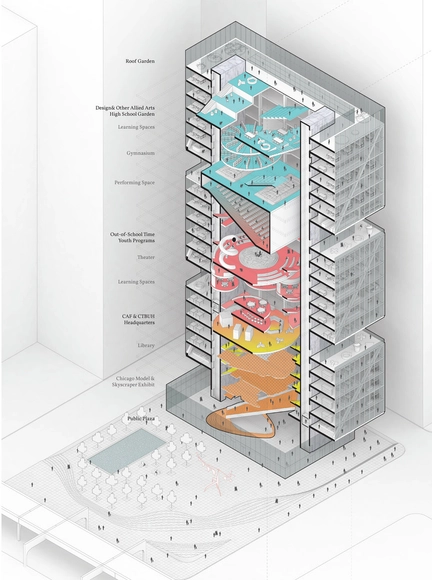
The Chicago Architecture Foundation (CAF) has announced the three winners of its ChiDesign ideas competition to design the Chicago Centre for Architecture, Design and Education (CADE). The competition was in conjunction with the first ever Chicago Architecture Biennial, following the spirit of Robert McCormick’s international competition for the Chicago Tribune Tower in 1922 which opened discourse on the importance of design to the public. Similar to McCormick’s competition, but tackling a more modern, mixed-use typology, the Chicago CADE is envisioned as a facility to house the Chicago Architecture Foundation; the Council on Tall Buildings and Urban Habitat; a design and allied arts high school; and learning spaces for an extra-curricular youth program. Read about one of the winners, "Layered Intelligence" after the break, and see another winner, "Unveiled" here.
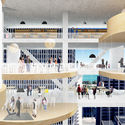
mcdowellespinosa’s "Layered Intelligence" Challenges the Typology of Mixed Use Buildings - Skyscrapers, Stairs, Facade, Column, Handrail, Arch, Lightingmcdowellespinosa’s "Layered Intelligence" Challenges the Typology of Mixed Use Buildings - Skyscrapers, Facade, Beam, Stairsmcdowellespinosa’s "Layered Intelligence" Challenges the Typology of Mixed Use Buildings - Skyscrapers, Facade, Stairs, Column, Handrailmcdowellespinosa’s "Layered Intelligence" Challenges the Typology of Mixed Use Buildings - Skyscrapers, Facademcdowellespinosa’s Layered Intelligence Challenges the Typology of Mixed Use Buildings - More Images+ 7

S House 3 / VTN Architects

S House 3 / VTN Architects - Houses, Beam, Table, ChairS House 3 / VTN Architects - Houses, Beam, Table, ChairS House 3 / VTN Architects - Houses, Beam, Chair, TableS House 3 / VTN Architects - Houses, Beam, Facade, DoorS House 3 / VTN Architects - More Images+ 7

  • Architects: VTN Architects
  • Area Area of this architecture project Area:  32
  • Year Completion year of this architecture project Year:  2015

Lycée Français de Chicago / STL Architects

Lycée Français de Chicago / STL Architects - Schools Lycée Français de Chicago / STL Architects - Exterior Photography, Schools , Facade, LightingLycée Français de Chicago / STL Architects - Exterior Photography, Schools , FacadeLycée Français de Chicago / STL Architects - Schools Lycée Français de Chicago / STL Architects - More Images+ 19

Event: Come To The Table With Chicago Educators

Come to the Table is an installation made of reconfigurable elements that serve as a platform for dialogue. The construct is a framework to engage local architects, artists and thinkers in questioning What is the State of the Art of Architecture Today? Confirmed Panelists include Penelope Dean (Associate Professor, UIC), Vedran Mimica (Associate Dean, IIT)
and Ben Nicholson (Professor, SAIC).


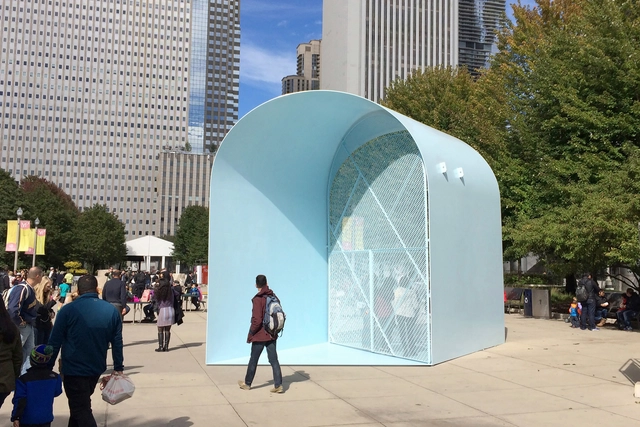
Summer Vault / Independent Architecture + Paul Preissner Architects

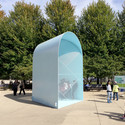
Summer Vault / Independent Architecture + Paul Preissner Architects - Temporary Installations, Facade, ArchSummer Vault / Independent Architecture + Paul Preissner Architects - Temporary Installations, Arch, BenchSummer Vault / Independent Architecture + Paul Preissner Architects - Temporary Installations, Facade, Arch, Bench, CityscapeSummer Vault / Independent Architecture + Paul Preissner Architects - Temporary Installations, FenceSummer Vault / Independent Architecture + Paul Preissner Architects - More Images+ 6

Stanley Tigerman Unveils His 2015 New Titantic

Stanley Tigerman will discuss his 2015 New Titanic along with the opening of a special exhibit that includes a selection of past and recent work featuring the 1978 “Titanic” photomontage.

Grace of Intention: Photography, Architecture and the Monument

Monuments are deliberate gestures—objects or structures created to commemorate an event, person or era. Their meaning is usually imposed, and they often serve as focal points for aspirational civic and political attributes like valor and sacrifice, or to underscore a foundational political narrative. But their meaning can transform, changing over time as the relevance of their symbolism ebbs and flows due to social and political shifts. Like monuments, architecture and photography are also inflected with a grace of intention, and both have the ability to commemorate or represent a nation, event, time or place. The act of photographing monuments and buildings transforms them, sometimes revealing some of the original qualities and more closely evoking the response that they were originally intended to have. And photographs have an inherent memorial quality. This group exhibition examines the work of international artists, some of whose work addresses actual monuments, some whom look at architecture and its relationship to memory and how its importance and symbolism can shift over time, and others approach the idea of the future monument.

Subversive Methods Make A Skyscraper in Michael Ryan Charters and Ranjit John Korah's "Unveiled"

Subversive Methods Make A Skyscraper in Michael Ryan Charters and Ranjit John Korah's "Unveiled" - Facade, Cityscape
Night View. Image Courtesy of Michael Ryan Charters and Ranjit John Korah

In a Los Angeles Times article last December, “The future is in the past: Architecture trends in 2014,” acting critic Christopher Hawthorne sought to make sense of a year that included Koolhaas’s Venice Biennale, Smiljan Radic’s Serpentine Pavilion, and periodicals like Log 31: New Ancients and San Rocco 8: What’s Wrong with the Primitive Hut? Through these examples and others, Hawthorne concluded that it was a year of overdue self-reflection, where in order to determine architecture’s future it was necessary to mine the past.

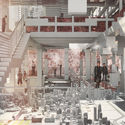
Building on these precedents, Hawthorne predicted that after years of baroque parametricism, in 2015 architects would use last year’s meditations on history as a practical foundation for new projects and proposals. An example of this can be found in the work of Michael Ryan Charters and Ranjit John Korah, a duo who recently shared the top-five prize for the CAF led ChiDesign Competition (part of the Chicago Architecture Biennial) for their project Unveiled. In a brief that called for “a new center for architecture, design and education,” and with lauded jurors including Stanley Tigerman, David Adjaye, Ned Cramer, Monica Ponce de Leon, and Billie Tsien, Charters and Korah proposed what could casually be summarized as a terracotta framework over a multi-story crystalline form of wooden vaults, but is actually something much more complex.
Subversive Methods Make A Skyscraper in Michael Ryan Charters and Ranjit John Korah's "Unveiled" - Facade, Column, Arch, Handrail, ArcadeSubversive Methods Make A Skyscraper in Michael Ryan Charters and Ranjit John Korah's "Unveiled" - Arch, Arcade, Column, LightingSubversive Methods Make A Skyscraper in Michael Ryan Charters and Ranjit John Korah's "Unveiled" - Facade, CityscapeSubversive Methods Make A Skyscraper in Michael Ryan Charters and Ranjit John Korah's "Unveiled" - Arch, Arcade, Column, CityscapeSubversive Methods Make A Skyscraper in Michael Ryan Charters and Ranjit John Korah's Unveiled - More Images+ 3

Back of the Yards High School / STL Architects

Back of the Yards High School / STL Architects - High School, Table, ChairBack of the Yards High School / STL Architects - High School, Door, Table, ChairBack of the Yards High School / STL Architects - High School, FacadeBack of the Yards High School / STL Architects - High School, FacadeBack of the Yards High School / STL Architects - More Images+ 14

NLÉ Architects' “Rock and the Bean” Invites the Public to Leave a Mark on their Lakefront Kiosk

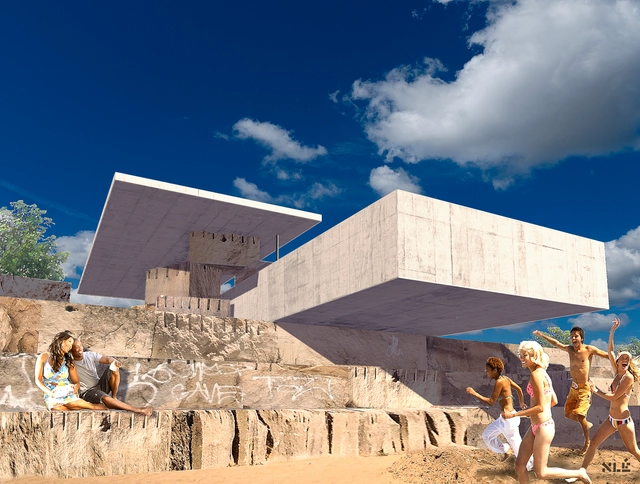
With its Lakefront Kiosk competition, the Chicago Architecture Biennial is hoping to leave a long-lasting impact and legacy for its city. The ROCK, a submission from NLÉ Architects in collaboration with School of the Art Institute of Chicago, is giving the public the opportunity to shape that legacy. Throughout the course of the event, which opened on October 3rd, eventgoers are invited to Millennium Park to add value to the 1930s limestone rocks that will create the pavilion through carving, painting, performances and other unimagined processes.

Exhibition: Richard Meier: Process and Vision

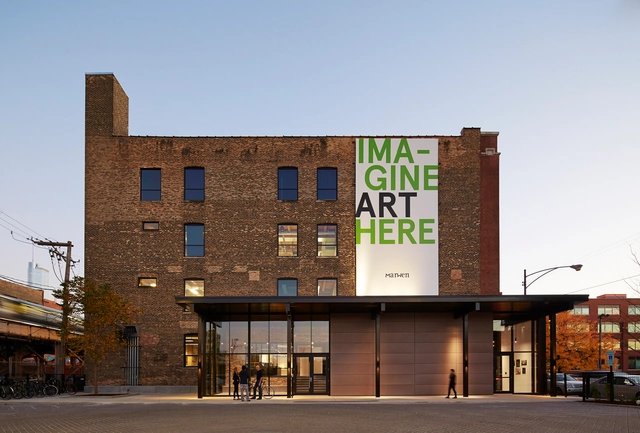
Richard Meier & Partners is pleased to announce Richard Meier: Process and Vision at Mana Contemporary Chicago in partnership with the inaugural Chicago Architecture Biennial.

Richard Meier’s international body of work is acclaimed for its timeless, classic design from the Museum of Contemporary Art in Barcelona to the Getty Center in Los Angeles to Rome’s Jubilee Church. Each project throughout Richard Meier’s decades of architectural practice has posed its own set of inherent challenges, whether social, environmental, technological, or economical.


New Horizon_architecture From Ireland

New Horizon_architecture from Ireland, a series of presentations of the work of emerging Irish practices in three high-profile venues around the world, opens at Chicago Design Museum on October 3rd and runs until January 3rd, 2016 as part of the inaugural Chicago Architecture Biennial.
Presented by Irish Design 2015 (ID2015) in partnership with Chicago Design Museum, this flagship exhibition of Irish architecture and the built environment is a key element of ID2015, a year-long initiative backed by the Irish government exploring, promoting and celebrating Irish design throughout Ireland and internationally.
Liquid Happening: A Living Architecture Ball

Aboard a private yacht, this event will break traditional molds of evening public lectures that promote excellence, diversity, as well as engaging the public about the impact and relevance of architecture, good design including providing continuing education. Attendees and guests will come out reenergized, as they mingle, tour Chicago through Lake Michigan and Chicago River in a private yacht, and engage in dialogue with Keynote Speaker, Dr Rachel Armstrong. The evening's topic centers on an ecological age of design and construction that seeks to develop new ways of choreographing space by working along with natural systems. The black-tie and tie-dyed evening cruise will culminate at the rooftop of a secret high rise building location (to be revealed on the day of the event) for a viewing of the Living Ball installation of the Leapfrog Project.

Chicago Architecture Club Announces 2015 Burnham Prize Competition: Currencies of Architecture

UPDATE: The deadline for submissions for the Burnham Prize has been extended to September 7th, 2015 with the announcement of the winning entries to occur on September 30th, 2015. In addition, student entry fees have been reduced to $25.00.

Affiliated with this year’s Chicago Architecture Biennial, the Chicago Architectural Club has announced the 2015 Burnham Prize Competition: Currencies of Architecture. This year’s Burnham Prize was inspired by the Chicago Architecture Biennial’s title, “The State of the Art of Architecture,” and explores the question: what is the state of the art of architecture today? Entrants are challenged to create a single image that exemplifies a point of view on the current state of architecture – whether it is a celebration, a challenge, a statement or anything else.