B.S. in Architecture and Master of Architecture from Ohio State Knowlton School. Master of Science in Real Estate Development at Columbia University. Senior Contributor at ArchDaily. New York, NY. Interested in strategic development of cities at the intangible scale.
Until the recent outbreak of the COVID-19 pandemic, the climate crisis was perhaps the fundamental design problem of our Anthropocene era. The threat of climate change has forced us as designers to reevaluate how we realize designs at all scales. Eco-friendly interior finishes, net-zero energy skyscrapers, and strategies to prevent the rising sea levels from pushing residents in coastal cities more inland are just some of the innovative solutions that have come from the increased urgency to mitigate the effects of the climate on our world.
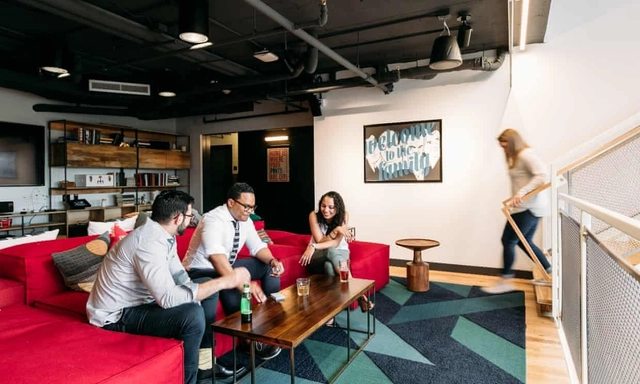
Many of us have already lived, or are currently living in, some sort of shared community housing. Whether it be from a college experience of living in a dormitory or a retirement community filled with other senior citizens, the loosely defined, yet increasingly popular concept of co-living has taken on many forms in society. The co-living market giants, including WeLive, Common, and Ollie, center themselves around participating in a shared economy, offering a financially sensible housing solution, and fostering meaningful social connections. As we continue to battle the COVID-19 pandemic and adapt to the enforcement of social distancing and stay-at-home mandates, co-living tenants have felt compelled to navigate the loopholes in the designs of their communities in order to discover new ways of living with others, while also mitigating health risks. In fact, co-living communities may be better positioned to handle a pandemic while balancing a sense of normalcy more so than traditional residential real estate offerings.
Architects throughout the modern era have displayed their fantasies through their designs and their obsessions with how women have inhabited them. Take for example Corbusier’s infatuation with Eileen Gray and her home, E. 1027. Plagued with unconfirmed tales of how he broke into her home to paint murals on the white walls, he was also known to publicly downplay the home's design, while conversely praising it in a series of unreciprocated love letters to Gray. In the same vein, while Adolf Loos stood firmly against architectural decoration, he perhaps supported the elegance of women acting as a human ornament, an assumed notion in his envisioned home for the French Entertainer, Josephine Baker. The unbuilt proposal took on the form of a black and white striped solid which located a glass pool at the center of the space, forcing Baker to catch the male gaze of other occupants.
The relationship of sensuality and space doesn’t stop with the provocative desires of these three men, but lives on in one of the world’s most famous publications, Playboymagazine. Perhaps best known for its significance as a vanguard in the sexual revolution with its promotion of masculinity, the magazine also illustrated a showcase of swanky glass bachelor pads standing high above Beverly Hills that pushed forward a debonair lifestyle punctuated by modern design. As a generator of a glamorized lifestyle, the magazine highlighted architectural titans including Mies van der Rohe, Bucky Fuller, and Eero Saarinen, and made them palatable to a general audience.
In the highly connected world we live in, technology influences and impacts almost every decision we make. Big Data, Artificial Intelligence (AI), and the Internet of Things (IoT) have enhanced our connected world and helped us understand more about the spaces we inhabit. Aside from the smart homes and smart appliances we have become accustomed to, the modern day office is being redesigned and reprogrammed to include a variety of smart technology systems. The goal of these systems is to put our offices to work and empower businesses to better understand their design decisions, real estate investments, and most importantly- their own employees.
With the COVID-19 pandemic forcing many architecture firms to quickly transition into a work from home, designers are having to discover new ways to work without everyone being in the same room. The casual conversations, overheard ideas, and site visits that were once an integral part of our jobs have been put on pause, and have left some architects wondering how everyone else is continuing project work.
The “smart” movement has gained traction and generated buzz over the last decade, but despite all of the hype, what even is a smart city? The dogma behind its loose definition and goals has been rather elusive, and while some claim that it relies on digitization of all urban aspects, others argue an increase in personal data collection is the sole method for improving urban lifestyles. One person’s digital paradise is perhaps another person’s technophobic doomsday. Extending beyond the mere definition of these cities, what role do designers and researchers play in creating this loosely identified futuristic landscape? As Corbusier once defined a home as a machine for living, it’s time to redefine how our buildings shed their passive exteriors and become the true machines for working that they were always meant to be.
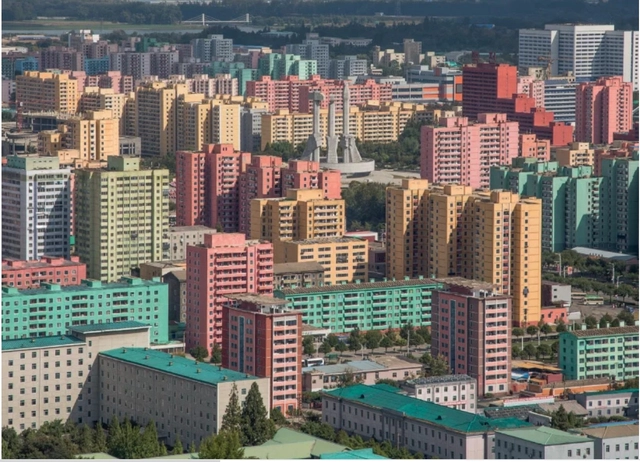
North Korea is a country known for it’s rising nuclear tensions, extreme militaristic showboating, and draconian views of human rights. As one of the few remaining places on earth that is almost entirely shut off from the rest of the world, little is known about day to day life in the communist state. But for a nation that is so heavily shrouded in mystery and uncertainty, the efforts of their architectural bravado provide some insight into how their regime operates.
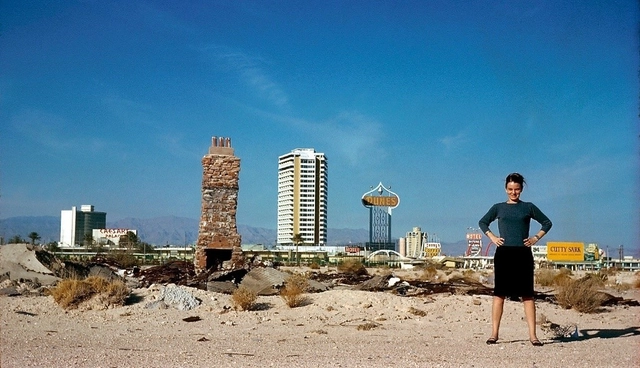
In every casino, there’s much more than meets the eye. Although guests are typically only aware of what’s happening on a surface level, a casino’s ability to create a false sense of reality extends beyond the programming of slot machines and betting against the odds at the tables. It reaches far into every corner of the room and is designed in such a way, that their intentionality behind every flashing light, “cha-ching!” jackpot noise, smokey bar, and endless maze of slot machines all come together to place a bet against human psychology. They say there’s a reason why the house always wins, but what is it about the design of these spaces and the allure of the gambling table that makes visitors always come back for more?
Architects around the world are constantly striving to explore new ways of using materials that are both more environmentally friendly, and can create impactful designs that demonstrate new abilities of creativity. For 2020 Pritzker Prize winners Yvonne Farrell and Shelley McNamara of Grafton Architects, these ideas are at the forefront of every project they design, but became especially meaningful when they visited their completed “carved mountain” project, University Campus UTEC, in Lima, Peru for the first time.
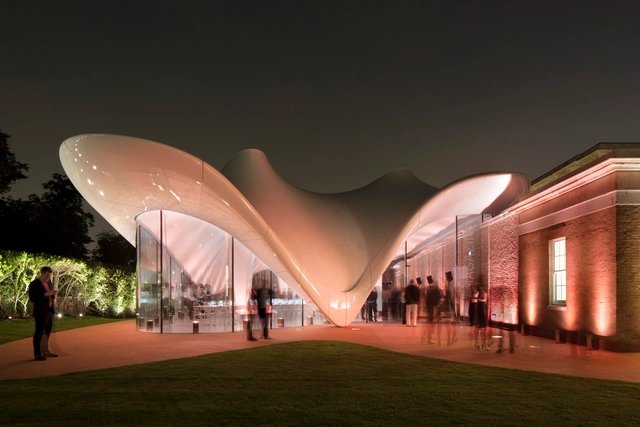
In honor of International Women’s Day celebrated on March 8, it’s important to reflect upon and acknowledge the progress that women across all design professions have made over the last several years. From more women being appointed to leadership roles in prominent academic institutions around the world, Jeanne Gang being named to Time 100’s Most Influential People in 2019, the all-female team of Counterspace being awarded the design of the Serpentine Pavilion in London, and the first female practice winning the prestigious Pritzker Prize only a few days ago, more women in architecture are gaining the recognition that they deserve in this traditionally male-dominated profession.
Why do we build? How do we build? Who do we ultimately build for? These have been questions that have dominated the worlds of both practice and pedagogy since the early ages of architecture. On a basic level, those questions can be answered almost reflexively, with a formulaic response. But is it time to look beyond just the simple why, how, and who?
In a world where the physical processes of architecture are becoming increasingly less important and digital processes proliferate through all phases of architectural ideas and documentation, we should perhaps be looking to understand the ways in which architects work, and examine how we can claim the processes—not just the products—of our labors.
While cemeteries have long served as a place in which we can honor and remember our loved ones, they are also often places that showcase architecture, and landscape design. In the late 19th century, cemeteries evolved from overcrowded and unsanitary urban spaces into rural, park-like social centers. In cities that lacked public parks, cemeteries became popular destinations for picnics, holidays, and other family gatherings.
It has been just over a week since the 7.0 magnitude earthquake destroyed 50,000 homes in North Lombok, a city just east of the island of Bali, Indonesia. Although much of the town is gone, the community has already rallied together to begin the long and arduous rebuilding process. With the rainy season approaching in less than two months, DOME Lombok is working to begin building earthbag domes and teaching their construction techniques to help the area rebuild.
Courtesy of Prof. Shiauyun Lu, Jhengru Li, Tzuman Tseng, Hsianghsiang Wang
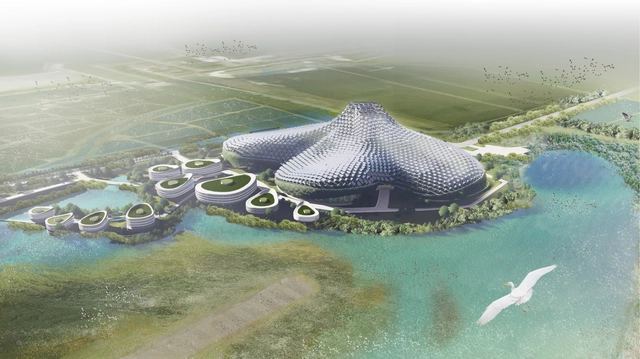
The island nation of Taiwan is a country that boasts both a high population density and a wide range of ecosystems. However, a large issue that the country is currently facing involves the energy production and consumption, and the negative impact it has on the environment. With the largest power plant slated to be shut down by 2023, a team from Taiwan has devised an architectural proposal for how to construct a plant that both generates enough electricity to serve the metropolitan area and reduce its negative impact on the air quality and surrounding wetlands.
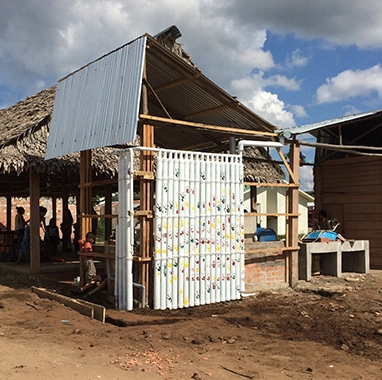
World Architecture Festival has announced the winner of its inaugural Water Research Prize. First place was awarded to a team of students from Pontificia Catholic University of Peru (PUCP) who designed a water management system that "captures, stores, and treats rainwater and inserts it into pre-existing water networks."
James Stirling (1926-1992) was a British architect who is considered by many as the premier architect of his generation and an innovator in postwar architecture. Some of his most famous projects include the Sackler Museum, No 1 Poultry, and the Neue Staatsgalerie. Through the influence of his teacher Colin Rowe, Stirling had a deep understanding of architectural history, yet never adopted a singular doctrine. His career began with designs that were more aligned with what would later be labeled as the high-tech style, but evolved into buildings that were a series of dynamic and often colorful arrangements. Stirling’s aesthetic tropes ultimately gave the final push that broke architecture free from the clutch of post-war European Modernism as he turned the Modernist canon of “form follows function” into a hyperbole by celebrating the expression of a building’s program with his over-the-top details. Stirling’s work is still largely influential, and the recursive wave of history has shown that the underlying implications of his oeuvre remains somewhere in all architectural practice of the present day.
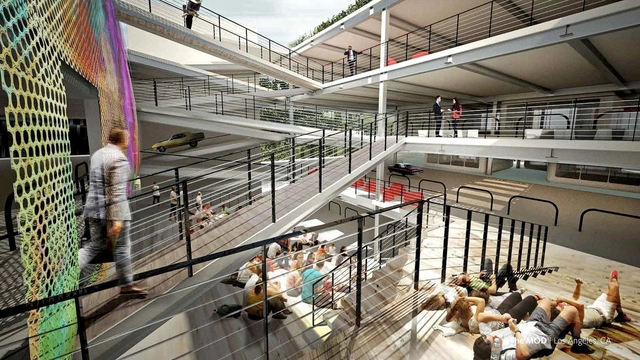
Are you in the market for a new home? If so, you may want to consider looking at a former parking garage, because they just might be the next place where developers are looking to build. In the United States alone, there are more than 500 million parking spots for 326 million citizens, covering approximately 2,500 square miles of land. Despite the push for a "car-free" future, more of these structures keep springing up across the country. If cities are building parking garages to support the need for the cars of today, how might we rethink their design so they can outfit the autonomous vehicle ambitions of tomorrow?
When you think of your favorite spot to grab a beer, what architectural features come to mind? Is it the swanky furniture, themed artwork, or the heavily designed cocktail menu? Today, the aesthetics of bars are now as much a draw as the drinks themselves. From movie set inspired spaces to rooftops that offer spectacular city views, we’ve compiled a list of nine bars and beer gardens that every architect needs to cross off their list.


_Paolo_Rosselli__DSC2950.jpg?1588226670&format=webp&width=640&height=580)



__Fabulous_Las_Vegas_--_2012_--_6263.jpg?1584031699&format=webp&width=640&height=580)