An upcoming conference at the University of Manchester will tackle the idea of Model Making In The Digital Age. Based on the premise that the world of architecture is dominated by digital tools today more than ever, from design and manufacturing to the ways in which we visualise complex spaces and structures physically and virtually, this symposium seeks to shed new light on the practice of model making and its uses.
The Edinburgh College of Art have announced that they will be creating a ‘Domesday Book’ catalogue of every multistory post-war housing project in the UK. The project - called Tower Blocks - Our Blocks!- will contain over 3,500 publicly accessible photographs from the 1980s, documented "at a time when post-1945 high-rise housing is continuously under threat threat across the [UK]." All images will be made searchable in a digital archive.
Arrette Scale have released an update ($8.99) for their iOS app which addresses the level of precision and dexterity in the use of the Edge Tools, which have new controls and behavior. The app itself has proved popular among architects, aiming to provide designers with a simple, familiar drawing environment usable by anyone comfortable with traditional drawing tools. Allowing users to digitally review work by sharing ideas and drawings, Arrette’s platform welcomes incremental design changes and collaboration on iPad without the need for printing reams of paper.
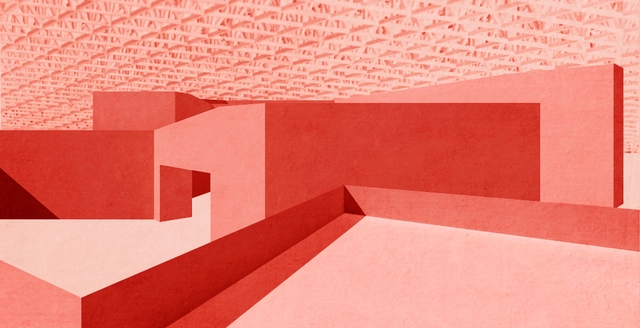
Conceptual Design. Image Courtesy of Carmody Groarke
The British Council recently announced that London-based practice Carmody Groarke have been selected to design the UK pavilion at the 2015 Feria Internacional del Libro (FIL) in Guadalajara, Mexico. The organisers of the international event, which is the largest literary festival in the Spanish speaking world, have chosen the UK to be this year's "Guest of Honour" as part of a bilateral initiative launched to "build, strengthen and celebrate the growing connections" between the two countries.
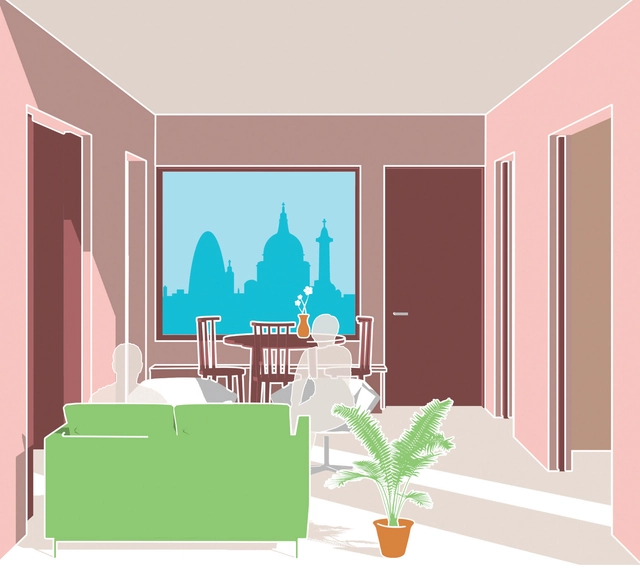
London based practice Henley Halebrown Rorrison’s (HHbR) have unveiled a scheme for affordable housing based on a model inspired by Andrea Palladio's Villa Capra (1566-1571) near Vicenza. The Pocket Rotunda model hinges around their developer’s ambition to offer new two-bedroom accommodation that will help open up home ownership to couples with young children, joint buyers, and single parent families who earn too much to qualify for social housing but are, nevertheless, priced out of the UK market.
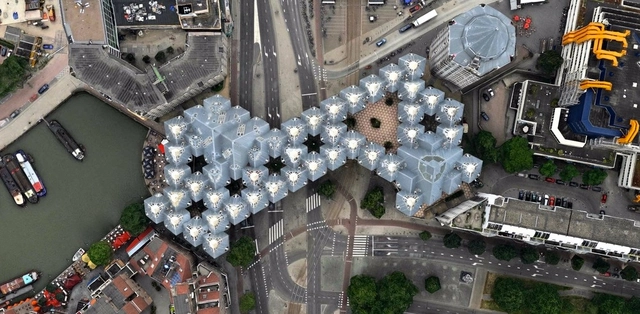
Piet Blom's Cube Houses - Rotterdam, The Netherlands. Image Courtesy of DigitalGlobe
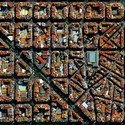
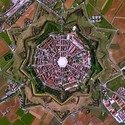
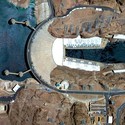
Earthrise, a photograph taken on Christmas Eve of 1968 by astronauts of the Apollo 8 mission, was a defining moment for our collective understanding of the world in which we live on. For the very first time it dramatically pulled into focus the simultaneous magnificence, intricacy, and terrifying fragility of the planet we inhabit. Since that time the advent, acceleration, and accessibility of satellite imagery has made one thing abundantly clear: that humankind has had a considerable effect on Earth, for better or for worse. Daily Overview's self-defined mission is to "consider the places where man has left his mark and then conduct the necessary research to identify locations to convey that idea." They do so with incredible effect.
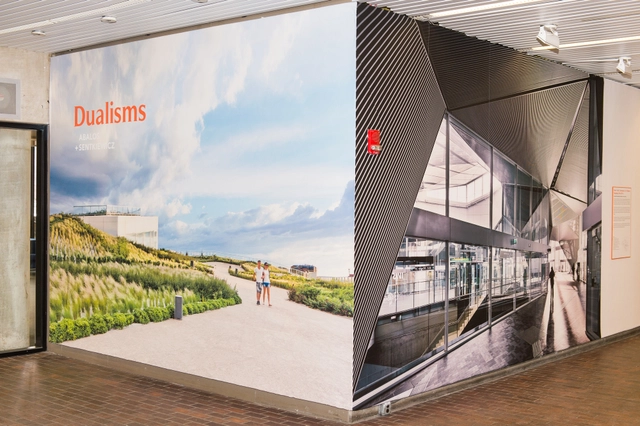
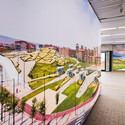
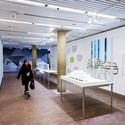
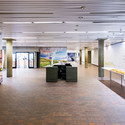
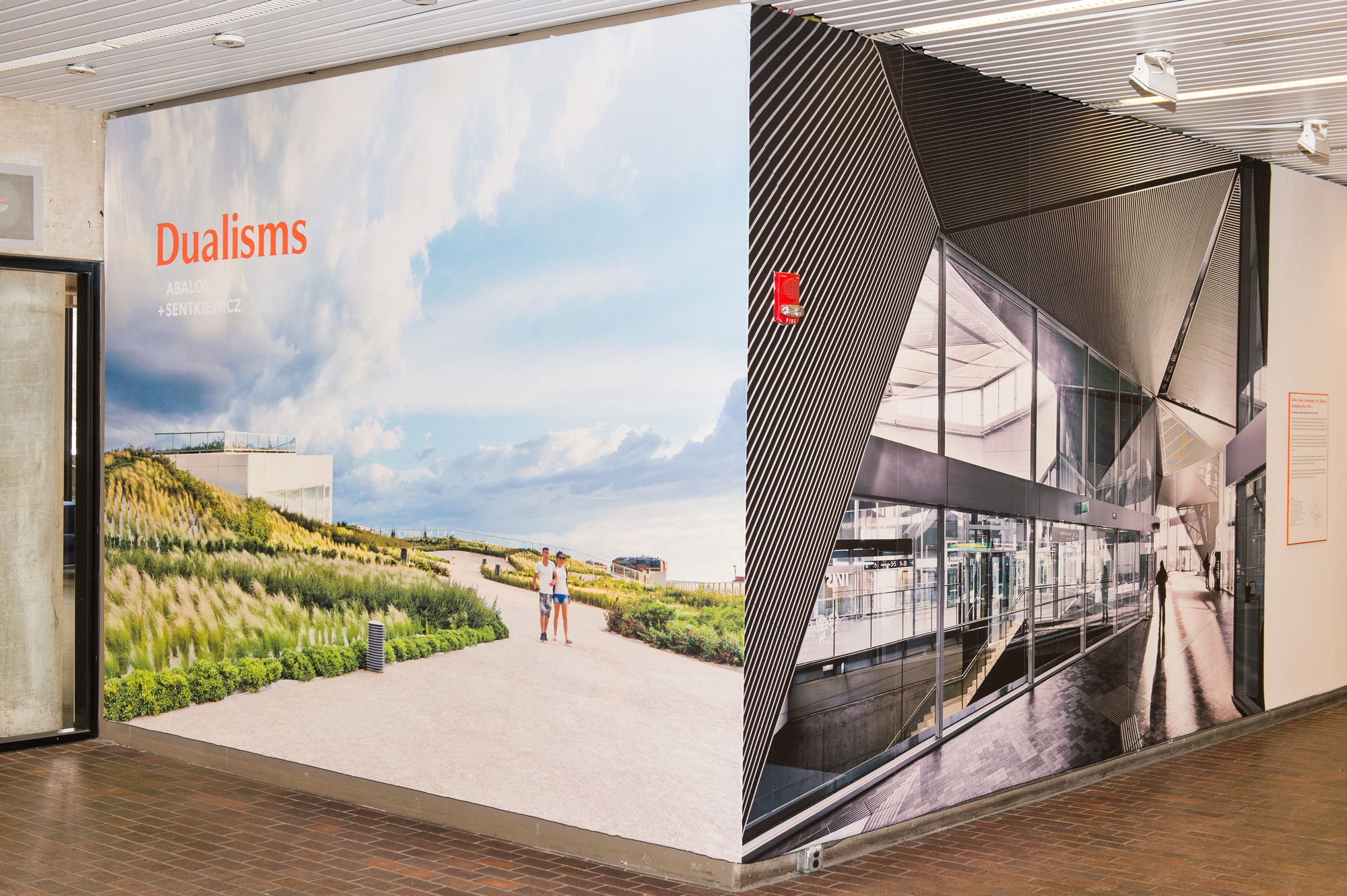
A new exhibition at the Harvard Graduate School of Design by Iñaki Ábalos and Renata Sentkiewicz (Ábalos+Sentkiewicz) will explore Dualisms in architecture: the notion that most historic architecture takes its "composite tension from two theoretically incompatible morphological organisations that correspond to different disciplines or languages." Suggesting that these organisations can possess elements of "compatibility and incompatibility" simultaneously, the appearance of "a kind of hybrid 'Frankenstein's monster'" is characterized by dualism in architecture. For the curators, Dualisms act not only performatively, but also in a creative and composite way. "They are, at once, constraints and formative opportunities."
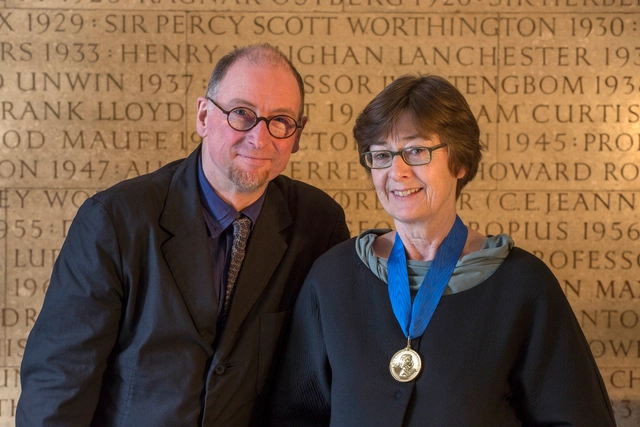
John Tuomey and Sheila O'Donnell - recipients of the 2015 Royal Gold Medal. Image Courtesy of RIBA
When Sheila O'Donnell and John Tuomey, who practice in partnership as O'Donnell + Tuomey, were named as this year's recipients of the RIBA Royal Gold Medal, a palpable collective satisfaction appeared to spread throughout the profession. No one could find criticism in Joseph Rykwert and Níall McLaughlin's nomination, nor the ultimate choice of the RIBA Honours Committee, to bestow the award upon the Irish team. Their astonishingly rigourous body of work, compiled and constructed over the last twenty five years, has an appeal which extends beyond Irish and British shores. A robust stock of cultural, community and educational projects, alongside family homes and social housing projects, leaves little doubt about the quality, depth and breadth of their mutual capabilities and the skill of those that they choose to collaborate with.
Read the conversation with the Gold Medallists after the break.
National libraries, often monumental in scale and "dominated by nationalistic ambitions and overwhelming architectural details," will be the subject of a new exhibition opening later this month at the Harvard Graduate School of Design (GSD). Icons of Knowledge: Architecture and Symbolism in National Libraries seeks to examine why national libraries are amongst the most symbolic icons of modern day countries. In the global milieu of the "rapid digitisation of print," this exhibition aims to shed light on why nations are "vehemently investing resources in the construction of buildings that will project their cultural legacy and house the most precious treasures of their written history."
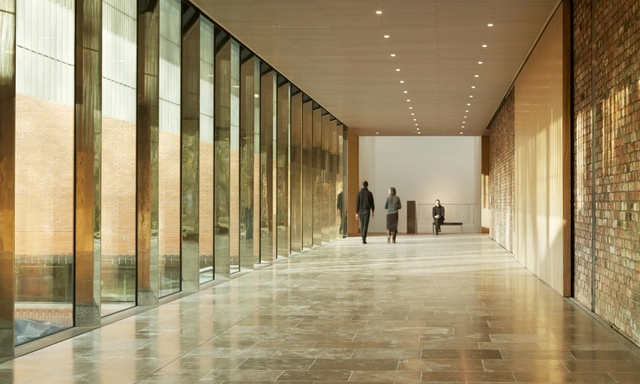
The sun drenched interior promenade. Image Courtesy of The Whitworth
In an article for The Observer, Rowan Moore visits Manchester's Whitworth Art Gallery (1908), a compact museum which has now undergone a comprehensive restoration and extension by MUMA (McInnes Usher McKnight). The practice, who won the job against 130 other bids for the project, worked with a budget of £15million in order to realise an ambitious brief. Their interventions and innovations, many of which are modest and unseen, have not only reconnected the building with its surrounding parkland but also elevated the interior rooms into world-class exhibition spaces. For Moore, their work is striking but muted: "the virtues of the new Whitworth – sustainable, accessible, sensitive, thoughtful – could all be synonyms for 'dull' or at least 'worthy'. But, thanks to its pleasures of light and material, it is not. It is a job very well done."
According to a document published last month, London's aspiration to become "a great cycling city" has taken one step closer to reality. The office of the Mayor of London has approved plans to develop Europe's longest segregated bicycle lane through the centre of the city following modifications to an original plan that drew sharp criticism from residents and commuters. The new plans, which have been supported by a number of private companies and public bodies, aims to maintain vehicular traffic capacity whilst allowing the segregated cycle lanes to cater for a large capacity of cyclists.
In 1954 British sculptor Henry Moore was commissioned to design and install a large wall relief into Joost Boks' new bouwcentrum (Construction Centre) in the Dutch city of Rotterdam. The project, pieced together with approximately 16,000 hand-carved Dutch bricks, stands as the sculptor's only work completed in the humble material. In a short documentary film produced by ARTtube, architectural historian Wouter Vanstiphout narrates the fascinating story behind Wall Relief No.1.
Combo Competitions'latest ideas challenge asks participants to "rethink refueling" in a competition which seeks to re-imagine the ubiquitous filling station. The historical rise of this 20th century typology, from simple fuel dispensers to palatial rest-stops on the highway, grew with the proliferation of the car and became symbols for societal progression, personal status, and "a bright future." Although the number of vehicles worldwide "surpassed one billion in 2010, there has been a steady decline in filling stations since the end of the last century." As such, perhaps this is the time to start to rethink how these fragments of the international mobility infrastructure operate?
In an essay and accompanying mini-documentary film by Ellis Woodman for The Architectural Review, Siza's iconic Quinta da Malagueira housing estate (1973-1977) in Évora, Portugal, is comprehensively explored and examined with a refreshingly engaging critical weight. Rather than develop multi-story housing in the sensitive landscape around the city, Siza proposed "a plan that distributed the programme between two fields composed of low-rise terraced courtyard houses." As a result, the arrangement of these structures adjust to the "undulating topography ensuring that the narrow, cobbled streets along which the houses are distributed always follow the slope."
As is made clear in the film (above), one of the remarkable aspects about the Quinta da Malagueira estate is that it is "governed by a third layer of infrastructure" which takes the form of "an elevated network of conduits that distributes water and electricity [...] much in the manner of a miniature aqueduct." For Siza, this was a logical move as it provided the cheapest means of distributing utilities around the complex. Woodman ultimately concludes that "Siza’s work at Malagueira invites a reading less as a fixed artefact and rather as one episode in the site’s ongoing transformation."
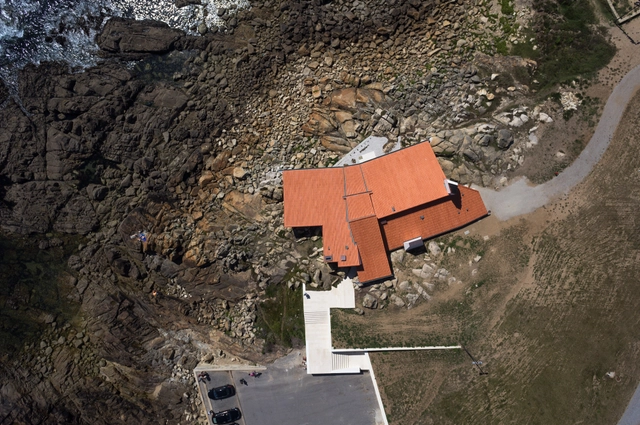
What is the draw of the aerial view? Whereas architects and designers often find solace in this particular spatial perspective there is a more inclusive, universal appeal to this way of seeing. The ease of access to online mapping services has increased our collective reliance on understanding our world from above.
Maps condense the planet into a little world inside our pocket, the commodification of which has universalised the ‘plan-view’ photograph. The question of whether or not their ubiquitous availability, having now been assimilated into our collective consciousness, is a positive step for the status of the plan is a discussion ongoing. Yet, in the face of this dilemma, architectural photographers are pushing the boundaries of drone technology in order to find new meaning.
In an article for Metropolis Magazine, Zachary Edelson speaks to architect and critic Michael Sorkin about The Next Helsinki - a competition set up "to inquire as to whether this very valuable site in this wonderful city can’t somehow be leveraged beyond a franchise museum building." The esteemed jury, replete with distinguished artists and architects (many of whom are Finnish), is not just "a counter-competition" to the recent Guggenheim competition: "we’re trying to raise the question of whether a big foreign institution is the most logical way to prompt the arts to flourish at the community level." Read Sorkin's comments about the Finns' attitude to their city and his thoughts on the shortlist of the recent Guggenheim competition in full here.
The Royal Institute of British Architects (RIBA) have announced that a new exhibition exploring the Scottish designer and artist's celebrated, but difficult, career is to open next month in London. Mackintosh Architecture will be the first exhibition solely devoted to his architecture, offering the opportunity to view over sixty original drawings, watercolours and perspectives spanning the entirety of his working life. Seen together, they "reveal the evolution of his style from his early apprenticeship to his later projects as an individual architect and designer." Drawings on display will also show his collaboration with the accomplished artist and designer Margaret Macdonald, his wife.
The Royal Institute of British Architects (RIBA)’s Future Trends Survey for December 2014 has revealed little month-on-month change in indexes with the acknowledgement of a growing level of optimism. After falling back slightly in November 2014, the workload index has remained consistent at +29 (from +37 in November). Workload forecast balance figures have remained extremely positive, with practices reporting +50 in Northern Ireland and up to +75 in Scotland. Furthermore, practices of all sizes have been responding with "optimistic" workload prospects heading into the next quarter. The percentage of respondents reporting that they had personally been under-employed fell to 9% from 12%.











_RIBA_Library.jpg?1422208050&format=webp&width=640&height=580)