The Royal Institute of British Architects (RIBA) have announced fourteen 2016 RIBA Honorary Fellowships (of whom two are in partnership) and eight International Fellowships which will be awarded at an event on the 1st February 2016, alongside the recently announced RIBA Royal Gold Medal. RIBA Honorary Fellowships are awarded annually to people who have made "a particular contribution to architecture in its broadest sense," be it in the fields of architecture, construction, media, education, or the arts.
The Royal Institute of British Architects (RIBA) have revealed that Dame Zaha Hadid will receive the 2016 Royal Gold Medal — the first sole woman to be awarded the UK's highest honour for architects in her own right. Previous female winners (Sheila O’Donnell in 2015, Patty Hopkins in 1994, and Ray Eames in 1979) were each recognised alongside their husbands and practice partners.
Given in recognition of a lifetime’s work, the RIBA Royal Gold Medal is approved personally by Her Majesty The Queen and is awarded to those who have had a significant influence "either directly or indirectly on the advancement of architecture." Other notable Royal Gold Medallists include Frank Gehry (2000), Lord Norman Foster, Baron of Thames Bank (1983), Ludwig Mies van der Rohe (1959), Le Corbusier (1953), and Frank Lloyd Wright (1941). The medallists' names are engraved into the marble wall at the RIBA's headquarters in London.
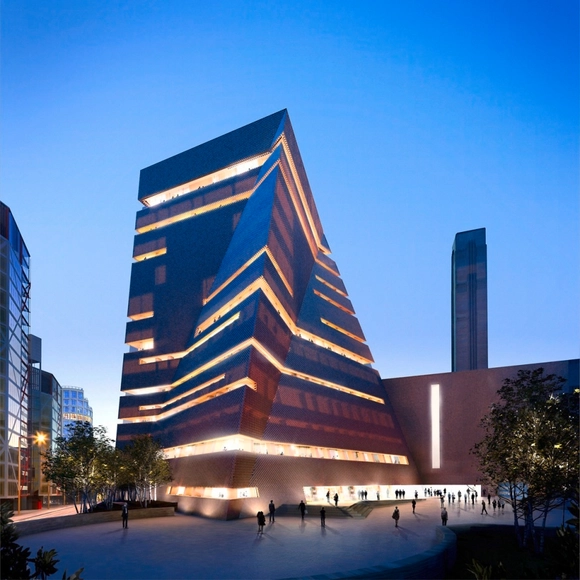
Earlier this week Sir Nicholas Serota, director of the Tate Modern, announced that Herzog & de Meuron's extension will officially open on Friday 17th June 2016. The gallery, which originally opened in 2000 housed within a former power station in London's Bankside, dramatically transformed the UK's relationship with modern and contemporary art. Since then, the Tate Modern has become a bastion of trend-setting and high-profile exhibitions, and has grown to be one of London's most visited cultural venues.
Empathetic historicism and romanticising older buildings has become an ever-common sentiment in modern Britain. In an article for the British daily The Telegraph, Stephen Bayley tackles this trend by questioning whether Victorian-era architecture is actually all worth saving? Victorian architecture, so called because it was implemented under the reign of Queen Victoria, was stylistically preoccupied by Gothic Revival — an attempt by architects and commissioners to impose a 'pure', chivalrous unifying aesthetic designed to instill a sense of civic importance and reaffirm a social hierarchy. Yet "their architecture," according to Bayley, "has an inclination to ugliness that defies explanation by the shifting tides of tastes."
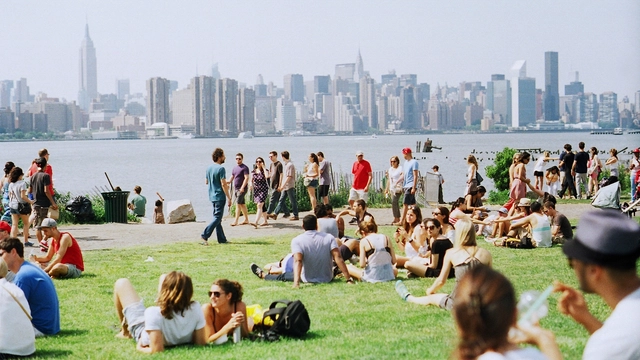
For the latest episode of The Urbanist, Monocle 24's weekly "guide to making better cities," the team explore the role of bilateral inspiration between metropolises across the world. Examples of cities relying on one another to draw lessons from and progress can be seen across the world: from the ways in which London and New York City tackle similar urban problems, to how a bike-sharing scheme in Paris has proven to be contagious. The show also visits Vienna, where its Imperial heritage is being imitated the world over, and the show ponders whether the fact that every continent "claiming to have its own Venice" is actually a good thing?
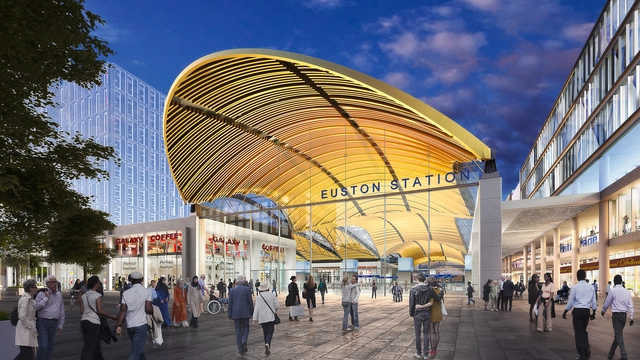
Grimshaw Architects, in collaboration with Arup, have revealed renderings for their proposed 25,000 square metre High Speed Two (HS2) railway terminal at Euston Station, in north London. They have developed an "incremental staged design" that will allow for the construction of the new high speed station while maintaining all existing services. Fronted by a 38 metre glazed façade, the new entrances will transform the internal circulation spaces into a "light and airy destination with shops, restaurants, and cafés."
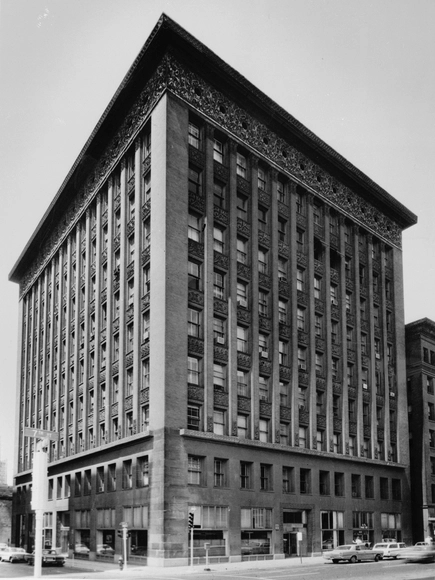
Wainwright Building / Adler & Sullivan. Image Courtesy of Historic American Buildings Survey
Welcome to the second installment ofThe Long(ish) Read: an AD feature which uncovers texts written by notable essayists that resonate with contemporary architecture, interior architecture, urbanism or landscape design. In this essay, written in March 1896, Louis H. Sullivan (1856-1924) discusses the construction of high-rise office buildings. Sullivan, often described as the 'Father of Skyscrapers' and the 'Father of Modernism', was a mentor to a number of US architects in and around Chicago — including Frank Lloyd Wright and the Prairie School. In this essay, written when he was forty years of age, Sullivan lists his solutions to the many problems associated with building tall, and doing so with a degree of artistic flair.
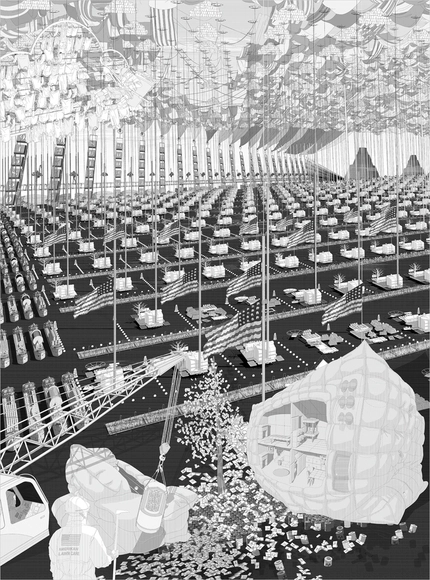
Marcin Chmura, a recent graduate from London's Bartlett School of Architecture, has developed a project which attempts to imagine a new future for the 'American Dream'. The United Suburbs of AmeriKa, named after Franz Kafka’s novel in which—despite never having visited America—he depicts the United States as a utopia offering eternal wealth and happiness for his foreign protagonist.
According to the Architects' Journal Jonathan Woolf, "the much-respected architect and academic" born and based in London, has died aged 54. His practice, Jonathan Woolf Architects, was established in 1990 and has completed more than thirty-five projects in Europe and Africa. Woolf was also a prolific educator, having taught at the British universities of Bath, Kingston (from which he received an honorary doctorate earlier this year), the Scott Sutherland School of Architecture, and the Architectural Association.
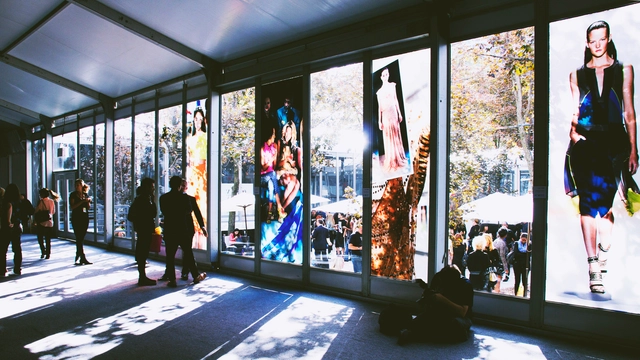
For this edition of The Urbanist, Monocle 24's weekly "guide to making better cities," the team examine how fashion is weaved into the very fabric of our cities. They visit New Delhi to explore the role of ethics within the industry, head to Paris to see how the French capital is benefitting from its status as the 'Fashion Capital', and spend time at the only Eco Fashion Week in Vancouver. The episode also asks whether it's possible to identify a city by what people wear.
For this week's The Urbanist, Monocle 24's "guide to making better cities," Andrew Tuck and David Plaisant broadcast a Reykjavík special with a series of reports from the Icelandic capital. They explore how this city marks its spot on the world map, looking at its high-quality new museums alongside its growing cultural and culinary scene. With around one million tourists visiting the city last year, th Reykjavík is experiencing a boom in popularity — which some describe as "maybe too much". With only around 300,000 inhabitants, Monocle 24 asks how the world's most northerly capital is coping with this growing success.
The news last year that the Hotel Okura, often described as one of Tokyo´s "Modernist gems," was to be demolished was met with widespread disappointment across the board. Built in 1962 under the design direction of Yoshiro Taniguchi, Hideo Kosaka, Shiko Munakata, and Kenkichi Tomimoto, the hotel has long been considered a significant architectural landmark in the Japanese capital. With only a week to go until the hotel checks out its last guest, Monocle—having been granted exclusive access—have shared with us a film to capture "the gracious ways of this much-loved building."
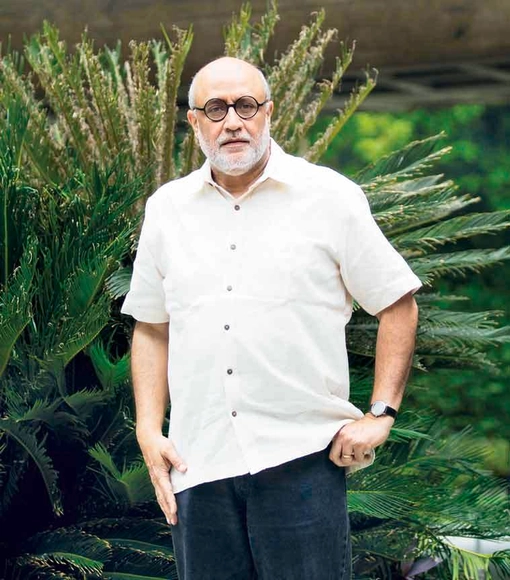
In an interview withThe Indian Express, Rahul Mehrotra—conservationist, architect and author of Kumbh Mela: Mapping the Ephemeral MEGACITY—talks to Shiny Varghese about his belief that the current notion of a 'smart city' is about "blanket replication, [which] will result in gated communities and flattening of the city, driven by infrastructure and investment." He argues that this approach "will create a form of exclusion."
A reef in August 2014. Image Courtesy of DigitalGlobe, via the CSIS Asia Maritime Transparency Initiative, and CNES, via Airbus DS and IHS Jane’s (via The New York Times)
For a recent article in The New York Times, Derek Watkins examines "what China has been building in the South China Sea." Employing high resolution satellite imagery and diagrams, his article investigates why—and how—China have been dredging and dumping sand in a bid to construct inhabitable artificial islands. Political and diplomatic concerns aside, the article also touches upon the technical requirements necessary to reclaim land from the oceans.
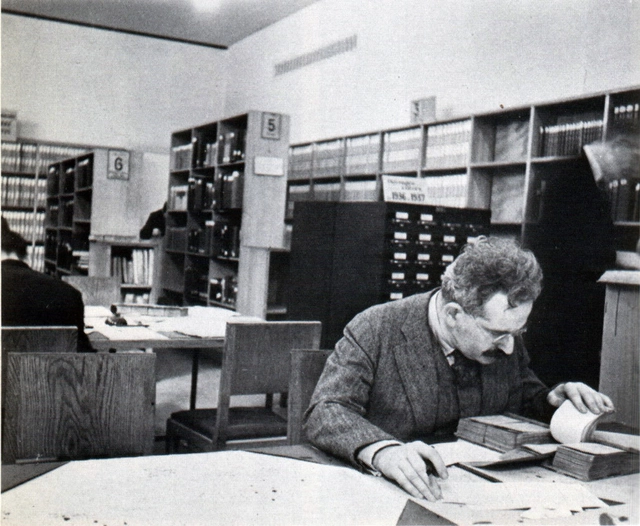
Welcome to The Long(ish) Read: a new AD feature which uncovers texts written by notable essayists which resonate with contemporary architecture, interior architecture, urbanism or landscape design. In this essay, written in 1931, Walter Benjamin narrates the process of unpacking his library. All in boxes, he takes the reader through elements of his book collection: the memories attached to them, the importance he placed on the act of 'collecting' and the process of accumulation, and how objects like books inhabit a space.
For this week's edition of The Urbanist, Monocle's weekly "guide to making better cities," the team explore why being 'number two' is not always a bad thing in an episode about second cities and the ways in which they step out of their capital's shadow. From Milan to Melbourne, the team examine how and why some cities are carving their own niche in the international business and tourism markets. They also interview the Mayor of Aarhus about the challenges – and advantages – of governing Denmark’s second city.
A twenty five metre long, ten storey high suspended swimming pool—dubbed the 'Sky Pool'—has been planned for the second phase of a new high-end residential development in the London district of Nine Elms, next to the new Embassy of the United States. The pool is part of two buildings, designed by London-based practice HAL and part of a complex of 2000 homes developed Ireland's Ballymore Group. The water will be held in suspension by just twenty centimetres of "structure free" transparent glass, and will connect two housing blocks together. Alongside a rooftop bar, orangery and spa, a second connection between the two is also planned in the form of a footbridge.
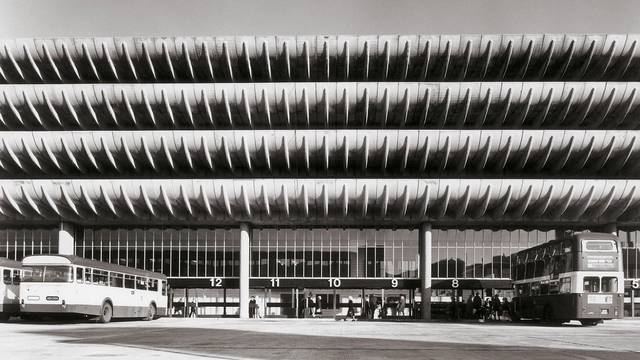
In 2013, following a number of campaigns, a 1969 Brutalist icon in the northern British city of Preston was listed. The future of this bus terminal—one of the largest in the UK and the biggest in Europe when it originally opened—was, until last month, a matter of considerable speculation and debate. This week the results of an international open-call competition for proposals transforming into a new youth centre were revealed, selecting the proposal of New York based practice John Puttick Associates as 'the best of the lot.' The 'lot', however, left something to be desired.


_Ronald_Tilleman_20130916-0033.jpg?1443101122&format=webp&width=640&height=580)