What can you learn from enterprising firms who push tech to new limits? It is time to be inspired to experiment with innovative technology that supports BIM. The software that opens projects up to unlimited possibilities is the one that helps you benefit from ground-breaking techniques. For firms, using ARCHICAD, 3D modeling photorealism and VR experiences are more than gimmicks. These technologies are part of a powerful toolset that opens the door to unlimited possibilities. Hear from the firms who have unlocked that power in By Design: The Next Frontier.
AD Editorial Team
BROWSE ALL FROM THIS AUTHOR HERE
↓
Three Architecture Firms Explore the Benefits of BIM in "By Design: The Next Frontier"
https://www.archdaily.com/914502/three-architecture-firms-explore-the-benefits-of-bim-in-by-design-the-next-frontierAD Editorial Team
Fairy Tales 2019 Winners: Top Stories Grapple With Issues Of Immigration, Sustainability, & The Future

Blank Space has announced the winners of the sixth annual ‘Fairy Tales’ competition. With submissions from over 65 countries, the award-winning entries explore current events and the creative process through wonderfully crafted short stories and artwork.
The winners were chosen by a jury of more than 20 leading architects, designers and storytellers, including Moshe Safdie, Tatiana Bilbao, Jurgen Mayer, Julia Koerner, Mark Foster Gage and Jane Yolen, among many other distinguished judges.
Check out the winning designs after the break.
https://www.archdaily.com/914525/winners-of-annual-fairy-tales-competition-announced-by-blank-spaceAD Editorial Team
Call for Entries: Eliminate Loneliness Through Design

***Registration Closes at 00:00 EST on April 8th, 2019***
https://www.archdaily.com/911880/call-for-entries-eliminate-loneliness-through-designAAA
Trends Report: Inclusive Design
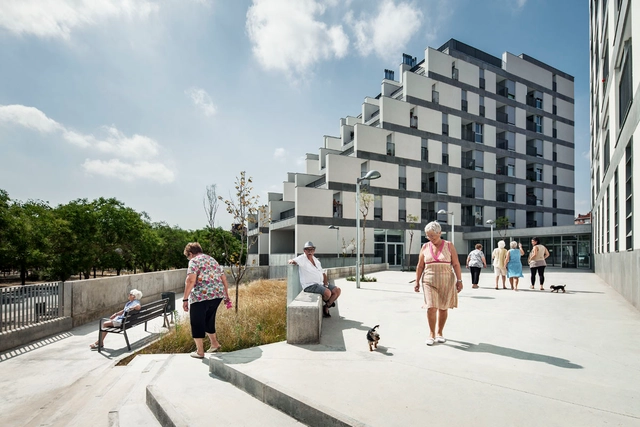
As users of ArchDaily demonstrate certain affinities and greater interest in particular subjects, these topics emerged as trends. Inclusive Architecture was one of the most searched concepts on ArchDaily in 2018.
https://www.archdaily.com/915588/trends-report-march-2019-inclusive-designAD Editorial Team
Winners of the 2019 Building of the Year Awards
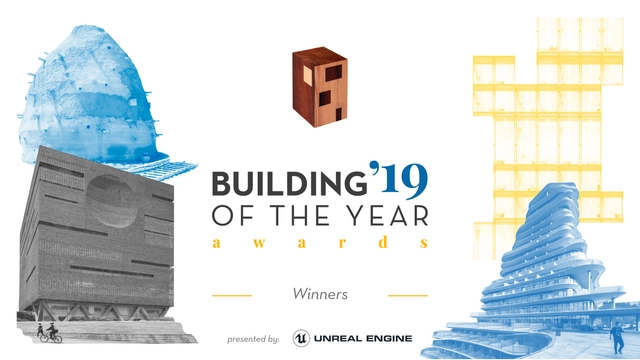
More than 80,000 votes were cast over the last two weeks and, after careful review, the results of the 2019 ArchDaily Building of the Year Awards presented by Unreal are in. Building of the Year, which itself celebrated ten years this year, is the largest peer-based crowdsourced architecture award in the world, showcasing the projects chosen by you, our readers, as the most significant of the year.
This is no mean feat. More than 4000 projects were in contention this year, challenging readers to carefully consider a wide variety of projects across type, scale, and location. 4000 projects were whittled to 75 finalists; 75 have now been reduced to the 15 winners - one for each typological category.
The results are as diverse as the architecture itself. Well-known names are, as in years past, present among the bunch, among them Zaha Hadid Architects, MVRDV, and Heatherwick Studio. For London-based Heatherwick, their win marks the second consecutive year they have taken top honors for a refurbishment-based project. But less-renowned names dominate the ranks of the winners this year. Innocad’s serenely simple office building for a real estate company elevates what corporate architecture can be while the technical and material mastery of Sameep Padora’s Maya Somaiya Library is enough to make any architect look twice. The library is, in fact, one of two Indian projects to take top honors this year - a strong first year showing for the nation whose design talent seems finally to be coming to the fore.
But for all their many beautiful differences, the winners share a crucial element in common: they represent the values of our mission, to bring inspiration, knowledge, and tools to architects everywhere. Building of the Year - indeed, ArchDaily itself - would not be possible without the generosity of firms and readers as invested in our mission as we are. We give our profound thanks to all who participated this year, no matter the form. Congratulations to all the winners!
https://www.archdaily.com/912997/winners-of-the-2019-building-of-the-year-awardsAAA
The Best Architecture Portfolio Designs
.jpg?1496179855&format=webp&width=640&height=580)
When applying for an architecture job, you need to make sure you have the perfect portfolio. While a clever and attractive business card might help you initially get a firm's attention, and a well-considered résumé or CV might help you prove your value, in most cases it will be your portfolio that makes or breaks your application. It's your portfolio that practices will use to measure your design sensibilities against the office's own style and to judge whether you match up to the talents claimed in your résumé.
After launching a call for our readers to send us their own portfolios so that we could share the best design ideas with the ArchDaily community, this selection below shows the best of the nearly 200 submissions we received, which were judged not on the quality of the architectural design they showed (though much of it was excellent) but instead the design quality of the portfolio itself. In making the selection, we were looking for attractive graphics, a clear presentation of the work itself, the formulation of a visual identity which permeated both the architectural designs and the portfolio design, and of course that elusive and much-prized attribute: "creativity."
https://www.archdaily.com/872418/the-best-architecture-portfolio-designsAD Editorial Team
World Architecture Festival and INSIDE World Festival of Interiors 2019 Launches its Global Awards Programme
.jpg?1551991300&format=webp&width=640&height=580)
The search has begun for the world’s best building, as the World Architecture Festival launches its annual global awards programme. The 12th edition of the festival will take place in Amsterdam from the 4th to 6th December, where more than 550 architectural and design practices from over 68 countries are expected to compete for category and overall prizes.
Alongside the World Architecture Festival sits its sister festival; INSIDE - World Festival of Interiors. INSIDE is a feast of creativity, inspiration and knowledge for the interiors industry and is now open for awards entries. Comprising the most original and exciting interiors from the last 12 months, projects can be entered across nine diverse categories.
https://www.archdaily.com/912830/world-architecture-festival-and-inside-world-festival-of-interiors-2019-launches-its-global-awards-programmeAAA
Who is Arata Isozaki? 20 Things to Know About the 2019 Pritzker Laureate
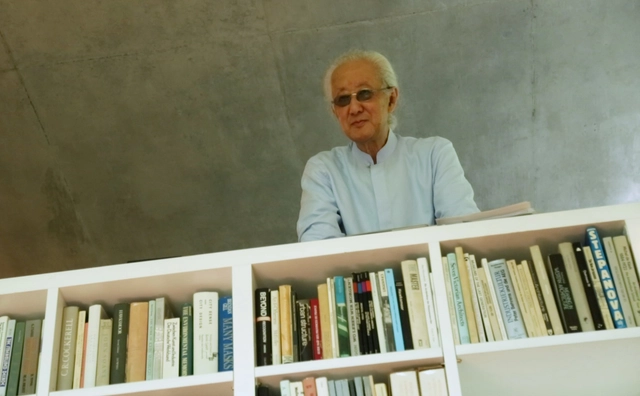
The prolific and varied career of 2019 Pritzker Laureate Arata Isozaki, which includes more than 100 works built on virtually every continent, gives us a huge amount of facts that are relevant to understanding his life and architecture. Considered the first Japanese architect to develop his work on a truly global scale, Isozaki took special care to respond to the context and the specific requirements of each project, expanding the heterogeneity of his work and resulting in a variety of styles from vernacular to high tech.
See below 20 fascinating facts that illuminate his particular genius:
https://www.archdaily.com/912602/who-is-arata-isozaki-20-things-to-know-about-the-2019-pritzker-laureateAD Editorial Team
A Selection of the Best Instagram Photos from Arata Isozaki's Work
_17.28.10.jpg?1551731331&format=webp&width=640&height=580)
2019 Pritzker Laureate Arata Isozaki has been designing for more than half a century; several of his works are considered architectural classics due to their influence and impact on international design.
His work combines a number of styles, from vernacular to high tech and organic to brutalist, giving his projects a sculptural and undeniably photogenic appearance. With such richness in design, it is perhaps no wonder that people around the world are excited to photograph his work.
We've selected 23 of the most beautiful photos of Isozaki's work posted to Instagram by users across the globe. Our selection, after the break:
https://www.archdaily.com/912600/a-selection-of-the-best-instagram-photos-from-arata-isozakis-workAD Editorial Team
ArchDaily's 2019 Building of the Year Awards are Now Open for Nominations
.jpg?1550588752&format=webp&width=640&height=580)
2018 marked a banner year for ArchDaily. Our global audience has continued to grow in leaps and bounds, taking advantage of the nearly 40,000 new articles and 4300 projects added to our site. We are proud and excited to reach readers in every corner of the world, and we savor the opportunity to continue sharing the inspiration, knowledge, and tools needed to design a positive urbanizing world.
We recently shared with our readers the trends that will define the field of architecture in 2019. We are able to confidently identify these trends, not just because of our experience in reporting on them but also due to our data-driven approach. We are committed to listening to and sharing the interests of our readers - and no effort exemplifies this better than our annual Building of the Year awards.
The 2019 edition of BOTY, presented in partnership with Unreal Engine, is a particularly exciting one for ArchDaily, as it marks ten consecutive years of our flagship award program. With the Building of the Year award, we ask you, the reader, to share in the responsibility of recognizing and rewarding the projects making an impact in the profession. In sharing your opinion, you become part of an unbiased and representative network of jurors and peers that have been dedicated to elevating the most relevant projects in the profession of the past decade.
Over the next three weeks, your collective wisdom will whittle the more than 4,000 projects published in the last year to just 15 stand-outs––the best project in each category on ArchDaily.
This is your chance to reward the architecture you love by nominating your favorite for the 2019 Building of the Year Awards!
https://www.archdaily.com/911592/archdailys-2019-building-of-the-year-awards-are-now-open-for-nominationsAAA
The Brutal Majesty of Bratislava's Slovak Radio Tower, Through the Lens of Alexandra Timpau
.jpg?1549809940)
Opening in the late 1980s after more than ten years of construction, the Slovak Radio Tower is an unmissable feature in the landscape of Bratislava. The building, an inverted pyramid of steel frame construction, was designed by Štefan Svetko, Štefan Ďurkovič, and Barnabáš Kissling during the height of socialist realism.
.jpg?1549809709 "© Alexandra Timpau, Alex Shoots Buildings")
.jpg?1549811238 "© Alexandra Timpau, Alex Shoots Buildings")
.jpg?1549809072 "© Alexandra Timpau, Alex Shoots Buildings")
.jpg?1549809230)
.jpg?1549808705)
https://www.archdaily.com/911129/the-brutal-majesty-of-bratislavas-slovak-radio-tower-through-the-lens-of-alexandra-timpauAD Editorial Team
Solar Car Port: Renewable Energy to Charge Your E-Car
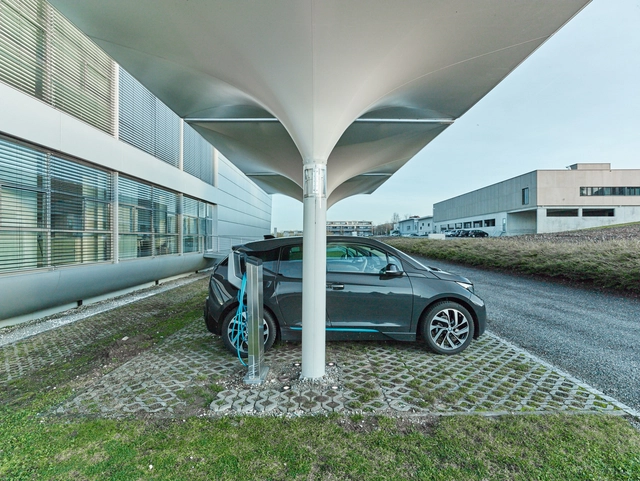
In recent years, solar energy has become a very popular method to power electric vehicles. This emerging technology has motivated the development of new architectural typologies. An evident evolution of traditional gas stations, it could be foreseen that solar-powered charging stations will begin to significantly grow in numbers in our cities in both public and private spaces.
https://www.archdaily.com/897606/energy-harvesting-charge-a-car-in-3-hours-at-this-solar-powered-electric-stationAD Editorial Team
Best Houses of 2018
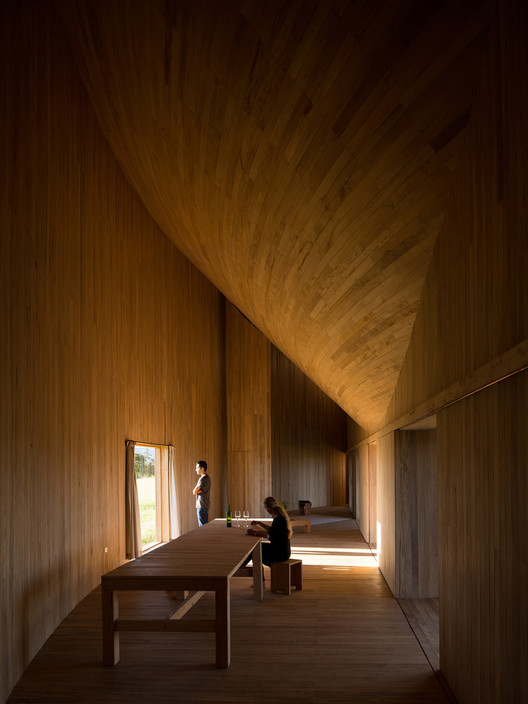
With more than 4000 different projects published during the year, our editors want to close an exciting year for architecture with a selection in a typology near and dear to us all: houses.
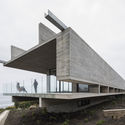
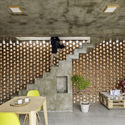
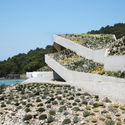
From remote landscapes to urban infills; vernacular design to high-tech automation, this selection of 80 houses highlights 2018's most exciting moments for architectural design, material and construction innovation, challenging topography, and client desires - all in the home. See the best houses from around the world here.


https://www.archdaily.com/908259/best-houses-of-2018AAA
The Best Architecture of 2018
To our readers,
As we approach the end of the year, we would once again like to thank you all for making 2018 our best year yet. With your continued support, we are now reaching more architects around the globe than ever, and inspiring them in the creation of better urban environments for all.
https://www.archdaily.com/907313/the-best-architecture-of-2018AD Editorial Team
The New Mixtape Featuring Your Favorite Designers
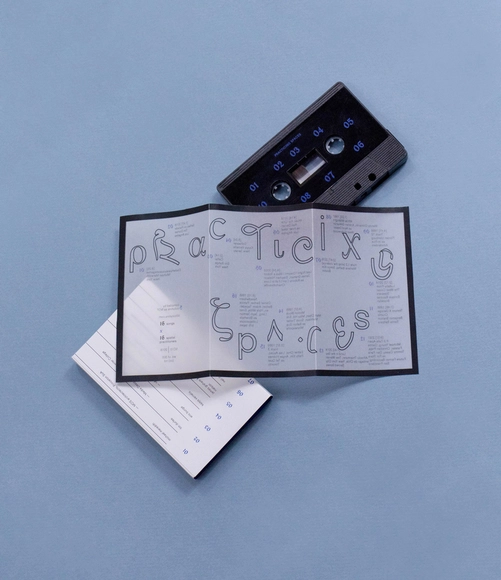
Architecture has long proved an inspiration to musicians, with artists as diverse as Art Garfunkel and Kanye all drawing (so to speak) from the field. Some musicians even began their professional careers as architects - Weird Al, Ice Cube, and three of Pink Floyd's founding members among them.
https://www.archdaily.com/908642/the-new-mixtape-featuring-your-favorite-designersAD Editorial Team
World Architecture Festival Winner Shares Their Experience of the Event
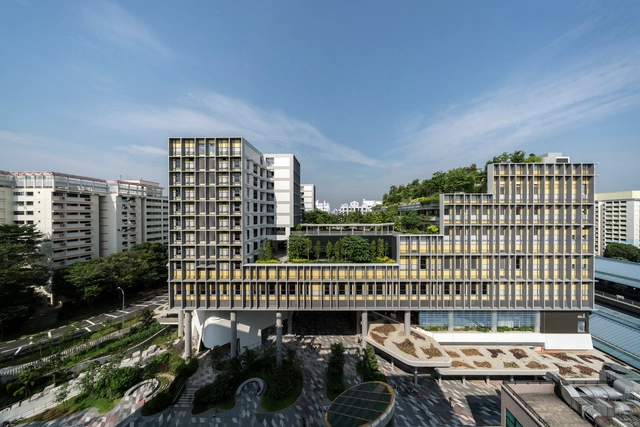
A month after the event, the various nominees of 2018's World Architecture Festival have returned to their home cities, leaving the fanfare of the year's event in Amsterdam as a memory. But that's not to say it's not left a lasting impact.
https://www.archdaily.com/908256/world-architecture-festival-winners-share-their-experiences-of-the-eventAD Editorial Team
Happy Holidays from Architects Around the World (2018 Edition)

'Tis the season of holiday cheer, and with that comes the creative greetings from offices, museums, photographers and collaborators around the world! See our favorites below (or check out our best reader-submitted cards).
Here’s to a joyful, exciting, and architecture-filled 2018! See the best projects and articles published this year, here.
https://www.archdaily.com/908073/happy-holidays-from-architects-around-the-world-2018-editionAD Editorial Team
Why Your Home and Office Affect Your Mood and Health

If asked about comfort, what is the first thing that comes to mind? Luxurious finishes, plush chairs and sleek interiors? Few would think of their office, and the likely culprit is a fundamental ignorance of an alternative definition of comfort. When defined as a state of physical well-being derived from the provisions that are necessary for occupants to perform space-specific tasks, it’s apparent that architects play a key role--and that comfort is not just about spaces that are comfortable for leisure activities.
Architects and designers are responsible for the visual, thermal and acoustic qualities of spaces, not to mention the indoor air quality of our offices and homes. This is fundamental considering that the typical 21st century urbanite spends an average of 90% of time indoors. We constantly experience physical, psychological and physiological consequences of the balance (or imbalance) of indoor environmental design .
With this in mind, thermal comfort seems obvious (and it is) but unfortunately comfort as a holistic goal of architecture has not been taken seriously enough. Beyond measuring the acoustic and visual aspects of a built space, architects must have a solid understanding of the underlying concepts that drive the best practices. A solid grasp on how material selections will affect qualitative assessments of conferences rooms, homes, theaters, etc. can improve basic tectonic decision making that can, in turn, create more comfortable spaces.
https://www.archdaily.com/907758/why-your-home-and-office-affect-your-mood-and-healthAAA