Courtesy of Consejo Nacional de la Cultura y las Artes
As part of ArchDaily's coverage of the 2016 Venice Biennale, we are presenting a series of articles written by the curators of the exhibitions and installations on show.
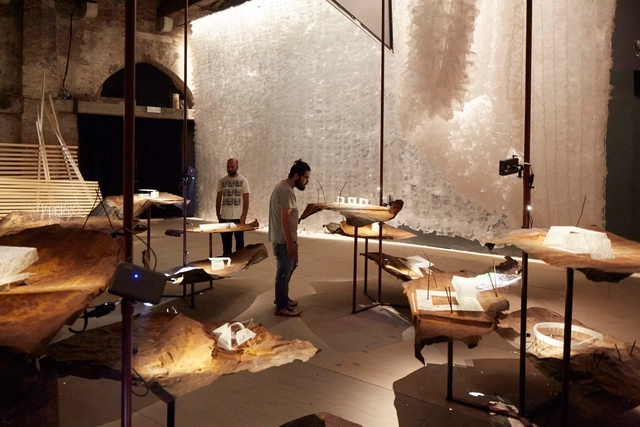
Against the tide presents the efforts of a generation of young architects who have conceived, designed, and constructed works of architecture, while also arranging their financial and contractual aspects as part of the requirements for their professional degree in architecture. All they have in common is that they belong to the Central Valley of Chile, where they have returned following their academic training to contribute to their communities, creating architectural projects which connect to a set of places where the region’s campesinos and their families can live and work.
At the opening of the 2016 Venice Biennale, ArchDaily and PLANE—SITE had the unique opportunity to interview Carlos Quintáns & Iñaqui Carnicero and ask them about "UNFINISHED"—an exhibition that uncovers design strategies that take an optimistic view of the built environment. This idea of exhibiting architecture that revels in the patina acquired through the passage of time and that shows how architects have learned from Spain's recent economic crisis earned the Pavilion the Golden Lion for Best National Participation. The jury cited Quintáns & Carnicero's "concisely curated selection of emerging architects whose work shows how creativity and commitment can transcend material constraints."
To see the video with subtitles, make sure that the "CC" button is selected.
As part of ArchDaily's coverage of the 2016 Venice Biennale, we are presenting a series of articles written by the curators of the exhibitions and installations on show.
After the collapse of the Soviet Union, and increasingly since 9/11 and the “War on Terror” that followed, warfare has moved into the city.
While the wars of the 20th century were waged largely between nations, over territorial sovereignty and along disputed borders, the wars of the 21st century are internal and borderless. They are fought between large multinational coalitions and insurgent networks.
https://www.archdaily.com/788422/blue-architecture-of-un-peacekeeping-missions-inside-the-netherlands-pavilion-at-the-2016-venice-biennaleAD Editorial Team
As part of ArchDaily's coverage of the 2016 Venice Biennale, we are presenting a series of articles written by the curators of the exhibitions and installations on show.
The Romanian Pavilion at the 15th International Architecture Exhibition — La Biennale di Venezia showcases “Selfie Automaton”, an exhibition by Tiberiu Bucșa, Gál Orsolya, Stathis Markopoulos, Adrian Aramă, Oana Matei, Andrei Durloi. The exhibition consists of 7 mechanical automata, featuring 42 built in marionetes — 37 human and 5 creatures. Three of the automata will be placed in the Romanian Pavilion in Giardini, another three in the New Gallery of the Romanian Institute of Culture and Humanistic Research, and one nomad that will wander through the streets of Venice.
Alejandro Aravena and the jury for the 15th International Architecture Exhibition at La Biennale di Venezia have just announced the winning participations.
The Golden Lion for Best National Participation went to Spain for UNFINISHED. The jury cited Carlos Quintáns & Iñaqui Carnicero's "concisely curated selection of emerging architects whose work shows how creativity and commitment can transcend material constraints."
"Architecture is about giving form to the places where we live. It is not more complicated than that, but also not easier than that." - Alejandro Aravena
On the first day of the vernissage 15th International Architecture Exhibition at La Biennale di Venezia, ArchDaily is pleased to show you a preview of the exhibitions and installations that were hand selected by Alejandro Aravena and his firm Elemental. Separate from (but in dialogue with) the National Pavilions, "Reporting From the Front" celebrates work that "address[es] a problem that matters and for which quality architecture made a difference."
In an exhibition whose aim is to share the "success stories" where architecture is making a difference, Alejandro Aravena has convened offices and practitioners from across the globe to show—"in the simplest possible terms (without trivializing)"—projects that demonstrate innovation, resolve and quality problem-solving abilities.
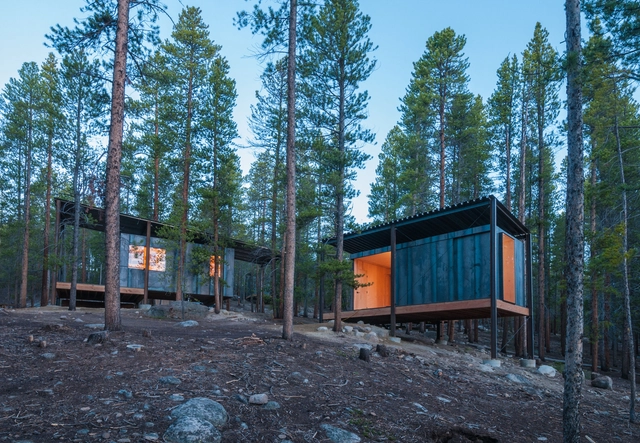
The process of carrying out a project from start to finish includes many different variables, from determining the users' needs to figuring out how best to set up the work site. The latter are an important part of determining the project logistics as well as its design criteria. Colorado Outward Bound Micro Cabins emphasize this process, using a planning logic that takes into account the design of a minimally-sized living unit under extreme conditions as well as the execution of the assembly in a short time and in a place of difficult access.
The 2016 Venice Biennale will see the inaugural collaboration between La Biennale and London's Victoria & Albert Museum (V&A) with an exhibition located in the Sale d’Armi (Arsenale) entitled A World of Fragile Parts. The show aims to explore the threats facing the preservation of global heritage sites and how the production of copies can aid in the preservation of cultural artefacts.
https://www.archdaily.com/787177/londons-victoria-and-albert-museum-to-present-a-world-of-fragile-parts-in-2016-venice-biennaleAD Editorial Team
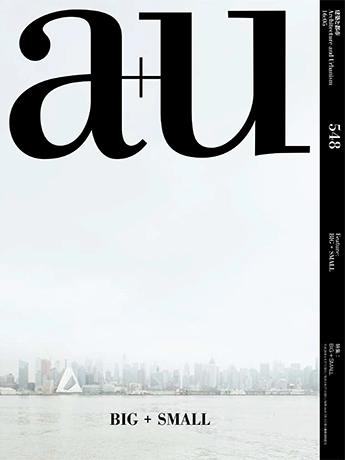
From the Publisher. The May 2016 issue of a+u is a special issue dedicated to recent works by BIG – Bjarke Ingels Group.
The team is engaged with projects both large and small in locations all over the world. The issue reflects that diversity, with the first half devoted to the large, urban-scale works for which the practice is best known, and the second half devoted to smaller works, including residences and a pavilion. Including those nearing completion, 20 of the 22 projects introduced here are currently underway. Over the next few years, we will see many more of their works finished.
https://www.archdaily.com/787062/a-plus-u-548-big-plus-smallAD Editorial Team
This article is part of our new "Material Focus" series, which asks architects to elaborate on the thought process behind their material choices and sheds light on the steps required to get buildings actually built.
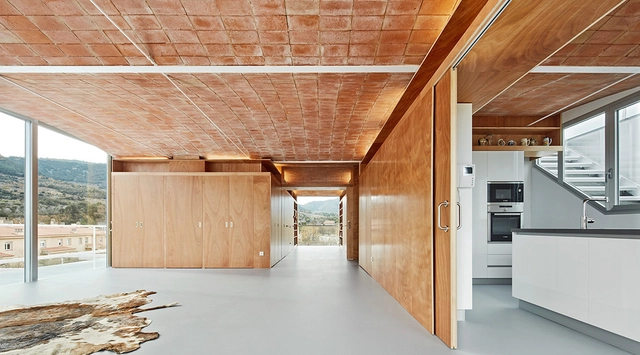
In the Catalan countryside, on the outskirts of the small town of Alforja, sits an incongruous sight: among the scattered stone masia houses is a structure of steel and glass, a resolutely rectilinear box among the traditional housing forms. But once inside the OE House, designed by Fake Industries Architectural Agonism and Aixopluc, one realizes that the building is not so different to its neighbors after all: on the upper floor, the roof incorporates a system of ceramic vaults taken almost directly from traditional vernacular design. This feature then combines with plywood and OSB to create a truly eclectic material pallette. We spoke with the design's architects, David Tapias of Aixopluc and Cristina Goberna and Urtzi Grau of Fake Industries Architectural Agonism, to find out what lay behind these unusual material choices.
https://www.archdaily.com/786897/material-focus-oe-house-by-fake-industries-architectural-agonism-plus-aixoplucAD Editorial Team
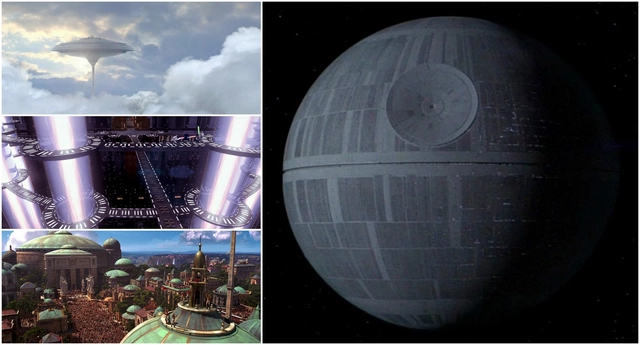
Perhaps the most enduring appeal of Star Wars for its fans is not simply its compelling storyline or its dramatic space battles - it is instead that this universe is, in fact, a universe, with all the complexity and depth that entails. One of the best ways to reveal that depth is through architecture, which offers the most visually striking combination of history, culture and technology available. As a result, the Star Wars universe is littered with a huge variety of fascinating architecture, from ancient temples to futuristic floating cities.
Today is the most holy day in the Star Wars fanatic’s calendar, and thanks to pages like Star Wars Architecture on Facebook and Wookieepedia, we’re celebrating the event with seven of the most interesting, astonishing and iconic architectural structures from the franchise. Enjoy, and May the 4th be with you.
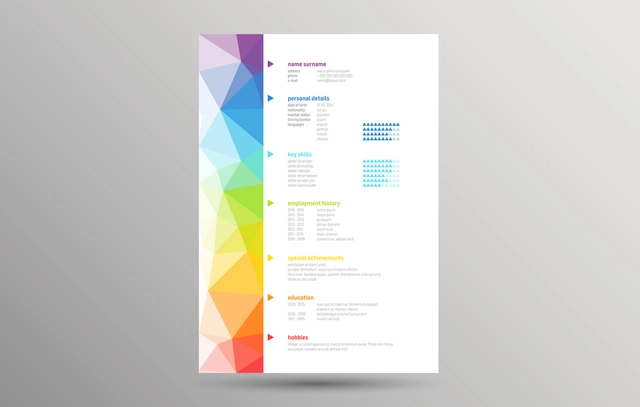
Are you proud of your resume? Not for what's contained in it—that part is super important, don't get us wrong—but for how it's visually presented and designed? Following the success of our business cards for architects post, we want our readers to share their innovative, eye-catching, well-formulated resumes (also called CVs, depending on where you live/work).
If you think your resume has what it takes to be featured in a top-10 list, then send it over!
https://www.archdaily.com/786321/call-for-submissions-the-best-architecture-resumesAD Editorial Team
The Massachusetts Institute of Technology (MIT) have announced that eight full-time or visiting faculty members and four alumni spanning five continents will be responsible for ten separate installations at the upcoming 2016 Venice Biennale. The institution have said that their "worldview for meaningful impact [is] deeply aligned with this year’s theme of architecture in action."
https://www.archdaily.com/786650/massachusetts-institute-technology-mit-announce-ten-associated-installations-at-2016-venice-biennaleAD Editorial Team
This edition of Section D, Monocle 24's weekly review of design, architecture and craft turns its editorial gaze back to their "own turf" to consider ways in which publications cover design and architecture, both in print and online. The episode asks whether "traditional magazines are as influential as they used to be," and whether or not "clicks and online-only articles can actually pay the bills?" In search of answers, Monocle's Henry-Rees Sheridan talks to ArchDaily's co-founder and Editor-in-Chief, David Basulto, along with European Editor-at-Large James Taylor-Foster, about the origins of the platform – and more.
https://www.archdaily.com/786281/monocle-24-asks-how-do-you-cover-architecture-and-design-archdaily-david-basulto-james-taylor-fosterAD Editorial Team
Zaha Hadid’s prolific, admired, and influential body of work led to hundreds of invitations to lecture around the world. Through her contemporaries’ heartfelt introductions, we can appreciate her groundbreaking architectural approach in a world which often appeared to be one step behind her ideas and enthusiasm.
https://www.archdaily.com/785459/reflections-on-zaha-hadid-a-compilation-of-introductory-remarksAD Editorial Team
ArchDaily is looking for motivated architecture lovers to join our team of interns for Summer 2016! An ArchDaily internship is a great opportunity to learn about our site and get exposed to some of the latest and most interesting ideas shaping architecture today.
Interested? Then check out the requirements below.
https://www.archdaily.com/785363/call-for-archdaily-interns-summer-2016AD Editorial Team
Photographer Laurian Ghinitoiu has captured the latest photos of BIG's courtscraper, VIA 57WEST. Exploring the urban context of this unconventional high-rise, the images illustrate how the building's swooping facade and peak appear from different sight lines.
Tonight, the "Pritzker Laureates' Conversation"—titled Challenges Ahead for the Built Environment—will be broadcast live at 6.30pm ET. It will provide a rare opportunity to hear 2016 Pritzker Laureate Alejandro Aravena in conversation with previous Pritzker Prize Laureates, including Richard Meier, Glenn Murcutt, Jean Nouvel, Renzo Piano, Christian de Portzamparc, Richard Rogers, and Wang Shu. The conversation will be moderated by Cathleen McGuigan.
https://www.archdaily.com/784973/watch-the-pritzker-laureates-conversation-live-today-6-30pm-etAD Editorial Team
.jpg?1464882577 "© Laurian Ghinitoiu")
.jpg?1464882653 "© Laurian Ghinitoiu")
.jpg?1464882611 "© Laurian Ghinitoiu")

.jpg?1464971221 "© Laurian Ghinitoiu")
.jpg?1464971291 "© Laurian Ghinitoiu")
.jpg?1464971243 "© Laurian Ghinitoiu")
.jpg?1464971274 "© Laurian Ghinitoiu")
.jpg?1464971221)

.jpg?1464426433 "BLUE: Architecture of Peacekeeping Missions. Image © Laurian Ghinitoiu")
.jpg?1464426519 "BLUE: Architecture of Peacekeeping Missions. Image © Laurian Ghinitoiu")
.jpg?1464426543 "BLUE: Architecture of Peacekeeping Missions. Image © Laurian Ghinitoiu")
.jpg?1464426508 "BLUE: Architecture of Peacekeeping Missions. Image © Laurian Ghinitoiu")
.jpg?1464426374)
.jpg?1464648970&format=webp&width=640&height=580)
.jpg?1464648978 "SELFIE AUTOMATON / curated by Tiberiu Bucșa, Gál Orsolya, Stathis Markopoulos, Adrian Aramă, Oana Matei, Andrei Durloi. Romanian Pavilion at the 2016 Venice Biennale. Image © Laurian Ghinitoiu")
.jpg?1464649006 "SELFIE AUTOMATON / curated by Tiberiu Bucșa, Gál Orsolya, Stathis Markopoulos, Adrian Aramă, Oana Matei, Andrei Durloi. Romanian Pavilion at the 2016 Venice Biennale. Image © Laurian Ghinitoiu")
.jpg?1464648985 "SELFIE AUTOMATON / curated by Tiberiu Bucșa, Gál Orsolya, Stathis Markopoulos, Adrian Aramă, Oana Matei, Andrei Durloi. Romanian Pavilion at the 2016 Venice Biennale. Image © Laurian Ghinitoiu")
.jpg?1464649086 "SELFIE AUTOMATON / curated by Tiberiu Bucșa, Gál Orsolya, Stathis Markopoulos, Adrian Aramă, Oana Matei, Andrei Durloi. Romanian Pavilion at the 2016 Venice Biennale. Image © Laurian Ghinitoiu")
.jpg?1464648970)
.jpg?1464428401&format=webp&width=640&height=580)


.jpg?1464428401)

.jpg?1464273616 "© Laurian Ghinitoiu")
.jpg?1464273639 "© Laurian Ghinitoiu")
.jpg?1464273508 "© Laurian Ghinitoiu")
.jpg?1464273743 "© Laurian Ghinitoiu")
.jpg?1464273296)
Victoria_and_Albert_Museum__London.jpg?1462899945&format=webp&width=640&height=580)




.jpg?1459794350)