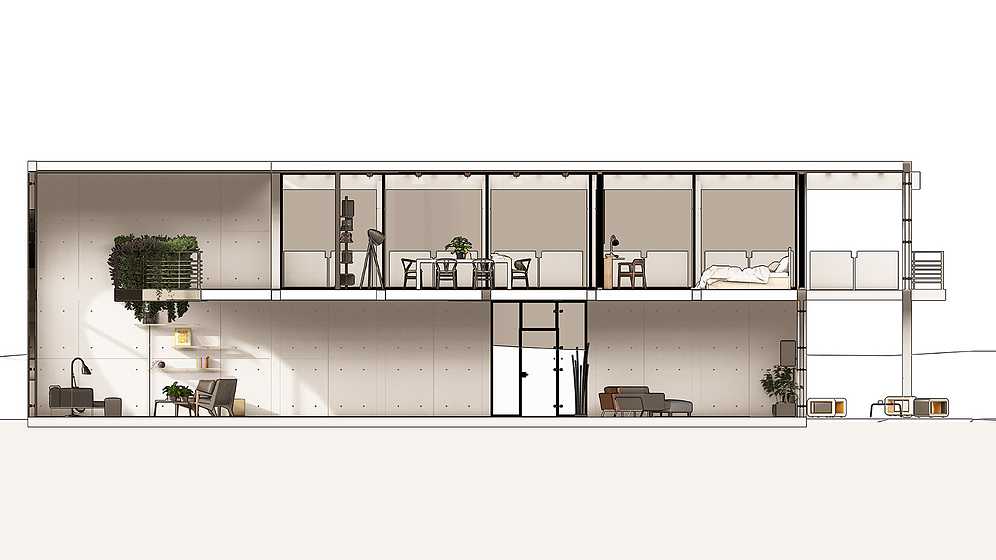
Produce personalized presentation boards that distill complex concepts into simple visual representations with a few helpful tools and effects.


Produce personalized presentation boards that distill complex concepts into simple visual representations with a few helpful tools and effects.
“Public space is the new backyard,” says Hamish Dounan, Associate Director of CONTEXT Landscape architects. “Great landscape architecture projects can actually get people out of their apartments and going for walks. It can get them engaging in a social way,” adds Shahana Mackenzie, CEO of the Australian Institute of Landscape Architects (AILA). Trends to activate public spaces are increasing in popularity around the world; urban parks and gardens, vibrant street places, wider pedestrian walkways, cafes with outdoor seating. So during the 2016 International Festival of Landscape Architecture held in Canberra during October 2016, Street Furniture Australia launched a pop-up park in the underused urban space of Garema Place, in collaboration with AILA, the ACT Government and In The City Canberra. The aim of the pop-up park was to create a small social experiment, “to test the theory that the fastest and most cost-effective way to attract people is to provide more places to sit.” In addition to moveable furniture, the design by CONTEXT Landscape architects included bright colors, additional lighting, a lawn, free Wi-Fi and bookshelves as techniques to make Garema Place more inviting.
The process and results of the pop-up park were documented in a report by Street Furniture Australia, with some impressive results: before the #BackyardExperiment, 97% of people were observed to just pass through Garema Place without stopping, and 98% of the people who did stop in the space were adults. During the 8 days of the experiment, the number of passersby increased by 190% as people chose to walk through Garema Place instead of taking other routes. In addition to this, 247% more people stayed at the place to sit and enjoy the pop-up park and surrounding area. There was an incredible 631% increase in children at the park, double the number of groups of friends, close to a 400% increase in the number of couples and almost 5 times the amount of families. With the numbers as evidence for the success of the #BackyardExperiment, here is a summary of the elements used to evoke such a positive response. Simple, cost-effective and relatively easy to implement, these interventions are an attractive “cocktail” for any underused urban space.
In this article, originally published by Strelka Magazine, journalist and writer Stanislav Lvovskiy recommends ten forthcoming books (which will be published this year) on architecture and urbanism written by leading experts and scholars.
A person of prescience never renounces the pleasures (and, yes, perils) of forecasting, especially the realistic kind, and even more so after all the "bad news" of the past year. Without a doubt, the year to come has its own surprises in store. For those who still relish reading or, at the very least, find it useful, let’s now have a preview of the pleasures we can expect from the university presses in 2017.

Interiors is an Online Publication about the space between Architecture and Film, published by Mehruss Jon Ahi and Armen Karaoghlanian. Interiors runs an exclusive column for ArchDaily that analyzes and diagrams films in terms of space.
Damien Chazelle’s La La Land (2016) is an ode to the Technicolor musicals of Hollywood by way of Jacques Demy and Paul Thomas Anderson. The film is less of a musical and more of a love story with music, as its rich color palette and Cinemascope presentation create an idealized world that strips away its artificiality over the course of its runtime, ultimately becoming more and more realistic.
La La Land uses its filmmaking—particularly its long, unbroken takes—to bring its audience into its world and its spaces. The opening sequence, for instance, where helpless drivers stuck in a traffic jam hop out of their cars and break into a synchronized dance number, was filmed on the 105/110 freeway interchange and was edited to appear as one take, ultimately resulting in an immersive experience that highlights the architecture of the scene.
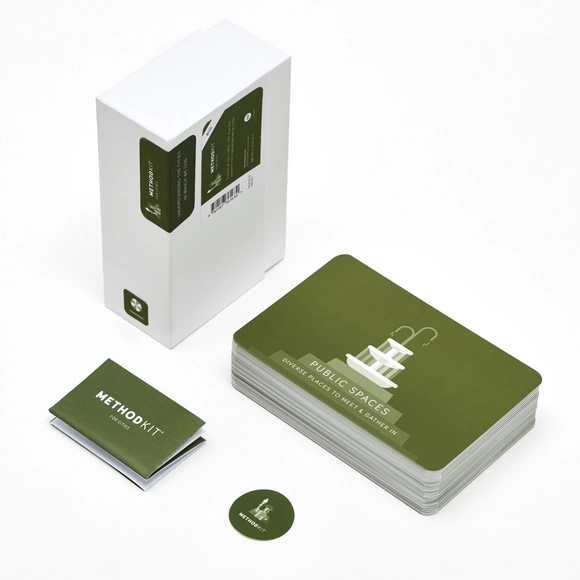
Planning can be a complex task depending on the factors at play such as time, participants, and topics.
Since 2012 a Swedish firm called MethodKit has dedicated itself to designing kits to simplify task in many professional disciplines using cards that raise an issue and guide the discussion.
Initially, these kits were oriented towards design and digital technology, however, with such a collaborative and easy to use tool they were expanded to architecture and urban planning.
.jpg?1487538662)
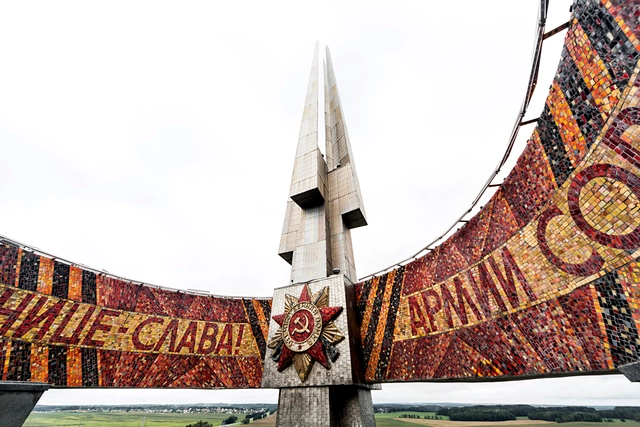
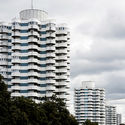
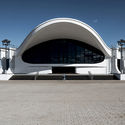
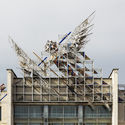
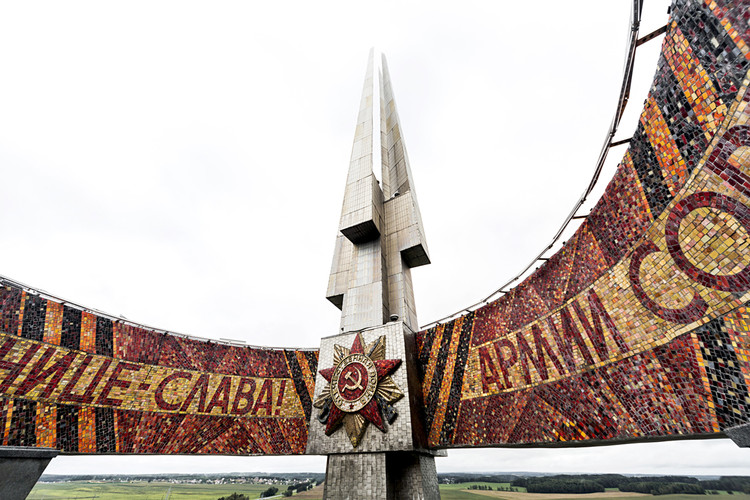
The history of what is now the Republic of Belarus is a turbulent one. It has been part of the Russian Empire, occupied by the Germans during both World Wars, divided between Poland and the Soviet Union, and finally declared its independence in 1991. Although Belarus is now an independent nation, it is also an isolated dictatorship that has in some ways remained unchanged since the 1990s, and is largely seen both culturally and architecturally as a sort of time warp, Europe's most vivid window into life in the Soviet Union.
Photographer Stefano Perego recently documented the postwar Soviet legacy of Belarus' architecture from the 1960s-80s, and has shared the photos from his 2016 cross-country drive with ArchDaily.

The legendary John Lennon once said, “Time you enjoy wasting, was not wasted.” And had a group of disgruntled, bespectacled, darkly clad architects been present when he spoke these words, their response probably would’ve been: “Time? What time, Johnny boy?” But as a matter of fact, there was no group of architects listening to these wise words, because they were probably furiously puffing on their last cigarette, tearing up another piece of trace, or lying collapsed somewhere.
It’s common knowledge that time is not exactly an architect’s best friend. Sleepless nights, endless hours of painstaking work and coffee expenses are but a few of the side effects that are all too familiar within the profession. But if the watch on your wrist looks something like this, don’t worry, because ours do too.

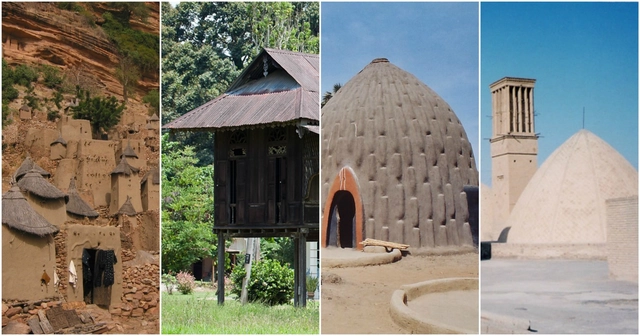
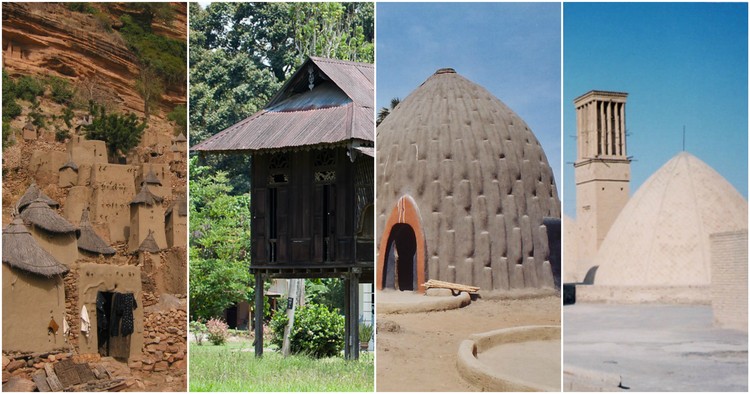
"Vernacular architecture can be said to be 'the architectural language of the people' with its ethnic, regional and local 'dialects,'" writes Paul Oliver, author of The Encyclopaedia of Vernacular Architecture of The World’. Unfortunately, there has been a growing disregard for traditional architectural language around the world due to modern building technology quickly spreading a “loss of identity and cultural vibrancy” through what the Architectural Review recently described as “a global pandemic of generic buildings.” People have come to see steel, concrete and glass as architecture of high quality, whereas a lot of vernacular methods including adobe, reed or peat moss are often associated with underdevelopment. Ironically, these local methods are far more sustainable and contextually aware than much contemporary architecture seen today, despite ongoing talks and debates about the importance of sustainability. As a result of these trends, a tremendous amount of architectural and cultural knowledge is being lost.

ArchDaily is continuing our partnership with The Architectural Review, bringing you short introductions to the themes of the magazine’s monthly editions. In this introduction to the February 2017 issue, Editor Christine Murray discusses craft. Seeking to find parallels between the processes of creating their own magazine and of designing a building, she argues that "there are easier ways to make a magazine, but along paths we choose not to take."
The magazine you hold in your hand is the product of many: 16 writers, 48 photographers, plus illustrators, jellymakers, 3D printers, 10 editors and an art director; and at the press, 15 people for its printing and binding.
You may imagine that the contemporary magazine-making process has lost its need for expertise through automation – push a button and the printer spits it out. But as AR Head of Production, Paul Moran says, "Machines may have taken on some of the front-end work, but every element of the printing process is a skill."

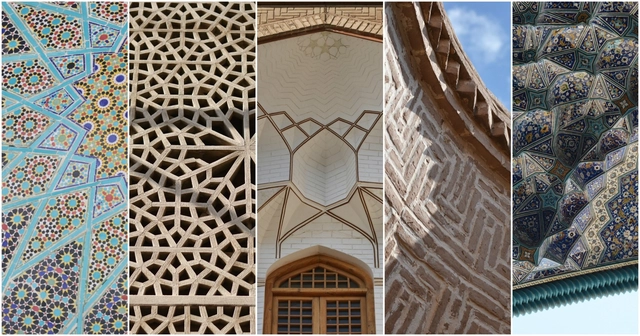
Iran’s geography consists largely of a central desert plateau, surrounded by mountain ranges. Due to the country being mostly covered by earth, sand, and rock, Iranian architecture makes fantastic use of brick or adobe elements. Most of the buildings seen in larger cities such as Tehran and Isfahan are constructed using similar brick-laying methods as can been seen in other parts of the world, but certain constructions, usually ones that date further back, contain incredible geometrical treasures. And it doesn’t stop there - old Iranian architecture often contains a layer of tiles over the brick constructions that can create just as mesmerizing geometrical wonders. The art of creating complexity by using many incredibly simple elements is one that has been mastered in Iran. In an architectural world where construction has become hidden by layers of plaster and plywood, we could learn a lot from the beauty of Iran’s structural geometry, where skin and structure are (almost always) one and the same.
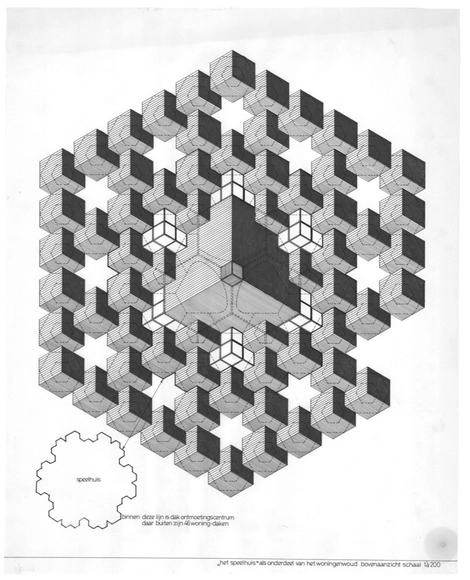
In this article, Dirk van den Heuvel links (Dutch) Structuralism to current day developments – more specifically in the digital realm. The following essay was first published by Volume in their 50th issue, Beyond Beyond, the editorial of which is available to read here.
Throughout his life the Dutch architect Jaap Bakema (1914-1981) sought to convey to his students and colleagues the notion of what he called 'total space', 'total life', and 'total urbanization'. In his view, architectural design had to help in making people aware of the larger environment to which they belong and in which they operate. Architecture could not be uncoupled from urbanism, it was related to the deeper structure of society. His conceptualization of architecture was programme and process based and it put social and visual relationships at the centre, which betrays his adherence to Structuralism as voiced in the Dutch journal Forum of which he was an editor together with Van Eyck and Hertzberger, and to the Team 10 discourse, of which he himself was one of the leading voices. At the same time, Bakema would expand on the legacy of the Dutch De Stijl movement and Dutch Functionalism. In particular his concept of space and spatial continuity is derived from De Stijl. His diagrammatic approach to architectural design and programmatic organization, as well as the elementary architectural language of his projects were elaborations of the Dutch Functionalist tradition.


The following three video testimonials explain why you should participate in the International LafargeHolcim Awards.
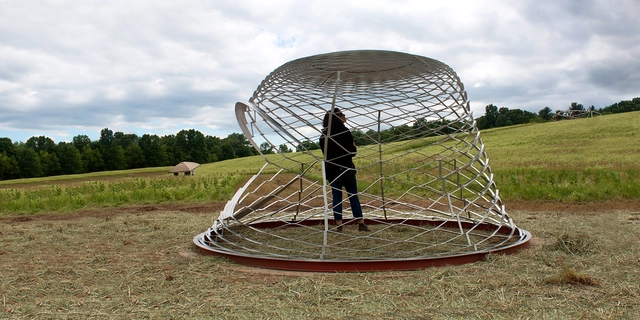
This article was originally published by Autodesk's Redshift publication as "Haresh Lalvani on Biomimicry and Architecture That Designs Itself."
It’s the holy grail for any biomimicry design futurist: buildings and structures that use generative geometry to assemble and repair themselves, grow, and evolve all on their own. Buildings that grow like trees, assembling their matter through something like genomic instructions encoded in the material itself.
To get there, architecture alone won’t cut it. And as such, one designer, Haresh Lalvani, is among the most successful at researching this fundamental revision of architecture and fabrication. (Or is it “creation and evolution”?) He employs a wildly interdisciplinary range of tools to further this inquiry: biology; mathematics; computer science; and, most notably, art.


This article was originally published by Metropolis Magazine as "Studio Fuksas' Controversial (Yet Striking) Convention Center Opens At Last."
Despite its evocatively fluffy name, “The Cloud” (Nuvola in Italian) has been one of the most seriously discussed and debated architectural projects in Italy in the last decade. Even after its opening in October 2016, the building continues to generate controversy over its cost (an estimated €353 million, or $390 million) and the delays its construction incurred.
The EUR Convention Center, as it’s officially known, is the largest new building to be built in Rome in more than 50 years—a flicker in time for the Eternal City, perhaps, but not an inconsiderable span either. The design was hatched by Massimiliano and Doriana Fuksas in 1998, but it languished on the drawing boards for nearly two decades after that. In that time the city elected five different mayors and had three temporary commissioners. It also weathered a number of corruption scandals.

.jpg?1486494963&format=webp&width=640&height=580)
As a young architecture student looking for a way to take his mind off schoolwork, architect/artist Tristán began drawing comics that drew inspiration from what he knew best: architecture school. Settling on the protagonist of the architecture student, he created a full series of comic strips focusing on the day to day routine of architecture students and teachers.
The comics take on moments from the life of architecture school, from the stresses of pulling all-nighters to the realities of dealing with clients in the professional world. By creating these strips, Tristán aims to shed some light on the complexities of being an architecture student – not forgetting that humor can sometimes be the best medicine for what ails you.
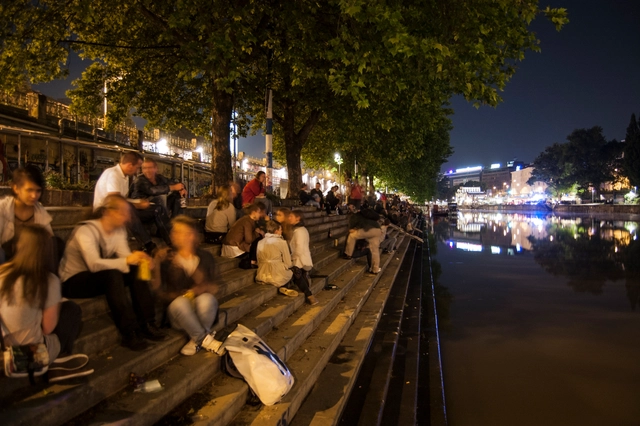
This article by Gabu Heindl, an Austrian architect and urbanist, was first published by Volume in their 50th issue, Beyond Beyond, the editorial of which is available to read here. Here, Heindl introduces the concept of "powerfully (precariously) positioned planning propositions" (PPPP) based on the Donaukanal project in Vienna.
In a certain sense, looking at the beyond is something that we cannot do today, other than from the vantage point of a beyond the ‘beyond’. Looking at the connections between progressive political movements and planning/building practices in modernity and their ways of departing into ever new ‘beyonds’, beyond the boundaries of historically given urban and social formations – today, we are certainly beyond these dynamics. And it is not so much postmodernism that needs to be invoked here, but rather two reflections on politics, planning/building related and otherwise, that are bound for the beyond. One reflection concerns how progressive, modernist, avant-garde politics, even at their height, were compromised by, or even complicit in, affinities with paternalistic, top-down governance (Red Vienna) or even with totalitarian rule (fascism). The second reflection, more pertinent to our present moment, concerns the extent to which the dynamics of going beyond have, since the late 1970s, shifted to a regime of (self-)government and accumulation which is addressed and theorized under labels such as neoliberalism, Post-Fordism or new spirit of capitalism.

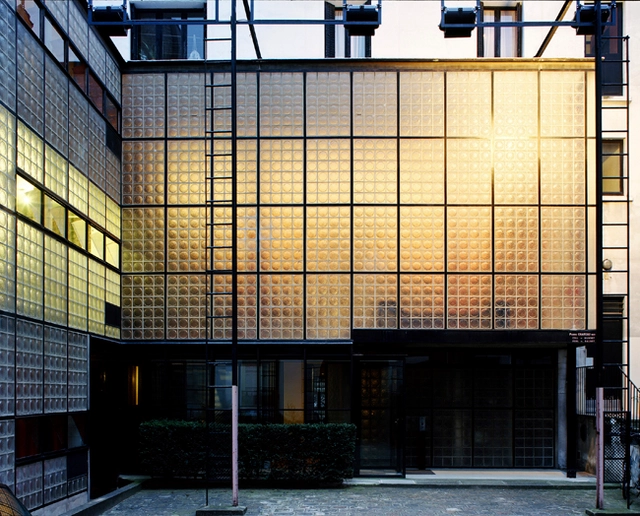
This article was originally published on Metropolis Magazine as "New Retrospective Glimpses the Man Behind the Maison de Verre."
Pierre Chareau was an architect whose buildings have almost all been demolished; an interior designer whose designs have all been remodeled; and a film set designer whose films you cannot see. These are not the most auspicious circumstances on which to mount a retrospective, but an ongoing exhibition at the Jewish Museum, imaginatively designed by Diller Scofidio + Renfro (DS+R), attempts it nonetheless.
Chareau, who is best known for his one surviving building, the Maison de Verre in Paris, defies neat classification. Without any sort of architectural training, he worked briefly as a furniture designer for a British firm then struck out on his own, creating an idiosyncratic corpus of furniture, interior designs for life and cinema, and even several homes.
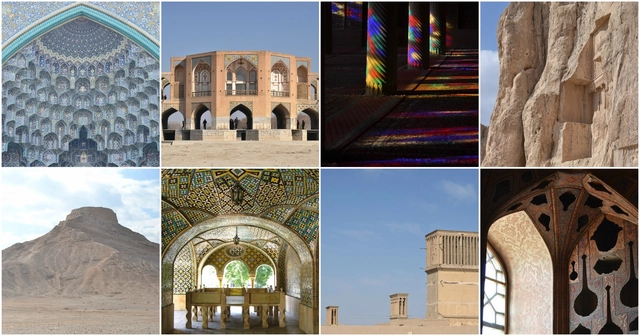
As the remnants of an empire that once covered almost the entire area from Greece to China, Iran is full of historic wonders. Due to the country's current political situation, it is not exactly a top tourist destination and as such many of these wonders are kept a secret from the rest of the world. As with any historical building, the ten sites listed below each contain a rich history within their spaces. However, Iran’s history is exceptionally complex, layered with dynasties and rulers whose influence extended way beyond modern-day Iran. These sites, therefore, are physical memories of the rich culture that underpins Iranian people today, despite the radical change in the country’s political sphere after the 1979 Revolution. Sacred sites for the Zoroastrians, for example, are still visited and remembered, despite the restrictions placed upon them by the Iranian government. The essences of these sites provide opportunities to learn about and empathize with the history of Iran, beyond what we hear in the news.

It is difficult to understand and quantify the importance of design in our lives. However, when we take a closer look at the pieces that inspire and transform our daily life, innovative furniture brings us new ways of seeing the world, further enhancing the meaning of simple concepts like beauty, comfort, and quality.

This article was originally published by Autodesk's Redshift publication as "5 Ways to Design Solar Architecture Beautifully—Not as an Ugly Afterthought."
No one puts solar panels on their house because they’re sexy—at least, not yet.
Jon Gardzelewski, an architect and associate lecturer at the University of Wyoming in the Building Energy Research Group (UW-BERG), wants to change that. He believes the fact that solar panels are usually an afterthought to the design of a building is a big barrier to integrating them into a critical mass of houses and buildings.
"Rethink the City; New Approaches to Global and Local Urban Challenges" is a free online course given by Delft University of Technology in the Netherlands, starting on March 28, 2017.
The course aims to address urban challenges in emerging countries to provide a new perspective in understanding and analyzing the southern hemisphere. For this reason, the content is structured in the following three thematic axes: "Spatial Justice," "Housing Provision and Management," and "Urban Resilience".
Enrollment is now open through the Edx.org online education platform. The course has a duration of six weeks between 3 to 4 hours per week and is aimed especially at undergraduate students, especially those in Latin America, Asia, and Africa, according to the course content.


To most people, Facebook is simple. They use it as a survival tool during never-ending university lectures. They use it to distract themselves during arguments at the family dinner table. They use it to ‘research’ that new person in the office. But when the architect signs in, everything changes. To us, Facebook is an ‘archi-forum’. Every passionate, powerful sketch of ours is uploaded. Every deep, reflective, opinion of ours is posted. Every non-architectural event is advertised with the intensity of an adventure to Narnia. Happily, we know our audience – other architects...


Our modern day, image-obsessed culture has got us consuming a large quantity of architecture through photographs, as opposed to physical, spatial experiences. The advantages of architectural photography are great; it allows people to obtain a visual understanding of buildings they may never get the opportunity to visit in their lifetime, creating a valuable resource that allows us to expand our architectural vocabulary. However, one must stay critical towards the disadvantages of photography when it comes to architecture. Jeremy Till, author of “Architecture Depends,” summarizes this in his chapter “Out Of Time”: “The photograph allows us to forget what has come before (the pain of extended labor to achieve the delivery of the fully formed building) and what is to come after (the affront of time as dirt, users, change, and weather move in). It freezes time or, rather, freezes out time. Architectural photography ‘lifts the building out of time, out of breath,’ and in this provides solace for architects who can dream for a moment that architecture is a stable power existing over and above the tides of time.”
The following tips aim to not only improve the visual strength of your architectural photography, but also the stories that they can tell—going beyond the individual images in order to communicate buildings’ relationships with their contexts, space and time.
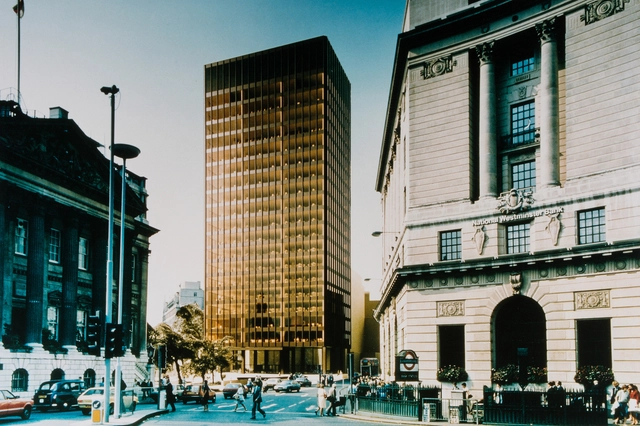
In the 1960s James Stirling asked Ludwig Mies van der Rohe why he didn’t design utopian visions for new societies, like those of Frank Lloyd Wright’s Broadacre City or Corbusier’s Cité Radieuse. Mies replied that he wasn’t interested in fantasies, but only in “making the existing city beautiful.” When Stirling recounted the conversation several decades later it was to the audience of a public enquiry convened in London – he was desperately trying to save Mies’ only UK design from being rejected in planning.
It couldn’t be done: the scheme went unbuilt; the drawings were buried in a private archive. Now, for the first time in more than thirty years, Mies’ Mansion House Square will be presented to the public in both a forthcoming exhibition at the Royal Institute of British Architects (RIBA)—Mies van der Rohe and James Stirling: Circling the Square—and, if it is successful, a book currently being funded through Kickstarter by the REAL foundation.


The Faculty of architecture at KU Leuven, which last year featured on QS's Top 100 Universities in the World for Architecture, is Belgium's largest and most established university. The following essay, by Dag Boutsen—Dean of the School—and Kris Scheerlinck, examines cyclical learning in architectural education. It was first published by Volume in their 50th issue, Beyond Beyond, the editorial of which is available to read here.