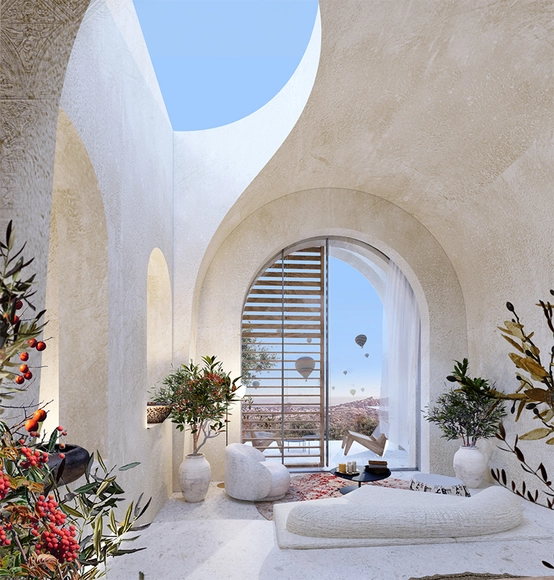
Cappadocia Spa Hotel by GAD ARCHITECTURE. Image Courtesy of GAD ARCHITECTURE
Offering short-term accommodation to travelers, hotels represent one of the main elements supporting the hospitality sector. They often aim to create a serene environment, isolated from the bustle of city life, yet representative of the local identity. Boutique hotels represent a rising sub-sector of hospitality design. These are small hotels typically between 10 and 100 rooms with carefully chosen interior design, providing a memorable experience to their guests. From historic renovations to contemporary ground-up hotels, hotel projects represent a great opportunity for architects to create unique environments centered around leisure and relaxation.
This week’s curated selection of Best Unbuilt Architecture highlights projects submitted by the ArchDaily community. Located in the forests of Portugal, on the shore of the Greek island of Crete, or in the deserts of Egypt, this round-up of unbuilt projects showcases how architects respond to local conditions in order to create designs that cater to the needs of tourists and travelers.
It is often times that when living in Japan, whether you're occupying a shared house or renting out your own apartment, you'll find yourself having a limited amount of space to work with. This primarily stems from land scarcity within the country, with 73% of the land available to us being considered mountainous, with another large percentage of the country's flat land serving as farmland and a means for agricultural purposes. There is also the issue surrounding overcrowding within Japan's urban areas. Due to these factors, inflation amongst properties is rife, thus, resulting in many residents turning to small dwellings.
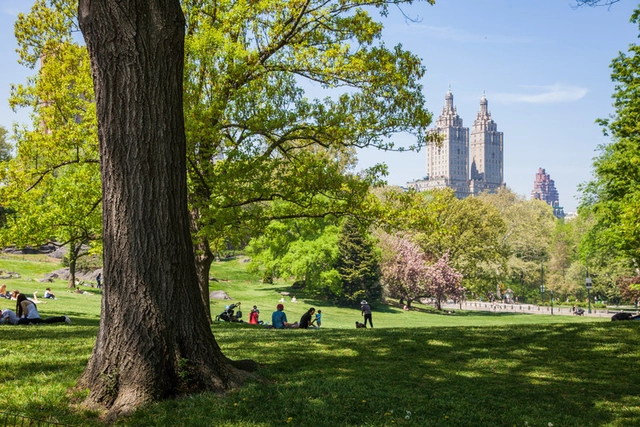
Whether it is a small balcony, access to green space or a private garden, the outdoor space has become a privilege for many, especially upon the dawn of the Covid-19 pandemic and the multiple lock down periods that followed. Green space in the city is constantly under threat, particularly since governments seek to increase housing densities in order to feed a growing demand for suburban development. As a result, the garden and access to green/outdoor spaces has decreased in recent times, as priorities lie in housing as many as possible, often with disregard to beneficial features such as access to outdoor areas in residential developments.
In terms of living conditions the lack of access to these spaces presents evident inequalities, uncovered during periods of lock down and restrictions during the pandemic. People were confined to their homes and local outdoor spaces, where they could exercise. Those who had access to these public spaces and had their own gardens/external space were very lucky in the sense that they were able to enjoy an element of the outside. While those less fortunate in flats and areas of depravity faced claustrophobic and demoralizing conditions, contained within the shell of their homes.
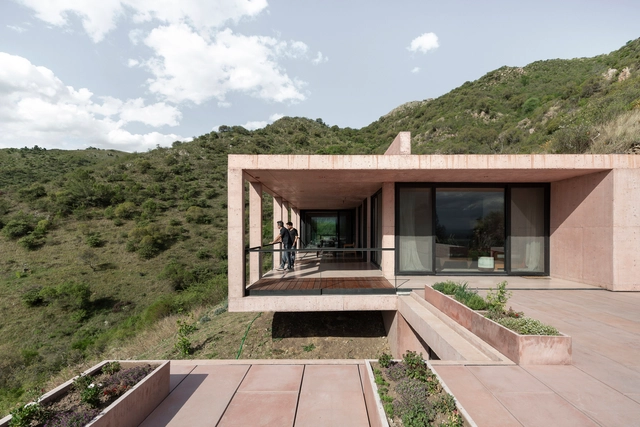
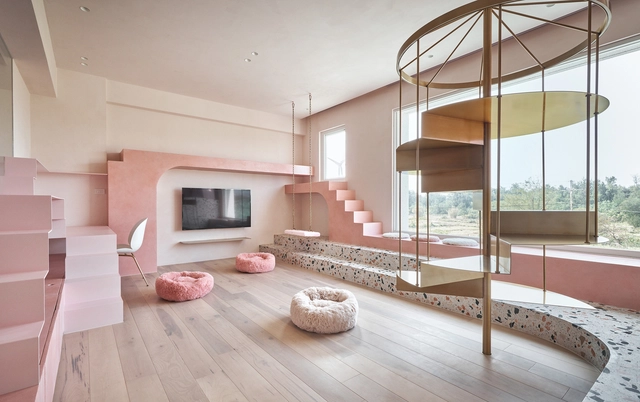
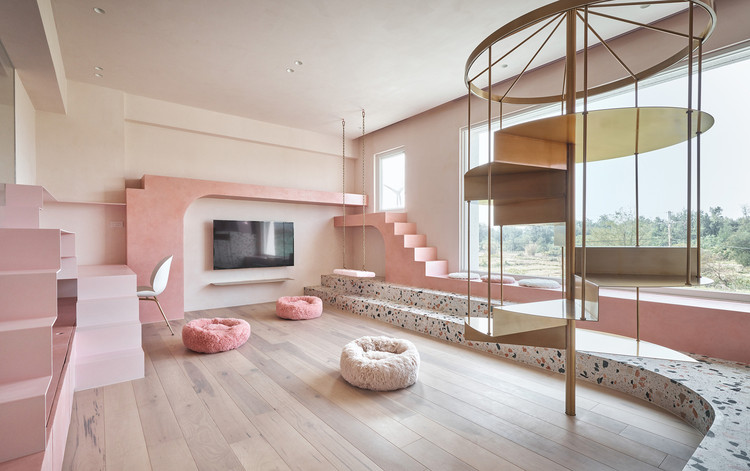
How relevant is the use of color in architecture? Throughout history, we find various scenarios where color takes centre stage in its integration with the architectural work. Nowadays this is no exception. This is because colour is a medium that can be used to provoke deep and immediate emotions and reactions in the person observing. Because of this, colour plays an important role in the architectural reading, as it has the power to clarify the components that make it up or, on the contrary, to change the perception of the work or space.
The following list shows various Latin American housing projects that have had a particular approach to color in their composition. In them, we see the conception of color as the integrator of the work, or as a means of enhancing a particular element, be it interior or exterior.
In the field of design and construction, the question of gender is a point of conflict: who has the possibility of building? What are the alternatives for us architecture professionals? These are the questions that Taller General (re)think about. It is from these questions that Femingas, a participatory construction conference with a gender perspective, arose. These are manifested as an alternative to the construction of "mingas", days of joint work between the members of a community to achieve a common good.
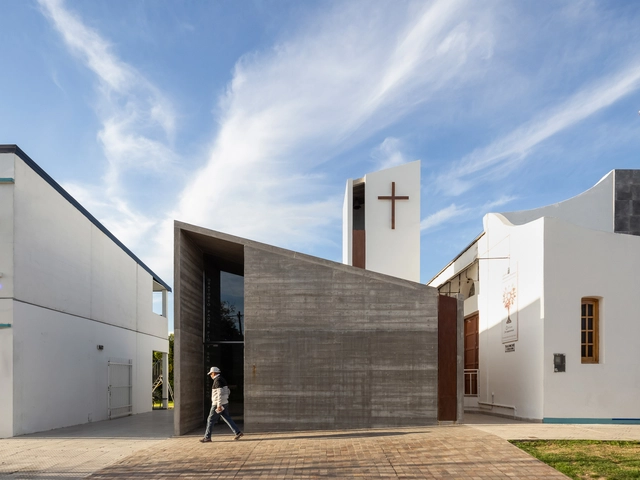
Few spaces are as intimate and contemplative as prayer rooms. Designed as both stand-alone structures and part of larger projects, prayer rooms are made as an architecture of introspection. Located within a house of worship or funerary space, or for their own dedicated purpose, these quiet rooms offer tranquil areas to consider life and the passage of time. Reflecting larger ideas on specific faiths and spirituality, they are designed as spaces of symbolism and sanctuary.
Daylighting design is an essential aspect for creating brighter, healthier buildings for everyone. Considering that daylight has a unique ability to shape the experience of a space, it is important for architects and designers to take it into account in order to build healthier, more sustainable buildings. Good daylighting design can improve the health, mood, cognitive abilities and productivity of the occupants of homes, schools or workplaces, while reducing the energy consumption of the building.
We explore a few key factors that can influence daylight availability in buildings and how to account for them in your next project.
Headquartered in Belo Horizonte, Minas Gerais, the architectural firm Arquitetos Associados presents a dynamic and varied way of dealing with each project. Based on a specific and specific work organization for each case, which allows for a varied team including external collaborators, the firm's way of working reflects on its unique projects.
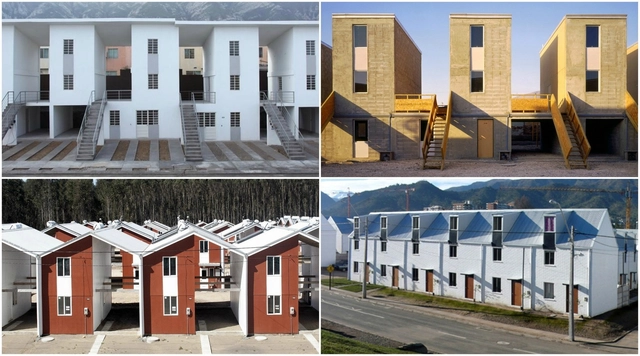
In 2016, Pritzker Prize winner Alejandro Aravena announced that his firm, ELEMENTAL, had released the rights to four of their social housing projects, and all documents would be uploaded to their website for public use. Aravena’s goal was to start a movement in which architects would work together to tackle the world’s challenges around housing shortages and affordability, especially with increased migration. The shared drawing sets and a description of the project’s principles provide architects with the necessary documentation for building a low-cost home, encouraging designers to do the same with their work, contractors to assist in building these homes, and governments to shift their thinking of how they can approach mass urbanization. Six years later, how has the concept of open-source architecture progressed, and how has it impacted the architectural profession ever since?
"La Curutchet habitada" is the title of a forthcoming book that records research developed by the Department of Interior Architecture and Furniture of the Instituto de Proyecto de FADU-Udelar, Uruguay, of which we share a small preview originally published in the magazine Summa+ 189 in December 2021.
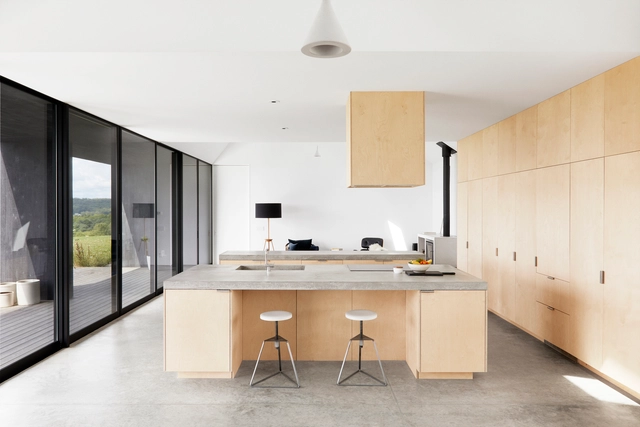
In addition to their aesthetic appeal, the use of raw materials can save resources by bypassing the use of additional coatings and processes. This type of solution was most commonly used in utility buildings, such as infrastructure, factories, and warehouses. Exposed concrete floors, for example, were primarily found in industrial spaces, parking lots, and gas stations. However, they are increasingly being used in structures of different programs due to their appearance, durability, resistance, and vast possibilities for finishes. But what are the main factors to be aware of when using a concrete floor for a project?
https://www.archdaily.com/933296/polished-concrete-floors-18-projects-that-combine-aesthetics-durability-and-ease-of-executionEduardo Souza e Matheus Pereira
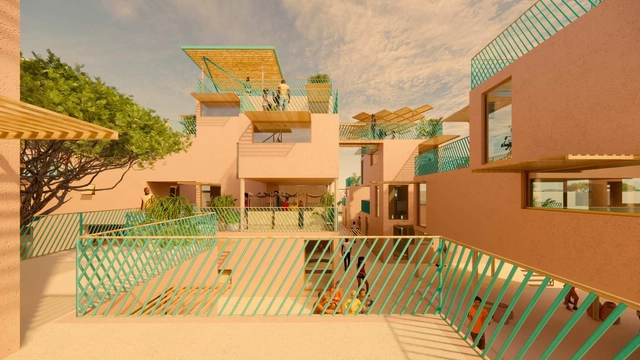
Render of affordable homes created out of plastic waste. Image Courtesy of Othalo
A lot of people around the world would agree that we are currently in a climate emergency. The IPCC report, released last year, makes for difficult reading. Practitioners in the built environment have taken to direct climate action, with organizations such as ACAN and Architects Declare fostering carbon literacy and calling for designers to re-evaluate how they practice.
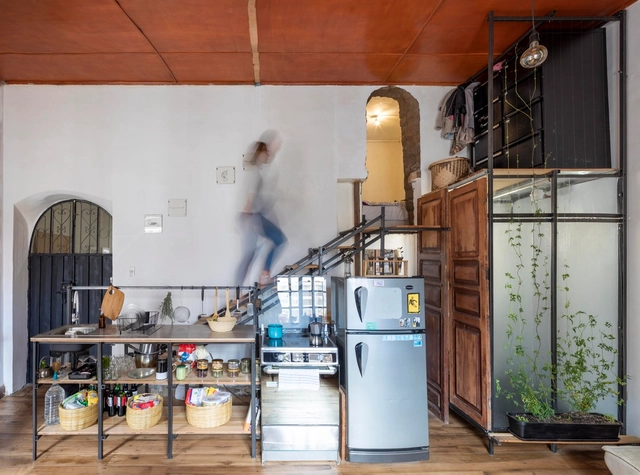
Most of us use stairways every day, but few times do we stop to contemplate their design or put much thought into their function. With their steps, treads and railing, they are easily one of the most fundamental architectural elements in any home. Apart from providing a safe, simple and easy access from one floor to another, it is through staircases that architects create unique spatial forms and strong visuals. From afar, one can observe people moving up and down repeatedly; from within, the user is treated to new angles and ways to perceive a space. Therefore, good staircases are more than just means of vertical circulation. Through their might and scale, they can become the protagonist of a space – a design focal point that rises to the level of art. In this article, we present their versatile characteristics and material qualities through a selection of inspiring examples, all of which can be found in Architonic's 'Staircases' section.
When development firm Blue Heron set out to create their one-of-kind residential showpiece, Vegas Modern 001, or VM001 for short, the goal was to stretch the boundaries of design and create an immersive experience that embraced both the natural and human-made worlds.
“We like to think about the home as being appropriate to our time and place, our culture and the technology that's available,” says Founder and CEO Tyler Jones. “And so there's an energy and spirit that comes from the city … so we're talking about digital media and this playful kind of vibe that we have in some big dramatic moments.”
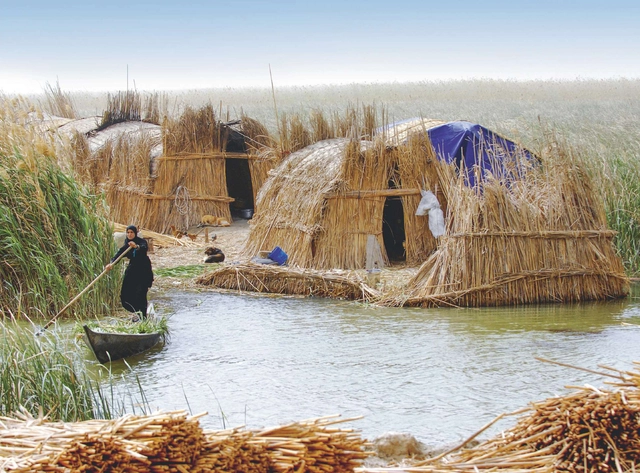
"Indigenous technologies are not lost or forgotten, only hidden by the shadow of progress in the most remote places on Earth". In her book Lo-TEK: design by radical indigenism, Julia Watson proposes to revalue the techniques of construction, production, cultivation and extraction carried out by diverse remote populations who, generation after generation, have managed to keep alive ancestral cultural practices integrated with nature, with a low environmental cost and simple execution. While modern societies tried to conquer nature in the name of progress, these indigenous cultures worked in collaboration with nature, understanding ecosystems and species cycles to articulate their architecture into an integrated and symbiotically interconnected whole.
Upon becoming a sovereign country, free from British Rule, the people of India found themselves faced with questions they had never needed to answer before. Coming from different cultures and origins, the citizens began to wonder what post-independence India would stand for. The nation-builders now had the choice to carve out their own future, along with the responsibility to reclaim its identity - but what was India's identity? Was it the temples and huts of the indigenous folk, the lofty palaces of the Mughal era, or the debris of British rule? There began a search for a contemporary Indian sensibility that would carry the collective histories of citizens towards a future of hope.
Charles Darwin's theory of natural selection sought to explain the origin and survival of species on the planet. In short, it points out that the fittest organism survives and can reproduce itself, perpetuating useful variations for each species in a given place. Adaptation is, therefore, a characteristic that favors the survival of individuals in a context. In the construction world, we could draw some parallels. Could adaptation be an important quality to increase the useful life and efficiency of a building over time, considering the changes and demands of society, as well as technologies and lifestyles?
If, on the one hand, bathrooms have a certain rigidity when we think about the layout and their spatial arrangement, it is in the floor and wall coverings that this logic is inverted. With the wide variety of models and patterns available on the market, ceramic tiles and porcelain tiles are often used to give quality and identity to space. At the same time, the ease of access to ceramic and porcelain tiles, as well as their ease of installation, end up conditioning our choices, making it difficult to think of other finishing possibilities for these areas.
Participatory design is a democratic process that aims to offer equal input for all stakeholders, with a particular focus on the users, not usually involved directly in the traditional method of spatial creation. The idea is based on the argument that engaging the user in the process of designing spaces can have a positive impact on the reception of those spaces. It eases the process of appropriation, helps create representative and valuable spaces, and thus creates resiliency within the urban and rural environment.
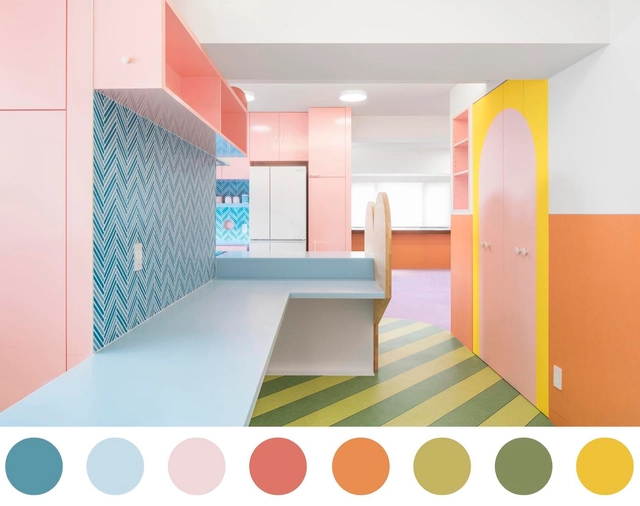
Besides thermal, acoustic and luminous comfort, colors are factors that influence the sensation we feel when in an environment and become a strong device to influence the user's behavior.
Far beyond aesthetic preferences, the use of certain colors can bring different meanings that cover other fields such as psychology or symbology. Therefore, it is known that a color does not depend only on light and environment, but also on the perception we have of it. The German Johann Wolfgang Von Goethe, who has deepened his study of the Theory of Colors, points out that the identification of tones is subjective, but the effects are universal. As an example, the warm colors (red, yellow and orange) are more dynamic and cause feelings of comfort and stimulus in people, while the cold colors (green, purple and blue) have a softer, soothing and static effect. Therefore, creating a color palette is a possibility to generate different sensations in the perception of space.
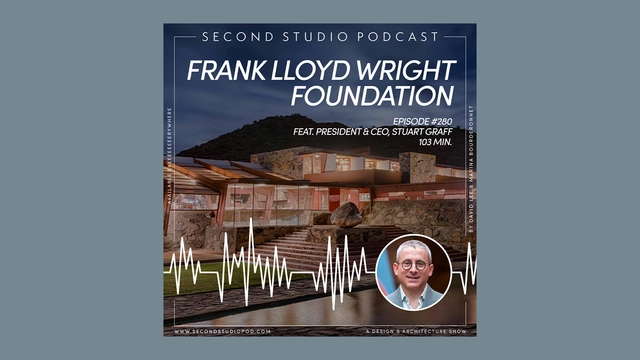
The Second Studio (formerly The Midnight Charette) is an explicit podcast about design, architecture, and the everyday. Hosted by Architects David Lee and Marina Bourderonnet, it features different creative professionals in unscripted conversations that allow for thoughtful takes and personal discussions.
A variety of subjects are covered with honesty and humor: some episodes are interviews, while others are tips for fellow designers, reviews of buildings and other projects, or casual explorations of everyday life and design. The Second Studio is also available on iTunes, Spotify, and YouTube.
This week David and Marina are joined by Stuart Graff, President and CEO of the Frank Lloyd Wright Foundation to discuss the foundation’s mission; the role cultural institutions play in supporting creative professions; preserving and furthering Wright’s legacy through programs and collaborations; intellectual property; Stewart becoming CEO of the foundation; running a successful non-profit; Frank Lloyd Wright’s principles; and more.
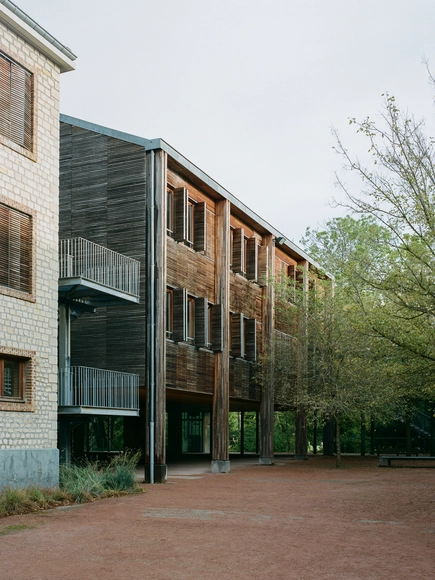
To wholly document a survey on the state of French forests, the wood industry, and forestry R&D, François Leclercq and Paul Laigle, from the architecture and urban planning practice Leclercq Associés, are in collaboration with architecture editor Michèle Leloup and photographer Cyrille Weiner.
The Wood That Makes Our Cities explores the environmental, economic, industrial, and technical challenges involved in the use of wood for large structures and urban architecture and assesses the future of wood construction. The book retraces the practice’s twenty years of experience with wood construction through five of its projects, featuring contributions by historians, researchers, manufacturers, timber producers, and forestry specialists.

















.jpg?1654265144&format=webp&width=640&height=580)







.jpg?1654436110 "Sanjaynagar Slum Redevelopment Project - Technical team holding a meeting with members of the Slum Committee. Image Courtesy of Community Design Agency")