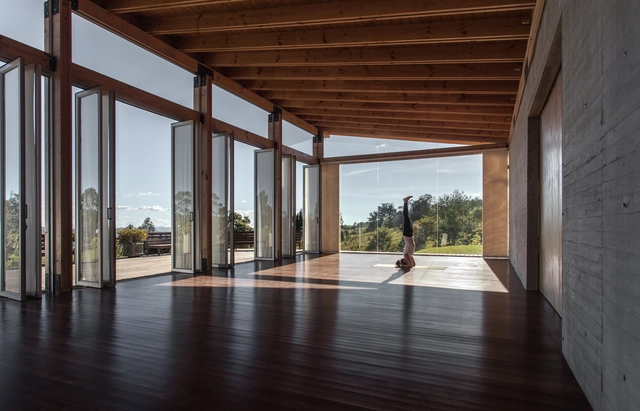
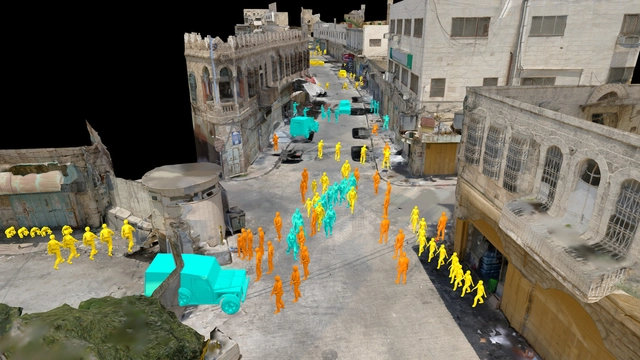
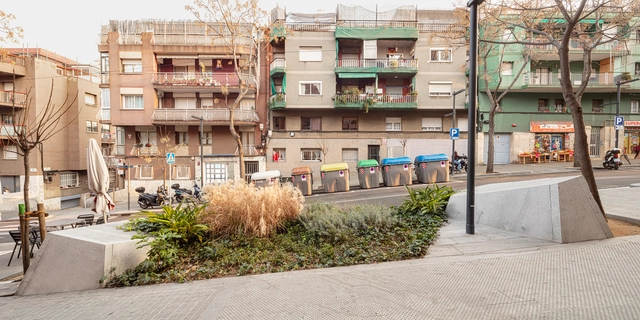
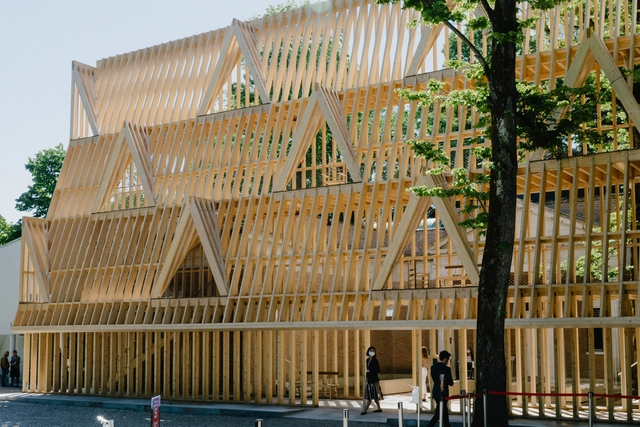
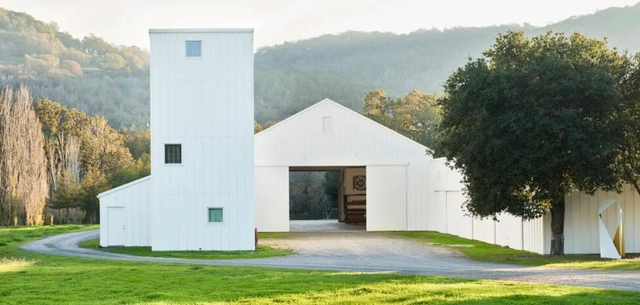
Living in an urban environment is demanding. Busy and competitive lifestyles leave people numbed from the effects of stress. Individuals in urban areas are more prone to mental health issues and demonstrate a noticeable lack of personal connection. Rosy city lights and skyscrapers are thorned with rising stress levels, posing an essential question to architects - how do spaces affect wellbeing?
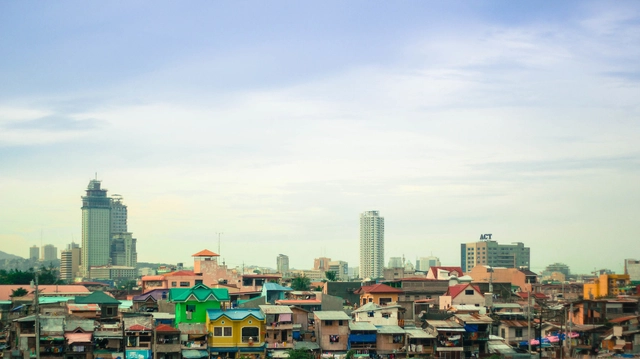
The history and culture of the Philippines are reflected in its architectural heritage, with numerous influences from other nations paving the way for the contemporary designs we see today, a mixité of cultural influences amongst Western-style buildings. Philippine architecture has grown along with the progress of the nation and its people, but memories of a glorious past are still embedded within the nation’s history.
Architecture is a privileged tool for brands that are characterized by a high-end positioning and that, beyond the quality of their own products, needs to feed an imaginary of prestige, style, and refinement. From the showrooms to the stores, fashion needs architects as much as stylists, photographers and modelers.
"in downtown New Delhi, huge curved structures sink in the ground, taking the form of a ramp. Amorphous voids mark the great twisted walls. The color red marks the structures and sets them apart from everything else."
This could describe a playground or even a skate park, but it is one of five astronomical observatories built in India between 1724 and 1738. These mazy volumes, which look more like a materialization of Escher's drawings, were conceived by the Indian prince Jai Singh as part of an ambitious project that sought to put architecture at the service of science. Their shapes make complex astronomical analysis possible, such as predicting eclipses, tracking the location of stars, and determining Earth's exact orbit around the Sun.
When we consider something edible, we understand its capacity to be eaten, consumed, or ingested independently of its taste. If our contemporary relationship to the built environment reflected this process, what would cities and constructed environments become?
There are many myths and misunderstandings around sustainability in construction. First, the belief that what is sustainable must inherently be technological, complicated or out of reach. Or that the products will necessarily be more expensive, will be made of recycled materials or will not be so aesthetically pleasing. When it comes to material specification, there is often confusion. Is steel more sustainable than bamboo? Would it be better to use a material that is said to be sustainable, but which goes through numerous industrial processes, or one with a low level of processing? The answer is not so simple, and there are various comparison mechanisms to help guide us. But this is an important consideration to make, as one of the main ways the construction industry can help reduce its carbon footprint is to select materials with the lowest general contribution to emissions and environmental impact. Natural slate, which can be used for roofing and facades, is a great example of this.
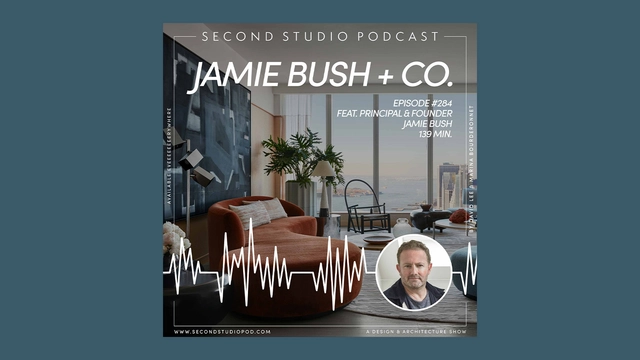
The Second Studio (formerly The Midnight Charette) is an explicit podcast about design, architecture, and the everyday. Hosted by Architects David Lee and Marina Bourderonnet, it features different creative professionals in unscripted conversations that allow for thoughtful takes and personal discussions.
A variety of subjects are covered with honesty and humor: some episodes are interviews, while others are tips for fellow designers, reviews of buildings and other projects, or casual explorations of everyday life and design. The Second Studio is also available on iTunes, Spotify, and YouTube.
This week David and Marina are joined by interior architect and designer Jaime Bush, Principal and Founder of Jamie Bush + CO. to discuss growing up with designers, photographers, and artists; studying Architecture abroad in Venice; transitioning into Interior Architecture; the disconnect between Architects and Interior Designers; how to differentiate between Interior Design and Architecture; fee structures; and more.
https://www.archdaily.com/983873/the-second-studio-podcast-interview-with-jamie-bushThe Second Studio Podcast
Social responsibility and the desire to improve society has long been influenced by the built environment. Looking at city centers, architecture has contributed to the improvement of the urban fabric, whether it being through planning and zoning strategies, integration of public spaces, or small interventions. In some cases however, these interventions are in fact used as tools to keep the homeless off the streets, disguised as art or conceptual designs. Several public urban policies have all implicitly prohibited the homeless and other marginalized social groups from city centers, claiming that their presence and “irregular” use of public space could compromise the reputation, security, and desirability of the city.
The origins of brutalism can be traced to the UK in the 1950s during the post-war period. However, there is no clear record of its initial boundaries or theoretical frameworks. Despite this, it is widely agreed that it sought to uphold constructive sincerity as its main value and that it had, in the execution of Le Corbusier's Marseille Housing Unit (1952), a turning point for its global diffusion (Casado, 2019). For authors such as Banham (1966) or Collins (1977), constructive sincerity in Brutalist buildings does not only refer to material or technical criteria, but also to moral, political or ethical ones. These variables, in nations such as Peru, were fundamental and built an aesthetic while trying, through and from architecture, to construct an idea of a country. This essay seeks to be an approximation to these ideas and experiences.
Four years ago, the Pritzker Prize–winner Tadao Ando spectacularly converted a 1920s apartment building in the Lincoln Park neighborhood of Chicago into exhibition spaces for a gallery named—in deference to its street address—Wrightwood 659. The gallery is currently staging a resourceful exhibition on wood-frame construction, the method by which more than 90% of U.S. houses are built.
Rarely has wood-framing been the subject of an architectural show. It’s too mundane a topic—or at least it seemed that way until two associate professors at the University of Illinois Chicago, Paul Andersen and Paul Preissner, conceived the American Framing exhibition for the U.S. Pavilion at the 2021 Venice Architecture Biennale. One year after Venice, the much talked-about exhibition makes its American debut at Wrightwood 659.
For varied reasons, architects have been driven away from professional practice. Sometimes, however, they continue to design buildings in other media and support. Vinicius Libardoni is an Italian-Brazilian architect and artist who migrated from Autocad to metal engraving, passing through woodcut, and has been building imaginary architectures ever since.
Metropolis Magazine's Kenneth Caldwell visits the Eames Ranch in Petaluma, California to unpack the goals and secrets of the Eames Institute of Infinite Curiosity. He explains that he may not be the best person to write objectively about the recent public launch of the Eames Institute of Infinite Curiosity, a non-profit formed in 2019 to help us explore Charles and Ray Eames’ legacy; particularly their timeless, iterative design process; the chair he sits in every day was designed by the Eameses the year he was born, and their work has been part of his life since he was a young boy looking for the future in architecture magazines at the local public library.
BoConcept‘sChelsea chair is designed by Karim Rashid, an industrial designer well known for his organically shaped products. With its rounded corners and simple format, it seems utterly natural and basic, almost like a non-design. Yet, obviously, a lot of thought and experimentation has gone into the process of creating such an unambiguous object.
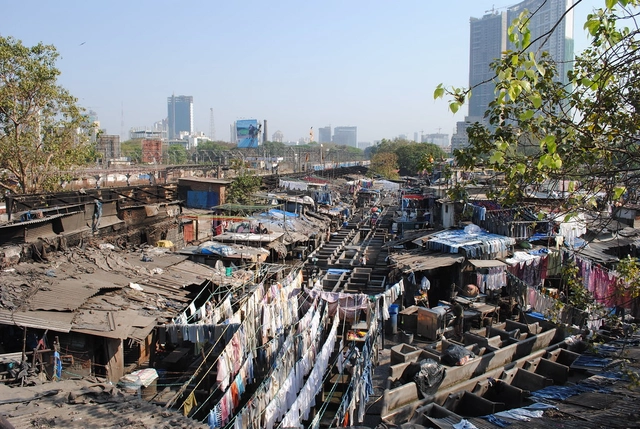
Built environments are a reflection of the social order and dynamic ideals of society. Neighborhoods and cities are cultural relics shaped by diverse communities, some of whose voices are heard louder than others. In the past few decades, Indian metropolitans have been booming with urbanization. Holding cities back from being Utopian hubs of growth is spatial inequality. The residential segregation that patterns the cities of India can be understood through the caste system. The issue, however, is largely intersectional. Forces rooted in class, religion, and gender also structure the country's social landscape.
“And the Lord God planted a garden in Eden, in the east, where He placed the man He had formed. Out of the ground the Lord God gave growth to every tree that is pleasing to the eye and good for food.”
This is how the Garden of Eden is portrayed in the first book of the bible, Genesis, which describes the origin of the universe and the heavenly place where Adam and Eve were placed. Such a paradise, despite being little characterized in the original words, has been inhabiting the imagination of the faithful and other enthusiasts of the matter for centuries. The scenes of this idyllic place, reinforced by the paintings and sculptures created over time, present a landscape considered ideal, an Edenic nature, expressed many times by the vibrant and contourless color – just like a painting by Monet –, probably emphasizing the representation of the spiritual world, where the image is seen through the contrast of colors, shadows and lights.
An online search away from any computer are eye-level views of many of the world’s cities. This technology is powerful – allowing people to have an in-depth look at the cities they might one day visit, live in, or work in. It’s a useful tool for understanding buildings on a more comprehensive level than photographs. This technology is, of course, Google Street View – which recently turned fifteen years old.
Thirty years ago, a contemporary classic was launched by Dornbracht: TARA. The bathroom series became the brand's best selling offering, as its versatility and timeless modernism allowed for its widespread use. As the German luxury fittings manufacturer celebrates thirty decades of its most popular bathroom series, it's looking ahead and introducing new product variants and finishes to the modern classic.
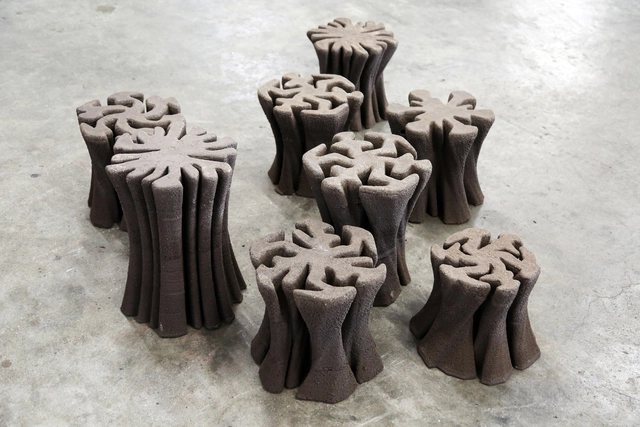
As humanity becomes aware of its impact on the environment, it has also sought ways to reverse some of the harm caused to fauna and flora, especially in cities. Our way of living, consumption and construction has caused severe damage to nature. In fact, according to a study from the Weizmann Institute of Science, we are at a point of inflection where the mass of all man-made materials is equal to the planet's biomass, and it should double by 2040. But not necessarily everything we build should have a negative impact. "The Tidal Stool" project is an example of this - part of a comprehensive revitalization project in Kuk Po Village in Shau Tau Kok in Hong Kong, which brings together two different ecologies, the anthropocentric and natural environment.
Choosing a career as soon as we leave high school can be somewhat challenging and even tormenting. Although it has been said that in the future it will be common to change careers or have various overlapping jobs, the fear of making the "wrong" choice causes many soon-to-be graduates to lose sleep. Having a good overview of what each profession entails is important to understand whether or not it is a good fit, especially in creative areas or newer and more dynamic professions. Architecture, for example, is a career that is well known for covering several areas - from mathematics to art history - but also for requiring many hours of dedication, critical thinking and mastery of computational tools. To give prospective students a taste of the experience of being an architect or an architecture student, Design Immersion Days (DID) is a four-week immersive summer program for future high school graduates to experience the world of design and architecture.
In the current scenario of a climate crisis, thinking about an architectural project without defining ecological guidelines has become practically unacceptable. One of the main emitters of carbon dioxide and other pollutants, the construction sector is increasingly looking for new ways and means that can make works more sustainable and, in some way, mitigate damage to the environment. Thinking about ecological materials can be one of the fundamental steps, but, which materials are these?
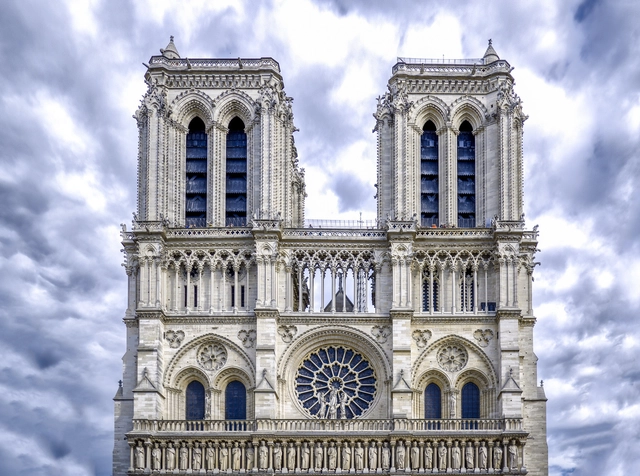
The word “Gothic” often envokes a description of mysterious homes, or a modern-day group of people who have an affinity for dark aesthetics, but what the gothic architectural style historically brought to the built environment could not have been more opposite. Gothic designs were actually created to bring more sunlight into spaces, mainly churches, and led to the design and construction of some of the world’s most iconic buildings.
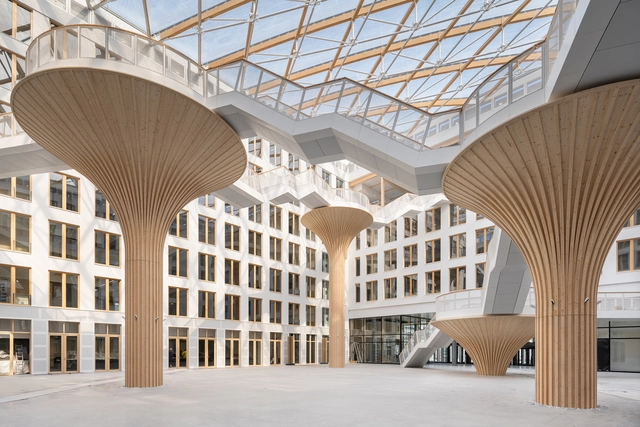
Located in the area between Sachsendamm and Berlin Südkreuz S-Bahn train station in Schöneberg, a new mixed-use complex, EDGE Suedkreuz Berlin, was completed last month by Berlin-based architect Sergei Tchoban and his firm Tchoban Voss Architekten with additional offices in Hamburg and Dresden. The complex comprises two freestanding structures—a larger Carré Building and a smaller Solitaire Building. Together they occupy their own block. The pair is now the largest hybrid-timber complex of buildings in Germany and one of the largest in Europe.
To start the day in a relaxed state of mind, it is good to have a natural sense of inner calm, or, failing that, a peaceful space to retreat to where stress can be left outside. In their first collaboration, Duravit and designer Sebastian Herkner transform the bathroom into a place of true well-being – for the restorative cleansing of body, mind and soul. Here, there really is nothing to remind one of everyday life, as the Zencha bathroom series transports us away, paying homage to the traditional tea ceremonies of Japan.