In a world where our understanding of what makes something luxury is being turned on its head, the once humble construction material, MDF, is coming off pretty well. When it comes specifically to the realm of design and architecture, what is now considered luxurious is not so much the shiny, rare resource, but the thoughtfully and sustainably produced. It’s defined not by carat or lustre, but by circularity, durability and adaptability. In the right hands, humble can become noble.
https://www.archdaily.com/984529/sculptural-furniture-and-fixtures-the-new-generation-of-mdf-productsEmma Moore
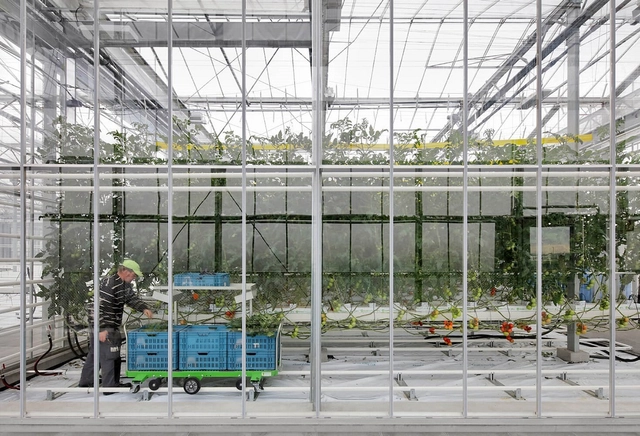
Do you know what urban farms are? Have you ever thought about growing your own food at home in your garden or in specialized freezers? Transporting food for consumption in cities is one of the major environmental (and financial) pollution problems in the world today.
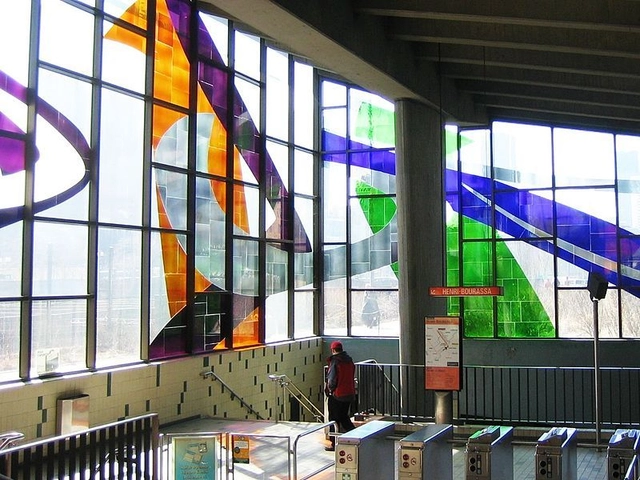
In terms of architectural enhancement, stained glass is often pieced together in order to produce depictions of decorative art, allowing light to filter and penetrate a particular structure or building. As a component it is both decorative and a variety of window, allowing a substantial and sufficient amount of light into a space, for atmospheric and beneficial effect.
Arteries of hope by Partner-z Architects. Image Courtesy of Partner-z Architects
This week’s curated selection of Best Unbuilt Architecture highlights educational facilities submitted by the ArchDaily community. From a contextual Earth school in Senegal, to a borderless, collaborative school in Vietnam, this round up of unbuilt projects showcases how architects infused nature with architecture, offering students the chance to engage with the landscape and learn more about their surroundings from their academic institutes. The article also features projects from Lebanon, Switzerland, Armenia, Ukraine, and Greece.
Clearly, graphic designers are not architects, but collaborative projects between these two fields of knowledge, which intersect in their details, can work well.
Creative industry as a sector has evolved, and many people are now in new fields. If you're collaborating, you can move quickly and we've covered that here. The trend is to be collaborative, and very different from 25 years ago, when you should be a graphic designer alone doing layout and paper weights or an architect isolated in an office running autocad.
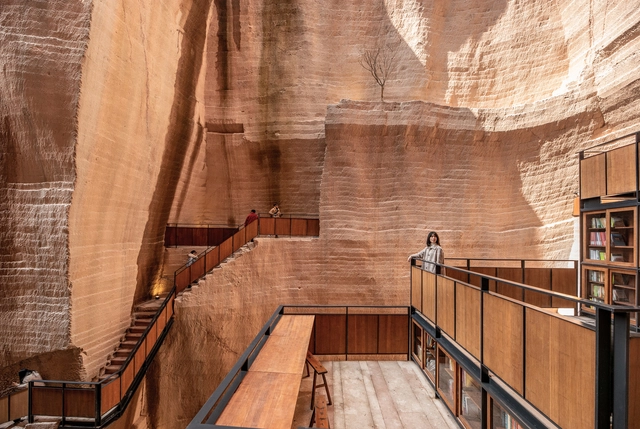
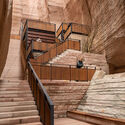
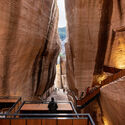
Today, reusing and adapting existing spatial resources is regarded around the world as an important contribution to sustainable development, and new challenges are thus also emerging at the margins of classic building tasks due to the changing assessments regarding whether to preserve or demolish. Xu Tiantian’s projects in the quarries of Jinyun combine aspects of landscape planning, interior design, artistic installations, and social planning with an economic revitalization of the rural area. In this way, a ruined and exploited landscape becomes a sign of departure with which a new sustainable coexistence can be linked to a narrative about the history of the location.
There are extraordinary connections between the natural world and the capacity for creativity in human beings. In his book Last Child in the Woods, journalist and author Richard Louv observes: “Nature inspires creativity in a child by demanding visualization and the full use of the senses. Given a chance, a child will bring the confusion of the world to the woods, wash it in a creek, turn it over to see what lives on the unseen side of that confusion.” He concludes that in nature, “a child finds freedom, fantasy, and privacy: a place distant from the adult world, a separate peace.” The architect Frank Harmon likewise wrote touchingly about the outdoors, woods, and water as perfect settings for cultivating a thirst for learning and discovery: “Children raised by creeks are never bored. Creek children don’t know about learning by rote, neither are they conditioned to working nine to five. Berries are their first discoveries, and birds’ nests, and watching the stars come out. Later they discover books. To creek children, learning is discovery, not instruction.”
https://www.archdaily.com/984628/an-architectural-journey-through-the-woodsMichael J. Crosbie & Suzanne Bott
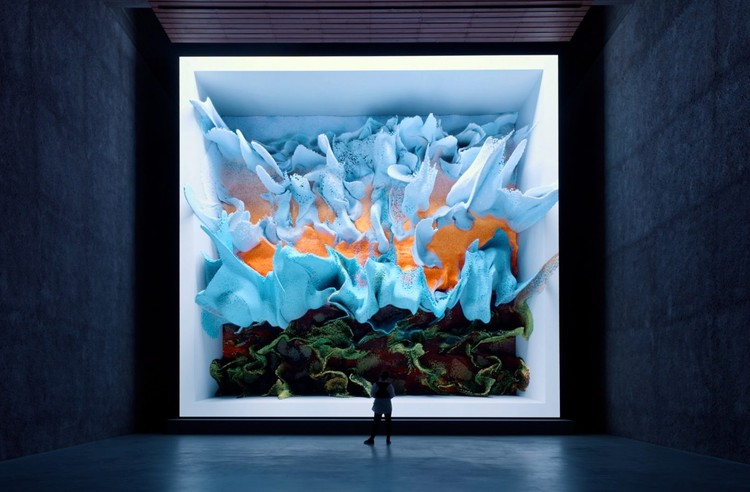
Architecture shapes our lives every day, but how can it be decentralized? At the core of efforts to design extended reality (XR) environments is a desire to make these projects more human and more relatable. As technologists, architects, and users themselves develop new tools for the metaverse, as well as augmented and virtual spaces, new projects are increasingly democratized and open source. At the same time, the design process is being reimagined.
The term 'high-performing' may bring different images, ranging from a star student to a virtuosic violinist to a hard-working employee. As diverse as they may be, these 'high-performing' people have common attributes. A cut above the rest, they transcend expectations and bring added benefits through their functioning. They deliver the best possible outputs within their constraints and ensure quality while doing the same. Most importantly, they are consistent in their results, and they use their excellence to positively influence their own lives and the lives of the people around them.
Architecture, as a profession, is highly cyclical in nature. It ebbs and flows with the tides of economic conditions, and is especially hard hit during times of downturn. We’ve all heard stories or experienced it ourselves, or layoffs during the Great Financial Crisis in 2008, or even more recently the significant cutbacks architecture firms went through during the uncertainty of the COVID-19 pandemic. Projects went on hold and new business opportunities declined almost overnight. Now, two years later, firms are keeping a close watch on global supply chain issues and rising inflation rates, especially with increased pressure to meet the needs of a growing urban population. Will architecture be recession-proof as we enter a bear market?
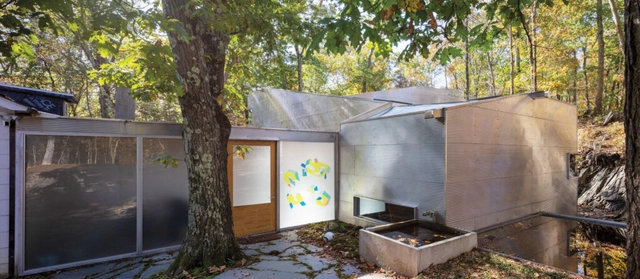
Steven Holl can often be found reading poetry and painting watercolors in a tiny cabin overlooking lotus flowers on the edge of a lake in Rhinebeck, New York. The cabin sits on a 28-acre reserve that Holl purchased in 2014 that now hosts Holl’s full-time office, and ‘T’ Space, a nonprofit arts organization offering creative exhibitions, environmental installations, and architectural residencies. Wrapping around several large trees and linking through a passageway to another existing 1959 cabin, the Steven Myron Holl Foundation’s Architectural Archive and Research Library, built in 2019, is the latest building to be carefully situated in the lush landscape.
As democratizing catalysts, educational spaces play a fundamental role in shaping individuals and entire communities. These places, where students spend a significant amount of time developing their capabilities, skills, and competencies, are more than a background for the promotion of a fundamental right, they are key elements to providing equal opportunities for all.
Open and common facilities, such as schoolyards, courtyards, and auditoriums are great examples of how spaces can encourage students, teachers, parents, and community members to learn with each other in an active dialogue. Flexibility and accessibility are two other key points to promote the democratization of both design and education, as seen in programs that go beyond school time and encourage communities to participate, for example.
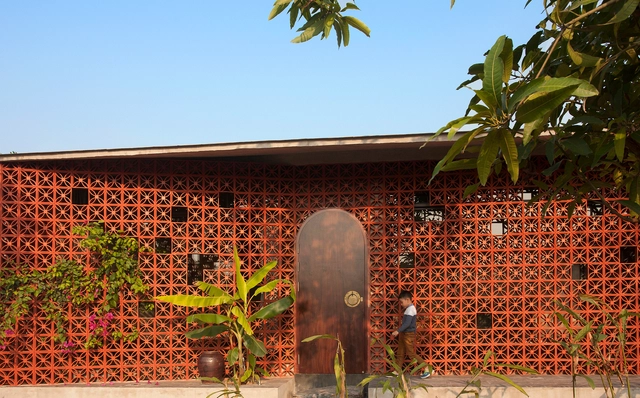
Ceramic fragments and figures found at the Neolithic site of Mureybet, in Syria's Middle Euphrates valley, indicate that clay and fire work date back to the 7th millennium BC. This means that dealing with ceramics is one of the oldest activities in human history. More than 9,000 years later, ceramic, and all its derivatives, has become one of the most used materials in construction, being used at different times, from structure to finishes.
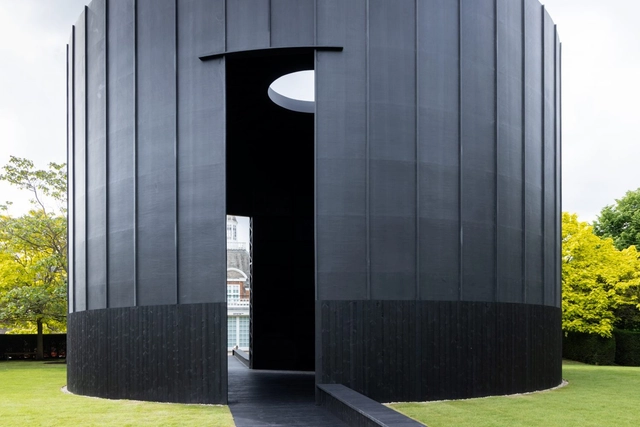
A few weeks ago, this year’s edition of the Serpentine Pavilion opened to the public. Designed by Chicago-based artist Theaster Gates, it’s an evocative project, its cylindrical form referencing American beehive kilns, English bottle kilns, and Musgum adobe homes found in Cameroon.
What the pavilion is named tells the viewer a lot more about its intentions as a spatial experience. Titled Black Chapel, it houses a spacious room with wraparound benches, and an oculus above that allows daylight to filter into the space. It’s a fairly minimal interior – designed as a site for contemplation and reflection. This minimal quality of Gates’ Serpentine Pavilion raises particularly interesting questions. How artists and architects opt for a “less is more” approach when designing meditative spaces, but also how these introspective spaces have been equally enhanced by ornamentation.
The A’ Design Award was "born out of the desire to underline the best designs and well-designed products." It is an international award whose aim is to provide designers, architects, and innovators from all design fields with a platform to showcase their work and products to a global audience. This year's edition is now open for early entries; designers can register their submissions here.
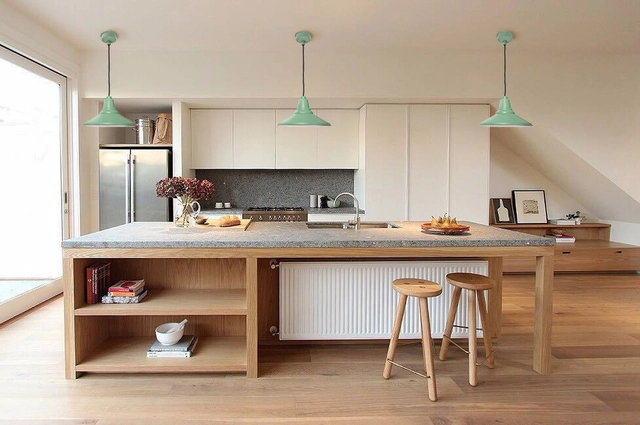
Calla Pendant Ceiling Lights. Image Courtesy of Cocoweb
Characterized by a simple structure and a gable roof, the traditional barnyard typology responds to its original function: sheltering farm products and livestock. In recent years, however, the barn aesthetic has evolved tremendously, sparking the interest of designers with its enduring rustic charm, minimalistic shape, refined ornamentation and modularity – qualities that have long made it popular in countryside hideaways. Reinterpreted to fit a contemporary style, the vintage typology has conquered modern projects that seek to offer an escape from the fast-paced, dense reality of urban life. Whether refurbishing historic farms or building new homes designed to resemble barns, architects have drawn inspiration from the industrial origins of traditional barnyards, but adding a modern twist.
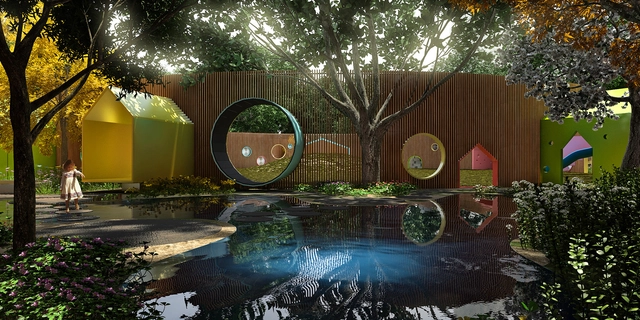
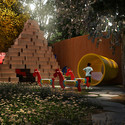
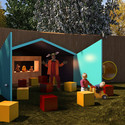
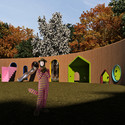
A square as a ludic space for children to freely explore – this was the idea behind the project for the Children Square Iguatemi, which will be built shortly on a site of 900 m², in the midst of a residential area.
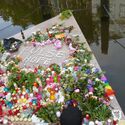
While walking through the city, have you ever felt afraid to be yourself? As strange as the question may sound to some, it is a reality for most LGBTQIA+ people, who at some point have been victims of hostility when they were noticed performing outside the "heteronormative standards" of public spaces. If violence comes from social layers that go beyond the designed space, this does not exempt the importance of thinking about projects that can integrate the physical sphere and insert a symbolic or representational factor to include and educate its citizens. This is the case of Homomonument, which for more than three decades, has become a platform for queer celebration and protest in the heart of Amsterdam.
The Age of Digitalization began nearly 40 years ago with the rise of information technology. With it came massive changes in the way humans interacted and industries operated — that is, with the exception of the education field. For the longest time, in spite of continuously evolving technologies around us, classroom learning remained the same. A teacher stood addressing students, imparting knowledge through conventional methods of reading, orating, and chalkboard drawing. This has also been true for architecture education so far. But times are changing. Today’s students have grown up with digital technologies around them and therefore can benefit from new learning methods, such as gamification, to challenge their intellects.
“Let me tell you what I think of the bicycle. It has done more to emancipate women than anything else in the world. It gives women a sense of freedom and self-confidence. I appreciate every time I see a woman cycling... an image of freedom”. Susan Anthony, one of the most important American suffragette leaders, said this at the beginning of the 20th century, praising the libertarian power represented by women and their bicycles at the time.
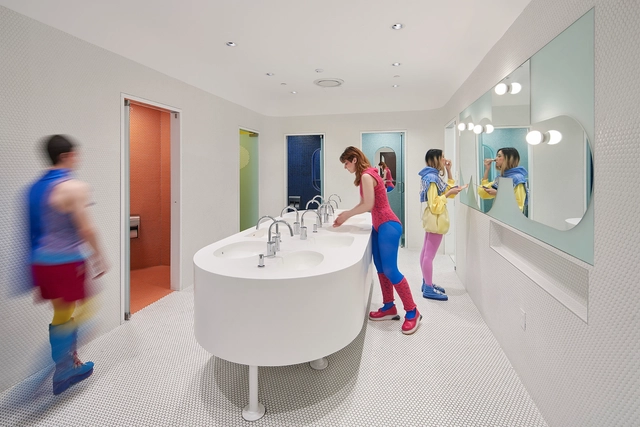
“Creating an equitable city implies that every citizen has their needs met”, states architect Wanda Dalla Costa at a time when metropolises were noticing change. Architects and the public have started to acknowledge the gender-driven design of public spaces. Across the world, urban areas have been a site of discrimination and danger to the LGBTQ+ community. Gender is demonstrated in public zones that promote visibility and interaction between people. An arduous challenge lays upon architects and planners to design fair environments and equitable spaces.
In the face of increasingly alarming predictions regarding the climate crisis, just increasing the efficiency of buildings is no longer enough. Zero energy buildings - or, better yet, energy positive buildings - make it possible to mitigate the negative impacts of the construction industry, which is responsible for 40% of all greenhouse gas emissions. These are buildings capable of producing more energy than they consume through the use of renewable sources. To reach this ambitious goal, it is necessary to follow three main steps:
Install a renewable power system to provide clean energy;
Include high efficiency systems, such as climatization equipment and low energy lighting.
Improve the construction envelope to conserve energy and reduce loads.
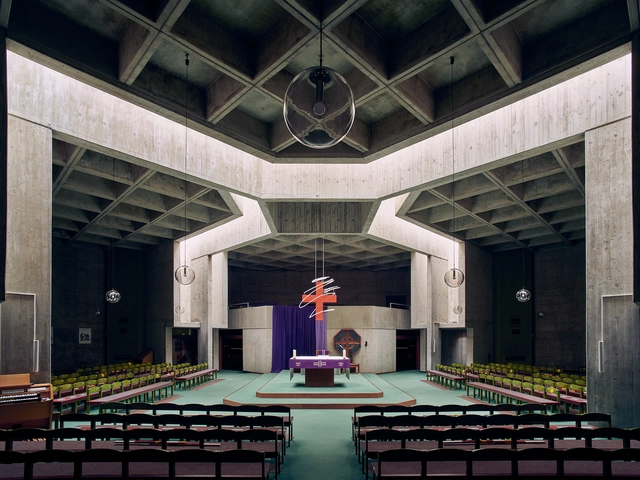
If one were asked to picture a Catholic Church, the first image to come to mind would probably resemble a medieval gothic cathedral with buttresses, pointed arches, and a spire pointing toward the sky. On second thought, many more styles could easily be identified as catholic architecture: the simple yet grandiose structures of the Romanesque or maybe the ornate styles of Baroque and Rococo. An image more difficult to associate with sacred architecture is that of Modernism. The Roman Catholic Church is a particularly conservative establishment. Modernism, on the other hand, is revolutionary; it is rational, functional, and technical; it rejects ornaments and embraces innovation. Surprisingly, in the years after the end of the Second World War, places of worship defied expectations. Blocks of concrete, raw materials, angular shapes, and exposed structures have all been employed to break from tradition and create churches that barely resemble a church. This article will explore Modernist mid-century Church architecture with the support of images from Jamie McGregor Smith.
Suburbs are one of the favorite fields of action for people who deal with social architecture in “first world” contexts. In 2020, a group of students from the Architecture for Humanity course at YAcademy– the renowned international school of architecture located in Bologna, Italy – had the opportunity to work with Michele De Lucchi in order to bring arts, beauty and quality into the drab suburbs of Milan.







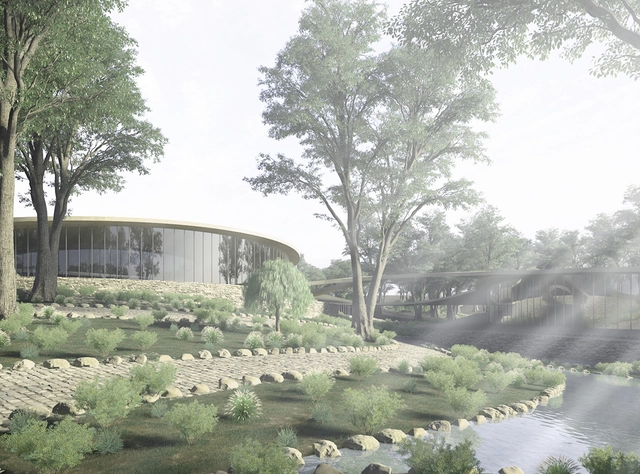

.jpg?1656583509 "The Creeper – COAF Smart Campus Armavir by TarberAK Architectural Studio; TL Bureau. Image Courtesy of TarberAK Architectural Studio; TL Bureau")