The at the University of Washington is a cross-disciplinary group from the College of Built Environments and the Department of Architecture. It’s directive is to explore and develop ideas “that will shape the future of design and information technology.”
Their research projects range from fabrication tools to new ways of rendering large-scale models. Amongst the most exciting is the SPOT tool. First of all, this tool is free, so anyone, anywhere in the world can use it. And because it was developed for architects, its features have the needs of architects in mind.
Map 13 shared with us their project, Infrastructural Archeaology. Landfills are areas of great potential which are but a mere evidence of the uncontrolled cosumerism of this extreme society. They understand that waste should be buried and isolated, and not be forgotten and abandoned. It is thus an open project, where the definite plan of its pieces is not the main interest, but rather the definition of its systems and their development in time. More images and architects’ description after the break.
Are you an avid lover of the High Line? If you’ve been keeping up with our coverage of the project byJames Corner Field Operations and DS+R, then you have been following the development of the High Line’s different sections – such as the early stages for a the design of the Gansevoort entrance and elevated street ampitheater of Stage One, and the picture frame and tree fly over of Stage Two. And, yet the amazing public space is still developing further. Friends of the High Line are presenting initial design concepts for the rail yards section of the High Line, which requires new zoning that would preserve the entire rail yards section, including the Spur, as public open space. At a community input meeting on Monday, March 12, the High Line design team will share their visions and answer questions about the soon-to-be newest part of the project.
More information about the meeting after the break.
The finalists of the international competition to transform the Carlsberg Brewhouse into an exciting, must-see Brand and Experience Center, was recently revealed. The competition sought to find proposals that would create a world-class attraction with a broad appeal to visitors who wish to be challenged, engaged and entertained by one of the world’s strongest brands. The main focus is on the transformation on the Brewhouse and the Elephant Gate but should also describe how Carlsberg Group can re-enforce, strengthen and further develop its presence in the Carlsberg site. More images and information on the finalists’ proposal after the break.
Launched just last week, the UrbanCollectiveModular Building Design Challenge 2012, open to all architects, engineers, designers and students – individually or in groups, challenges participants to design a contemporary modular home. throughout the world. The competition aims to further dialogue within the design community and build interest about prefabrication and modular design but also to create contemporary and affordable modular designs to aid in combating the widely discussed housing affordability crisis in Australia. Submissions close April 20th and the winner will be awarded $2,000.00USD in cash. For more information, please visit here.
Matteo Cainer Architects shared with us their proposal for the Museum Santiago Ydáñez in the town of Puente de Génave, Spain which expresses the relationship between the work of the artists, the site and the building program. Through an engaging, energetic and permeable design, they conceive a musical rhythm where the new museum becomes a reactive and interactive part of its landscaped setting through the intersection of the integrated and sculpted grids. More images and architects’ description after the break.
Skidmore, Owings & MerrillLLP (SOM) has been selected as winner of an international design competition with its Beijing Bohai Innovation City master plan that illustrates a new model of compact, environmentally enhanced urban design.
The winning proposal centers a new environmentally friendly district along the high-speed rail line, linking the national capital to the port city of Tianjin while leveraging the economic and lifestyle assets of the Beijing-Tianjin corridor. The city expansion will bring 17.6 million square meters of mixed-use development, with a focus on providing a premier headquarters location for advanced industries in the dynamically growing Bohai Rim, a region that already accounts for more than a quarter of China’s GDP.
In an article originally published on Plataforma Arquitectura, Guillermo Hevia Garcia describes his experience when visiting the Unité d’ Habitation in Marseille, France, also known as Cité Radieuse. On February 9th, the building was overcome by a large fire that was said to have been started due to a heating problem. The blaze took hundreds of firefighters nearly a day and a half to put it out. Eight residential units and four hotel rooms were destroyed, and approximately 35 other units were severely damaged by smoke or action relief. Most residents have returned home to the Unité d’ Habitation, Le Corbusier‘s thesis on domestic life, as they continue to live the communal life that the renowned architect dreamt up.
Sydney Opera House is not only a building with great beauty but it has also become known throughout the world as a symbol for not only a city, but a whole country.
The LEGO version of the Sydney Opera House seeks to capture the essence of this grand building in a small scale. Like the other models in the series it was created by Adam Reed-Tucker.
The set will be available in stores on March 1st at a suggested price of $39.99. More images after the break:
https://www.archdaily.com/210308/lego%25c2%25ae-architecture-series-sydney-opera-house-by-jorn-utzonAmber P
Tonight, Columbia University’s Graduate School of Architecture, Planning and Preservation (GSAPP) Studio-X NYC welcomes Fast Company’s Greg Lindsay and the Institute for the Future’s Anthony Townsend for the first of a new series of events focused on the “smart city”.
“Lindsay and Townsend are calling the series “X-Cities,” where X marks the spot at which information technology and mega-urbanization converge. In this first session, the pair will lay out their respective cases for the top-down, intelligent design of “smart cities” versus the bottom-up evolution of crowd-sourced “civic laboratories.” Is information technology a real tool for city-building? And, if so, what is its bright and/or scary future?”
This event will begin at 6:30PM at 180 Varick Street in New York. It is free and open to the public. No RSVP is required. Continue reading for more information.
Great news everybody! Thanks to Rakennustieto Publishing we have 4 copies of Alvar Aalto: The Mark of the Hand, by Harry Charrington and Vezio Nava. To win one of the copies you must become a registered user in ArchDaily and answer the following question in the comments: Which Alvar Aalto project should be featured in our AD Classics section? We already have a few so check them out so you don’t repeat them:
Newark-native Richard Meier has not forgotten his roots. Established by the Puritans as a colony to follow the rules of the church in the 17th century, Newark evolved into a prosperous industrial center during the 19th century, experienced a harsh period of industrial and social decline after WWII, and is currently seeking to reestablish its reputation as a renewed urban metropolis. Meier has supported such efforts to restore the city’s vitality, including chairing an international design competition for the creation of a Visitors’ Center for Newark (check out some proposals we’ve previously featured here). Back in 2010, Meier & Partners shared their vision for a new Teachers Village for the city – a four block-long mixed-use development aimed at attracting young professionals who work in the educational system to reside in the downtown area. This past week, we are happy to share that the Village, which includes two school buildings with three charter schools and a daycare center, 70,000 sqf for retail space, in addition to the rental apartments for Newark teachers, has broken ground.
Above is a video put together by 24studio on what today we call the National Museum of Science andTechnology – MUNCYT – which was born in 2001 as A Coruña Center for the Arts designed by aceboXalonso studio. The video coincides with the article written about the politically controversial building which was conceived as a single container to house two buildings of diverse nature: the new Dance Conservatory of the provincial Council of A Coruña and a Provincial Museum of ambiguous content. More info can be viewed here.
Coming up in March, the AIA Grassroots Conference will be featuring the Young Architects Forum (YAF), a knowledge community of AIA composed of architects licensed less than 10 years, who will be holding ‘Summit20′ at the District Architecture Center in Washington, D.C. during the conference on March 6-7. This is to commemorate YAF’s 20 year anniversary and to identify the top ten issues affecting young architects today. They will also be discussing immediate and long term action plans that AIA-YAF can take addressing the specific needs of young architects. The two day summit with panel discussions and open dialogue among approximately 50 young architect leaders from the nation will conclude with an outcomes presentation at the conference. For more information, please visit here.
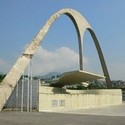
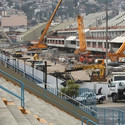
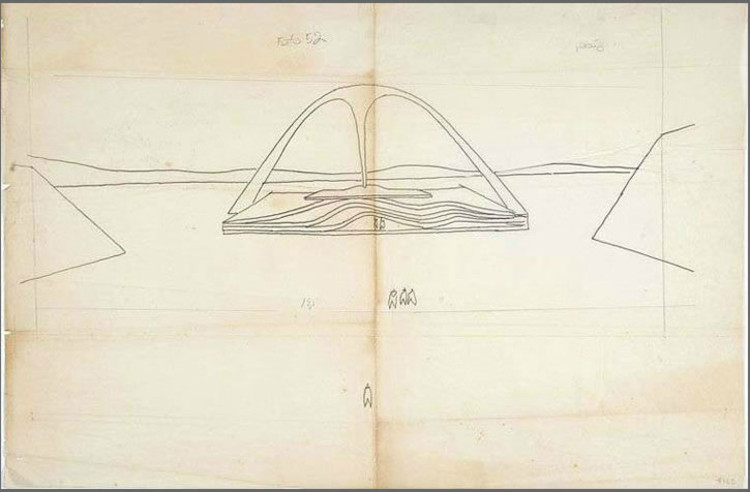
Brightly colored confetti and sequined samba queens covered the newly renovated Sambadrome in Rio de Janeiro, marking the beginning of the 2012 world-famous annual Carnival. Designed by Brazil’s legendary architectOscar Niemeyer, the Sambadrome was originally constructed during the first government of Leonel Brizola (1983 – 1987) in an effort to provide Rio with an urban facility that would serve as the permanent location of the traditional spectacle of the samba school’s parade. Inaugurated in 1984, the Sambadrome is also known as the Catwalk Professor Darcy Ribeiro out of respect to the man who moved the parade to its current site. Continue for more.