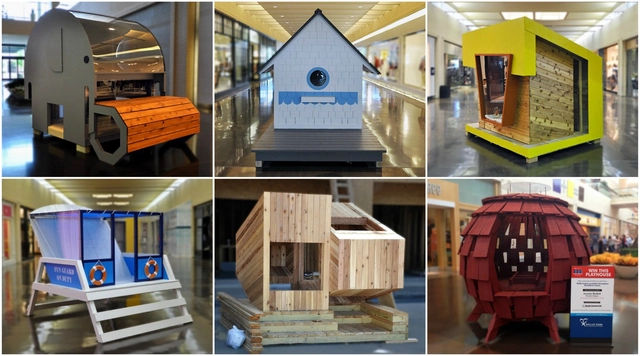
Have you ever thought of designing a house that is 8-foot cubed? It's unlikely, unless you've been involved in Dallas CASA’s event “Parade of Playhouses.” For 25 years, the association has asked architects, designers and builders to conceive, construct, and donate playhouses to raise funds for abused and neglected children. Each year, the playhouses are displayed in Northpark Mall – Dallas’ main “cultural centre” – where people can buy $5 raffle tickets to win one of the playhouses exhibited.
Architect Bob Borson conceived his first two playhouses for Dallas CASA in 2009, before starting his popular blog Life of an Architect and subsequently launching “The Life of An Architect Design Competition.” The idea came in 2010 when a great number of architects suffered from the economic crisis. As Borson explains: “I could have a playhouse design competition open to other architects so that they could remain connected to the architectural profession.” This also required Borson to raise money and find builders to construct the designs. “I have always covered all the expenses so that the competition would remain free to enter – the playhouses were for charity and it seemed like the right thing to do,” reflected Borson.
It’s the year 2036 in Generic City, a gloomy place where once mighty skyscrapers are lucky to be in decrepit condition, if they haven’t already been swallowed by the ever-increasing number of sinkholes appearing throughout the city. But the city is not lifeless: a constant hum echoes about the city, a well-choreographed churning motion in pursuit of one central activity. In this city, the world’s most precious commodity—not gold, not diamonds, not even black gold but just simple, fresh water is under the total control of a mega-corporation named Turquoise. The people are ruled by an oppressive autocracy and life is divided between the haves and have-nots. Life revolves around access to water.
Is this the opening paragraph of the latest dystopian novel? No, but it might be Joshua Dawson’s interpretation of our troubling future. With CÁUSTICO, an ode to the growing tradition of “speculative design fiction” pioneered by countercultural avant-gardists of the 1960s (think Archigram, Superstudio and Archizoom) Dawson exaggerates the implications of current social phenomena for the purposes of rhetoric. While the truthfulness of his vision is a little on the improbable side, the work is an eye-opening narrative on the increasing scarcity of fresh water. At the same time, Dawson’s dystopic vision opens a conversation about the relationship of the architect with utopianism, while his representational techniques brings up the question of what exactly the work of the architect entails.
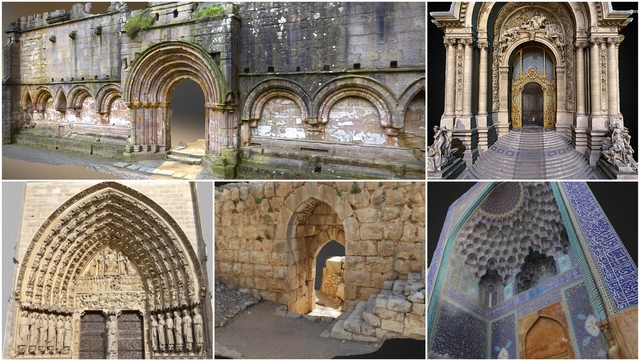
Our friends at Sketchfab have noticed a recurring trend: among the many 3D scans shared on their platform, a significant number are of historical doorways. Often neglected in today’s designs, doors and doorways are essential physical and mental transition points between the interior and the exterior of a building. While Mies van der Rohe’s strive for visual continuity and the use of glass doors has some critical advantages, it is not applicable – or only poorly applicable – to every design case. Fortunately, history shows that visually and spatially differentiating doors and doorways from the rest of a facade can be a resourceful alternative.
With this set of 3D models selected by Sketchfab, viewers can explore historical doorways online and discover the spatial sequences that they can offer. From framed, indented, raised, lowered, protruding and ornamented doors, these models clearly showcase the various design strategies available for you to keep your doorway design options open.
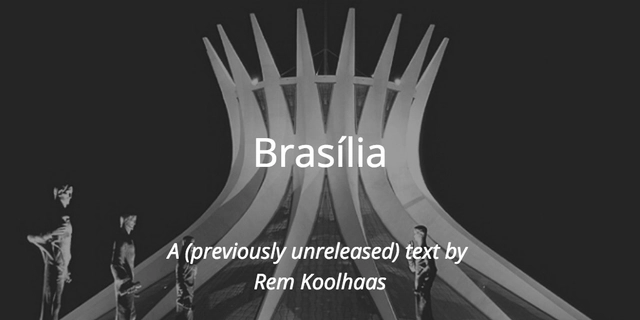
This essay was written by Rem Koolhaas on the occasion of his first trip to Brasília in August of 2011, and has since remained unpublished. Revista Centro (an online Brazilian magazine about architecture, urban studies, art & social science) has now published it in two versions (English and Portuguese) translated directly from its original language, Dutch. In addition to offering his first impressions about the modern Brazilian capital, Rem also emphasizes an autobiographical narrative about the origins of his relation with architecture.
Walking next to a construction site is anything but enjoyable. Unavoidable noise (and sometimes air) pollution is partly responsible, but development hoardings also contribute to the unpleasant feeling. In most cases you walk alongside blank canvases, made from OSB or poorly built plywood boxes, and covered with a concrete grey or navy blue Dulux paint. If you’re lucky enough to pass by a development for luxury apartments, you’ll find some lavish advertising for the homes which, of course, you couldn’t afford anyway. With her blog “Development Aesthetics,” Crystal Bennes gives credit to the visual importance of hoardings, showcasing London’s latest construction sites and commentating on the inadequacy and often absurdity of the advertising on their hoardings. As apartment blocks mushroom around the British capital, the issue increasingly affects inhabitants’ use and understanding of public spaces.
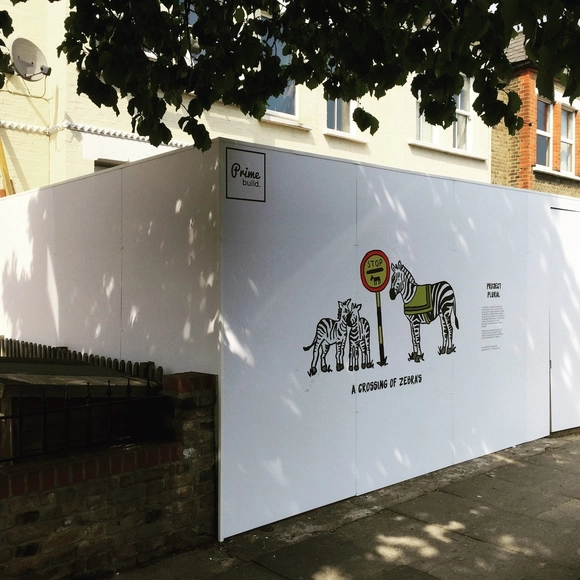
Hoping to turn this trend around, the UK-based construction, architectural and engineering firm Primebuild has launched its "Canvas for London" Initiative, using construction site hoardings as platforms for artists to display their work.
Day View of the Vessel. Image Courtesy of Bart//Bratke
California is suffering through its 5th year of severe water shortage. Aquifers and rivers continue to dry out as the water provided by melting snowpacks is reduced, and even the heavy rain brought by El Niño this year could not relieve the drought. Authorities are wary of the long-term consequences for California and neighboring areas of the Colorado River, and Santa Monica is now seeing a growing number of initiatives to control the use of potable water and find sustainable solutions.
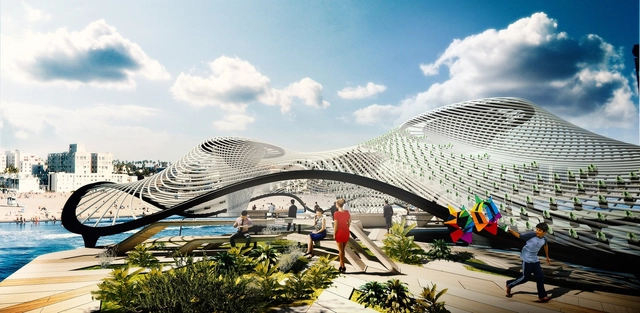
Most recently, a competition asked architects, artists and scientists to conceive sustainable infrastructure projects to improve Santa Monica’s water supply. Bart//Bratke and studioDE developed a raft structure named “Foram” that illustrates the future of floating platforms in sustainable development.
How to Succeed as a Young Architecture Professor (Without Dying in the Process)
In this article originally published in Spanish by the Arquia Architecture Foundation's blog, the author Manuel Saga speaks about the important task of involving young professors in architecture schools, arguing that it is essential that the academic route is seen as a real option with as much value as being a “big name designer,” especially when you take into account the current crisis seen within the industry.
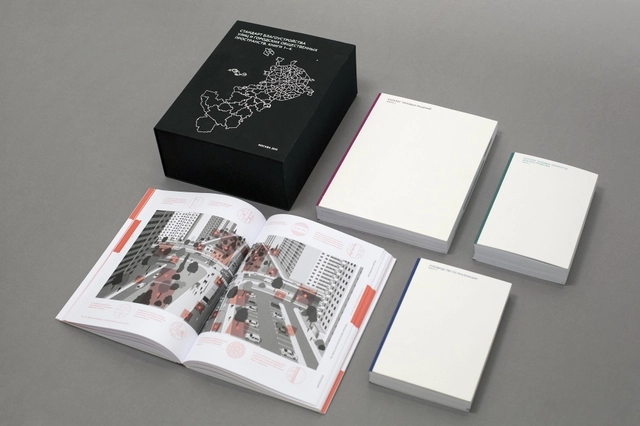
Earlier this year the development of a new Street Design Standard for Moscow was completed under a large-scale urban renovation program entitled My Street, and represents the city's first document featuring a complex approach to ecology, retail, green space, transportation, and wider urban planning. The creators of the manual set themselves the goal of making the city safer and cleaner and, ultimately, improving the quality of life. In this exclusive interview, Strelka Magazine speaks to the Street Design Standard's project manager and Strelka KB architect Yekaterina Maleeva about the infamous green fences of Moscow, how Leningradskoe Highway is being made suitable for people once again, and what the document itself means for the future of the Russian capital.
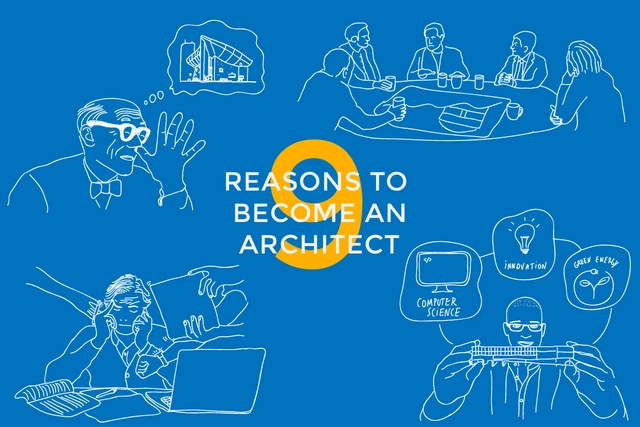
Making the decision to pursue architecture is not easy. Often, young students think that they have to be particularly talented at drawing, or have high marks in math just to even apply for architecture programs. Once they get there, many students are overwhelmed by the mountainous tasks ahead.
While the path to becoming an architect varies from country to country, the average time it takes to receive a Masters in Architecture is between 5 and 7 years, and following that is often the additional burden of licensure which realistically takes another couple of years to undertake. Knowing these numbers, it’s not particularly encouraging to find out that the average architect does not make as much as doctors and lawyers, or that 1 in 4 architecture students in the UK are seeking treatment for mental health issues. These are aspects which architecture needs to work on as an industry. However, beyond these problems, there are still many fulfilling reasons to fall in love with the industry and become an architect. Here are just some of them.
On this day twenty-five years ago Tim Berners-Lee launched the “World Wide Web” protocol at CERN in Switzerland, ushering in the age of the Internet. Over the last two decades this global information network has rapidly evolved, increasingly influencing how architecture is conceived, produced, discussed and ultimately implemented in real space.
https://www.archdaily.com/793914/internet-25-years-old-why-we-are-celebrating-today-why-all-architects-should-tooAD Editorial Team
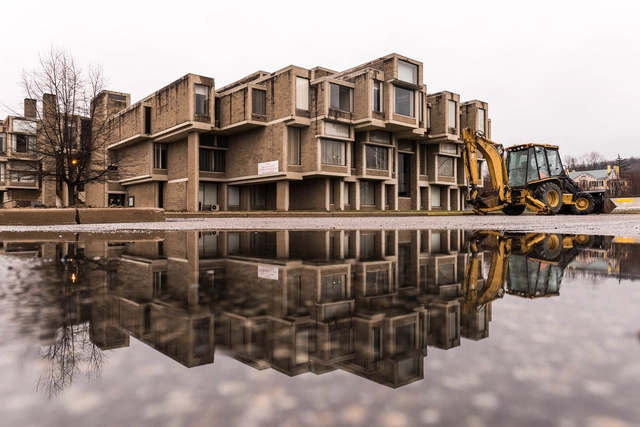
Visiting on four separate occasions throughout 2015 and 2016, Erskine captured the dismantling of this iconic Brutalist work with stunning severity. See the building's final seasons below.
As part of ArchDaily's coverage of the 2016 Venice Biennale, we are presenting a series of articles written by the curators of the exhibitions and installations on show.
In response to Alejandro Aravena’s Biennale theme “Reporting from the Front” the UAE National Pavilion, commissioned by the Salama bint Hamdan Al Nahyan Foundation, and supported by the UAE Ministry of Culture and Knowledge Development, has chosen as its main theme the transformation of the UAE National house, also known as Sha’abi, or People’s house – a housing program that was introduced in the UAE in the early 1970s to house what was then a fairly transient population.
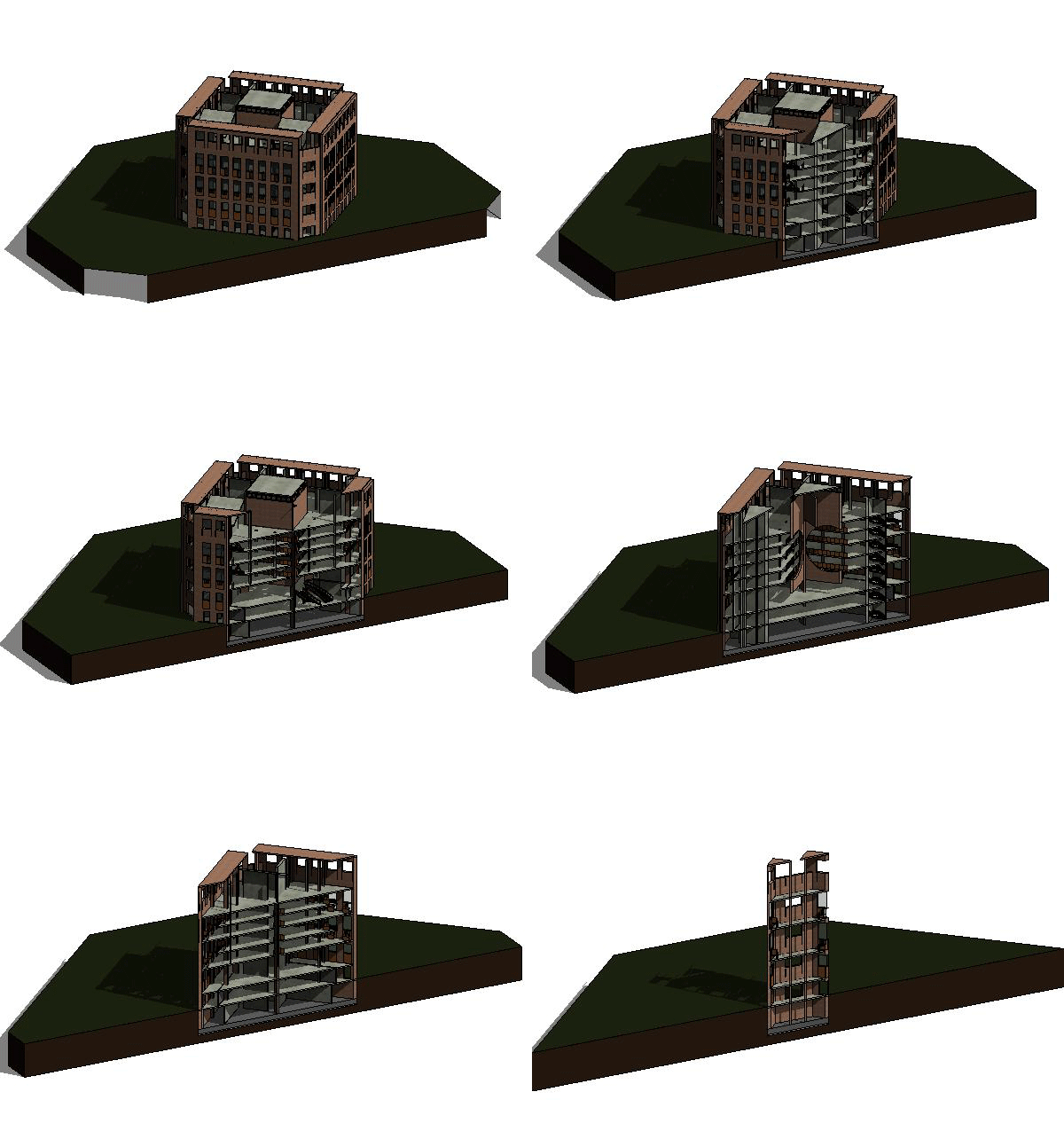
ArchDaily recently posted an interesting article on using animated GIFs for architectural drawings. The article had some great examples but was short on details of how to actually create these images.
I was curious how to create animated GIFs using Revit so I looked into the process. It turns out it’s pretty easy, provided you’re systematic when creating your views and have access to photo-editing software, like PhotoShop. Want to try it yourself? Follow the steps below to create your own animated GIFs in Revit.
In 1978, Australian ecologists David Holmgren and Bill Mollison coined the concept of permaculture as a systematic method for the first time. For Mollison, "permaculture is the philosophy of working with, rather than against, nature, after long and thoughtful observation." [1] Meanwhile, Holmgren defines the term as "consciously designed landscapes that simulate or mimic the patterns and relationships observed in natural ecosystems." [2]
In 2002, Holmgren published the book "Permaculture: Principles and Pathways Beyond Sustainability," in which he defines 12 design principles that serve as a guide for creating sustainable systems. These principles can be applied to everyday processes to humanize them, enhance efficiency, and ensure mankind's long-term survival."
What if we apply them to the design process of an architectural project?
Richärd + Bauer’s Arabian Library in Scottsdale, Arizona, won an IIDA Metropolis Smart Environments Award in 2009 for its groundbreaking approach to both sustainability and community needs. The building’s form and rusted-steel cladding were inspired by slot canyons in the Arizona desert. Image Courtesy of Richärd + Bauer
The city hall of my current hometown, Scottsdale, Arizona, gives no hint of any sort of civic function to the boulevard on which it sits. You enter it from the parking lot in back. The only reason I have been there was as part of a team presenting our credentials in a design selection process. My other dealings with government have been online, via mail, or at suburban locations where I have gone to handle such matters as smog tests. I vote by mail.
The big push in American local, state, and federal government is to take everything possible online and off-site and to make whatever remains as minimal and anonymous as possible. The actual operations of government have long taken place in back rooms where politicians and bureaucrats have done the real work. Yet they were often encased in grand structures that gave us a sense of identity and pride in our government while also serving as open sites where we could encounter our civic agents and one another. As a result, we live with a heritage of civic monuments that proclaim our investment in deliberation and democracy, but we build very few, if any, such structures today. Instead, we are looking to get rid of whatever relics of such a history of civic architecture we can—the governor of Illinois would like to sell the James R. Thompson Center, designed by Helmut Jahn in 1982–85, and only the specificity of the grand classical edifices that predate that Postmodern monument prevents other politicians from trying the same. Civic buildings cost money to build and maintain, and their formal spaces sit empty most of the time.
People are impressed when you tell them you are an architect. Why shouldn’t they, after all? You share the same title as Frank Lloyd Wright, and that other Frank who builds all those crazy looking buildings. As most of us know from experience, our lives are not that dissimilar from most people living in relative anonymity. How did the architects’ reputation become so acclaimed, yet, so far from what most of us experience?
A few months ago we put out a call for the best architecture résumé/CV designs. Between ArchDaily and ArchDaily Brasil we received over 450 CVs from nearly every continent. We witnessed the overwhelming variety and cultural customs of the résumé: some include portraits, others do not; some include personal information about gender and marital status; others do not. In the end, however, we based our selection on the CVs that stood out from the hundreds of submissions. We looked for CVs that transmitted the personality of the designer, their ability to communicate visually and verbally, and perhaps, the most intangible criteria for evaluation—the "creativity" of the CV. The documents below represent the diversity of styles and formats that just might land you a job at your dream firm.
https://www.archdaily.com/793375/the-top-architecture-resume-cv-designsAD Editorial Team
While BIM is increasingly becoming a necessity in architecture, it is still difficult to quantify the benefits it is bringing to the industry. Currently, there is no industry-standard method for calculating BIM’s Return on Investment (ROI) and, due to the complexities of the calculation, many firms have not adopted any consistent measurement practices to determine the monetary benefit that the technology has brought to their practice. The difficulty centers upon the fact that traditional analysis of ROI is unable to represent intangible factors that are important to a construction project such as avoided costs or improved safety.
Therefore, as the leading providers of BIM technology, Autodesk was interested in researching the subject. Their study, “Achieving Strategic ROI: Measuring the Value of BIM,” reveals that the role of ROI in technology decision making is shifting in that leading firms are seeking a more nuanced view of ROI to inform their strategy of investment and innovation.
Transcending the traditional “profit versus cost” calculation, companies are looking into different dimensions of the company to develop well-informed quantifications of their ROI for BIM.
https://www.archdaily.com/793443/how-do-you-know-if-bim-is-worth-the-investment-for-your-firmAD Editorial Team

















.jpg?1470849709&format=webp&width=640&height=580)