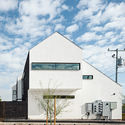
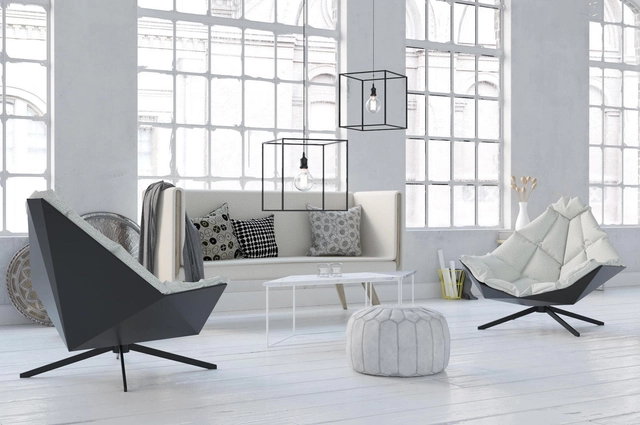
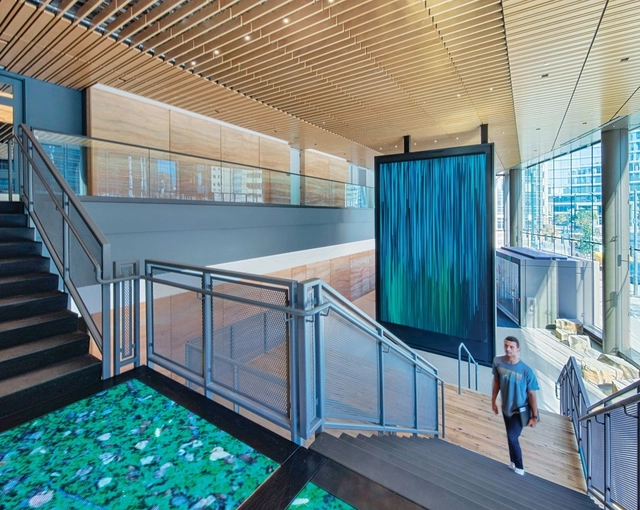
HPL (High Pressure Laminate) panels are made of Kraft paper impregnated with phenolic resins, subjected to heat and pressure. A decorative layer with synthetic polymer allows the sheets to have numerous color and texture options, providing an extremely high strength and durability. This is why HPL is widely used in façades, but it is also increasingly being considered for interior wall cladding, for partitions and lockers, as well as for furniture. It is a material that can be used outdoors and indoors, and even on horizontal surfaces.
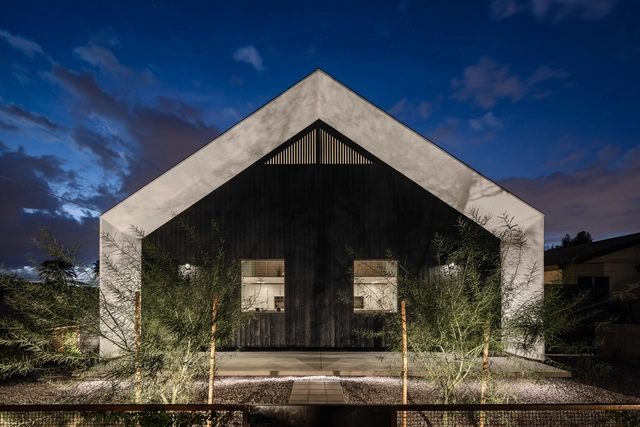
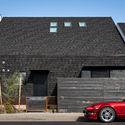
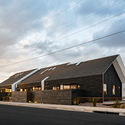
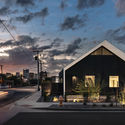
Architect and developer SinHei Kwok has completed Polker, a six-unit multifamily project in the Historic Garfield neighborhood near downtown Phoenix, Arizona. Featuring two-bedroom and loft-style units, the project reconsiders its surrounding context of single family houses. Polker provides a new kind of residence for urban dwellers who do not want to live in a single-family home or big box apartment, but would like to live and work closer to downtown.
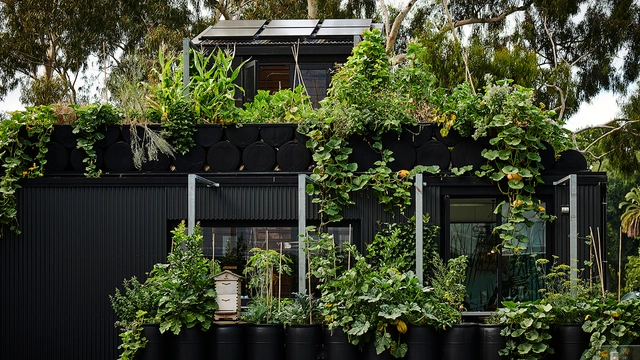
According to a 2021 Food Waste Index Report by the United Nations, 17% of global food production goes to waste, becoming the third biggest source of greenhouse gas emissions. 11% of this waste is generated by households, not only contributing to the climate crisis, but also provoking large economic costs, biodiversity loss, and the rise of pollution levels at unprecedented rates. Therefore, considering the key role that architecture and design plays in providing more eco-friendly housing options, it is essential to adopt and enhance a more self-sustaining, zero-waste approach.
The team at Cazú Zegers Arquitectura gave us an inside look at their three Chilean projects--Ye house, Llu House, and Fire House. The film, completed by ClaraFilms, seeks to capture the human dimensions of the homes and centers on how spaces are inhabited throughout time.
Clara Larraín, one of the team members, wrote the following text to accompany the architect's vision of encapsulating the feeling of the three videos into one poetic montage:
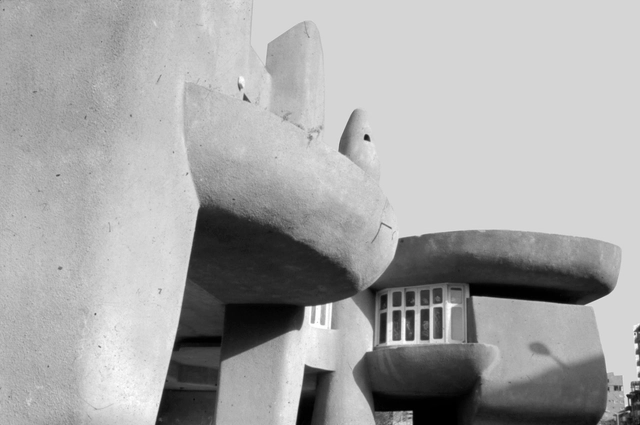
Villa Badran designed by Gamal Bakry . Image Courtesy of CENTER FOR ARCHITECTURE
On view at the Center for Architecture in New York City, the exhibition features 20 projects in Cairo and a warning about the threatened future of Egypt’s Modernist heritage.
Cairo Modern, a new exhibition at the Center for Architecture in New York, features 20 demolished, extant, and proposed projects in Cairo dating from the 1930s to the 1970s and also shines a light on the wrecking ball-threatening Modern architecture here and elsewhere.
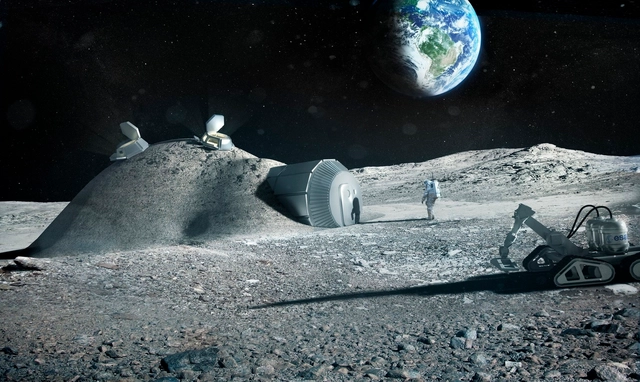
The Apollo 11 Mission, departed Earth on July 16, 1969, and touched down on the moon 4 days later. This moment marked a milestone for humanity and, to this day, makes us reflect on how technological progress is bringing us ever closer to life beyond planet Earth.
With the help of 3D printers, highly developed and fully automated constructive technology, we have compiled a selection of 15 architectural projects that demonstrate that life on the moon and beyond is closer than we've ever imagined.
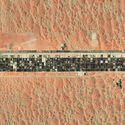
Food cultivation is one of the great historical milestones of our society's development. The knowledge of agriculture was fundamental for the evolution of a nomadic society into a sedentary civilization. Centuries later, agricultural production has become one of the main contributors to the organization of the land. This phenomenon can be seen in the aerial images we have selected below.
The built environment of Far East Asia is challenging the paradigm through urban developments that are centered around principles of sustainability, community, and user-centric design. Following concerns of high-density neighborhoods and compromised landscapes, architects of that region became aware that building for the future means changing their outlook on financially-driven projects with unsustainable strategies, and replacing them with structures that put the user and the environment at the forefront.
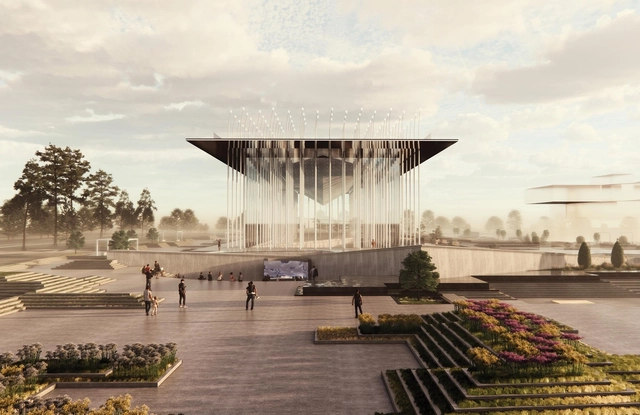
From an all-around panoramic hotel on The Philippines's waterfront to an emotion-provoking memorial inspired by the rain in South Korea, this round up of unbuilt projects showcases how architects merged the Far East's culture, history, and unique geography with contemporary designs, creating state-of-the-art architecture. This round up also includes projects from China, Vietnam, Indonesia, and Hong Kong.
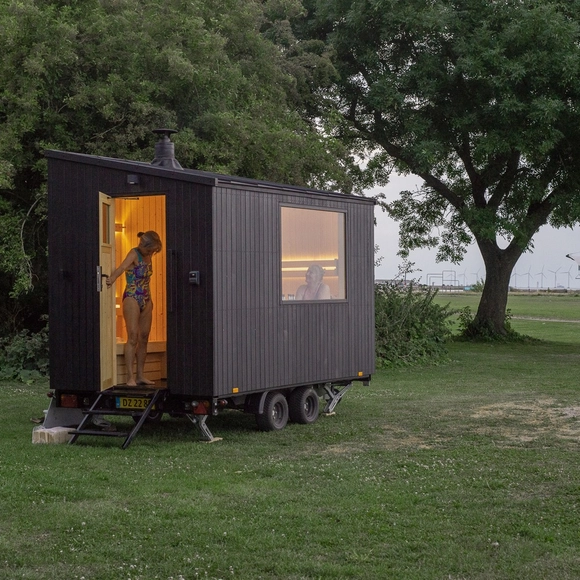
Saunas are inseparable from the culture of Nordic countries and they are increasing in popularity as a result of their many physical and mental health benefits. Their projects are usually quite archetypal, combining efficiency and sobriety.
We spoke with Jakob Gate, co-founder of Native Narrative & Scandinavian Sauna, who has been developing sauna projects that combine the flexibility of being transported anywhere, with the expertise and tradition of Scandinavian design. They work without electricity, heated by wood, while LED lighting is provided by a rechargeable battery. Learn more in the following interview:
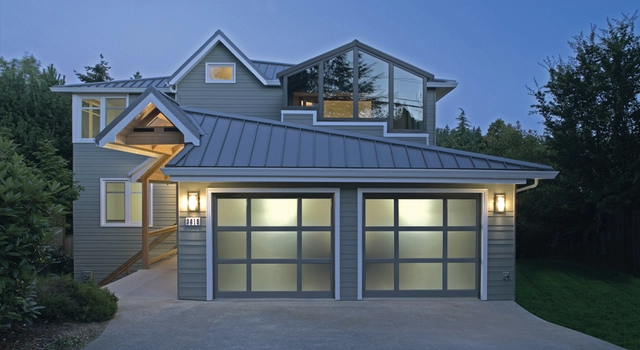
In residential architecture, the garage is a space that is mainly used for storage and car parking. Although the garage door is usually not a very thought-out part of the design of a residential project, it often occupies a large part of the front elevation of a house, and can play an important role in its general curb appeal.
The garage door is typically a large door that is opened manually or by an electric motor, and its size and design are determined by the vehicles that will need to pass through it. Raynor, a North American company that specializes in garage doors, describes several of the most important factors that go into choosing the right garage door.
With walls and ceilings a long way away, often the most practical way to control the placement of a light source and the positioning of light, is to drop it into the exact position where it’s required, with a pendant light.
Even designer pendant lighting can be as simple or as complex as the project’s parameters call for. From the most intricate sculptures of glass or mechanical puppetry to a single bulb on a cord, here are seven types of pendant light, and the purposes and projects for which they’re best suited:
Rapt Studio has recently completed the new headquarters for VF Corporation in Denver, Colorado. With a mission to power active and sustainable lifestyles for the betterment of people and the planet, VF is a diverse collection of global brands. Their new ten-story headquarters brings together several of those brands under one roof, and at the same time, allows each of them to maintain individuality and expression.
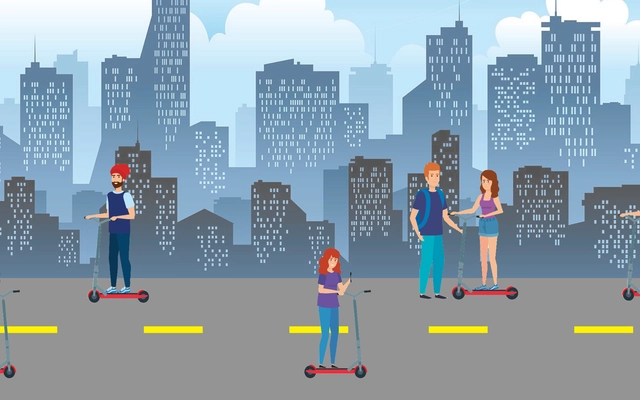
The rise of electric scooter fleets in cities around the globe happened almost overnight. By making transportation fun, they quickly took over a new market share and provided not only an easy way to travel but one that also prides itself in being sustainable. First becoming popular on the West Coast of the United States, scooters migrated eastward, eventually sweeping across Europe as well. Easy to maneuver and a convenient solution to get from place to place, we have to ask- can cities handle the accelerating rise of scooters and other forms of micromobility?
Videos
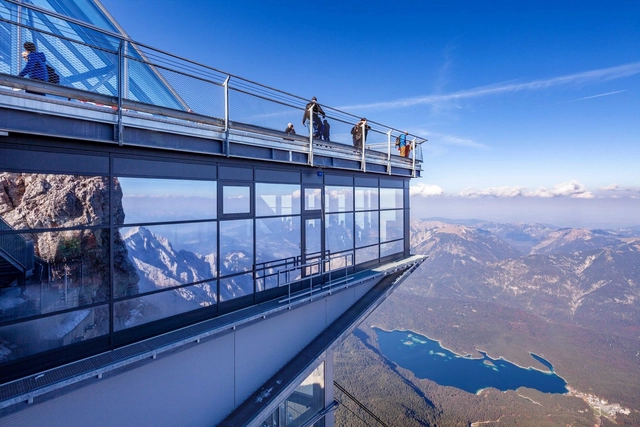
Zugspitze Mountain Station / Eibsee, Germany - Photo by Christoph Seelbach . Image Courtesy of Vetrotech Saint-Gobain
While glass is generally singled out as the weakest part of a building, it is not always true. With technological advances and the continuous innovations of the industry, there is glass that, even while allowing natural light to enter an environment, can protect the building from fire. Beyond fire, there are also other threats such as hot gases, smoke, and heat transmission, which put the safe evacuation of people and the protection of property at risk.
Architecture, by its very definition, involves the construction of structures. Structures that are meant to serve as spaces for work, living, religious devotion, amongst many other purposes. Architectural projects and interventions, however, need land – and it is this intrinsic relationship, between land and architecture, that has massive ramifications not only regarding reducing carbon emissions but more importantly in forming an equitable future rooted in climate justice.
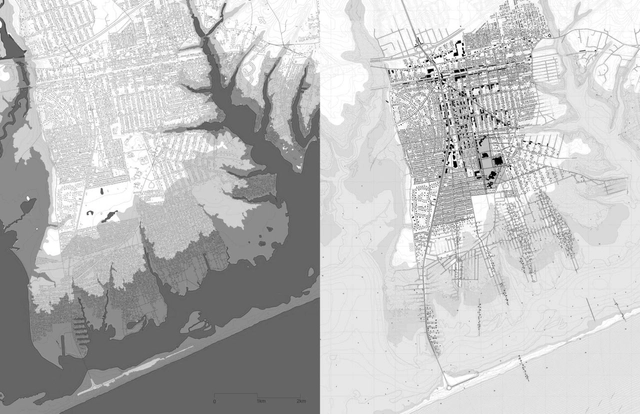
A future flood map of Mastic, New York. Right: A plan for densifying the town’s high, dry ground and retreating from the shoreline. . Image Courtesy of Rafi Segal And Susannah Drake
A lot can happen in the space between a book’s title and subtitle, as A Blueprint for Coastal Adaptation: Uniting Design, Economics, and Policy (Island Press, 2021) demonstrates. Here, in a reversal from the norm, the subtitle assumes the more evocative bent by elevating design to the same status as economics and policy. To some, this might seem a spurious move, but the volume lives its creed: Its editors include two design academics and a business school professor, to say nothing about the myriad backgrounds of its contributors.
Blueprint goes deep into the policy decisions that have shaped the brittle condition of coastal infrastructure. It coalesces into a convincing picture of the wider context in which design operates, with the aim of making the built environment more equitable for those caught on the front lines of certain climate change cataclysm.
The Second Studio (formerly The Midnight Charette) is an explicit podcast about design, architecture, and the everyday. Hosted by Architects David Lee and Marina Bourderonnet, it features different creative professionals in unscripted conversations that allow for thoughtful takes and personal discussions.
A variety of subjects are covered with honesty and humor: some episodes are interviews, while others are tips for fellow designers, reviews of buildings and other projects, or casual explorations of everyday life and design. The Second Studio is also available on iTunes, Spotify, and YouTube.
This week David and Marina are joined by Mark Lee, Principal and Founding Partner of Johnston Marklee and Chair of the Architecture Department at Harvard Graduate School of Design to discuss cities, architecture's responsibility to context, the cultural value of iconic architecture and everyday buildings, architectural education, designing for other cultures, working with clients, designing buildings, 'appropriateness' in architecture, and much more.
https://www.archdaily.com/971446/the-second-studio-podcast-interview-with-mark-lee-chair-of-the-architecture-department-at-harvard-graduate-school-of-designThe Second Studio Podcast
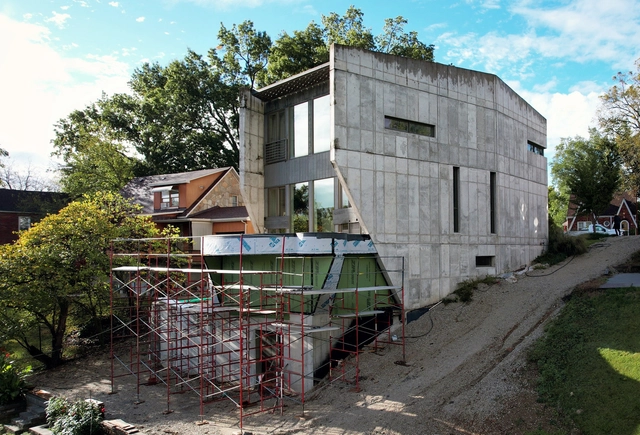
This is the story of architect Grant Gibson’s journey with a house in central Missouri. Originally designed with his mentor, Doug Garofalo, the owners have recently commissioned Grant to design an addition to their award-winning structure. The problem is the original house was designed to make it difficult to add anything at all, and Garofalo passed away shortly after the original house was constructed. Now, Grant, along with his practice CAMES Gibson, needs to design an addition to this house that defiantly resists alteration and to do it in a way that respects the original design while remaining consistent with his own beliefs and design ethos. The clients work closely with Grant to achieve this new design and find a solution to this very difficult problem.