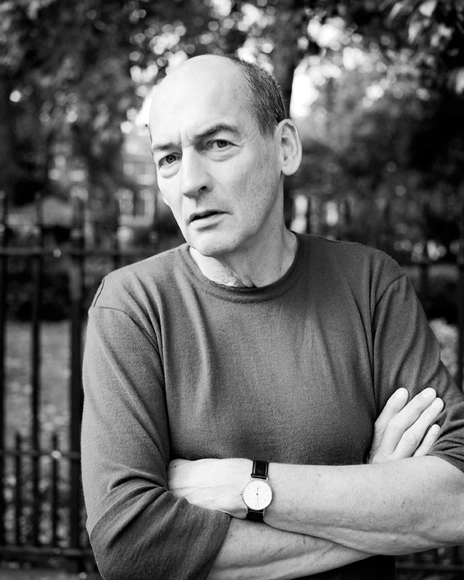
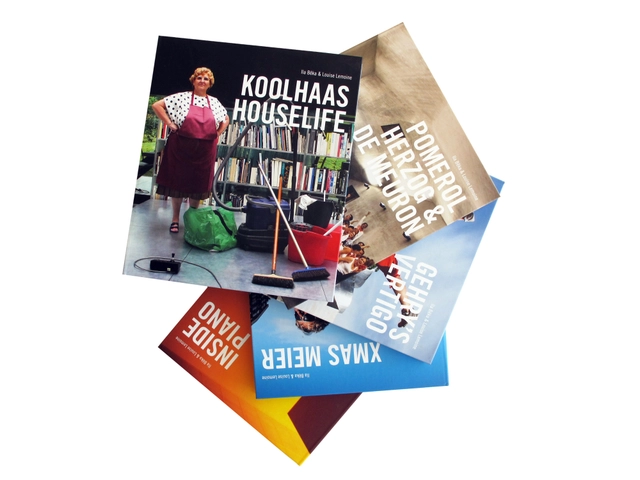
Dutch architect Rem Koolhaas will design a new project for the Hermitage Museum in St. Petersburg. RIA Novosti and The Calvert Journal report that the new building will be “located in the museum's storage facility in Staraya Derevnya in the north of the city” and that it “will house the Hermitage Library, the Costume Museum, the gallery's publishing arm, and a public event space.” This projects marks Koolhaas’ continued presence in Russia; he has been collaborating and teaching at the Strelka Institute and is currently working on the Garage Centre for Contemporary Culture in Moscow's Gorky Park.
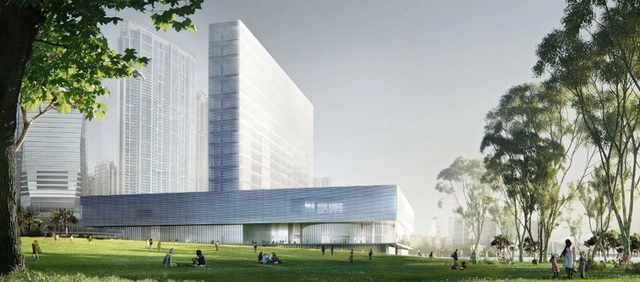
West Kowloon Cultural District Authority has appointed Herzog & de Meuron and TFP Farrells to design a new museum for visual culture on the edge of a reclaimed, 14-hectare park in Hong Kong’s Victoria Harbour. Focusing on 20th and 21st century art, design, architecture and moving image, M+ will be one of the first projects to be completed in the West Kowloon Cultural District, and a key venue in creating interdisciplinary exchange between the visual arts and the performing arts in Asia.
In a few weeks the Senate will likely vote on an amendment that would remove the 2030 sustainability targets for federal buildings that many architects and US citizens fought to put into motion six years ago. The AIA has requested for your help to prevent this and coordinate visits with Senators while they are back home during the Independence holiday recess next week. Please visit the AIA website here to see how you can help protect federal sustainability targets.
Courtesy of Elizabeth Richter Chu for AIA President, Facebook Page
The American Institute of Architects (AIA) reports that it has elected Elizabeth Richter Chu, the CEO of Richter Architects in Corpus Christi, Texas, to serve as the 2014 AIA first vice president/president-elect and 2015 AIA president. James Easton Rains, Jr., FAIA, and Thomas V. Vonier, FAIA, will each serve as vice president from 2014 through 2015; James P. Grounds, AIA, will be the Institute’s Treasurer.
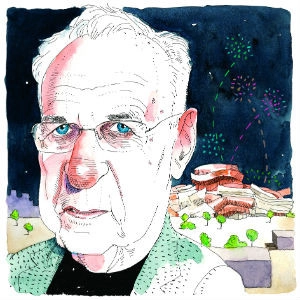
Frank Gehry recently sat down with Foreign Policy’s Benjamin Pauker for a candid interview covering everything from his distaste for Dubai (it’s “on steroids [...] like every cruddy city in the world”), his dislike for cold, minimalist architecture (“I need a place where I can come home and take my shoes off”); and, oddly enough, his approval of benevolent dictators - albeit with taste, of course. As Gehry put it: “It's really hard to get consensus, to have a tastemaker. There is no Robert Moses anymore. Michael Bloomberg wants to be one. In fact, he promised he would build 10 more of my buildings in New York, but, you know, he hasn't yet. Architecture's difficult … [sigh].” Read the full interview here.
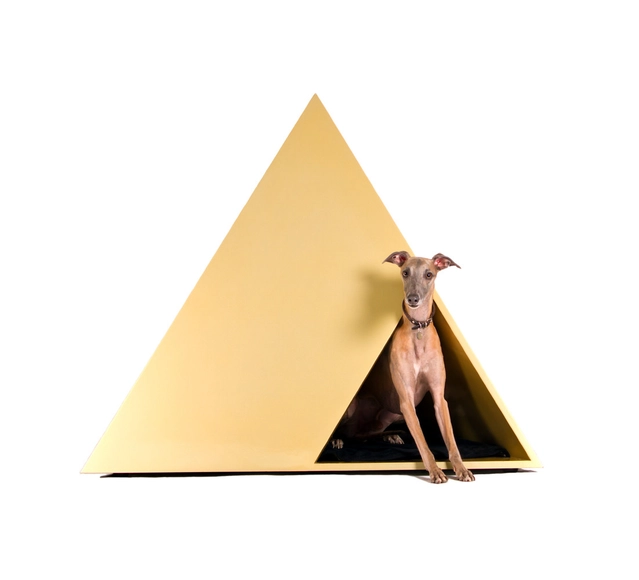
Dogchitecture is an exhibit inspired by “Architecture for Dogs”, a project by Japan's Kenya Hara that sought to reinvent the doghouse and integrate it into the world of design.
With one of his largest installations to date, American artist James Turrell has transformed the rotunda of Frank Lloyd Wright’s iconic Guggenheim Museum into a mesmerizing Skyspace. Shifting between natural and artificial light, Aten Reign - James Turrell’s main attraction - illuminates the central void with a brightly colored, banded pattern that imitates the museum’s famous ramps. This presents a dynamic perceptual experience in which the materiality of light is exposed.
More images of the luminous and immersive Skyspace after the break.
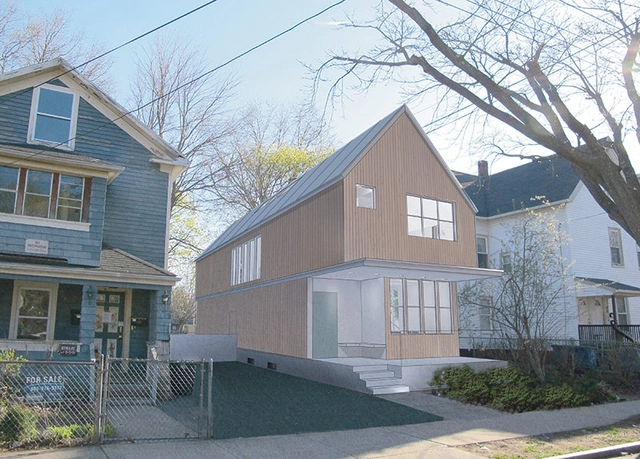
Every year, students at Yale design and build a single-family home in a low-income neighborhood. Called the Vlock Building Project, it’s one of the longest-standing and most admired public-interest design-build programs in the US. Unfortunately, it’s under threat. A/N reports professor Paul Brouard was assaulted and robbed on-site in Mid-May (he has since recovered). Despite the desires of dept. head Robert A.M. Stern, Yale University demanded the project be abandoned and re-located to an approved neighborhood. Did Yale make the right decision? Let us know what you think after the break.
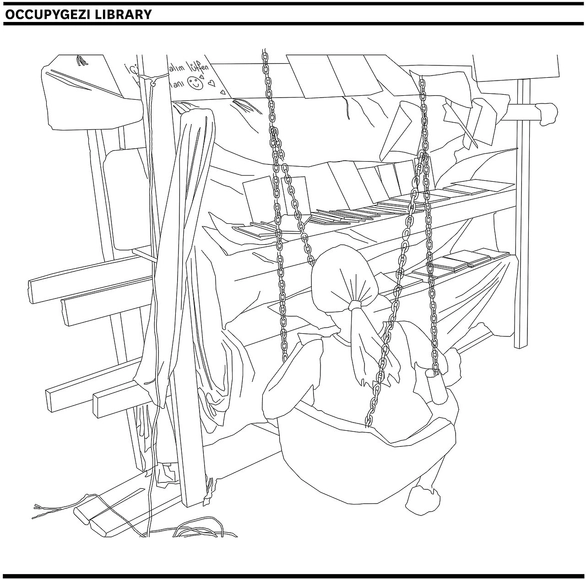
Architecture emerges with every "occupy" movement or protest. From whatever meager resources at hand, occupiers create structures to fulfill very specific purposes - from makeshift tents for sleeping, to instant podiums for speaking, or perhaps even a swing to kill the time. Unfortunately, these architectures are, by their very nature, fleeting: often disappearing instantly the moment the occupation ends.
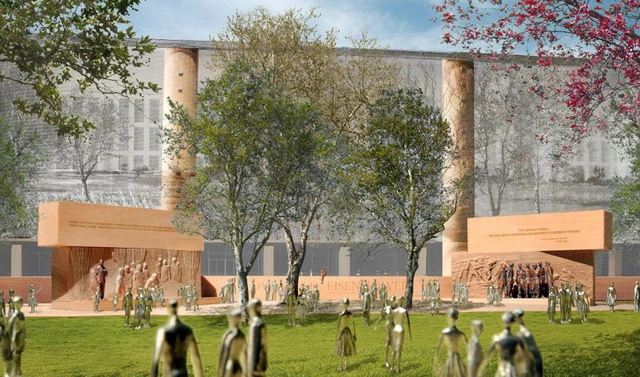
Despite harsh criticism and a lingering threat from the House to scrap funding and start anew, the Eisenhower Memorial Commission has unanimously approved Frank Gehry’s design for the Dwight D. Eisenhower Memorial in Washington DC. The $110 million project, nearly fourteen years in the making, has undergone numerous revisions in the past couple years in search of a compromise between the commission and its opposition, namely the Eisenhower family.
Though the odds started to lean in the opposition’s favor, the commission is pressing forward with their plans and Gehry is expected to present his design to the U.S. Commission of Fine Arts next month and the National Capital Planning Commission in early fall for review and approval.
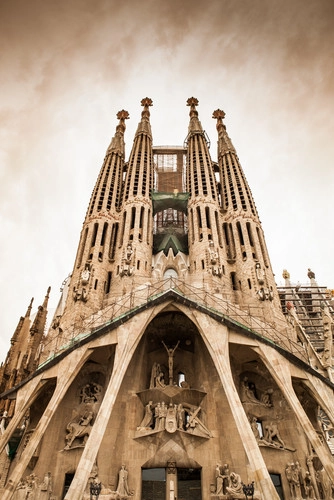
Antoni Gaudí (1852 -1926), the Catalán architect best known for his imaginative style, inspired by the curves and shapes found in nature, and - of course - for his inimitable masterpiece, the unfinished Sagrada Familia, would have turned 161 today.
Image by Tom Morris, March 2012, based on the 'We Can Do It!' poster created by J. Howard Miller in 1942 for the U.S. War Production Coordinating Committee, as part of the homefront mobilization campaign during World War II. [Courtesy of Wikimedia Commons, via Design Observer
Today, KCRW's Design & Architecture will air a podcast on the topic of "Forgetting Women Architects." The show will feature ArchDaily columnist Guy Horton's interview with Denise Scott Brown as well as a conversation based on Despina Stratigakos' fantastic article for Design Observer, "Unforgetting Women Architects: From the Pritzker to Wikipedia." In the article, Stratigakos describes how women continue to be edited out of architecture history and calls for us to "unforget" them by including their stories in online resources such as wikipedia. You can listen to the podcast here.
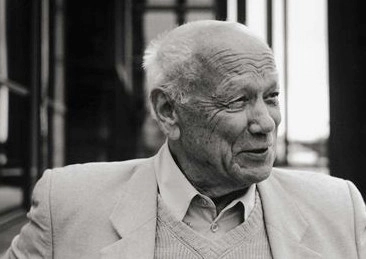
Robert Venturi, the architectural figurehead who fought the cause for postmodernism, turns 88 today. Venturi, whose 1966 book 'Complexity and Contradiction in Architecture' coined the term "less is a bore" - to contradict Mies van der Rohe's famous "less is more" - is possibly the most influential of the theorists who worked to steer architecture away from the modernist ethos in which it had become so entrenched.
The Architectural Association and Foster + Partners have announced John Naylor of Diploma Unit 16 as the 2013 Foster + Partners Prize recipient for his project ‘Bamboo Lakou’. Presented annually, the award is presented to an AA Diploma student whose portfolio best addresses the themes of sustainability and infrastructure.
Brett Steele, Director of the Architectural Association School of Architecture, said: “John Naylor’s project demonstrates the ways in which infrastructural ideas – and architectural imagination – might today expand beyond the clichés of Modernism to become life itself, literally breathing life into communities, cities and entire countries – today and long into the future.”
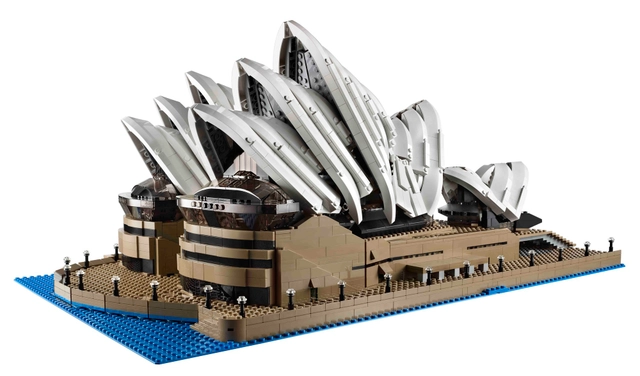
The LEGO® Group has unveiled a new rendition of Jørn Utzon’s beloved Sydney Opera House. Following last year’s unveiling of a slightly smaller edition, LEGO® will challenge the skills of its faithful builders with a new, highly detailed, 3,000 brick model of Australia's most famous landmark.
Videos
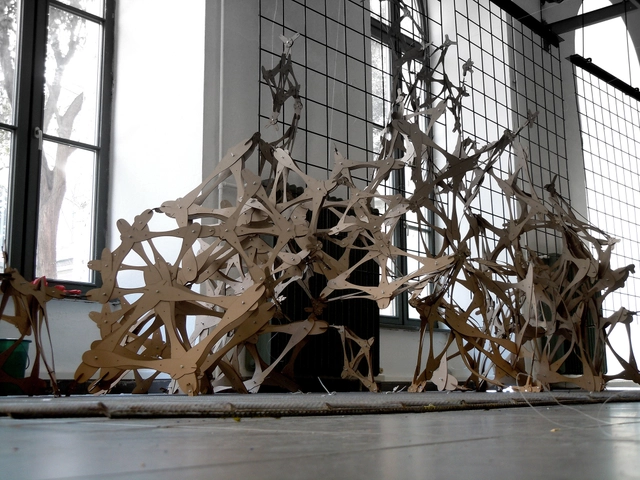
Noise De-Former final model (photo: Elif Erdine)
A few weeks ago, the AA Visiting School academic program was held in Istanbul and Athens. The program combines theory and practice, in an intensive workshop using computational tools as well as digital fabrication machines in a fully contextualised architectural problematic.
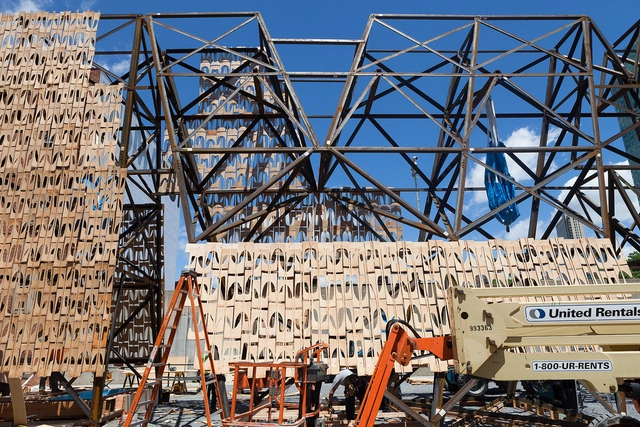
Starting this Saturday, the public will finally be able to admire the winner of this year's Young Architects Program -Party Wall - at the MoMA PS1 courtyard in Long Island City. Every Saturday this summer through September 7, Party Wall will be the multi-functional backdrop (at once wall, water feature, shading and seating storage device) for Warm Up 2013, an outdoor music series.
We spoke with Party Wall's designer, Caroline O'Donnell, principal of CODA, just this morning; she told us that although much has been made of Party Wall's ingenious material (skateboarding scraps) and multi-functionality, it's most important feature is it's referentiality to the urban language of Long Island City.As O'Donnell told us: "we started to understand the relationship between the wall and the other languages—Long Island City, the billboards, the graffiti. We realized we had entered into a dialogue with a bigger urban context."In fact, the wall itself is a legible sign - written in the shadow it forms.
Read our interview with O'Donnell on Party Wall's ingenious design, after the break...
"It's not where you start in life, it's where you end up and all the places you went in between." - United States General Colin L. Powell
For the closing keynote speaker of the stimulating, three-day “Building Leaders” convention in Colorado, the American Institute of Architects (AIA) selected one of America’s most admired public figures to share wisdom and insight to becoming a great leader.
General Colin L. Powell, a first-generation American born from Jamaican immigrants in 1937, is the epitome of the American dream. Starting life in the South Bronx, Powell paved his way to becoming a highly respected, four-star general in the United States Army and the first African American to serve as Secretary of State. A natural storyteller, Powell effortlessly captivated the audience of architects with a series of experiences and lessons he had learned throughout his lifetime of service.
General Colin Powell’s top ten lessons of leadership after the break...
PXSTL site on Washington Boulevard. Photo courtesy of the Pulitzer Foundation for the Arts.
Launched by the Pulitzer Foundation for the Arts and the Sam Fox School of Design & Visual Arts at Washington University in St. Louis, three finalists were just selected for their PXSTL Competition. Focusing on the interplay of art, design, architecture, and urban life, PXSTL invited designers, architects, and artists to re-imagine and developa vacant lot in the St. Louis Cultural District. The finalists include Design Collective Rebar, Collaborative Freecell Architecture,and Artist Oscar Tuazon. More information after the break.
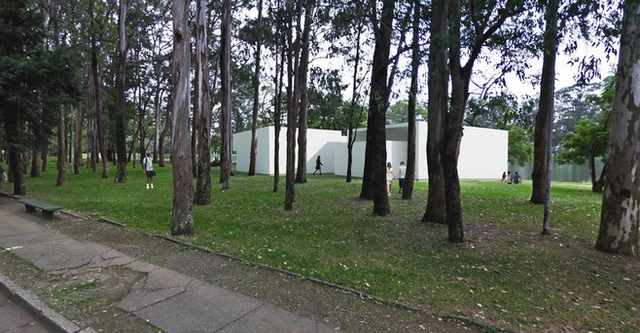
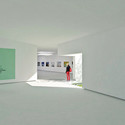
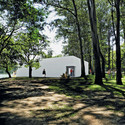
Thanks to Alvaro Siza and Eduardo Souto de Moura, Portugal's two Pritzker Laureates, Sao Paulo will soon have its own temporary summer pavilion - a la the Serpentine Gallery - in the city's most important green space: Ibirapuera Park.
“When you build a beautiful building, people love it. And the most sustainable building in the world is the one that’s loved.” - Cameron Sinclair, Co-founder of Architecture for Humanity
Cameron Sinclair is a man who sustains his passion for helping improve the world, one project at a time, by tapping into the skilled enthusiasm of like-minded architects from all over the globe. Since co-founding of his non-profit organization with Kate Stohr in 1999, Sinclair and his interdisciplinary teams of citizen architects have provided shelter for more than two million people worldwide.
Under his leadership, Architecture for Humanity’s infectious mantra has inspired thousands to join its cause every year, allowing the organization to expand at an unbelievable rate and become the exemplar of public interest design. Considering this, it is no surprise that Sinclair was selected to be the keynote speaker on day two of the 2013 AIA National Convention.
As his speech continued the momentum of yesterday’s inaugural presentation, in which TOMS founder Blake Mycoskie shared his success story of “doing well by doing good,” Sinclair urged architects to hold close the true value of their profession.
Learn what Cameron Sinclair believes to be the true value of architects after the break.