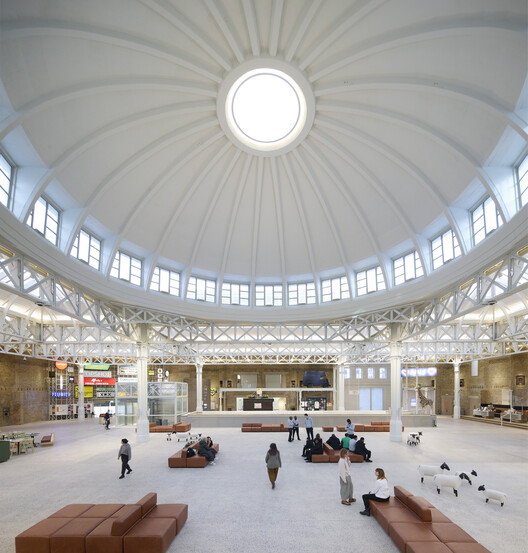
London Museum opens in its new home in West Smithfield's restored General Market on Saturday, November 28. The institution, formerly known as the Museum of London, closed its previous location at 150 London Wall, near the Barbican complex, on December 4, 2022. The relocation project has taken a decade to bring the collections representing the city's story, from the prehistoric inhabitants who settled by the Thames to today's global city, to a newly restored historic building. Stanton Williams led the transformation of the General Market, with collaborating architect Asif Khan Studio and conservation architects Julian Harrap Architects. According to Director Sharon Ament, the project is a collective endeavor that tells "the city's story in all its grit and glitter."
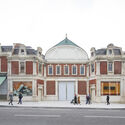
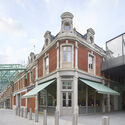
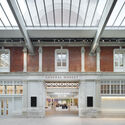
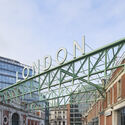
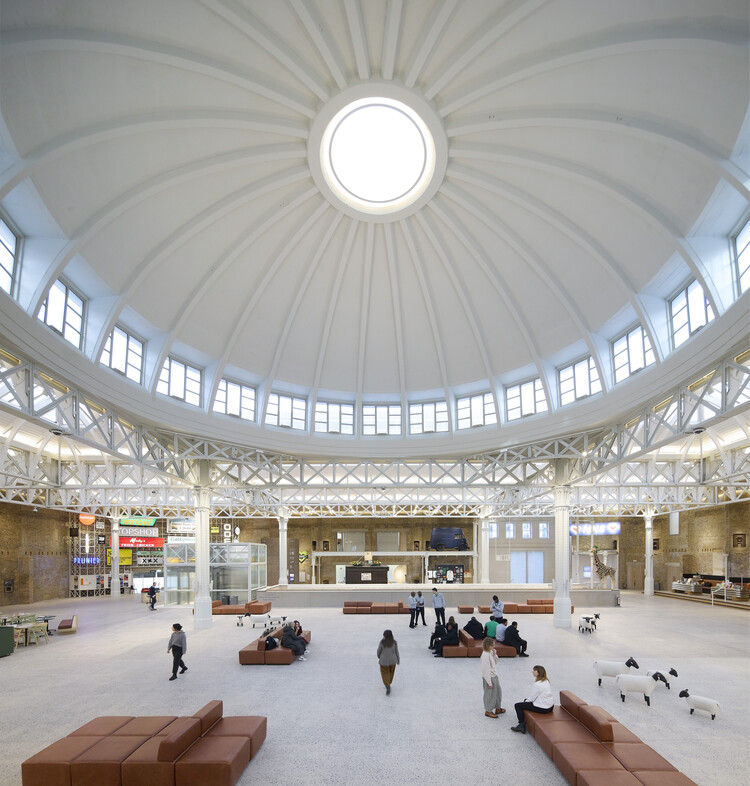
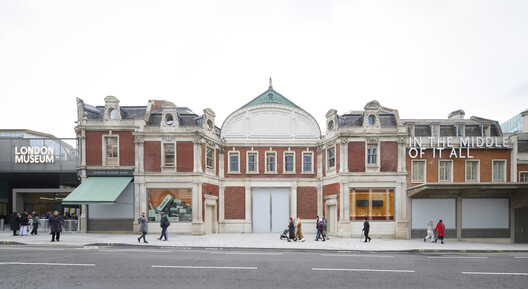
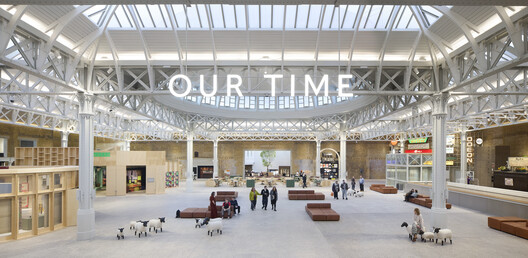
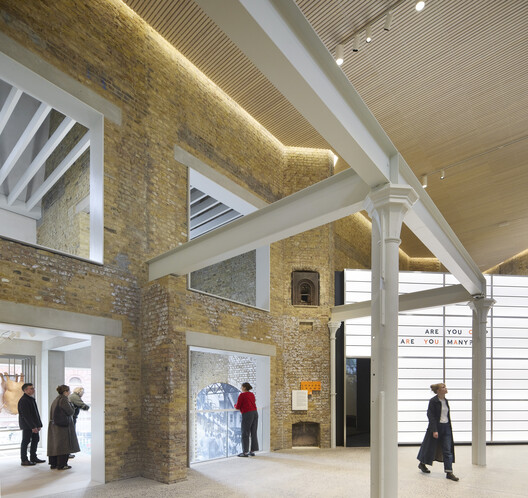
The Museum is organized into three main spaces. Real Time is the main entrance, a covered former street known as West Poultry Avenue, where animated screens display data about London in the moment, from the number of pubs and bees to Londoners' changing moods. Visitors will find Banksy's Piranhas sentry box here, as well as a clock tower with the last bell cast at the Whitechapel Bell Foundry, which will ring the Museum open each day. At the center of the building, Our Time occupies the former trading floor of the General Market, known as the Linbury Hall. A restaurant, a shop and a show space for families and schools surround 13 large installations, including the 1757 Lord Mayor's State Coach and the Buckingham Palace switchboard, on display for the first time. Syd's Coffee Stall will serve free hot drinks every Tuesday.
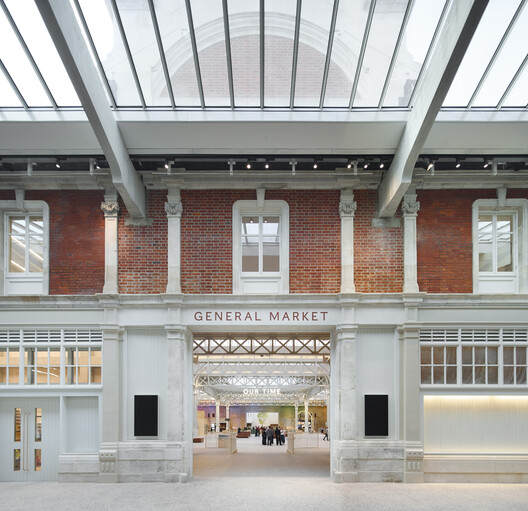
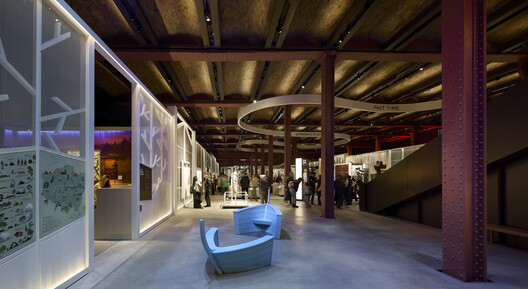
Below ground, at Roman street level, Past Time houses the permanent gallery on London's history, presented both chronologically and thematically for the first time. It includes five focus galleries, among them Votes for Women, and a six-meter window overlooking Thameslink trains that pass between Farringdon and City Thameslink. Highlights include the Cheapside Hoard, Roman writing tablets from the Bloomberg Collection and the Bowes Cup, displayed for the first time. The permanent galleries are free to enter. The Museum is open Sunday to Thursday from 10 am to 6 pm, and Friday and Saturday from 10 am to 11 pm, with last ticketed entry at 7:15 pm on those late nights.
Related Article
London’s Oxford Street Opens Its First Traffic-Free PhaseThe opening is the first phase of a longer schedule. Friday and Saturday late-night programming starts in December 2026, and the inaugural Our Time season, London Tastes, runs through August 2027. A rotating culinary residency, The Roost, opens in early 2027, the same year as the free exhibition Londinium: the making of a Roman city, scheduled for spring in the 800-square-meter underground vaults. The adjacent Poultry Market will follow in 2028 with two temporary exhibition spaces, a learning center and a collection store. The £437 million project returns the General Market to public use for the first time in over three decades, and the City of London Corporation expects around two million visitors a year, which it links to its wider plans for the Smithfield Barbican area.
Recent similar projects include Mecanoo's transformation of a historic theater in Zutphen, Netherlands, into a contemporary cultural destination. The project involves designing a new center for culture, knowledge and exchange, preserving the main historic building and introducing a new volume to accommodate cultural activities, education and community life. Kelly Wearstler Studio and ESG Architecture were announced as the lead designers of the transformation of Minoru Yamasaki's Minneapolis building, an adaptive reuse project first presented in April 2026. Also in the United States, Grimshaw has begun the reconstruction of 70 Mulberry Street, a historic community center in Manhattan's Chinatown, originally built as Public School 23 in the late 19th century.


