

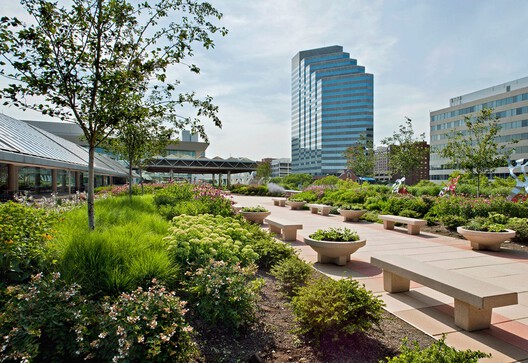
Cities bring together the best and worst of the human condition. They concentrate opportunities for work, social networks, and cultural production, but they also expose deep social inequalities. Among the many forms of urban exclusion are limited access to transportation, housing, leisure, or safety issues. One form that is rarely discussed is thermal inequality. In lower-income neighborhoods, where there are fewer trees, parks, and permeable surfaces, heat accumulates and thermal discomfort dominates, resulting in higher energy consumption and health risks. As concern about the climate crisis grows, this discussion becomes more urgent: extreme heat is no longer just a climatic phenomenon but also a spatial expression of inequality.
We spoke with Greg Kats, founder and president of the Smart Surfaces Coalition, recognized for his pioneering work in urban sustainability and for creating metrics to reduce the environmental impact of cities. He saw in this issue an opportunity for action:
Lower-income, often formerly redlined areas of cities, can feel 15 to 20 degrees hotter than wealthy, tree-covered areas, condemning tens of millions of families to summer misery. I became frustrated that, despite billions of dollars of foundation and government grants aimed at city projects to address urban heat, flooding, and related health costs, virtually all cities continued to get hotter and more flood-prone. — Greg Kats


