ColmeiA / AWAKE

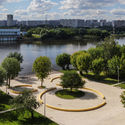
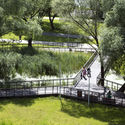
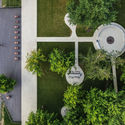
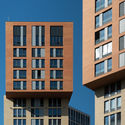
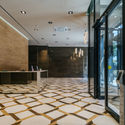
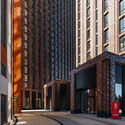
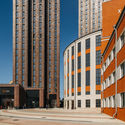
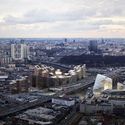
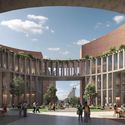
A proposal for the A101 Urban Block competition, ColmeiA, by Portuguese architects AWAKE aims to promote the traditional model of a dense urban housing block through a cellular, outside-in method. Additional images and a brief description after the break.
A101 Urban Block Competition proposal / Onat Öktem and Ziya Imren

Architects Onat Öktem and Ziya Imren shared with us their proposal for the A101 Urban Block City International Architectural Competition in Moscow, Russia. More images and architect’s description after the break.
A101 Block City Competition Entry: Social Machine / LED Architecture Studio

LED Architecture Studio present their submission for the A101 Block City Competition in Moscow Russia. Architects Alessandro Liberati and Roberto Straccali of LED Architecture Studio designed the Social Machine, a housing block that seeks to engage the residents with the street life, while maintaining a sense of privacy for the users of the housing complex.
More on this project after the break.
A101 Urban Block Competition Proposal / b4 Architects

With the design challenge of housing 150,000 people for a new city near Moscow, b4 Architects shared with us their proposal for the A101 Urban Block Competition where they have focused on a thoughtful making of spaces while being sensitive to the context conditions of the city. More images and architect’s description after the break.
A101 Urban Block Competition Winners / CIE and SVESMI

The joint ventures of Frits van Dongen, Patrick Koschuch and Jason Lee of CIE and Alexander Sverdlov of SVESMI produced two winning projects and an honorable mention from the open international competition for A101 Block City in Moscow, Russia. The 13,000 hectare area south is Moscow is to be developed by the Masshtab company, led by Maxwan Architects of Rotterdam for the urban planning concept of the A101project.
The Block City is a masterplan for the area to be built up. It envisions the introduction of standard sizes for urban blocks that can be interchangeable with flexibilities in their typologies and phasing at various stages of the project’s completion. The first phase of the project to be realized is 157 hectares with 12 million sqm of housing of the Block City area. The following proposals are winners for the design of the urban block.
More on the winning projects after the break.
Village in the Air / Építész Stúdió

Építész Stúdió has shared with us their entry, Village in the Air, for the A101 Bock City Competition in Moscow. Information from the architect as well as additional images after the break.
Park City / Építész Stúdió

Budapest-based Építész Stúdió shared with us Park City, a 29,000 sqm residential project located in Moscow, Russia. More images and architect’s description after the break.
Inside Out / Studio Marco Vermeulen

Rotterdam based Studio Marco Vermeulen has shared with ArchDaily their recent proposal for a housing block competition in Moscow. Additional images and a brief architects description after the break.
VTB Arena: Russia’s Main Stage for the 2018 FIFA World Cup / Erick van Egeraat & Mikhail Posokhin

Today, FIFA announced their selection of nations for the 2018 and 2022 FIFA World Cup™ host at the Zurich Exhibition where it was decided that in 2018, Russia will be hosting the FIFA World Cup™. Designed by Erick van Egeraat and Russian partner Mikhail Posokhin, architects of Moscow’s new VTB Arena are thrilled to hear of this decision. “What wonderful news! What a start for this new Russian masterpiece to be the center of the 2018 FIFA World Cup™!” says architect-director Erick van Egeraat when presented with this latest news. More images and architect’s description after the break.
Erick van Egeraat builds Corporate University for Sberbank Russia

The board of Sberbank, the leading bank of Russia, signed a contract with the Dutch Architect Erick van Egeraat for the realization of their new Corporate University, west of Moscow, close to the Novorizhkoye highway. More images and complete press release after the break.
Erick van Egeraat wins Dynamo Stadium

Erick van Egeraat’s 330,000 m2 proposal for the Dynamo Stadium in Moscow recently placed ahead of four international competitors. Situated on a 116,000-m2 plot in Petrovsky Park, the competition site has been chosen by the Administration of the Stadium and VTB Bank to be developed in order to meet contemporary international requirements to support Russia’s bid to host the 2018 FIFA World Cup. Erick van Egeraat’s proposed “multifunctional urban regenerator” will feature a 45,000-seat Stadium Arena, a 10,000-seat Arena Hall, a Retail and Entertainment complex, restaurants, parking and other facilities. With these various programmatic activities, the proposed design aims to provide a self sustaining model that will be activated continually throughout the day.
More about the awarded project and more images after the break.
A101 Block City Masterplan Competition / Call for portfolios

Masshtab Development Company is announcing a competition for the design of the masterplan for A101 Block City: an area of 127 ha with over 1 million sqm of housing in the A101 project. The A101 project is a new town of around 150.000 people and 13 million sq m of housing located south of Moscow.
The Masterplan competition has two stages: the first stage is an open selection procedure for architects and urban designers based on portfolios, the second one an invited competition among four selected participants.
The competition is based on the Block City concept that was developed by Bart Goldhoorn and Aleksander Sverdlov in the context of the International Architecture Biennale in Rotterdam in 2009. For more information click here. Seen at Bustler.
Lifschutz Davidson Sandilands reveal shimmering new food destination for Russian department store

Architects Lifschutz Davidson Sandilands and food consultant Ford McDonald have released the first images of their designs for a 50,000 sqft fit-out in a new department store on Moscow’s Tsvetnoy Boulevard. The team is providing three floors of food retail and restaurant space, including a spectacular destination rooftop café.
More images and architect’s description after the break.
Strelka Institute / OMA + AMO

It was just announced that OMA + AMO will collaborate with Strelka, a postgraduate school for media, architecture and design in Moscow. The new school is launching an educational program where a select group of students will work intensely and innovatively on a series of themes aimed to reshape Russia’s current role in the world. In an attempt to raise the ambition of the creative industries in Russia, the institute will challenge students with a variety of projects. The students will guided by the expertise of both Russian and international creative leaders.
More about the collaboration after the break.
Reconstruction of Kremlin Concert Hall / OTASH studio
Architects: OTASH studio
Location: Kremlin, Moscow, Russia
Authors: Dejan Otasevic, Ivo Otasevic, Uros Otasevic (designer)
Project architectural team: Slobodan Damjanovic, Pavle Bogdanovic
Associates: Nenad Peranovic, Marija Simsic, Dragana Mijatovic
Design Year: 2007
Project Year: 2008-2009
Photographs: OTASH studio
Aqaulis Pier / Andrew Bedov
Situated along the Moskva River in Moscow, Andrew Bedov’s Aqaulis Pier creates a dynamic infrastructure hub that provides an alternative circulation route for the users. The pier is designed to replace the 15 moorings in the city by creating one central unit with an efficient water bus transportation system to help commuters cross the river.
The smooth form creates a fluid continuity for both the exterior and interior spaces. Inside the structure, open spaces provide room to relax while resting upon countless sofas, dinning in a small café or reading in the library. On the exterior, a viewing platform extends allowing users to enjoy the natural beauty of the river.
More images after the break.
New Russian-Jewish Museum of Tolerance / Graft Architects
The committee for the Russian-Jewish Museum of Tolerance finalized the German-based Graft Architects‘ design for the new museum. Grafts’ renovation and expansion of the 1927 Konstantin Melnikov’s bus depot will transform the space into the world’s largest Jewish museum.
More about the project after the break.