Videos
Qunli Stormwater Wetland Park / Turenscape. Image Cortesia de Turenscape
Eucalyptus forests in Australia are known to burn periodically. It is the trees' way of ensuring propagation, as its fruits – known as gumnuts – have an insulating layer breaks down with the heat of the fire. Once they open, the burnt soil is covered with seeds, initiating a process of forest renewal. Glenn Murcutt, an Australian architect, has created a body of work rooted in the country's landscape. His innovative houses embrace the possibility of frequent fires, including elements that allow for fire control with the least possible loss. In short, the houses are built with very non-flammable materials, always have huge water reservoirs, and a “flood system” that allows the building and its immediate surroundings to be spared in the case of a forest fire.
To its great credit, the American Institute of Architects recently denounced the Trump administration’s decision to formally withdraw from the Paris Climate Agreement. This may put the professional organization on the right side of history, but it’s unlikely to sway any hardened hearts and minds in Washington. Obviously, the executive branch is worse than useless on this issue: not just an impediment to change, but a malevolent force for willful inaction. It’s hard to see it as anything less than an enemy of the climate.
YAC - Young Architects Competitions and Cantiere delle Marche launch “Kiribati Floating Houses”, a competition of ideas aiming to design floating structures to tackle the challenges of the rise in ocean levels and climate change. A cash prize of € 15,000 will be awarded to winners. In addition, some projects will be selected to be part of an exhibition at Santa Maria della Vita in Bologna and some other projects will be selected to be part of an exhibition about the ocean exploration held by National Geographic at Palazzo Blu in Pisa. selected by a well-renowned jury made of, among the others, Kengo Kuma, Moon Hoon, Rocco Yim, Cristiana Favretto (Studiomobile), Simon Frommenwiler (HHF Architects), Fabio Roversi Monaco (Genus Bononiae), Giuseppe Zampieri (David Chipperfield Architects).
Architecture is inherently linked to policy, politics, and power. With responsibility for the design and perception of the built environment, architects have a distinct role in shaping the human urban experience. As the world confronts issues of climate change, forced migration, and affordable housing, architects are increasingly putting themselves on the front line of the debate, using a variety of tools and avenues to clamor for change, and indeed design for it. However, while many official avenues exist for architects to advocate for social and environmental reform, there is an under-theorized method of resistance, a ‘road less traveled’ for social progress beyond officialdom.
https://www.archdaily.com/925260/we-need-diy-activist-architecture-to-fight-climate-changeNiall Patrick Walsh
Fellow architects, can we talk? This is gonna hurt, but it needs saying. Were I a poet, I’d write, The end is nigh, and we are why. I’m no bard, though, so I’ll put it this way: Most of us suspect anthropogenic climate change will lead to civilization’s end. Some architects deny the science (“The climate is always changing!”), while others ignore the obvious (denial is a good coping mechanism), but buried within the folds of all angst-addled designer brains lies the fear that today’s toddlers could be the last of us.
I’ll pause here to let the weight of that thought depress you.
The City of Utrecht Council, in collaboration with advertising agency Clear Channel, has transformed 316 bus stops across the city into “bee stops.” The adaption involved installing green roofs onto the bus stops, creating bee-friendly spaces for the endangered species.
Map: Crowther Lab, Fuente: Bastin et al. 2019 Plos One, Created using Datawrapper
The climate in Madrid in 2050 will look more like the climate in Marrakesh, Morocco today. Stockholm will feel more like Budapest, London like Barcelona, Moscow like Sofia, Seattle like San Francisco, and Tokyo like Changsa in China.
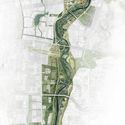
GVL Gossamer has released images of their design for a 19 kilometer stretch of waterfront along the Jing River in Xi’an, China. The proposal, a finalist in an international design competition, celebrates the site’s history at the origin of the Silk Road through strategies that tap into ancient and enduring histories of traditional architecture, merchant trade, and agricultural innovation. These enduring histories are woven with contemporary influences such as responses to major climatic and environmental challenges.
Modernism always wanted to have it both ways: on the one hand, modernist architecture was supposed to be, in theory, the same in all places; that's one reason why modernism in architecture was also called the International Style. If all modernist buildings look the same, when you see one you have seen them all: no need for further travel. Yet throughout the 20th century modernist culture and technology enthusiastically endorsed and favored travel. In the 60s we traveled to the Moon, and civil aviation made the world smaller. In modernist culture, travel was good. It made all travelers better, happier humans. It was good to learn foreign languages and to go see distant places. High modernist travel was not only good; it was also cool. The jet setters of the 60s were the coolest citizens of the world. Even later in the 20th century the general expectation was that borderless, seamless travel would keep getting easier and more frequent. Most Europeans of my generation grew up learning two or more foreign languages, and it was not unusual until recently to be born in one country, to study in another, and find one's first job in a third one. That was seen as an opportunity, not as a deprivation.
A recent report by the United Nations’ Intergovernmental Science-Policy Platform on Biodiversity and Ecosystem Services (IPBES) report reveals that the health of our ecosystems on which we and all other species depend is deteriorating more rapidly than ever. We are eroding the very foundations of our economies, livelihoods, food security, health, and quality of life worldwide. At this point, scientists believe that ecosystems untouched by human interventions no longer exist. Human civilization and technology have permanently altered our planet and some of the most tangible impacts include imploding population numbers, deforestation, pollution (air, water, soil, and industrial), ocean acidification, climate change, and invasive alien species.
New York City Mayor Bill de Blasio has announced plans to introduce a bill banning the construction of glass skyscrapers, forming part of efforts to reduce citywide greenhouse emissions by 30 percent. Unveiling the plans, he described all-glass façade skyscrapers as “incredibly inefficient” because of heat loss, according to NBC New York.
https://www.archdaily.com/915656/new-york-citys-mayor-is-planning-to-ban-new-glass-skyscrapersNiall Patrick Walsh
The Frank Lloyd Wright Foundation has used Earth Day, April 22nd, 2019, to launch a new initiative focused on educating the public about how sustainable practices are used in the conservation of National Historic Landmark sites, including the renowned architect’s Taliesin (Wisconsin) and Taliesin West (Arizona) residences. Taking place throughout the year, the Foundation’s efforts will aim to show how these practices can serve as examples for other facets of society.
https://www.archdaily.com/915558/frank-lloyd-wright-foundation-will-use-taliesin-west-to-educate-about-living-with-natureNiall Patrick Walsh
As the world recognizes Earth Day 2019, the public discourse is increasingly dominated by citizen action across the world manifesting a widespread fear and frustration at a perceived lack of action by governments and officials to confront the issue forthrightly. From the Extinction Rebellion protests that have gripped London, to school student strikes across 125 countries, global cities are increasingly finding themselves on the front line of a battle to limit the effects of global warming.
https://www.archdaily.com/915510/how-three-major-us-cities-are-preparing-for-climate-changeNiall Patrick Walsh
New York City Mayor Bill de Blasio has announced plans for a $10 billion coastal resilience project, designed to protect Lower Manhattan from flooding. In an editorial piece in New York Magazine, Mayor de Blasio outlined the ambitious plans to alter the waterfront of the Financial District, constructing a major infrastructural element up to 500 feet into the East River.
Part of the Lower Manhattan Climate Resilience Study, and designed in collaboration with climate scientists and local offices, the Mayor describes the scheme as “one of the most complex environmental and engineering challenges [New York] has ever undertaken and will, literally, alter the shape of the island of Manhattan.” The multi-billion dollar project is designed to protect Manhattan through the year 2100.
https://www.archdaily.com/913743/new-york-city-to-combat-rising-sea-levels-by-extending-the-manhattan-coastlineNiall Patrick Walsh
Back in 2008, ArchDaily embarked on a challenging mission: to provide inspiration, knowledge, and tools to the architects tasked with designing cities. In an effort to further align our strategy with these challenges, we recently introduced monthly themes in order to dig deeper into topics we find relevant in today’s architectural discourse. From architects who don't design to reframing climate change as a global issue, we are celebrating our 11th birthday by asking 11 editors and curators to choose ArchDaily's most inspiring articles.
About the Jose Marti Park Redesign RFQ: Through this RFQ, Van Alen and the City of Miami seek to commission a multi-disciplinary design team for the project that offers the full range of professional urban design, landscape architecture, and engineering services and includes at least one Florida-licensed firm. The design team will work with Van Alen Institute and the City to ensure that this treasured public space serves the present and future needs of the Little Havana community. Innovative and thoughtful design should allow the park to minimize flood impacts to the neighborhood, adapt to sea level rise over time, and enhance waterfront access for residents. Ideally this project results in a solution that can be replicated in other places experiencing similar conditions.







.jpg?1559718486)
.jpg?1559718881 "Campus for Infosys. Image © Morphogenesis")
.jpg?1559718521 "Pearl Academy. Image by Morphogenesis © Edmund Sumner")
.jpg?1559718319 "Pearl Academy. Image © Andre Fanthome, by Morphogenesis")
.jpg?1559718143 "Pearl Academy. Image © Andre Fanthome, by Morphogenesis")
.jpg?1559718143)


