Gehry Designs Mixed-Use Tower for Downtown Santa Monica

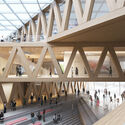
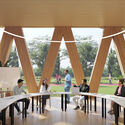
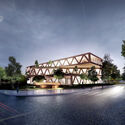
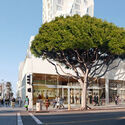
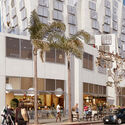
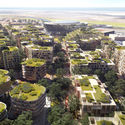
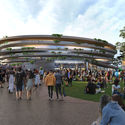
Developers M. David Paul Associates and the Worthe Real Estate Group have commissioned Frank Gehry to design a mixed-use hotel and residential tower in his hometown of Santa Monica, California. The 22-story “Ocean Avenue Project” aims to stimulate the coastal city’s economy with street-level restaurant and retail space below a 125-room hotel and 22-unit condominium tower topped with a rooftop observation deck. As for accommodating the car-centric lifestyle of the West Coast, resident and visitor parking will be available in a three-story subterranean garage beneath the tower. In addition, the developers plan to integrate a 36,000 square foot museum campus that will add a cultural perk to the development just North of its two-acre site.
Although this project looks promising, the 244-foot, Gehry-esque tower is currently pending approval from the City. A vote by the end of March will decide its fate.
More images of the “Ocean Avenue Project” after the break…
The West Coast’s Tallest: Wilshire Grand / AC Martin Partners

Developer Korean Air has recently unveiled the designs for the new 73-story Wilshire Grand tower in the financial district of Los Angeles, California. AC Martin Partners designed the plans for the $1 billion mixed-use office and hotel tower that will reach 1,100 feet, making it the tallest tower west of Chicago once completed.
Read more after the break…
San Lorenzo Residence / Mike Jacobs Architecture

Architects: Mike Jacobs Architecture
Location: Los Angeles, CA, USA
Architect In Charge: Mike Jacobs, Artur Growchowski, Dan Nissimov, Maria Tiliakos, Momo Araki
General Contracting: MFH Construction
Structural Engineering: Gordon Polon Consulting Engineers
Year: 2012
Photographs: Michael Wells
College Track / Turnbull Griffin Haesloop Architects

Architects: Turnbull Griffin Haesloop Architects
Location: San Francisco, CA, USA
Project Team: Eric Haesloop, Stefan Hastrup, Jerome Christensen
Area: 13,800 sq ft
Year: 2012
Photographs: David Wakely
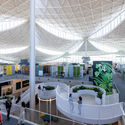
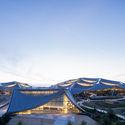
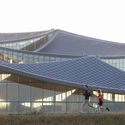
Google Collaborates with NBBJ to Expand California Headquarters

One thing Google has become known for is their spectacular work environments. From playful employee lounges to environmentally sensitive design, the multifaceted internet giant has successfully transformed hundreds of existing spaces from around the globe into casual work environments that spawn innovation, optimizes efficiency, and boasts employee satisfaction. Much like many other California-based corporations, Google has been toying with the idea of building their own office space from scratch. Well, this dream will soon be realized, as the company has teamed up with Seattle-based NBBJ to expand their current, 65-building “Googleplex” in Mountain View, California. By 2015, Google plans to construct a 1.1-million-square-foot complex known as “Bay View” on a neighboring 42-acre site.
More on Bay View after the break…
Gensler Designs New Silicon Valley Headquarters for Nvidia

Silicon Valley visual-computing pioneer Nvidia has joined the expanding list of tech moguls seeking to transform their work environment into the physical manifestation of their innovative business model. Nvidia CEO Jen-Hsun Huang has released the first schematic renderings – designed by Gensler - that depict a pair of 250,000 square foot triangular motherships centered around collaboration – a complete contrast to the typical, dated office building commonly found throughout Silicon Valley’s “oddly banal” landscape.
More after the break…
San Francisco Paves the Road to Zero Waste

Approaching zero-waste is a matter of changing the way our culture thinks about use and reuse. It’s not an impossible task, and San Francisco is leading the march to establish a feasible means of enacting public policy, structuring programs and educating the public on what it means to be “zero-waste”. With a goal set for 2020, the Bay City hopes to keep 100% of its waste out of landfills. Mayor Ed Lee estimates that the leading waste management company “Recology” is diverting nearly 80% of trash from landfills to be recycled or turned into compost. This begins with a public policy that sets a standard and gains traction as citizens embrace the goals of the city. Support programs reinforce these guidelines that eventually become habits and a cultural response to treating our environment.
Read on after the break for more on San Francisco’s road to “zero-waste”.
Iwan Baan: ‘The Way We Live’ Exhibition

Opening tonight, February 20, at 6:00pm PST at the Perry Rubenstein Gallery in Los Angeles, Iwan Baan‘s ‘The Way We Live’ exhibition features captivating large-scale images of urban, architectural, and home environments that capture Baan’s singular vision. Baan’s artistic practice examines how we live and interact with architecture, focusing on the human element, which brings buildings, intersections, and public gathering places to life. Running until April 13, this is Baan’s first solo exhibition at the gallery. More information after the break.
Winy Maas to Deliver Lecture on “What’s Next?” at NSAD

Taking place this coming Wednesday, February 20th, Winy Maas, a Netherlands-based architect, urbanist and co-founder of the internationally-recognized firm MVRDV, is scheduled to speak at NewSchool of Architecture and Design (NSAD) at 9:00am PST on the topic of “What’s Next?”. The free lecture includes a discussion on the recent works of MVRDV and the research institute The Why Factory, a think tank directed by Maas in collaboration with Delft University of Technology that develops scenarios and models of the city of the future. For more information, please visit here.
Update: SFMOMA Expansion / Snøhetta

The San Francisco Museum of Modern Art (SFMOMA) has announced further details of its 235,000-square-foot building expansion that will support the museum’s increasing role in city life and the international art community. Designed by Norway-based practice Snøhetta, in collaboration with local firm EHDD, the 10-story concrete structure will compliment SFMOMA’s original, Mario Botta-designed, red-brick museum by offering more free-to-the-public space, expanded education programs and an abundance of flexible performance-based gallery space.
Construction will commence this Summer and is expected to reopen in early 2016.
More after the break…
LA Architecture School Boasts Stimulating Post-professional Programs

Two dynamic post-graduate programs offered by the Southern California Institute of Architecture (SCI-Arc) in Los Angeles have been charged with examining core contemporary issues facing architecture today. Spanning topics from advanced manufacturing methodologies and new building systems, to urban planning and design challenges faced globally, these post-professional tracks allow students to rethink architecture and design through the creative lens of the SCI-Arc community.
The architecture school’s Emerging Systems, Technologies & Media (ESTm) and Future Initiatives (SCIFI) programs are conceived as intensive one-year (three semesters) post-professional degrees in architecture, functioning as think tanks and research engines within the larger framework of the school.
CORMAC Residence / Laidlaw Schultz Architects

Architects: Laidlaw Schultz Architects
Location: Corona del Mar, California, USA
Design Team: Craig Schultz, Scott Laidlaw, Kathy Troutfetter, David Kilpatrick
Structure: Michael Gabriel
Area: 3,000 sqft
Year: 2012
Photographs: Larry Falke
‘A Confederacy of Heretics: The Architecture Gallery, Venice, 1979′ Exhibition

Taking place at SCI-Arc‘s campus in downtown Los Angeles March 29-July 7, Pacific Standard Time Presents: Modern Architecture in L.A.: A Confederacy of Heretics: The Architecture Gallery, Venice, 1979 exhibition. The exhibition examines the pivotal role played by the temporary gallery held in the home of architect Thom Mayne for several weeks in 1979. An immersive showcase of spectacular models, drawings and media will be mounted in two spaces located on the SCI-Arc campus, the main gallery and the Kappe Library Gallery. More information on the exhibition after the break.
Iwan Baan: The Way We Live

Iwan Baan‘s name may ring a bell for all those following Hurricane Sandy’s devastation across New York City and New Jersey’s coast. The photographer’s iconic photograph made headlines when it was featured on New York magazine’s front page days after the storm, showing lower Manhattan in complete darkness, set against its vibrant counterpart uptown, as the United States’ east coast was recovering from the extensive damage left in Sandy’s wake. The image not only brings to mind the absolute helplessness that New York City faced during the storm, but also lends a hand in a social commentary that is notably pervasive in Baan’s work.
Starting February 20th, 2013, The Perry Rubenstein Gallery in Los Angeles will feature the Baan’s work in his first, two-month exhibition entitled The Way We Live, honing in on the images that encapsulate the world of architecture, urbanism and human engagement.
More on Iwan Baan: The Way We Live after the break.
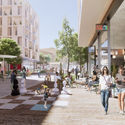
Our Ideal City? Seen through the eyes of the Pacific West Coast.

As most New Yorkers know, people are willing to shell out a hefty sum to live in a place where work and play are right around the corner from each other. But as the article by Ken Layne in The Awl points out, the west coast is a somewhat different place. UNLIKE New York City, which is crowded with restaurants, bars, and entertainment, as well as offices, design firms and businesses; Silicon Valley, which caters to programmers and tech companies that hire at $100k a year, offers few of the amenities that a nearby town like San Francisco does. So, Layne concludes, residents are willing to spend hours of their day making their way into the fortressed office parks of Silicon Valley, flanked by parking lots and boulevards, just to have a cultural reprieve to call home.
Mexican Architect Fernando Romero to Speak at NewSchool of Architecture and Design

Mexican architect Fernando Romero will be speaking tomorrow evening, January 16, at NewSchool of Architecture and Design in San Diego on the topic of “You are the Context” as part of the school’s lecture series. Free and open to the public, the event focuses on how we must reconsider the definition of context as it pertains to architecture as the global reach of projects increases through digital communication. Named to Fast Company’s Co.Design “Designers Shaping the Future” 2012, his recent Soumaya Museum in Mexico City is described by CNN’s Great Buildings series as “jaw-dropping.” For more information, please visit here.
Oyler/Wu Lecture & Gow + Karlsson Exhibition Opening Reception

Two key events are coming up at SCI-Arc this month starting with the ‘Dwayne Oyler & Jenny Wu: Lineworks’ lecture which takes place tomorrow, January 16, at the W.M. Keck Lecture Hall at 7pm PST. Established in Los Angeles in 2004, Oyler Wu Collaborative, ‘has utilized the last five years to establish a way of working that is committed to experimentation through a relentless hands-on approach to our work’. Also, starting January 18 until March 3, the ‘Marcelyn Gow + Ulrika Karlsson: AQUEOTROPE’ exhibition focuses on materializing the mathematical, the exact translation of virtual instructions in the form of drawings or codes to their material actualization, is a fundamental procedure in the production of architecture. For more information on the events, please visit here.
SFMoMA: Lebbeus Woods, Architect

SFMoMA will highlight the legacy of Lebbeus Woods in an exhibition that will run from February 16 through June 2, 2013. It will include 75 works from the past 35 years of his career. Lebbeus Woods is often categorized as an architect, but always as an artist and visionary. His career has been filled with imaginative leaps through the concepts of space and form, exploring politics, society, ethics and the human condition. He was a great influence on architects, designers, filmmakers, writers and artists. The exhibition will celebrate his untimely death late last year and the breadth of influence that his work had on the art and design community.
West Los Angeles Office Building Proposal / GMPA Architects

Located on a prominent corner in West Los Angeles, the proposal for an office building by GMPA Architects is an energized, swirling 4-level structure rather than a static wedding cake style. With its riveting spiral shape,, derived from the 10’ difference in elevation, the dynamic, multi-shaped levels add visual interest and reinforce a connection to the street. More images and architects’ description after the break.
New United States Courthouse Competition Entry / NBBJ

Claiming to be the most progressive, sustainable, and cost effective courthouse in the nation, NBBJ’s shortlisted proposal for the New Los Angeles Federal Courthouse serves as a model for future GSA development. The contrast between the free and informal spirit of Los Angeles with the formal structure and societal role of the Federal Courts illustrates an important duality that openly coexists throughout their phased design. At a larger scale, the structure becomes a mediator within the skyline, rising to a comfortable 256 feet tall to help transition the steep, urban high-rise topography of Bunker Hill and the mid-rise, ordered context of downtown.
Read the architects’ description after the break to learn more about this high performance, multifaceted design.
The Union / Jonathan Segal FAIA

Architects: Jonathan Segal FAIA
Location: San Diego, California, United States
Project Managers: Greg Yeatter, Luke Henderson, Guillermo Tomaszski
Year: 2007
Photographs: Paul Body