How to visualize architectural concepts in SketchUp using D5 Lite for faster design exploration.
How to visualize architectural concepts in SketchUp using D5 Lite for faster design exploration.

The Pritzker Architecture Prize presents The Role of Practice, the 2023 Laureate Lecture and Panel Discussion, today, Tuesday, May 23rd at 3:40 PM EEST, in partnership with the National Technical University of Athens, and with the participation of the Aristotle University of Thessaloniki, University of Patras and the Technical University of Crete.
The Pritzker Architecture Prize 2023 Laureate David Chipperfield will deliver the lecture, reflecting on architectural practice's role, responsibilities, and opportunities. Moreover, the 2023 winner will explore "how market forces have dominated architecture and become increasingly detached from its place, just as the challenges of the climate crisis, loss of biodiversity, and social inequality have heightened the urgency for a more proactive position". Alejandro Aravena, Jury Chair, and 2016 Laureate will introduce the lecture, which will be followed by a conversation between David Chipperfield, Francis Kéré, 2022 Laureate, and Anne Lacaton and Jean-Philippe Vassal, 2021 Laureates, as they each "reveal the successes and failures of their respective journeys which effected their architectural philosophies and works, and led them to the shared stage of the present".
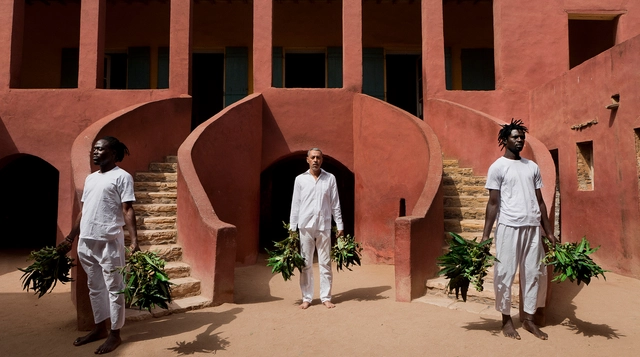
Questioning the canonical history of architecture and shedding light on long-invisible spatial practices, Gabriela de Matos and Paulo Tavares propose the exhibition “Terra” [Earth], at the Brazilian pavilion at the Venice Architecture Biennale 2023. "It's our way of shaking things up," say the curators, who turn their attention to ancestral ways of dealing with the land, aiming for more fair and complete possibilities for the present and future.
Addressing "earth" in all its meanings, the curators overlay issues related to soil and territory with the planetary problems. They propose an approach to reparations and decoloniality - emerging in Brazil - with broad topics such as decarbonization and the environment, decisive in the contemporary global debate. The Brazilian Pavilion titled Terra [Earth], won the Golden Lion for Best National Participation at the 2023 Venice Architecture Biennale, on Saturday 20th of May, selected by a jury comprising Italian architect and curator Ippolito Pestellini Laparelli as president, Nora Akawi, Thelma Golden, Tau Tavengwa, and Izabela Wieczorek.
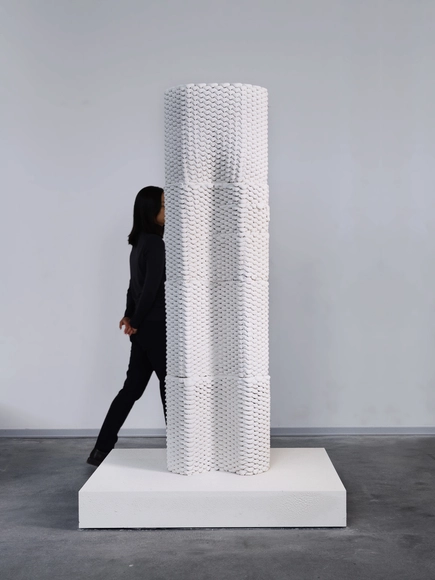
Harnessing the power of moldless manufacturing through large-scale robotic 3D printing, research at ETH Zürich in collaboration with FenX AG delves into the use of cement-free mineral foam made from recycled waste. The objective is to build wall systems that are monolithic, lightweight, and immediately insulated, minimizing material use, labor requirements, and associated costs.

Currently at 103 million, the number of people forcibly displaced from their homes is continuously growing. Many seek shelter in settlements that are meant to be temporary, but where displaced people end up living years, even decades.
The Norman Foster Foundation and Holcim, global leader in sustainable building solutions, came together to form a response to this problem based on two firm beliefs: everyone has the right to a home, and everyone should have access to sustainable building.
Onsite, in Venice at the 18th International Architecture Exhibition, ArchDaily had the chance to meet with the curator Lesley Lokko to discuss the first impressions and the main themes of this edition of the Biennale, following up on the previous interview recorded before the opening of the event. Featuring 63 National Pavilions, 89 Participants, and 9 collateral events in the city, the 2023 Venice Architecture Biennale represents one of the most important international events for the architectural profession. The conversation addressed Lesley Lokko’s approach to curating the theme and focus of the event, understanding Africa as “The Laboratory of the Future,” the desire to bring both authenticity and empathy to the architectural discourse, while creating a space for voices not typically heard in global exhibitions.

Cities worldwide can save thousands of lives every year through fairly simple measures: traffic calming and speed management. Readjusting vehicle speed limits on urban roads is one of the key initiatives highlighted by the UN and the WHO to help countries meet the target of halving traffic deaths and serious injuries by 2030.
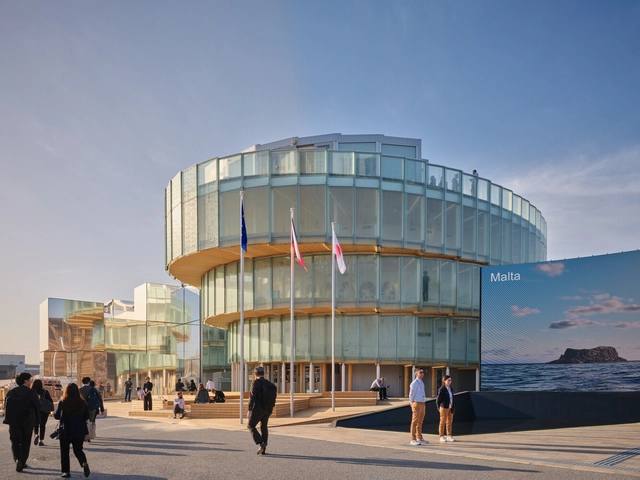
TheCzech Republic Pavilion at EXPO 2025 Osaka embodies the concept of life energy and continuous growth through its thoughtful architectural design. Created by Apropos Architects, the pavilion is centered around the motif of a spiral. Visitors experience a 260-meter-long pathway that wraps around the building, ascending gradually across four floors before culminating on the observation roof. This dynamic journey reflects the passage of time, individual development, and broader themes of personal and social progress.

Architecture involves mobilizing several aspects of the environment where the building is located: the socio-cultural, political and economic context, aesthetics, legislation, and functionality. Functionality includes use efficiency, occupancy, and comfort. Laurent Troost's work has shown the articulation between these various factors, with particular attention to comfort, especially thermal comfort. His projects prioritize natural ventilation over artificial air conditioning, which has become almost mandatory in current city models.

Environmental issues urgency and increasing temperatures on the planet are nothing new. There are many factors contributing to environmental degradation. However, two can be viewed as representative of critical points in the current world system: plastic and waste disposal, better known as garbage.
The environmental crisis cannot be attributed solely to these two examples. They are used here as examples to mobilize issues involving multiple agents, materials, and diverse methods. These issues lead to devastating consequences, increasingly irreversible.