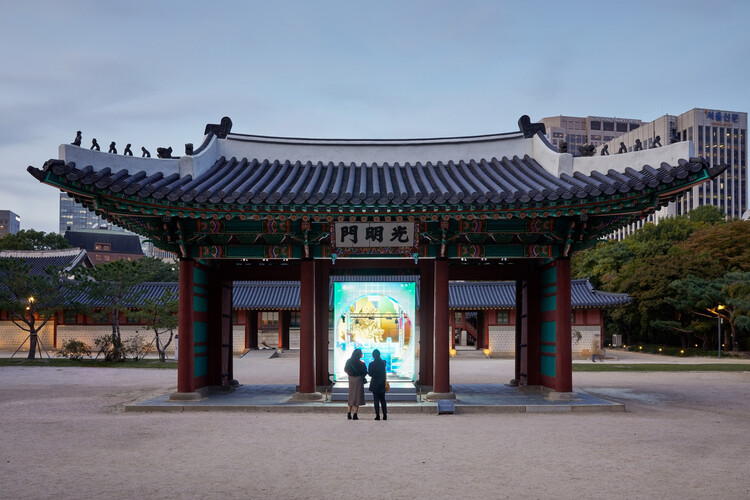
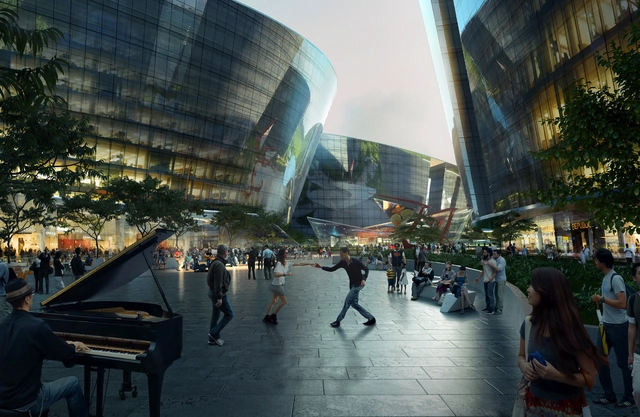
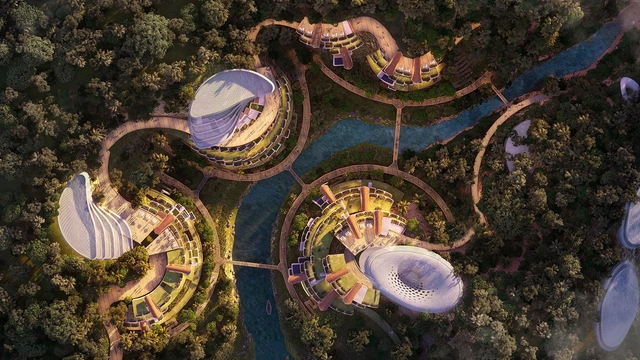
Project by Form4 Architecture investigating the opportunities for unsolicited participatory interaction in space, like street dancing, something that could be replicated in the Metaverse if its spatial quality had similar depth. Image Courtesy of Form4 Architecture
This article is the second in a series focusing on the Architecture of the Metaverse. ArchDaily has collaborated with John Marx, AIA, the founding design principal and Chief Artistic Officer of Form4 Architecture, to bring you monthly articles that seek to define the Metaverse, convey the potential of this new realm as well as understand its constraints.
For architects, one of the most captivating aspects of AI and the Metaverse is that of placemaking. How do we create compelling places that bring people to this new world and enable them to enjoy their experience there, getting them to return once the novelty has worn off? How much of this digital world needs to connect back with our day-to-day physical environs for it to feel meaningful and how do these artificial cities, towns, and neighborhoods come to life?
Videos
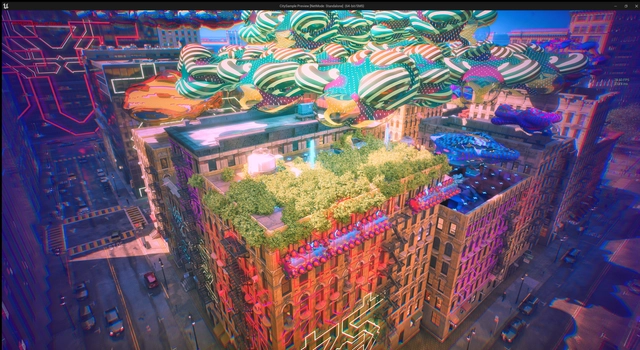
Discovery por lifeforms.io. Image Cortesía de Damjan Jovanovic
Today, architects and designers are increasingly aware of the responsibility they have in leading the construction of the virtual environment. But how is it designed? How is it built? What is the degree of experimentation that exists?
'Discovery: a story about rooftops, airships, robots, and inflatables' is a recently opened exhibition at the SCI-Arc gallery that addresses just this theme. Designed by Damjan Jovanovic and Lidija Kljakovic, founders of lifeforms.io - a video game creation studio based in Los Angeles, California - it presents an exploration of the creation of worlds, artificial intelligence, and ecology.
From Epic Games' Build: Architecture 2021. Image Courtesy of Zaha Hadid Architects
Epic Games operates one of the world’s largest games, Fortnite, and also develops Unreal Engine, the most advanced real-time 3D creation tool that powers Fortnite and is used in industries beyond games. Over the last few years, more professionals in architecture and related fields are using Unreal Engine to bring stunning, photorealistic worlds to life.
In an exclusive interview with ArchDaily, David Weir-McCall, Architecture Industry Marketing Manager at Epic Games, shares his insights on the use of digital technology, such as the likes of Unreal Engine, for collaboration and co-design within the field of architecture, engineering, and construction.
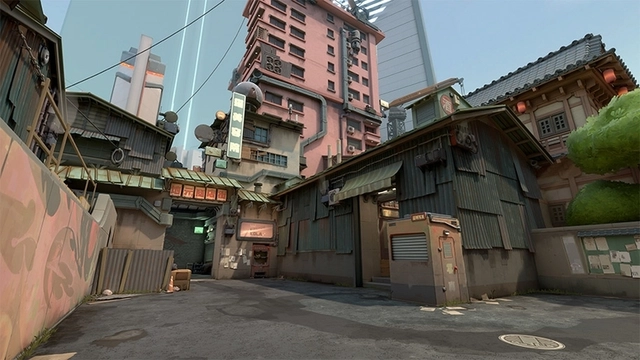
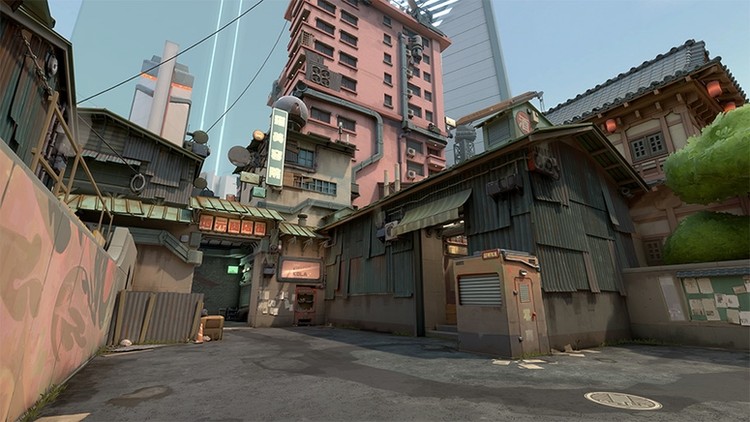
Map design and the significance of built environments continue to be inherently integral to gameplay within the realm of virtual worlds and video games, specifically in the genre of first-person shooters, and Riot Games’ VALORANT is no exception to this. Defying former expectations of its predecessors within the tactical shooter genre, Riot continually endeavors to make fundamental changes to decades of old formulas that have been implemented in practice all these years.
Video games and virtual worlds are jam-packed with imaginative environments to explore, time periods to peruse, and invented architectural styles to thumb through within every reality we choose to engross ourselves into. With recent advancements in technology, greater than ever are we witnessing the latest PC and console generations harboring the ability to produce life-like settings for players to roam around, get lost, and explore all the nuances the seemingly authentic reality holds.
In this new collaboration, originally titled Cartografías del Metaverso (Cartography in the Metaverse), Spanish architects and founders of the blog MetaSpace, Enrique Parra and Manuel Saga, explore the potential of mapping in video games. Mapping can sometimes go beyond the mere role of orientation, as in the Diablo sequel, and become a very important element of the game, as in Civilization and World of Warcraft.
The cartographic and planimetric language of architecture is also common to the world of video games. Many video games base much of their experience on interaction with one or more maps, through which users orient themselves to find out where they are and where they are supposed to be.
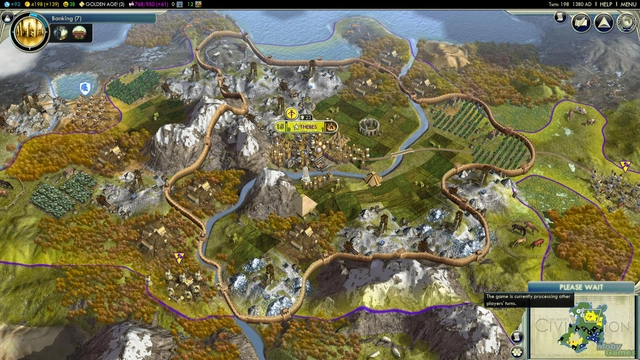
One example is the Civilization saga, a series of empire management games created from 1991 to date. All versions are played on a map, a geographical view of the world that represents different areas, available resources, geopolitical balance, and other factors. These variants are the rules of the game, the situation the player faces; the map becomes a dynamic fabric, ie, the interface that makes up the game.
https://www.archdaily.com/782818/cartography-in-the-metaverse-the-power-of-mapping-in-video-gamesEnrique Parra y Manuel Saga
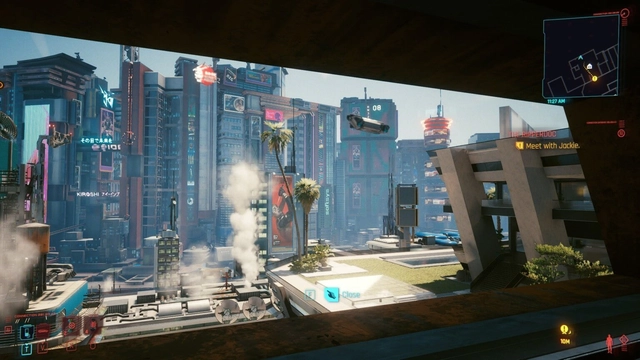
I know what you are wondering and the answer is medium and circumcised. These are just a couple of characteristics that play a part in determining the outcome of Cyberpunk 2077, the most anticipated video game release of 2020 (and possibly ever) by CD Projekt RED. As a player, you experience the main storyline through a genderfluid avatar named V. The game’s namesake stems from a science fiction genre that at its core presents a dystopian hyper-capitalist society intended as a reflective critique of contemporary life—think Philip K. Dick’s work or Ernest Cline’s Ready Player One novel. There are plenty of well-documented issues pertaining to the game, from its perpetuation of techno-orientalism in science fiction to a buggy release resulting in too much attention on the phallic options described above. The game’s criticism of contemporary culture mostly falls flat but inadvertently it has some scathing things to say about architecture.
We’ve asked our ArchDaily readers about which video game has impressed them most in terms of architectural visualization, and why. Hundreds of various answers later, it became evident that there isn’t one element that makes a video game stand out, but the virtually-built environment is almost always a key factor in how the game is experienced.
In video games, architecture plays a much bigger role than just being a backdrop of a virtual city or an authentic render of an existing one, it is, in fact, a fundamental component of transcending gamers into a virtual world that feels just as authentic as the real world does, but with extra adrenaline.
(WARNING: the videos and images featured in this article may potentially trigger seizures for people with photosensitive epilepsy)
Realistic images and walk-throughs have become an integral part of project presentations. Designers are using cutting-edge softwares and constructing precise 3D models to showcase their work as authentically as possible. As for the world of video games, it is not just about the quality of the graphics or how accurate these graphics are, but rather the immersive experience of visual designs and how the players are communicating with the virtually-built environment.
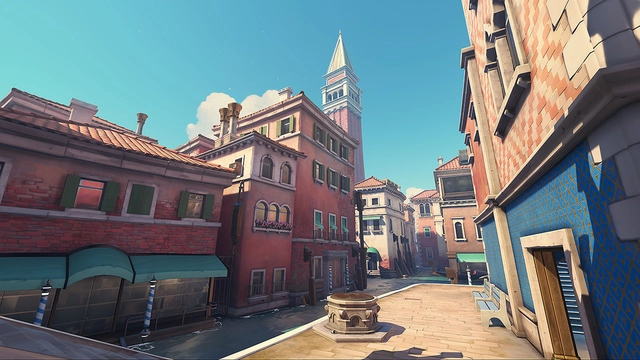
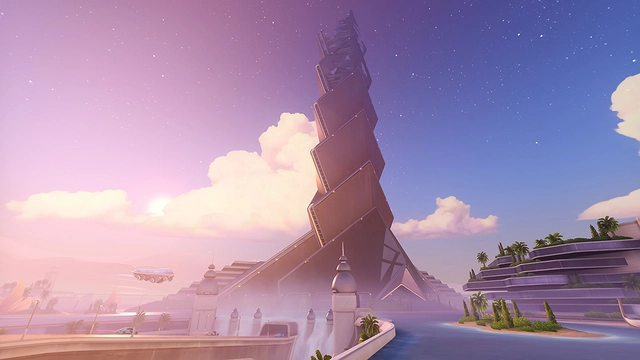
In an exclusive interview with ArchDaily, Philip Klevestav, principle artist at Blizzard Entertainment, the gaming development company known for Warcraft, Overwatch, and Diablo, shares his insights on video game designs and the influence of architecture on the designing process.
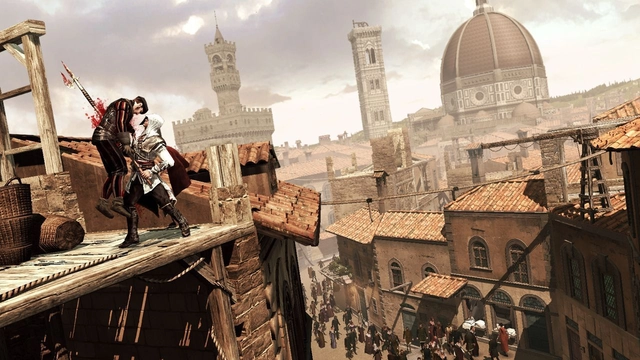
Some gamers work diligently to recreate historically-accurate structures or design their own renditions.
Avid gamers and casual observers alike have probably heard of The Sims, a life simulation video game and one of Electronic Arts' (EA) most popular franchises. The Sims, which has undergone multiple iterations and expanded its virtual universe many times over the past decade, allows players to dream and control elaborate stories for their Sims. This "virtual dollhouse," as The Sims creator Will Wright describes, also lends players the ability to endlessly customize and construct their own houses and cities for their Sims–a feature that has allowed many gamers to interact more closely with the real world of architecture.

Last week, the City of Arlington, Texas announced plans to collaborate with Populous in transforming the city’s convention center into North America’s first Esports Stadium. This 100,000-square-foot venue will be designed to draw in both competitive players and fans from around the world, and create the most immersive experience in the live esports market.
Love architectural video games like Minecraft or SimCity? Then it's worth checking out this ecological city simulator, Block'hood, which allows players to build their own arcology-style structures for humans and other species to coexist, all while managing a range of environmental and engineering conditions.
Following our review of the beta version of the game last March, the final edition has now launched on gaming platform Steam. New features include a 5-episode guided story mode, an increased maximum building size, an unlockable "unconstrained" mode, and compatibility in 8 different languages: English, Spanish, French, German, Japanese, Chinese, Portuguese and Russian.
If you’ve heard of Second Life, the 2000s-era web-based online world with millions of loyal “residents” who populated it with personal avatars, you’re likely to think it has become irrelevant or obsolete. But at the peak of its popularity, the site received a lot of attention for providing users with a potentially dangerous escape from reality—one so powerful that it was not unheard of to leave real jobs, friends, and families for those found within the site.
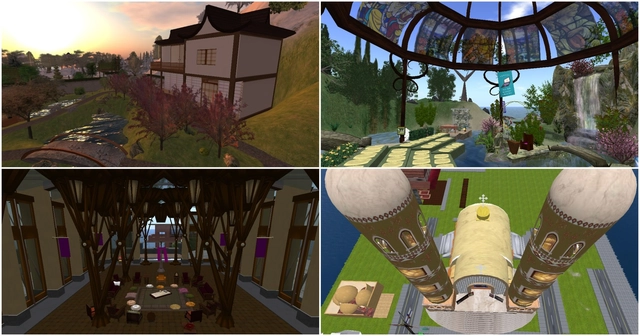
Second Life is the ultimate democratizer in space making. The vast web of locations in the site's virtual world, called sims, are almost completely user-generated. For as little as $75 a month, anyone with an internet connection and basic CAD skills can create, upload, and maintain whatever place they dream up. Sure, sometimes this “great equalizer” spits out such venues as SeDucTions and Sinners Burlesque, but more often than not, builders have responded to the complex opportunities and challenges presented by their unique situation with innovative design solutions.
One place to observe this is in the site’s many spiritual sims, in which religious architecture often responds to the displacement of religious authority in the digital world, since a lack of official (sanctioned) ties to tradition offers a designer more agency than in the real world. Read on to discover four cases that carve out a space for spirituality in Second Life and reveal some of what works—and doesn’t—in today's virtual sacred architecture.
Looking for a challenging new diversion that will keep your architectural mind humming? A new puzzle game from developers Dusty Road, Empty, may just fit the bill.
In New York City, as in many cities worldwide, residents rely on the subway system to get around. But despite its importance, there are still plenty of locations throughout the city so difficult to get to, it’ll leave you cursing, “Who designed this thing anyway!?”
Now thanks to a new game from engineer Jason Wright, you have a chance to correct the design flaws of the current system – virtually, anyway.
Videos
A real-time synthetic environments screen grab of the reception area at St Helens and Knowsley Teaching Hospitals NHS Trust in St Helens, UK. Image Courtesy of Arup
Evaluating the user performance of a particular building design is obviously a good way for clients and architects to gauge whether their design was successful—or could have been better.
There’s even an entire academic discipline called post-occupancy evaluation (POE) devoted to this concept, and Arup is tapping into it with a network of 22 industry partners using the Building Use Studies (BUS) methodology. Too few designers tap into POE, but with gamified simulations done before projects are built, that could change.
https://www.archdaily.com/798512/how-new-video-game-inspired-tools-are-redefining-post-occupancy-evaluationAngus W. Stocking, L.S.
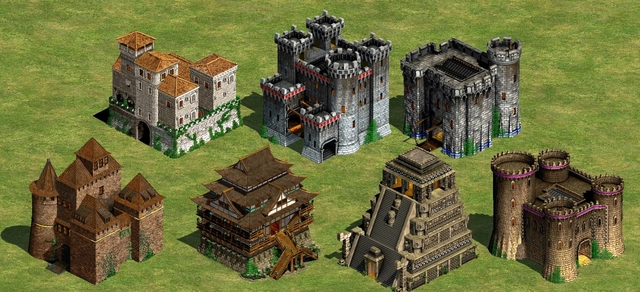
In this new collaboration, originally titled "Architecture for the system and systems for architecture," Spanish architect and cofounder of the blog MetaSpace, Manuel Saga, reflects on the experience of developing (and taking on) a game where architecture plays a key role for the designer, and for the player. The case studies? No less than four major titles of our times: Starcraft, Age of Empires, Diablo and Dungeon of the Endless.
On MetaSpace we have introduced a general overview of the challenges that video game designers face when creating buildings, cities and even maps. This time we will go one step further: what happens when a game doesn’t offer a narrative or a fixed, open map, but rather an architectural system that the player can take control of? How does a design team respond to something like that?
More than 6 million courses have been created for Super Mario Maker, a video game where players can create their own game levels with all of the available tools of the Mario universe. The plumber, who has entertained millions of people around the world with his adventures, turned 30 last September, the date of the release of his first solo odyssey, Super Mario Bros. The rest, as we know, is history.
A few months ago, for the premiere of Super Mario Maker at the last Electronic Entertainment Expo (E3 2015), Shigeru Miyamoto and Takashi Tezuka, the creators of Super Mario Bros, explained how they designed the levels of the classic Nintendo video game in 1985: on graph paper.
That's right, using graph paper and tracing paper, the Japanese artists drew each level in detail, adding and editing the position of enemies, traps, and even designing the game's cover art.