
-
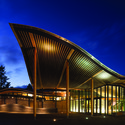
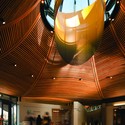
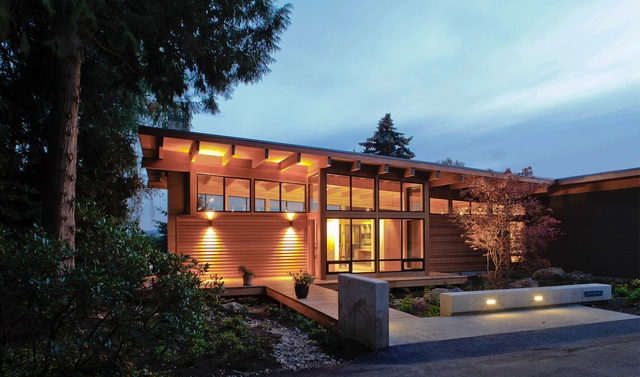
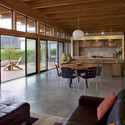
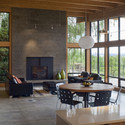
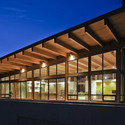
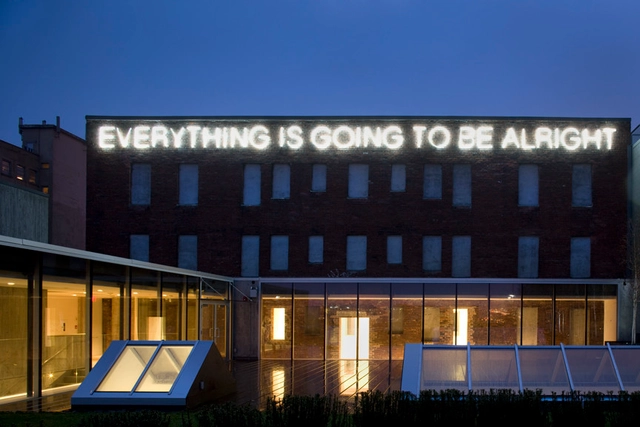
Architects: Acton Ostry Architects
- Year: 2012



The Architectural Foundation of British Columbia (BC) has announced the five finalists of the 100 Mile House Competition. Similar to the well-known 100 Mile Diet, the 100 Mile House challenges participants to design a 1200-square-foot home using only materials and systems that are made, manufactured and/or recycled within 100 miles of the City of Vancouver. Many have questioned whether the 100 Mile House is a plausible solution in today’s modern cities (check out: The 100 Mile House: Innovative ‘Locatat’ or Just Plain Loca?). Be your own judge and review the finalists after the break.

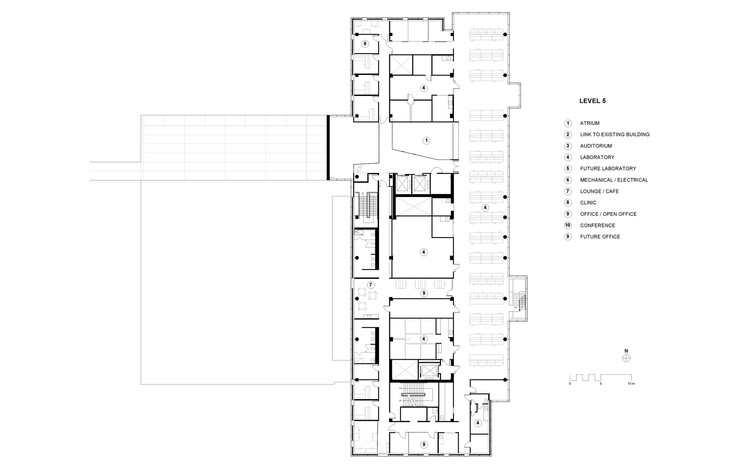
Stantec’s design for the DjavafMowafaghian Centre for Brain Health at UBC, in Vancouver, British Columbia in Canada is envisioned as a translational research facility defined by present and future medical practices that collaborate under research and patient care. To achieve this, designers considered the intersections within the spatial dynamics of the facility to coordinate interactions between researchers and clinicians. The facility is 134,500 square feet and includes exam / consultation rooms, lab benches, a full conference centre, a brain tissue and DNA bank of samples collected from consenting patients, and patient and animal MRI capabilities.
More after the break.

Contributing to the Vancouver skyline, the 490-foot-tall Beach and Howe mixed-use tower by BIG, Westbank, Dialog, Cobalt, PFS, Buro Happold, Glotman Simpson, and local architect James Cheng marks the entry point to downtown, forming a welcoming gateway to the city, while adding another unique structure. BIG’s proposal, named after its location on the corner of Howe & Beach next to the Granville Street Bridge in downtown Vancouver, calls for 600 residential units occupying the 49-story tower, which would become one of the city’s fourth tallest buildings. More images and architects’ description after the break.

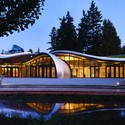
Perkins+Will‘s VanDusen Botanical Garden Visitor Centre in Vancouver, BC is designed to meet the Living Building Challenge, the most rigorous set of requirements of sustainability. Formally and functionally, it encompasses the goals of environmentally and socially conscious design. The building is an undulating landscape of interior and exterior spaces rising from ground to roof level and providing a vast surface area on which vegetation could grow, thus reoccupying the land on which the building sits with the landscape. The building also features numerous passive and active systems that reuse the site’s renewable resources and the building’s own waste.
More photos after the break, including a video about the project!

White Rock, a small surburb outside of Vancouver, Canada can now boast to having the largest green wall in North America thanks to Green Over Grey, Vancouver, Canada-based company that design and install green walls (also known as living walls). The once bare 3000 square foot wall is now a lush garden of a wide variety of plant life. It is located on the facade of the Semiahmoo Public Library and RCMP Facility.
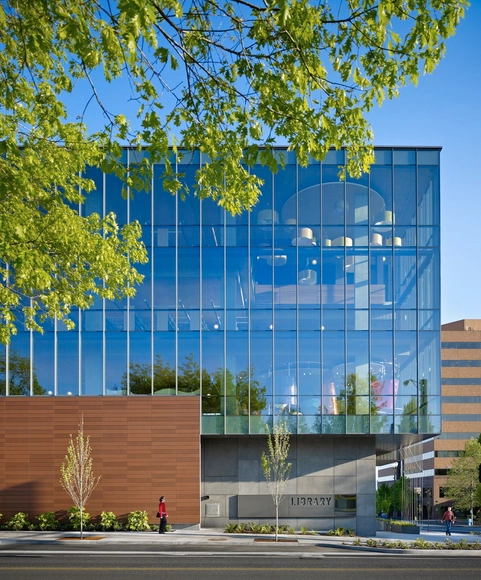

Presented by the Architectural Institute of British Columbia and Architecture Canada | RAIC the 2011 Festival of Architecture will take place May 24 to 27th in Vancouver, Canada.