.jpg?1397621364&format=webp&width=640&height=580)
.jpg?1397621294 "Courtesy of Scott and Scott Architects")
.jpg?1397621531 "Courtesy of Scott and Scott Architects")
.jpg?1397621441 "Courtesy of Scott and Scott Architects")
.jpg?1397621526 "Courtesy of Scott and Scott Architects")
.jpg?1397621364)
-
Architects: Scott and Scott Architects
- Area: 70 m²
- Year: 2014


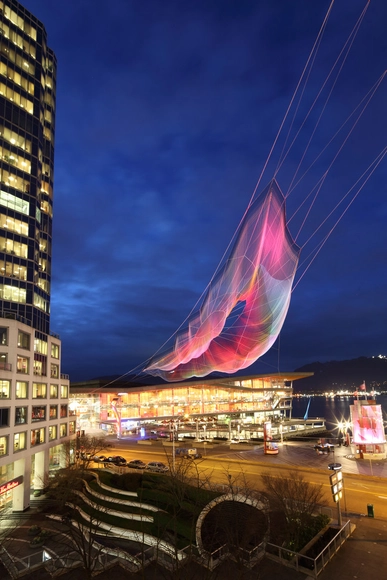
American Artist Janet Echelman is to premiere her latest, and largest, sculpture in Vancouver. Widely known for her artistic ability to reshape urban airspace, Echelman's sophisticated mixture of ancient craft and modern technology has led to collaborations with aeronautical and mechanical engineers, architects, lighting designers, landscape architects, and fabricators to "transform urban environments world wide with her net sculptures." Using a light weight fibre to elevate her monumental "breathing" forms above the streets of urban centres, Echelman's new sculpture will be of a size and scale never before attempted.


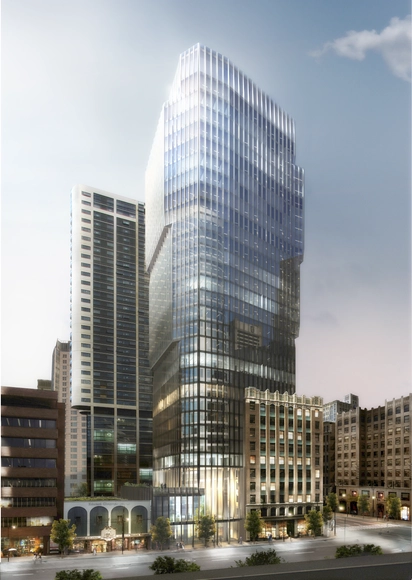
Construction broke ground last month for ‘The Exchange’ tower in Vancouver, Canada's first LEED Platinum heritage conversion and Harry Gugger Studio’s first North American building. The 31-floor office building resolves the strict urban regulations imposed on high-rise construction downtown and addresses the historical context by preserving and integrating the façade of the city's historic Stock Exchange building.


Bjarke Ingels Group (BIG)’s 700,000 square foot Beach + Howe development has been approved by the Vancouver City Council. Though concerns still remain regarding the height of the 52-story tower - which is intended to become the city’s fourth tallest building - an overwhelming majority of the council and public seems to be enthusiastic about the project.
“It meets the test at every respect — gorgeous architecture, turning a dead space into a vibrant public space with animation and job space. The housing is diverse and much needed... People have used the word iconic - I think it’s remarkable design to combine so many elements on a tough site,” stated Mayor Gregor Robertson before the vote. “It’s an extraordinary project that deserves strong council support.”


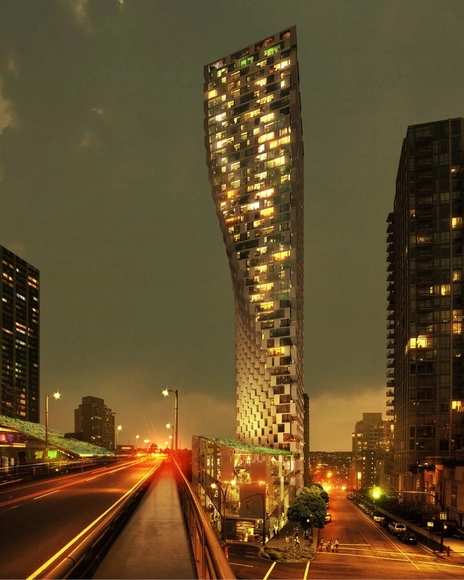
A BIG step forward for Vancouver’s latest mixed-use tower making international headlines, as the 497-foot tall Beach and Howe proposal has received an “enthusiastic endorsement” from the city’s design panel.
Commissioned by Canada’s real estate mogul Ian Gillespie of Westbank, the Bjarke Ingle Group-designed tower promises to add a foreign twist to Vancouver’s skyline and create a new identity for an undefined section of town at the fringe of the city's residential area. The 700,000 square foot complex - which contains shopping, social housing and market rental apartments - was praised by the panel for anchoring itself on a nine-story podium that occupies the disused, interstitial spaces found between the Granville Street Bridge’s entry and exit ramps.
More after the break...
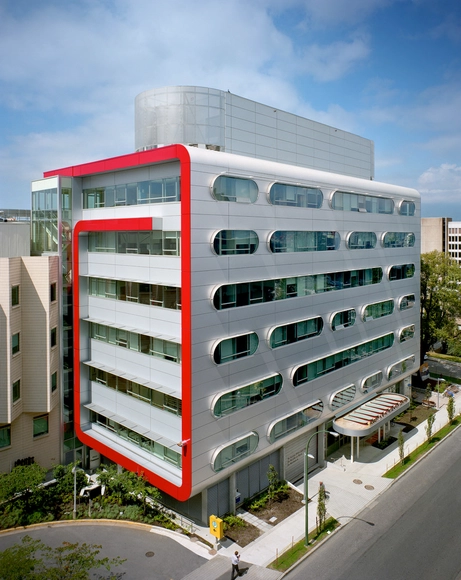

With the aim to generate a broader discussion of possibilities for Vancouver’s affordable housing crisis, Jessie Andjelic, Albert Dijk and Philip Vandermey submitted their Meta Vancouverism and Vancouver Islands proposal for the Re:think Housing competition held by the City of Vancouver. These concepts are focused on on being grenade projects in response to perceived contradictions within dominant themes of Vancouver urban planning – affordability, sustainability, nature, speculative urbanism, sprawl and the condo rush. More images and architects’ description after the break.








































.jpg?1428631663 "© Derek Lepper")



.jpg?1414028338&format=webp&width=640&height=580)
.jpg?1414028343 "© Marc Cramer")
.jpg?1414028340 "© Marc Cramer")
.jpg?1414028347 "© Marc Cramer")
.jpg?1414028345 "© Marc Cramer")
.jpg?1414028338)