The HA Tower, designed by Frontoffice + Francois Blanciak, proposes a hybrid model for urban life that embraces the city, pulling it in the heart of the units, while still offering large open spaces that otherwise are only available on the urban fringe. Located in Higashi-Azabu, within walking distance of a cluster of rail lines, Shiba Park, and the iconic Tokyo Tower, the corner site is small, covering only 130 square meters and is constrained by a floor area ratio that limits construction to 8 floors. More images and architects’ description after the break.
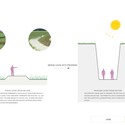
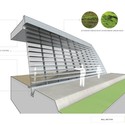
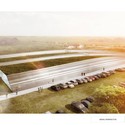
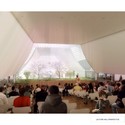
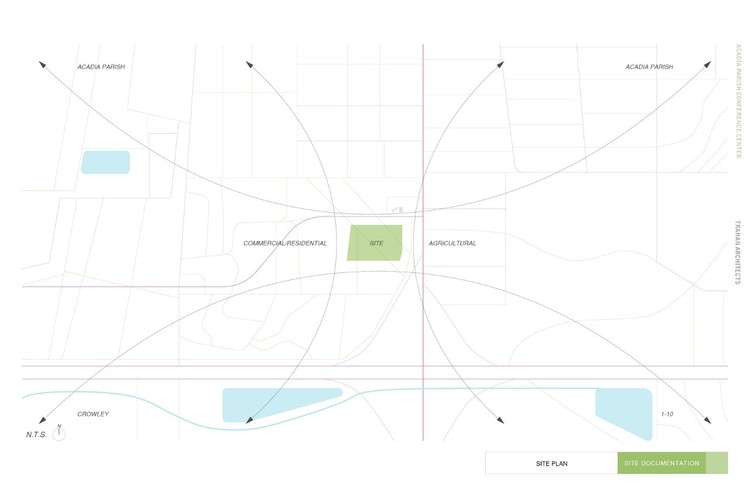
Located to the north-east of Crowley, a small town in Louisiana known to be the “Rice Capital of America”, the Acadia Parish Conference Center by Trahan Architects will mediate the threshold between the urban development to the west and the agricultural fields to the east. Envisioned as an extension of the landscape, the center creates a harmonic balance between the two environments, expressing the importance of local agricultural.
Continue after the break for more on the Acadia Parish Conference Center.
With the aim of the Green Architecture competition to stimulate and collect innovative proposals on how architecture, urban design & planning, and landscape architecture could contribute to maintain and improve our biodiversity, Lijbers Architect looked at the decline of natural biodiversity from the perspective of complex human dynamics. By investigating the organized but fundamentally unpredictable behavior of human systems and its consequences for the natural environment, they find that the highly dynamic reallocation and changing of the earth’s habitat by human action falls short in providing vulnerable species of plants and animals with sufficient time to recover. More images and architects’ description after the break.
As Larry Levine and Ben Chou discuss in their NRDC blog post ”New York and Pennsylvania: Among the Best at Planning for the Inconvenient Truths of Climate Change”, we have already seen what the progress of climate change has done to the most recent weather patterns and the harm it has caused to our infrastructure. Rising temperature throws off climate balances making some areas wetter and others drier, complicating water supplies, farmland and infrastructure. In the post, they point out the specific affects on densely populated urban areas and outdated infrastructure that cannot support heavy rains and increased runoff, which inevitably ends up in our waterways: New York City, Albany, Buffalo, Philadelphia and Pittsburgh. While many parts of the country lack a comprehensive strategy to respond to these mounting threats, nine states have created detailed reactionary and preventative measures to deal with climate change (see the NRDC report).
However, public policies, regulations and reports are not always in sync with what people choose to construct or what actually gets built. New York’s 2012 Green Infrastructure Grant Program is promising in that respect; it is a step towards bridging that gap that exists between building purely for utility versus building to keep cities livable, functional and safe. The program focuses on storm water management, giving private enterprises the incentive to make responsible decisions that will alleviate the burden on the NYC sewer system. The grant has set aside $4 million for green infrastructure projects, which include green roofs, blue roofs, combined roofs, bioswales, permeable pavers and perforated piping. This money is open only for use on private properties and businesses, or along streets that abut privately owned properties and are located on sites that drain into a combined sewer. The full report is outlined here.
The proposal for the Kyiv Urban Wildlife Park by Katya Larina, Yevgeniya Pozigun, Irina Klixbull, and Roman Pomazan responds to what the place means for the thousands of people who cross the area which is nestled between two fast developing banks. Therefore, the design becomes a development of a decision-making instrument which is intended to guide the future development of Kyiv Islands. More images and architects’ description after the break.
The ten finalists competing in the final phase of the National Mall Design Competition are dreaming big. Proposals to restore the National Mall include flourishing lakeside gardens, contemporary cafés hovering over water, grassy new amphitheaters and underground pavilions exposed at the foot of the Washington Monument. Since the announcement of the finalists, the teams have been refining there proposals behind closed doors.
Now, the Trust for the National Mall has released the highly anticipated proposals to the public. From now until Sunday, at the Smithsonian Castle and the National Museum of American History, you can view each proposal in its entirety. If you don’t live in the D.C. area, no need to worry. Continue after the break to catch a glimpse of each submission and learn how you can help the jury decided who will revamp America’s “front yard”.
The center of Tirana is marked by a clear urban layout, but its recent growth filled up a large area around it without any order, structure, adequate services or meaningful public spaces. In this proposal by Cino Zucchi Architetti, in collaboration with One Works, Gustafson Porter, Buro Happold London, and Antonello Stella Architects, the voids rather than the buildings become the catalysts of new urban regeneration. In doing so, their design attracts public and private functions around a sequence of green spaces of high environmental quality. The extension of the boulevard into a lively green promenade progressively opens up to the beautiful landscape of the hills across the Tirana river. More images and architects’ description after the break.
The contenders: NYU and the Greenwich Village community. Let Round 2 commence.
Almost two years after we first brought you news about NYU 2031, NYU’s plans for expansion in Brooklyn, Governor’s Island, and (most controversially) in Greenwich Village, and the fight has not only continued, but escalated. A debate, hosted by The Municipal Art Society of New York, two nights ago brought about 200 NYU affiliates and community residents together, but only spatially; there was a considerable lack of willingness to compromise from either camp.
NYU’s plan, thought up by Toshiko Mori Architect, Michael Van Valkenburgh Associates, and Grimshaw Architects, has ruffled feathers mostly for the fact of its bulk. The 2.5 million square-foot development (1.1 million of which would be underground) is the largest ever proposed for the Village, and has drawn criticism for its potential to diminish light, greenery, and open space in the neighborhood.
In this TEDx Talk, Jason Roberts – known as the “The Bike Guy” in his Oak Cliff community outside of Dallas, Texas – gives his audience a how-to guide in improving a community one block at a time as part of a project called “The Better Block“. The project did not start off as an organization with vast goals and strong following; instead it started off with Roberts’ interest and desire to develop his community into one that had a legacy apart from the highways and overpasses that dominate the landscape. Inspired by the rich history and existing street life of European cities with their historic buildings and monuments, plazas, and vistas; Roberts started small and eventually built a foundation and organization that is now nationally recognized and used as a tool to develop cities across the country.
Walk into the cafeteria at the Googleplex and you are nudged into the “right” choice. Sweets? Color-coded red and placed on the bottom shelf to make them just a bit harder to reach. “Instead of that chocolate bar, sir, wouldn’t you much rather consume this oh-so-conveniently-located apple? It’s good for you! Look, we labelled it green!”
Like the Google cafeteria guides you to take responsibility of your health, Google wants to transform the construction industry to take responsibility of the “health” of its buildings. They have been leveraging for transparency in the content of building materials, so that, like consumers who read what’s in a Snickers bar before eating it, they’ll know the “ingredients” of materials to choose the greenest, what they call “healthiest,” options.[2]
These examples illustrate the trend of “medicalization” in our increasingly health-obsessed society: when ordinary problems (such as construction, productivity, etc.) are defined and understood in medical terms. In their book Imperfect Health, Borasi and Zardini argue that through this process, architecture and design has been mistakenly burdened with the normalizing, moralistic function of “curing” the human body. [3]
While I find the idea that design should “force” healthiness somewhat paternalistic and ultimately limited, I don’t think this “medicalized” language is all bad – especially if we can use it in new and revitalizing ways. Allow me to prescribe two examples: the most popular and the (potentially) most ambitious urban renewal projects in New York City today, the High Line and the Delancey Underground (or the Low Line).
More on “curative” spaces after the break. (Trust me, it’s good for you.)
Beijing urban expansion _ The fast and enormous urban development of Beijing has transformed the city into a metropolis made of suburban residential compounds, abandoned industrial plants, community housing blocks from the 70s-80s and popular self-grown villages. A mix of high rise residential areas, business districts, impressive infrastructures enclosing spontaneous house areas surviving the demolition and renovation dictated by the construction market. The population has grown from 1 to 18 millions in 60 years, and the size of the city has reached 5 times the ancient capital within the walls – the 2nd Ring Road.
The urban expansion, mostly based on imported urban models and low quality constructions, has been exploding in the past 30 years, and it is rooted with political and economical decisions, as well as local culture and history. Briefly, Beijing is a stunning showcase of urban consequences happening in the world’s first growing economy, during an explosive industrial revolution.
Studio E Architectsfaced a compelling challenge when designing the first phase UC Davis West Village, which opened last October in California’s upper Central Valley. Experiencing moderate winters, warm summers, prevailing winds and moderate rainfall within the heart of former agricultural fields, the new addition to UC Davis was to be a net-zero facility. Serving as the largest of its kind and a model for campus communities and environmentally conscious urbanism. That is sustainable and community oriented. The program required 123 units of student apartments in one, two and three-bedroom configurations, 45,000 square feet of ground level commercial space all of which would emulate the central park space in downtown Davis and become the heart of West Village.
Follow us after the break to see the sustainable solutions that Studio E Architects came up with!
One of the greatest Mediterranean Ports is about to be transformed. Work has begun on the Old Port of Marseille as part of a series of regeneration projects to be completed in time for the city’s inauguration as European Capital of Culture in 2013. Based on French landscape architect Michel Desvigne’s and London-based architects Foster + Partners’ competition-winning master plan, the project will reclaim the quaysides as a civic space, creating new informal venues for performances and events, while traffic is relocating traffic to a safe, semi-pedestrianised public realm.
Lord Foster stated, “I know the harbor at Marseille well and it is a truly grand space. This project is a great opportunity to enhance it using very simple means, to improve it with small, discreet pavilions for events, for markets, for special occasions. Our approach has been to work with the climate, to create shade, but at the same time to respect the space of the harbor – just making it better.”
The Greek urban design project “e_co_llectiva” by Athanasios Polyzoidis (Architect-Landscape Architect) and Katerina Petsiou (Architect) was awarded with the Salon Grand Prix in the 4th Landscape Architecture Exhibition in Belgrade. In their design, the public space of the streets and the vacant lots in the internal parts of the four building blocks is unified so as to create a single urban garden-park which promotes the concept of collective activity. This intervention is given the title ‘e_co_llectiva’ after ecology (eco), collectivity (collectiva) and new technologies (e). More images and architects’ description after the break.
Space Group, based out of Oslo, Norway, recently completed the master plan for Lexington, Kentucky’s new Arena, Arts and Entertainment District. Beating out 13 other architectural firms, the 46 acre development will incorporate a basketball arena, convention center, performing arts center, school of the arts, offices, retail shops and housing. A unique aspect that was incorporated was the distinctive compactness of the existing downtown area and its proximity to residential neighborhoods. In order to accommodate predicted future growth, Space Group conceived a strategy that mirrors the footprint of the existing downtown district and projects it along an axis in line with the Rupp Arena. More info after the break.
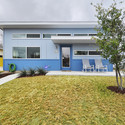
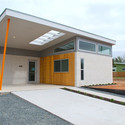
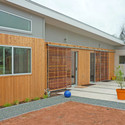
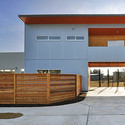
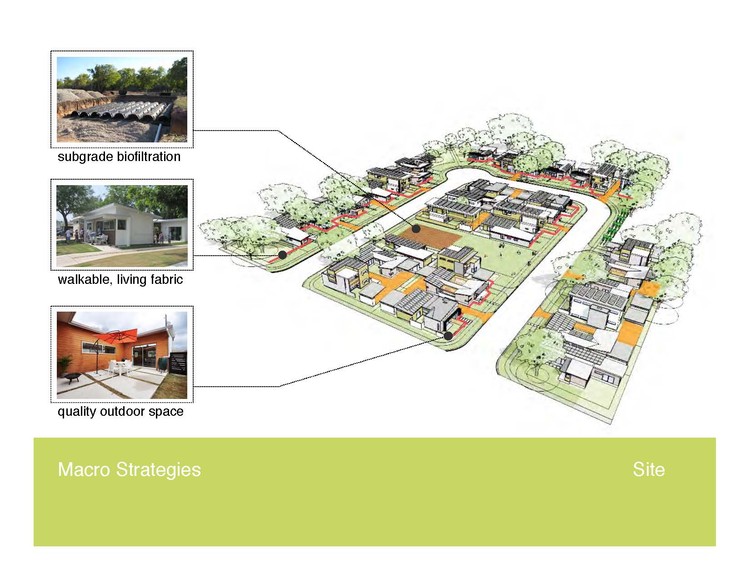
SOL Austin - Solutions Oriented Living – is a model development of a sustainable community that integrates social, economic and ecological components to create a “holistic community”. The project was a result of a partnership between KRDB Architects, Beck-Reit contractors, the Guadalupe Neighborhood Development Corporation (GNDC) and the Austin Housing Finance Corporation. The medium density, single-family in-fill project in central east Austin, just three miles from downtown incorporates a significant portion of low-income and affordable housing, sustainable practices and consideration for the kind of future that developments like this can create.
Read on for photos, plans and more information about this project, considered for the AIA 2011 Design Awards in Urban Design.
‘Calling of the Sea’, the proposal for the exhibition hall for Yantai Development Zone Blueprint by Origin Architect, will be not only a space to exhibit the blueprint of Yantai City, but also present an attitude itself and the possible future of the coastal city, as well as the visions experienced directly. The starting point for the entire design derives from cherishing and respect to unique land conditions. It makes an attempt for common development and symbiotic relationship of urban architectures and nature, protect and develop natural resources, and restore hangovers from the past. In the end, it can make the city’s single coastal environment thriving. More images and architects’ description after the break.
In association with Jean-Baptiste Ferrari et Associes SA, gmp Architekten recently won the competition for a sports complex and urban re-design in Lausanne, Switzerland. The design manages to create an urban link between the diverse structure of the neighboring quarters, the new proposed residential quarter and the shores of Lake Geneva. Situated on a triangular lot, the site is defined in the south by the motorway and in the west and north by large arterial roads. More images and architects’ description after the break.