In an age of unprecedented globalization, our food supply chains — the institutions and mechanisms involved in food production and distribution — have become longer. So much so that they are hardly perceived as chains or systems. They have been integrated into our lives, and into our cities, and transformed our relationships with food. And yet, those very long food supply chains are implicated in some of our most pressing global problems, from food security and waste to biodiversity and climate change. These food supply chains have come to their current state, their current length, over decades, or centuries perhaps, through all sorts of political, social, cultural, and economic processes, and carry with them a range of burdens: vague producer-consumer relationships, and a host of negative environmental externalities, among many others.
FoodCAMP focuses on the wide array of ways in whic food can make better cities (and vice versa). C. Jon Bilous, 123RF
Can food form a better city - and vice versa? Prague's CAMP (Centre for Architecture and Metropolitan Planning) will search for the answers to this question during its FoodCAMP programme from December 2 to 6. Every evening of the week will explore a different layer of food - urban planning dynamics covering topics like the sustainable relationship between the city and countryside, urban gardening, restaurant design and street food. The programme includes movie screenings, talks, debates with foreign speakers like Carolyn Steel, author of Hungry City, a kids’ workshop and a talk show.
In February 2020, the Solomon R. Guggenheim Museum will present an exhibition titled “Countryside, The Future.” The brainchild of a team led by Rem Koolhaas and AMO, the exhibition will mark the latest chapter in one of Koolhaas’ fields of study from recent years; the impact of an increasingly urbanized world on the non-urban areas “left behind.” This investigation is for good reason.
https://www.archdaily.com/925800/what-will-the-countryside-be-for-when-we-all-live-in-citiesNiall Patrick Walsh
It is, once again, the time of year where we look towards the future to define the goals and approaches that we will take for our careers throughout the upcoming year. To help the millions of architects who visit ArchDaily every day from all over the world, we compiled a list of the most popular ideas of 2018, which will continue to be developed and consolidated throughout 2019.
Over 130 million users discovered new references, materials, and tools in 2018 alone, infusing their practice of architecture with the means to improve the quality of life for our cities and built spaces. As users demonstrated certain affinities and/or demonstrated greater interest in particular topics, these emerged as trends.
https://www.archdaily.com/910525/the-trends-that-will-influence-architecture-in-2019Pola Mora
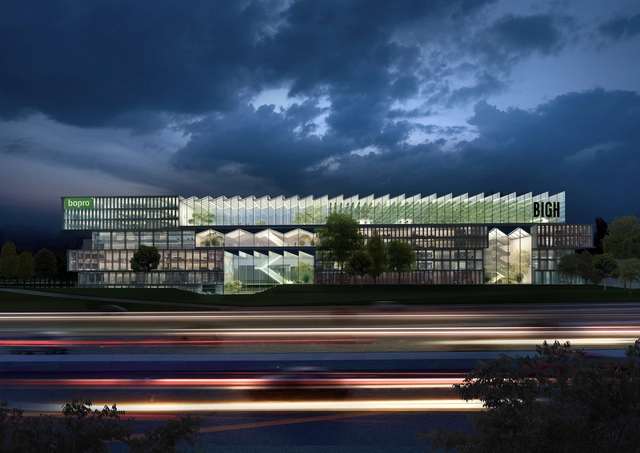
Dutch Firms Team RAU, SeARCH, and karres +brands have been named as one of the winners of the Inventons la Metropole de Grand Paris, the largest European competition for city planning, architecture and public space. Their project, Triango, reinvents Paris’ Triangle de Gonesse into a dynamic and lively business park which promotes sustainability in every sense of the word.
Australian ecologists, David Holmgren and Bill Mollison, first coined the term permaculture in 1978, encompassing holistic methods for planning, updating and maintaining environmentally sustainable, socially just and financially viable systems. For Mollison, "Permaculture is the philosophy of working with and not against nature, after a long and thoughtful observation." In this sense, herbal spirals are an excellent exercise to begin to understand some of the concepts of this culture, as it brings together various natural functions in a single element, making it more productive and healthy.
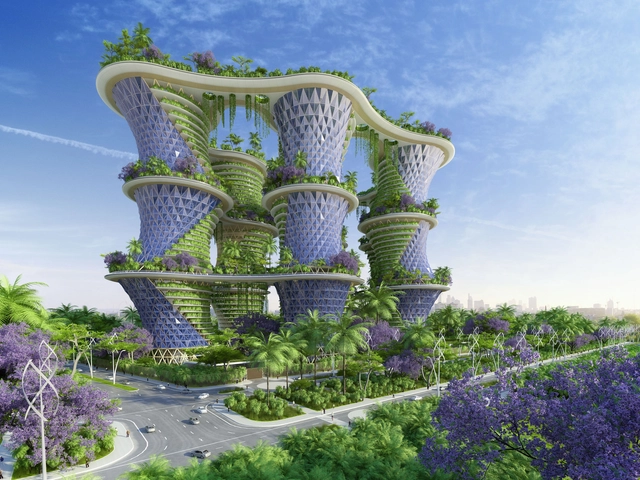
Agroecologist Amlankusum, together with Paris-based Vincent Callebaut Architectures, has created Hyperions, a vertical, energy positive eco-neighborhood proposed for Jaypee Green Sports City in the Delhi National Capital Region (NCR) in India. Aiming to “reconcile urban renaturation and small-scale farming with environment protection and biodiversity,” the project combines low-tech and high-tech elements with the “objective of energy decentralization and food deindustrialization.”
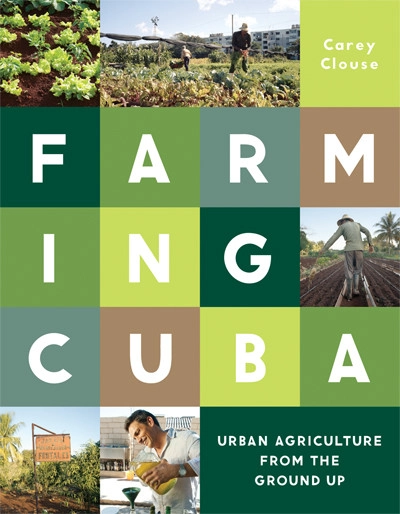
The following is an excerpt from Carey Clouse's Farming Cuba: Urban Agriculture from the Ground Up, which explores Cuba's impromptu agricultural development after the dissolution of the Soviet Union, and the challenges that development poses for modern day architects and urban planners.
Following the collapse of the Soviet Union in the early 1990s, Cuba found itself solely responsible for feeding a nation that had grown dependent on imports and trade subsidies. With fuel, fertilizers, and pesticides disappearing overnight, citizens began growing their own organic produce anywhere they could find space, on rooftops, balconies, vacant lots, and even school playgrounds. By 1998 there were more than 8,000 urban farms in Havana producing nearly half of the country's vegetables. What began as a grassroots initiative had, in less than a decade, grown into the largest sustainable agriculture initiative ever undertaken, making Cuba the world leader in urban farming. Featuring a wealth of rarely seen material and intimate portraits of the environment, Farming Cuba details the innovative design strategies and explores the social, political, and environmental factors that helped shape this pioneering urban farming program.
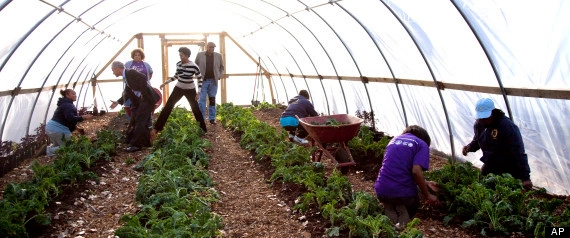
Mayor Rahm Emanuel and Growing Power, a Chicago-based urban agriculture organization, announced recently the formation of Farmers for Chicago, a program that will transform vacant south-side Chicago lots into productive urban farms. The program will make available up to five acres of city-owned vacant lots for urban farming activity and "help expand the supply chain for local neighborhood-level food production and wholesale," "improve community access to healthy food, help participants to supplement their incomes, and to foster workforce training."
Read more about Farmers for Chicago after the break.
If you read our infographic, then you know that Public-Interest Design is one of the few growing sectors of the architecture industry. From the prevalence of Design-Build curriculums in Architecture Schools to the rise of the 1% program and non-profits like Architecture for Humanity, Public-Interest Design (PID) is hitting its stride.
The latest SEEDoc follows the story of the Grow Dat Youth Farm - a brilliant example of what we call “Urban Agri-puncture” (a strategy that uses design & Urban Agriculture to target a city’s most deprived, unhealthy neighborhoods) that is changing the lives of New Orleans youth.
Earlier this month, The New York Times’ Michael Kimmelman tackled a common narrative in the architecture and urban planning community. It goes like this: once upon a time, in the 1990s, Medellín, Colombia, was the “murder of the capital of the world.” Then thoughtful architectural planning connected the slums to the city. Crime rates plummeted and, against the odds, the city was transformed.
Well, yes and no.
What happened in Medellín is often called “Urban Acupuncture,” a way of planning that pinpoints vulnerable sectors of a city and re-energizes them through design intervention. But Kimmelman reports that while the city has made considerable strides in its commitment to long-term, urban renewal, it has prioritized huge, infrastructural change over smaller solutions that could truly address community needs.
Urban Acupuncture needn’t be expensive, wieldy, or time-consuming. But it does require a detailed understanding of the city – its points of vulnerability, ‘deserts’ of services, potential connection points – and a keen sensitivity to the community it serves.
So what does this have to do with food? Our food system presents seemingly unsurmountable difficulties. In Part II, I suggested that design could, at the very least, better our alienated relationship with food. But what if we used the principles of Urban Acupuncture to bring Agriculture to the fore of urban planning? What if we used pinpointed, productive landscapes to revitalize abandoned communities and help them access healthy foods? What if we design our cities as points of Urban “Agripuncture”?
What would our cities look like with Urban Agripuncture? Read more after the break…
Everyday, in the city of London, 30 million meals are served. That’s millions of trucks arriving to millions of stores and restaurants in a complex, tightly scheduled orchestration of production, transportation, and distribution.
We take it for granted that this system will never fail. But what would happen if these trucks were stopped? As unrealistic as it sounds, it’s happened – and not so long ago.
In 1989, over 57% of Cuba’s caloric intake was imported from the Soviet Union. When it collapsed, Cuba became, virtually overnight, solely responsible for feeding its population – including the 2.2 million in the city of Havana. [1] What happened next is an incredible story of resilience and innovation.
As our world becomes increasingly urbanized, our farms increasingly endangered, and our reliance upon fossil fuels increasingly undesirable, the question of how we will feed billions of future city dwellers is no mere thought experiment – it’s an urgent reality.
The story of Cuba offers us an interesting question: What would our cities look like if we began to place food production/distribution as the primary focus of urban design? And what will it take to make this vision a reality?
More on how Food can shape our cities, after the break…


.jpg?1548884950&format=webp&width=640&height=580)