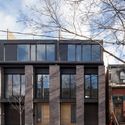
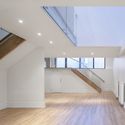
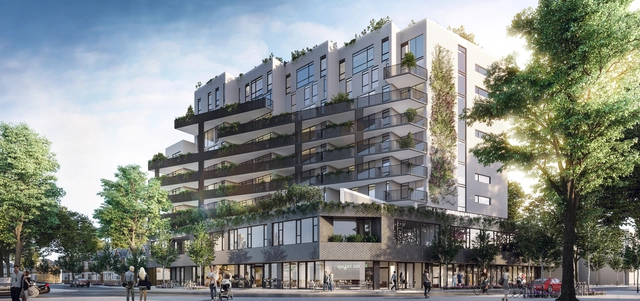
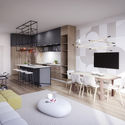
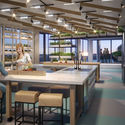
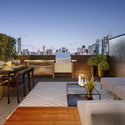
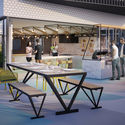
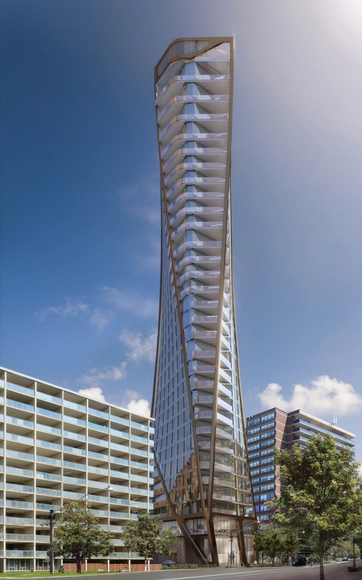
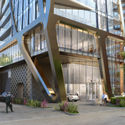
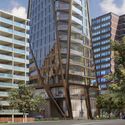
Since the site was acquired in 2016, New York-based architects CetraRuddy, known for the iconic Manhattan tower One Madison, have been working on what is likely to be an icon of its own, 64 Prince Arthur. The point where The Annex and Yorkville neighborhoods meet in Toronto marks Adi Development Group and Forgestone Capital’s newest project, as well as Adi's first in Toronto. The initial renderings of the project show the commitment by the development team and CetraRuddy to making a statement on the skyline, “an iconic legacy project."
Incognito by Curio Art Consultancy and Jaspal Riyait, Rees Street Parkette (Photo: Andy Barrow)
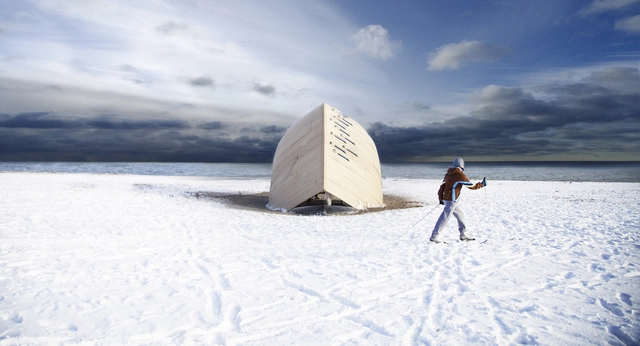
After a successful inaugural year, Ice Breakers is returning to Toronto's Waterfront. The Waterfront BIA has again enlisted WinterStations Inc. to bring five temporary, public art installations to various sights between Bathurst St. and Yonge St. for five weeks, commencing February 03, 2018.
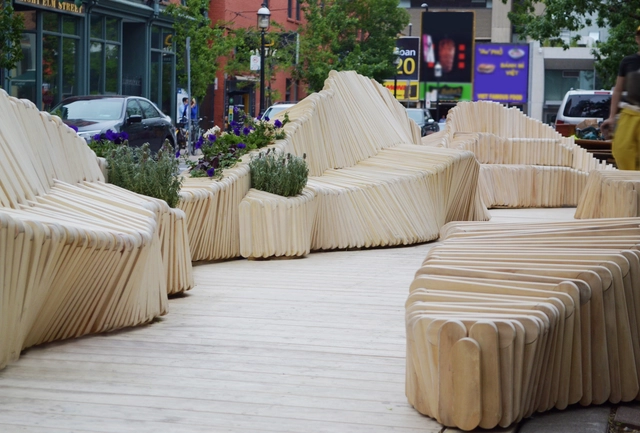
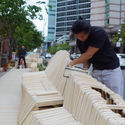
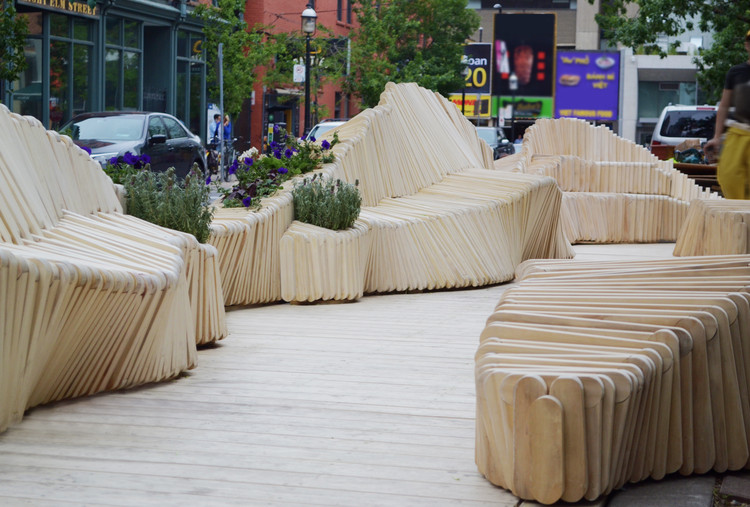
This modular design developed by the students of the Department of Architecture Sciences at Ryerson University proposes a public space to sit and relax that works as an extension of the walkway, appropriating and giving a new meaning to the parking spaces in the streets of Toronto.
The project, with a natural wave form, is built by a series of Accoya wood modules, which allow easy storage, reuse, and reconfiguration.
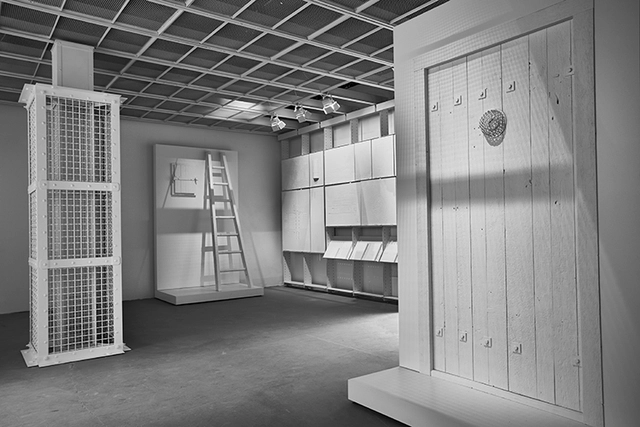
Interior perspective of The Evidence Room with models of Auschwitz gas column and gas-tight hatch, plaster casts, and model of gas-tight door. Photo by Fred Hunsberger, University of Waterloo School of Architecture.
Widely acclaimed as a critically important work on its debut at the 15th International Architecture Exhibition of the 2016 Venice Biennale, The Evidence Room examines the chilling role architecture played in constructing the Auschwitz death camp.
Penda, collaborating with wood consultants from CLT-brand Tmber, has unveiled the design of ‘Tree Tower Toronto,’ an 18-story timber-framed mixed-use residential skyscraper for Canada’s largest city. Drawing inspiration from the distinctly Canadian traditional modular construction, including Moshe Safdie’s iconic Habitat 67, the tower is envisioned as a new model of sustainable high-rise architecture that can establish a reconnect urban areas to nature and natural materials.
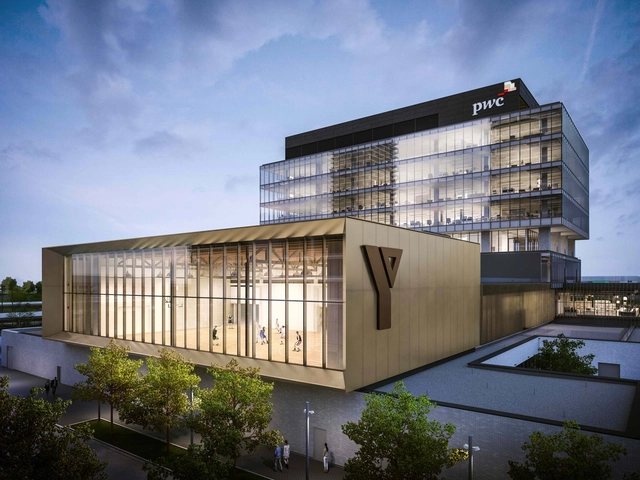
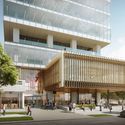
Ground has been broken on a key component of Canada’s largest urban development undertaking, in the form of a 236,000 square foot mixed-use tower in the City of Vaughan, designed by Toronto-based firm Diamond Schmitt Architects. Situated at the core of SmartCentres Place with easy access to nearby retail and commercial spots, the tower will serve as the new home of PwC Canada, in combination with a 100,000-square-foot YMCA, a 20,000-square-foot public library, 10,000-square-foot community space and 3000 square feet of retail.
The PwC-YMCA Tower further illustrates the architectural quality and urban design excellence that is a hallmark of this smart, pedestrian-friendly precinct, explained Donald Schmitt, principal at Diamond Schmitt Architects.
https://www.archdaily.com/874441/diamond-schmitts-mixed-use-tower-embodies-largest-urban-development-in-canadaOsman Bari
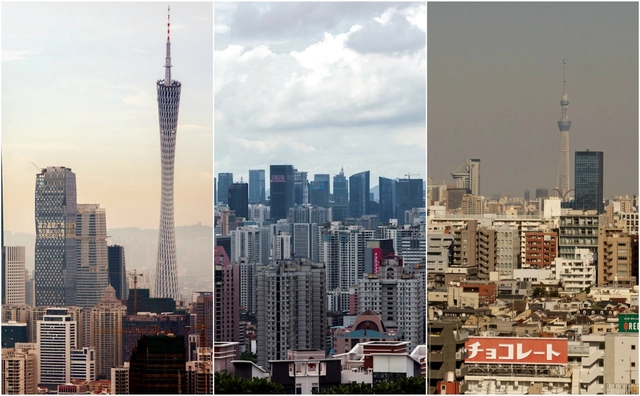
There’s a lot that the presence of skyscrapers can say about a city. They can be indicators of anything from wealth to modernization to density, or a combination of all three, depending on where you look. This potential to observe trends in a city through the height of its buildings makes data on those buildings valuable to a multitude of industries, so companies like Emporis conduct and distribute research on topics like the newest, tallest, and most expensive buildings in the world. Keep reading to find out about the ten tall cities that are home to the largest number of skyscrapers—as defined by Emporis' definition of a building that is 100 meters or more.
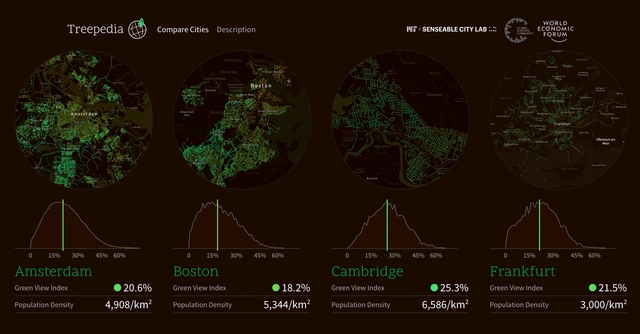
Users can compare their green canopy to cities across the world. Image Courtesy of MIT Senseable City Lab
Researchers at the MIT Senseable City Lab have launched a new platform using Google Street View data to measure and compare the green canopies of major cities across the world. Treepedia, created in collaboration with the World Economic Forum, is an interactive website which allows users to view the location and size of their city’s trees, submit information to help tag them, and advocate for more trees in their area. In the development of Treepedia, the Senseable City Lab recognizes the role of green canopies in urban life, and asks how citizens can be more integral to the process of greening their neighborhoods.
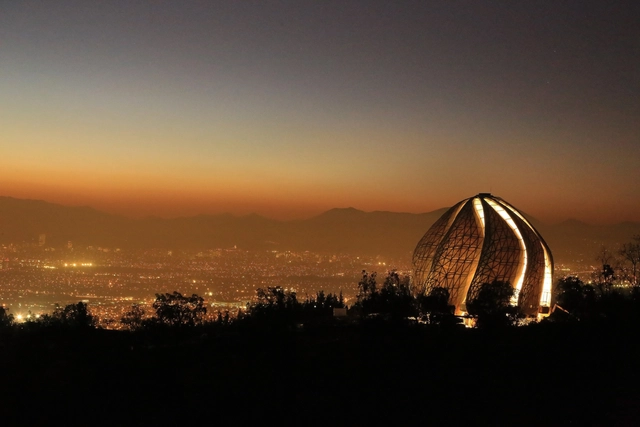
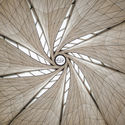
Located in the foothills of the Andes Mountains outside Santiago, Chile, the domed building was designed and built using computer modeling, measuring, and fabrication software, as well as custom glass, all of which culminated in nine monumental veils that frame an open worship space for up to 600 visitors. Completed in 2016, the project took 14 years to realize.
With the ever-expanding global population, cities around the world today are caught in the midst of mass urbanization; the resultant problems are the topic of much of the current architectural discourse. From these trends stems the challenges of providing adequate amounts of both housing and urban green space, and by extension, providing adequate food production. In order to address this divide, Toronto will soon be home to The Plant – a mixed-use community revolving around sustainable residential urban farming and social responsibility in the Queen Street West neighborhood.
“It might seem extreme, but we orientated this entire project around our connection to food,” says Curated Properties partner Gary Eisen, one of the developers involved in the project. “It’s our guiding principle and the result is a building that lives and breathes and offers a better quality of life to the people who will live and work here. The Plant is a community that fits with the foodie culture that has come to define Queen West.”
https://www.archdaily.com/867594/torontos-urban-farming-residence-will-bridge-the-gap-between-housing-and-agricultureOsman Bari









.jpg?1501783920&format=webp&width=640&height=580)
.jpg?1501783945 "Courtesy of Penda")
.jpg?1501783890 "Courtesy of Penda")
.jpg?1501783772 "Courtesy of Penda")

.jpg?1501783920)

_photo_Khristel_Stecher.jpg?1496668517 "© Khristel Stecher")
_photo_Khristel_Stecher.jpg?1496668741 "© Khristel Stecher")
_photo_Khristel_Stecher.jpg?1496668571 "© Khristel Stecher")
_photo_Khristel_Stecher.jpg?1496668531 "© Khristel Stecher")