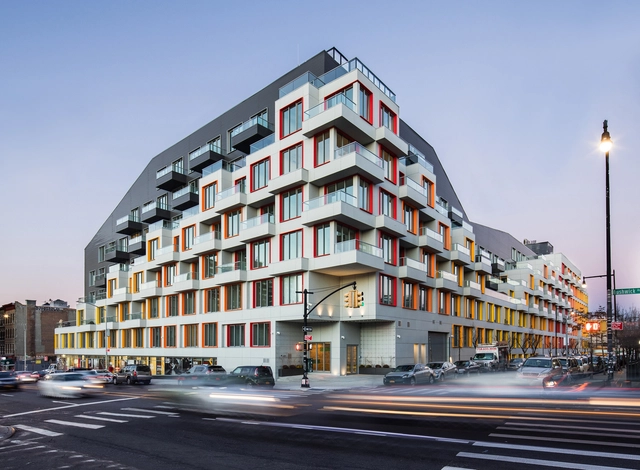
There’s a new kid on the block making noise in Brooklyn’s thriving Bushwick neighborhood. At 7-stories tall, 500 units, and occupying 489,000 square feet of real estate, The Rheingold is one of the most expansive multi-family developments in Brooklyn to date.
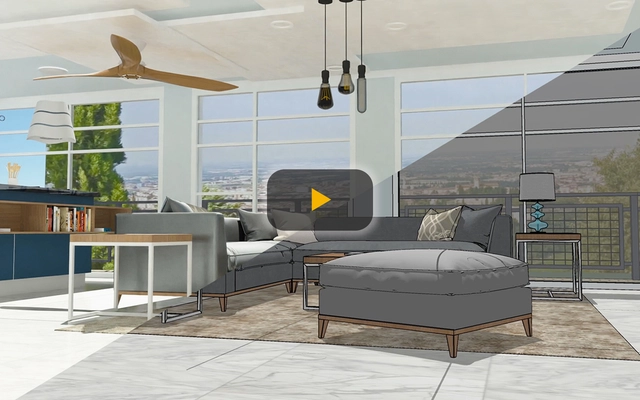
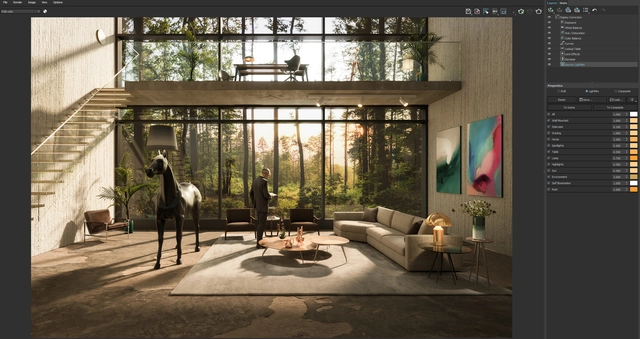
Using the new Light Mix in V-Ray 5, artists and designers can visualize ideas even faster and more effectively. Now, from just one single render, you have the power to create as many images as you can imagine, at a speed that simply wasn’t possible with earlier versions.
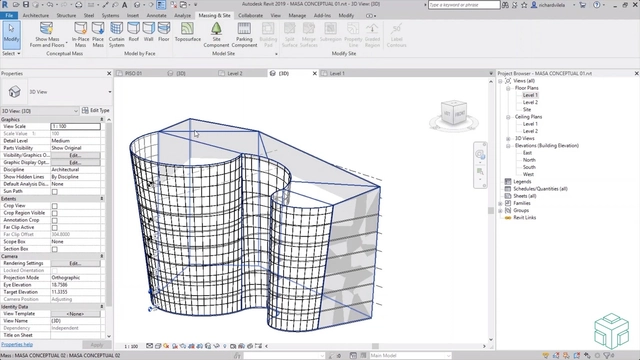
We have all heard the term BIM within the fields of architecture and construction. But have you ever wondered why its use has grown so much in recent years? The BIM (Building Information Modeling) methodology has simplified the work of the different actors in the world of architecture and construction; it not only facilitates the design process but also simplifies the general analysis of the building, minimizing errors.
Thanks to the BIM methodology, it is possible to work collaboratively and maximize efficiency in the management and administration of projects of any size. Architects and engineers work with parametric plans and models, called 3D smart objects.
https://www.archdaily.com/940315/learn-revit-bim-with-this-free-online-introductory-courseGoPillar Academy
Architects don’t make buildings. Architects make drawings of buildings. But of course, someone has to make the building. The construction industry is one of the largest economic sectors and we all interact with the built environment on a daily basis, but the actual work of getting a building from drawing to structure has barely evolved over the decades. While the rest of the world has moved into Industry 4.0, the construction sector has not kept pace. Architecture has begun to embrace some digitalization. After all, not many of us work with mylar on drafting tables anymore. So with the architecture industry’s everlasting link to the construction industry, will the latter pick up some new technological tricks by association? And when it does, how will that change the role of the architect?
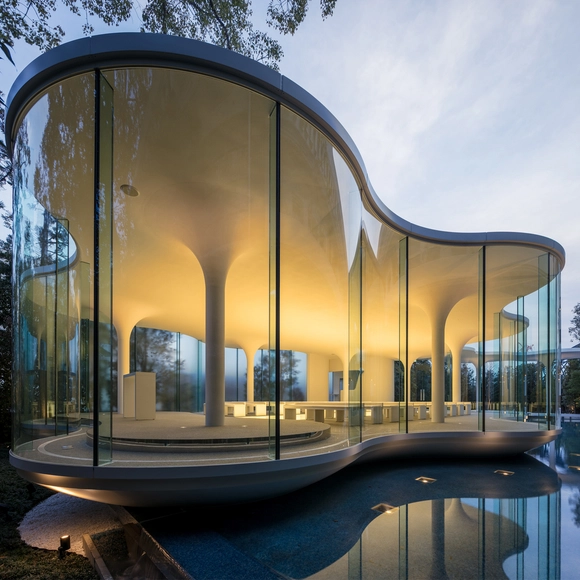
Cloud of Luster Wedding Chapel / Tetsuya Matsumoto. Image Courtesy of A' Design Awards
It's never too early to enter for a chance to showcase your work to a global audience; enter your design now for an A’ Design Award. The international competition was "born out of the desire to underline the best designs and well-designed products" of designers, architects, and innovators from all design fields. Among other design competitions and awards, the A' Design Award stands out for its exceptional scale with over 100 design categories.
Architects have always been asked to breathe new life into ancient architectures inherited from the past or into historical –often monumental– artefacts that no longer respond to the customs and needs of the contemporary society. Nevertheless, the ancient architectures tell our story, therefore deserve to be restored with interventions that bring along a hint of modernity and show the trace of the design activity. The Architecture for Heritage course has been created on these premises.
Videos
Project: Quatuor, Brussels, Belgium designed by Jaspers-Eyers Architects and developed by Befimmo. Image Courtesy of DeMicoli & Associates
The exchange of ideas and concepts is a major part of any large modern building project. Architects, investors, general contractors and sub-contractors all use different tools to form both mental and modeled images of what the end result will look like. When some parties rely on renders or fly-throughs and others use 2D drawings, it can lead to communication difficulties. Reynaers discovered that by bringing together collaborators from different disciplines in its Avalon, the fog of misunderstandings evaporates and difficult decisions can be made on the spot.
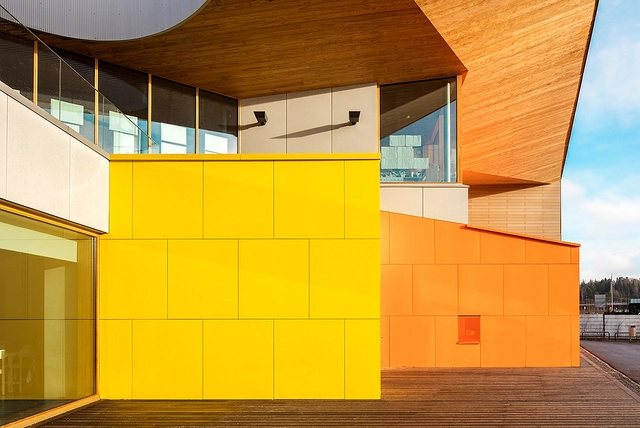
Panelized facade systems are a popular exterior design element across multiple project types in today’s architecture. Different material and color options create unique and completely customized exteriors versatile enough to fit almost any design style. Ensuring the vision comes to life exactly as imagined, however, can be tedious with Revit’s or ARCHICAD’s innate capabilities alone. The time-consuming manual process of specifying the design, pattern, colors, and fabrication methods of a panelized facade can be simplified and made more intuitive with Steni’s BIM elements.
Since the moment the first all-glass building was proposed by Mies van der Rohe, architects have sought the perfect façade. A well-designed façade system is often the difference between a mediocre and a spectacular design impression. Budget, aesthetic, and performance constraints require careful balancing. While every project is different, developing a decision-making framework greatly simplifies the process.
Building Together is a global digital event for architects and engineers hosted by GRAPHISOFT. Join them online on July 8-9th as they showcase how GRAPHISOFT software is changing the way architects and engineers work together through disruptive BIM workflows.
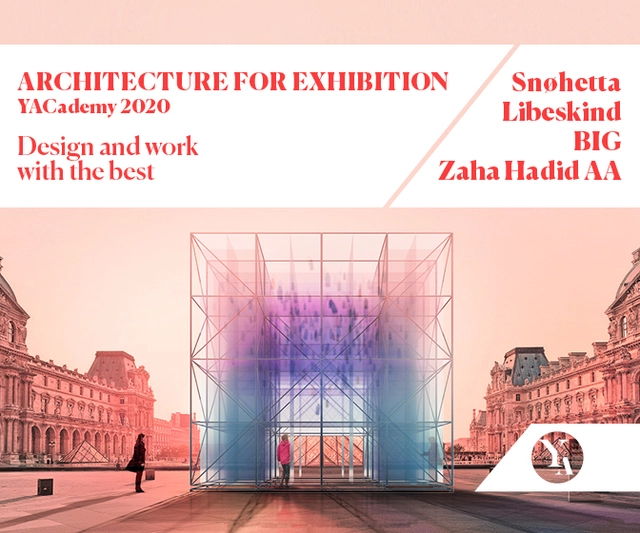
The dialogue with history is certainly one of the most exciting topics for reflection that a designer may approach. Among the several academic and post-graduation courses, YACademy is certainly one of the most prestigious contexts within which designers may explore the topic of history and past architectures. Located in the historical heart of one of the oldest and most important Italian cities, YACademy offers a refined specialization program in "Architecture for Heritage". Now in its third edition, the course offers the opportunity to discuss the topic with some of the most refined design firms, with the likes of Alberto Veiga, Kazuyo Sejima, David Chipperfield and Benedetta Tagliabue.
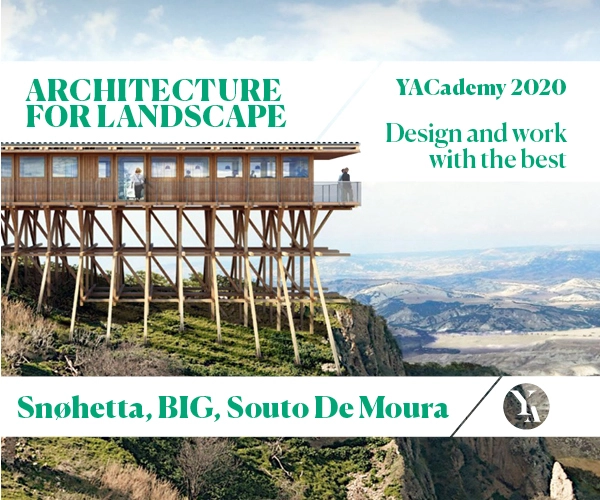
“Architecture for Landscape” was created on these premises: it aims to train designers to meet the diverse needs of transforming territories. The course encourages an attentive and productive dialogue with the surrounding landscape to respond to the needs of clients' unique contexts. Via a thorough analysis of the natural world, light and geomorphological terrain features, the designers will become increasingly able to reconnect human design to the natural environment. In becoming inspired by the landscape, they can design outstanding, sustainable and impressive architecture.
While first developed as a practical power source during the 1950s, solar systems were too expensive for mainstream use until the 1970s. Starting from their early use to power Cold War era military satellites, silicon photovoltaic solar cells achieved their first commercial success in places where electricity was not available, such as lighthouses and off-shore oil rigs.
The last decade has seen an enormous influx of new technologies in architecture. Ever since CAD revolutionized traditional pen and paper design methods, many forms of technology have found a comfortable place in the architect’s workflow. While the human experience has always been the cornerstone of architecture, innovations for the AEC industry aren’t always “people-centric”. High barriers to entry, whether that be price or ease-of-use, have kept many practitioners from realizing their full potential.
Due to the recent pandemic situation, for the courses held between September 2020 and January 2021, YAC has taken extraordinary measures to ensure the best performance of its activities and to facilitate access to its courses. In accordance with safety criteria, participation in the courses will be possible through a remote connection. Five scholarships are available for the full cost of enrollment and the full rules of the course are available on YAC's website.
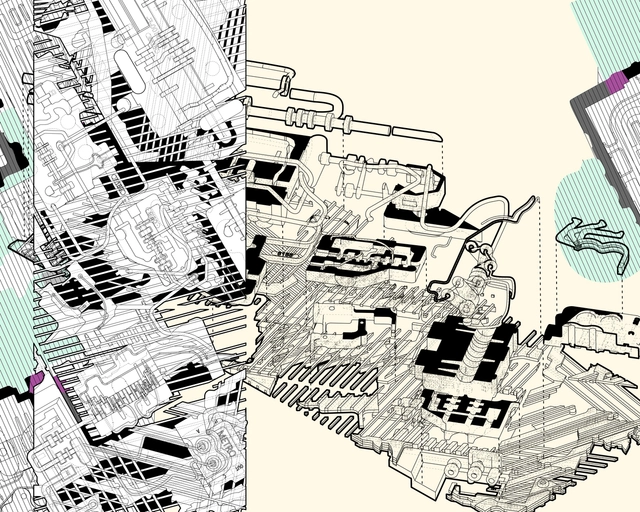
SCI-Arc’s Master of Science in Design Theory and Pedagogy is a one-year program that addresses the growing ambiguity between practice and academia and prepares students for the new hybrid career that has emerged in architecture: the architect-theorist-educator. As shifting political, social, cultural, technological, and ecological paradigms redefine architecture, the program speculates on how architects will practice in the future, interrogates current pedagogical models, and focuses on what needs to be rethought, advanced, or challenged. One of five master’s programs within SCI-Arc EDGE, Center for Advanced Studies in Architecture, Design Theory and Pedagogy prepares young architects for new forms of architectural practice.
As an important birthplace and practical realization of the concept of "Lucid waters and lush mountains are invaluable assets", Lishui has assumed the responsibility of exploring the construction of contemporary ShanShui cities. With this background in mind, we hope to build upon Lishui’s status as a “traditional Chinese ShanShui city” to organically combine the spirit of Chinese ShanShui together with contemporary waterfront urban development concepts. The goal is to methodically construct a Shanshui city spatial framework in order to set a model image for this city typology, to create a new ShanShui city lifestyle, and to explore contemporary, sustainable urban planning strategies.


Ai_Qing_Courtesy_of_KPF.jpg?1592356426&format=webp&width=640&height=580)


.jpg?1592595648&format=webp&width=640&height=580)



.jpg?1591973323&format=webp&width=640&height=580)
.jpg?1591036359&format=webp&width=640&height=580)