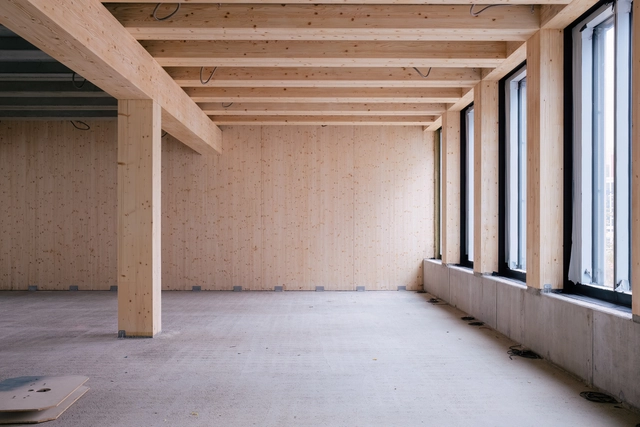
The Built by Nature Prize 2025 is now open for entries. The award recognizes completed projects – new builds, renovations, and extensions – that demonstrate leadership in sustainable timber and bio-based construction. Aimed at highlighting global best practices, the Prize offers architects and project teams an opportunity to gain international visibility and contribute to the evolving conversation around regenerative building. The deadline for submissions is 23:59 CET on June 8, 2025. Entries can be submitted via builtbn.org/prize.
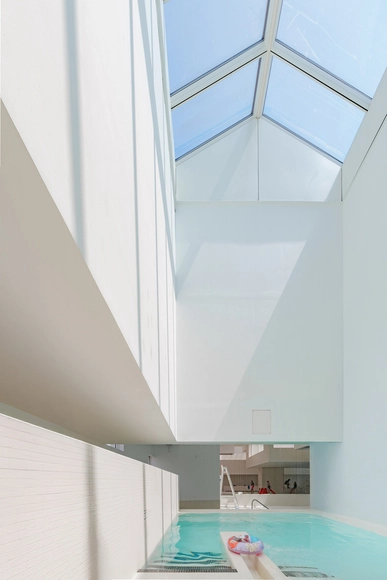
Les Bains des Docks Aquatic Centre. Image Courtesy of VELUX Commercial
Condensation, maintenance, and humidity are three familiar challenges that continue to test the buildings we design and construct. Whether stemming from climate conditions, limited airflow, or the specifics of construction detailing, these factors affect not only the durability of materials but also the everyday comfort and performance of inhabited spaces. When the setting is an aquatic center or an indoor swimming pool, the demands are even greater. The constant presence of steam, moisture accumulation, and the risk of mold can compromise both energy efficiency and the user experience. In such environments, ventilation and access to daylight, beyond their aesthetic value, become essential tools for maintaining equilibrium, enhancing indoor comfort, and ultimately improving how the space is perceived and utilized.
https://www.archdaily.com/1030573/letting-the-sky-in-4-case-studies-of-daylight-solutions-in-aquatic-architectureEnrique Tovar
Videos
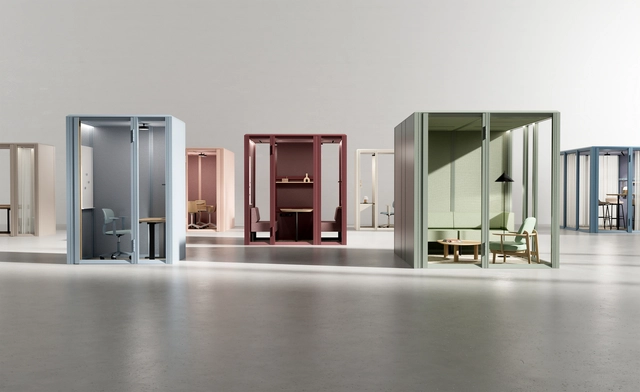
Mute’s latest pod family features 30 models in 11 sizes, designed to accommodate 1 to 8 people.
Mute, a pioneer in adaptable office architecture, has introduced Modular Pods—the largest and first truly adaptable pod collection on the market. Offering an unparalleled variety in sizes, unlimited customization options, and leading accessibility solutions, Mute'Modular Pods set new benchmarks for the entire product category.
Founded in 1870, The Metropolitan Museum of Art — affectionately known as The Met — is one of the world's most important and visited museums, housing over two million works that span five millennia of human history. Located in the heart of New York City, alongside Central Park, the museum is celebrated for its vast and diverse collections, ranging from ancient Egyptian art to European masters and contemporary works. Paintings, sculptures, documents, historical artifacts, and multimedia pieces make up an ensemble that demands meticulously planned exhibition solutions to ensure both preservation and the effective communication of their historical and artistic value.
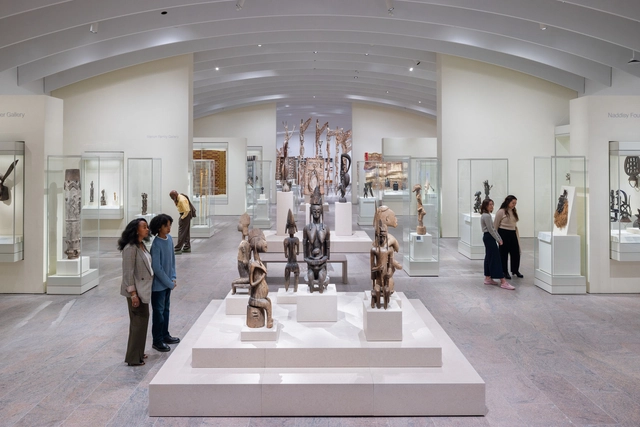
In 2021, The Met launched one of its most ambitious projects: the renovation of The Michael C. Rockefeller Wing, dedicated to the Arts of Africa, the Ancient Americas, and Oceania. With a $70 million investment, the initiative encompasses curatorial reorganization, oriented by a more regional and historical approach, as well as architectural interventions. The modernization of the galleries includes enhancements to natural lighting, accessibility improvements, and the incorporation of contemporary museographic systems, designed to optimize conservation and the interpretive experience for visitors.
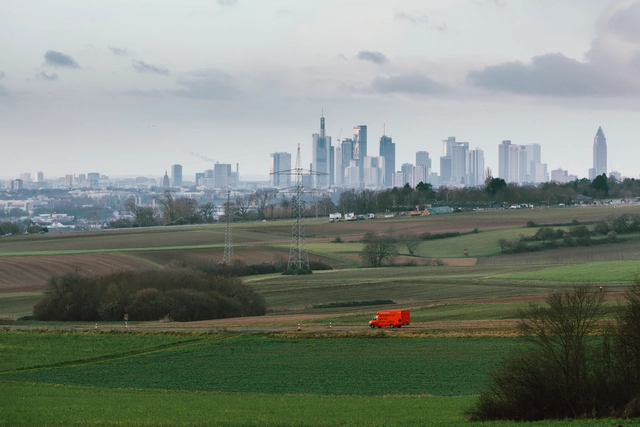
The German Design Awards 2026 are now open for submissions worldwide. Under the theme Connecting Global Excellence, the awards extend an invitation not just to enter, but to engage—with ideas, with places, with people. This year's open call is accompanied by a new series of Design Masterclasses in Zurich and Copenhagen, created in collaboration with DAAily platforms, offering spaces to share, learn and connect. As the Frankfurt RheinMain region prepares to take the global stage as World Design Capital 2026, the German Design Awards 2026 reflect the full spectrum of design today—from visionary innovation to cultural continuity. They are both a mirror of our diverse design landscape and a catalyst for forward-thinking transformation across all disciplines.
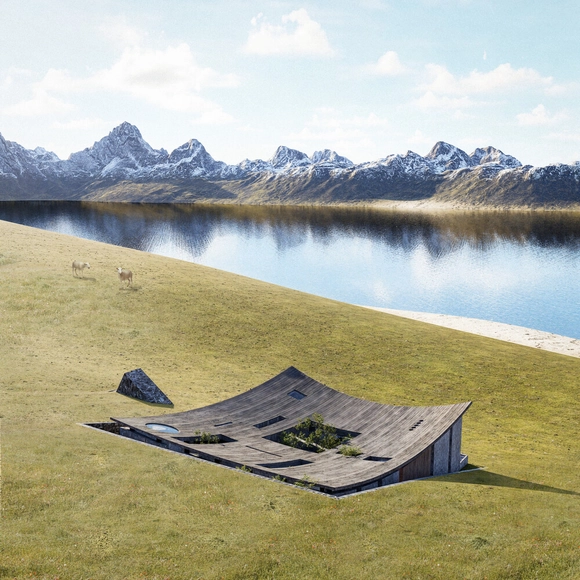
Buildner has announced the results of its third annual Home of Shadows international architecture ideas competition. The competition series is designed to focus on the vital interplay between light and shadow in creating functional and inviting living spaces. It highlights the importance of natural light in home design, essential for creating comfortable, inviting, and practical environments.
Light is viewed as a language through which architects communicate emotions in their designs, with shadows playing an equally significant role in influencing the ambiance of a space. The balance between light and shadow allows for the creation of spaces with depth and texture, setting different moods for various purposes. Often, this balance can be achieved through the strategic placement of windows and doors.
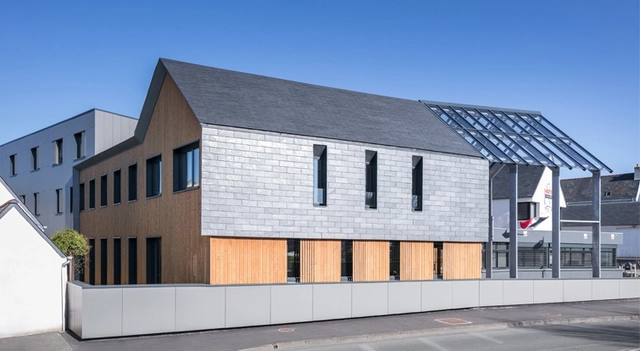
Haut Pays Bigouden / Pierre Brulé. Image Courtesy of Cupa Pizarras
Inspired by experimental solar houses developed after the 1970s oil crisis, the Passive House certification emerged in the late 1980s as a response to growing concerns about energy efficiency and the environmental impact of the construction industry. Its goal is both simple and radical: to reduce heating and cooling demands to an absolute minimum through passive strategies, controlled mechanical ventilation, and an extremely efficient building envelope — eliminating the need for complex or expensive systems.
The choice of exterior cladding materials plays a strategic role in achieving this performance. Poorly designed surfaces, thermal bridges, or sealing failures can undermine the building's entire thermal logic, especially in demanding climates. This is where rainscreen systems stand out: by creating a ventilated air gap between the cladding and the structural wall, they promote continuous airflow, manage moisture, and enhance thermal stability. Materials that combine performance, durability, and visual appeal are rare — and natural slate from Spain's Cupa Pizarras is a standout solution.
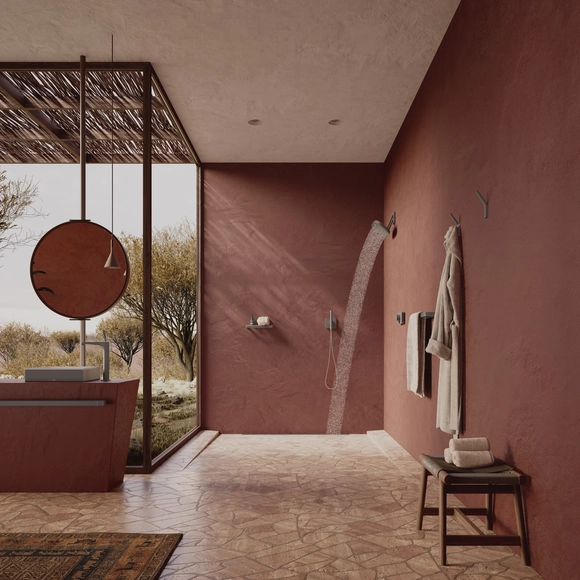
Water is a catalyst for sensory experiences: it manifests through direct contact when touched, through its presence when heard or seen reflected, and through its transformations—whether by temperature, from cold to heat, or by state, from liquid to vapor. It is a key element in designing for the senses, capable of evoking physically and emotionally perceived atmospheres. As Juhani Pallasmaa suggests, architecture does not address the eye alone but involves the whole body and sensory memory. The bathroom, in particular, concentrates much of the physical and emotional experience associated with water, opening up possibilities for creating environments that intensify that sensory connection. Consequently, the question arises: what elements or concepts should shape this space so that the shower experience escapes the ordinary?
https://www.archdaily.com/1030230/the-bathroom-reawakened-contemporary-design-concepts-for-a-sensory-experienceEnrique Tovar
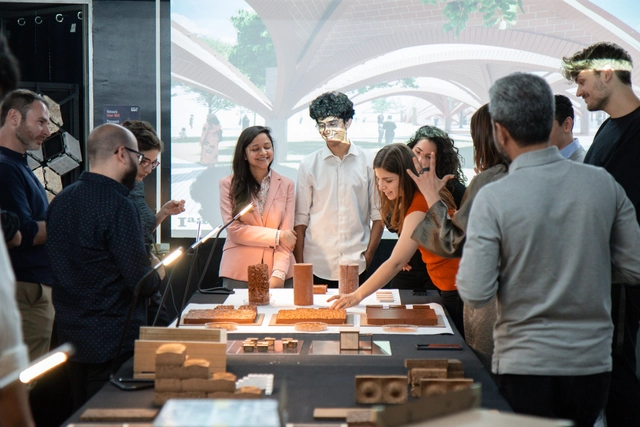
The Master in Advanced Architecture at IAAC celebrates its 25th anniversary as one of the most forward-looking programs in architectural education. Founded in 2000 in Barcelona, the program was created as a space for experimentation—where design meets technology, ecology and critical thinking, far from the conventions of traditional architectural training.
Over the years, the program has welcomed more than 1,000 students from over 80 countries. This international mix is no accident; it reflects IAAC's understanding of innovation as something that grows through dialogue, diversity and shared ambition. The result is a network of professionals working at the intersection of design, research, and systemic change.
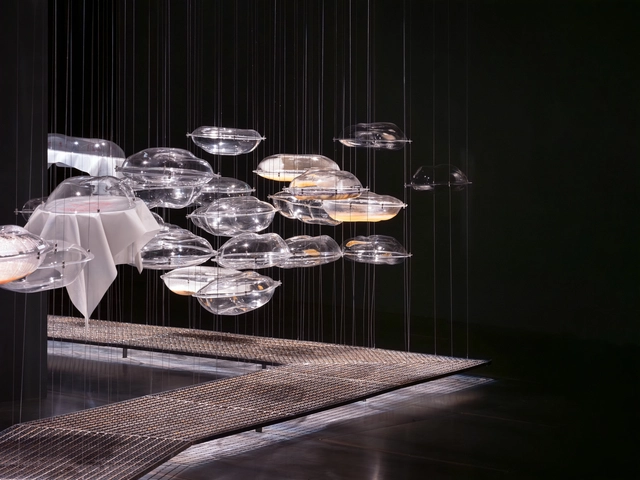
A pavilion in a Biennale serves as a platform for cultural expression, allowing a nation to articulate its architectural identity while responding to global challenges. These national exhibitions reflect how each country interprets the event's central theme through the lens of its own landscapes, histories, and future aspirations, reinforcing architecture's ability to act not only as a built discipline, but also as a catalyst for reflection, transformation, and dialogue. In this context, Montenegro's contribution resonates with particular force. Titled Terram Intelligere: INTERSTITIUM, the pavilion draws on the concept of a newly understood anatomical system of fluid-filled spaces running throughout the human body, facilitating connection and exchange. Once considered dense and inert, the interstitium is now revealed to be a network of dynamic interrelation — a metaphor that the curators use to reframe architecture as an active, living inquiry into natural, artificial, and collective intelligence, in tune with this edition's theme: Natural. Artificial. Collective.
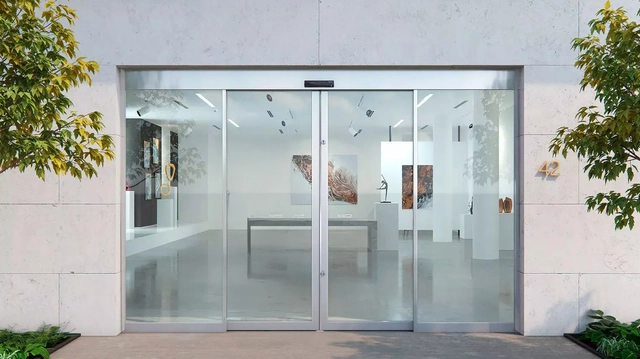
SL500 Sliding Door System. Image Courtesy of ASSA ABLOY
Throughout history, doors—and later automatic doors—have served a far greater purpose than merely marking an entrance or exit. They define thresholds, guide the flow of movement, and subtly shape the way people interact within a space. We can trace their evolution back to the 1st century, when Heron of Alexandria devised a steam-powered door—an early example of technology merging with architecture. Since then, contactless automatic door systems have incorporated technological advancements that enhance operation and redefine their role within buildings. Today, they are integrated across a range of building types and scales, acting as transitional elements that enhance comfort, energy efficiency, and the overall quality of indoor spaces.
https://www.archdaily.com/1029498/the-greener-future-of-automatic-door-systems-a-shift-in-design-and-performanceEnrique Tovar
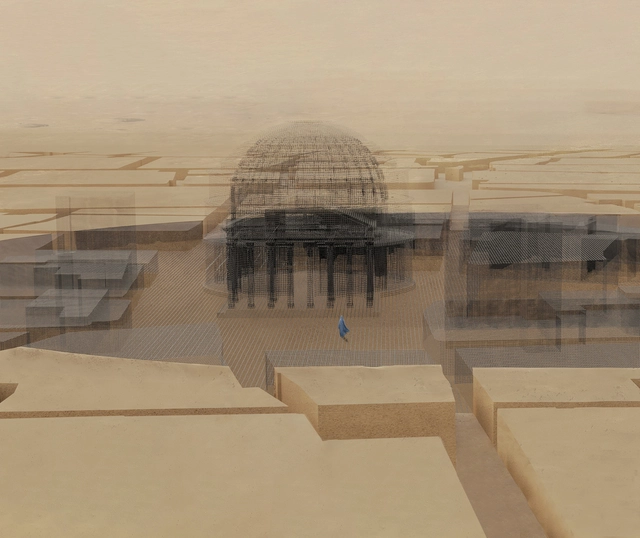
Buildner has announced the results of its competition, the Last Nuclear Bomb Memorial No.5. This competition is held each year to support the universal ban on nuclear weapons. In 2017, on the 75th anniversary of the 1945 bombings of Nagasaki and Hiroshima, which claimed the lives of over 100,000 people, the United Nations adopted the Treaty on the Prohibition of Nuclear Weapons.
In recognition of this treaty, Buildner invites conceptual designs for a memorial to be located on any known decommissioned nuclear weapon testing site. The conceptual memorial is intended to reflect the history and ongoing threat of nuclear weapons, aiming to promote public awareness of nuclear disarmament.
The challenge is intended to bring attention to the history and dangers of nuclear weapons. Participants are tasked with designing a space that commemorates nuclear warfare victims and conveys the need for a nuclear-free future. As a 'silent' competition, submissions are not allowed to include any text, titles, or annotations.
The next edition of this competition, the Last Nuclear Bomb Memorial No. 6, has been launched with an early bird registration deadline of June 12, 2025.
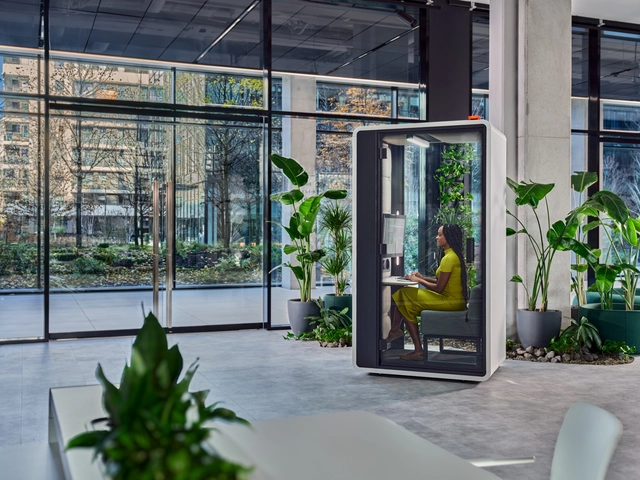
Without dedicated spaces for private focus — a crucial element of effective collaboration — even the brightest idea dims. The office must indeed balance connectivity with personal space most brilliantly, letting employees move between tasks without friction. Booths like hushFree.XS, hushFree.S.Hybrid, and hushFree.S are part of this, together forming a trio of single-person booths that meet the majority of the office's need for individual workspaces.
HushFree.XS, hushFree.S.Hybrid, and hushFree.S work as a complete system, ensuring employees have the right conditions for productive solo work throughout the day, proving to be invaluable tools for architects in designing spaces that completely address varied employees needs. Booths like these make premium refuges for focused calls, impressively immersive video conference spaces, and deep-focus bubbles.
An ancestral house in the rural village of Willendorf in der Wachau stands watch over a grove of fruit trees. The trees have stood for generations and, to this day, provide the fruit which is the basis of the family business. Bound on one side by the river Danube and the other by valley's edge, both house and grove have witnessed the passage of countless seasons together. With each progression between darkness and light, from winter to summer, comes the inevitability of change.
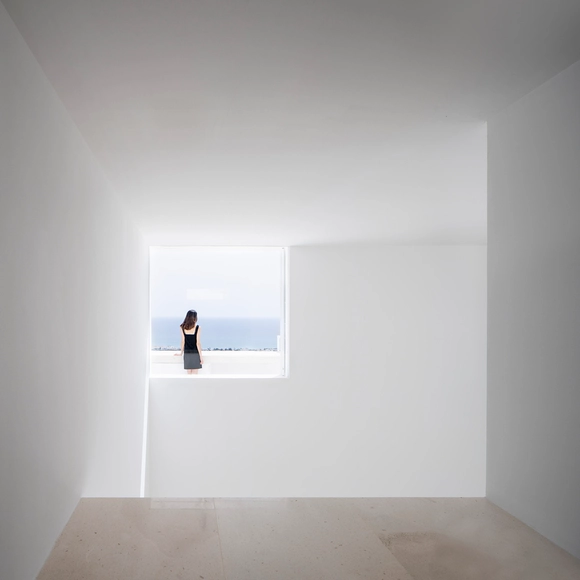
In The Poetics of Space, French philosopher Gaston Bachelard proposes reading architecture as a lived experience, in which each environment carries emotional and symbolic meaning. Reflecting on the house, he places particular importance on thresholds (windows, doors, stairs, attics, basements) as zones of transition and rupture between the intimate and the open, the known and the unknown. For him, the window is not merely a functional opening, but a point of dreaming and contemplation: it is through the window that the inhabitant projects themselves into the world. This perspective inspires a sensitive approach to architectural work, in which boundaries are not limited to separation, but articulate imagination, memory, and desire.
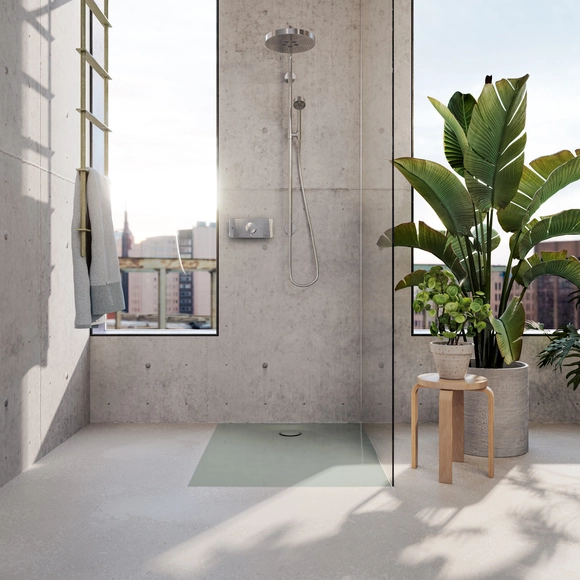
Paradoxically, the bathroom is usually both the most compact room in a house and the one with the greatest technical complexity: it's where electricity, cold and hot water networks, sewage, ventilation, and often gas converge. As such, its design must be optimized to accommodate pipes, valves, drains, and connections without compromising aesthetics or functionality. The strategic placement of plumbing points, accessories, cabinets, and lighting should aim to make the space efficient and functional, ideally transforming these typically compact areas into comfortable and visually appealing sanctuaries. Every decision matters — from product selection to the installation height of a shower tray.
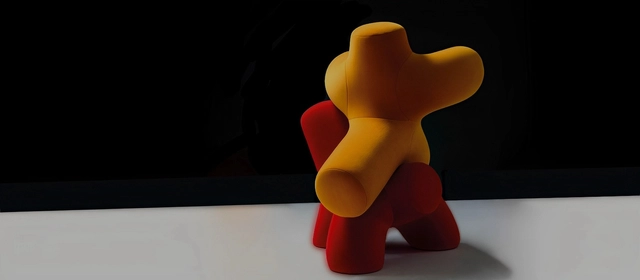
Buildner is pleased to announce the results of its third annual Architect's Chair Competition, which received excellent ideas from around the globe. Buildner has published two books on the topic, highlighting key ideas and outstanding projects from its past editions. With registration now open, we invite you to share your vision of the ideal chair by September 18th—submit your entry here.
Chair design exemplifies the interdisciplinary nature of architecture, showcasing architects' ability to adapt skills and sensibilities across scales and contexts, blurring the lines between architecture, design, and art. This versatility empowers architects to explore new ideas and challenge conventional notions of chair aesthetics, materials, and technology.
The Master's Programme on Sustainable Cities blends hands-on experience with academic insights from the Norman Foster Foundation's global network of experts. Co-directed by Norman Foster, President of the Foundation, and Professor Kent Larson, Director of the City Science Group at MIT Media Lab, the programme places students at the forefront of urban innovation. Each year, students immerse themselves in three pilot cities, engaging directly with local planners and managers to address urgent urban challenges.
Following the success of this year's pilot cities in Africa, the 2026 edition of the programme expands its geographical horizons to span three continents: Asia, Europe and Latin America. The pilot cities will be announced in the upcoming months.