
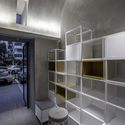

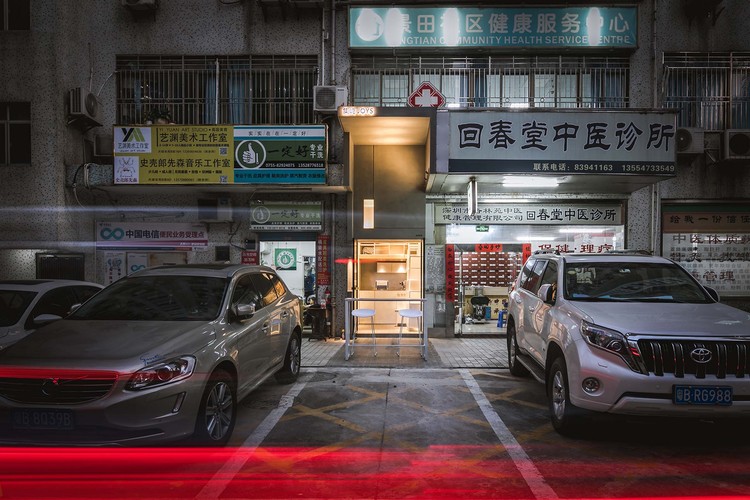
-
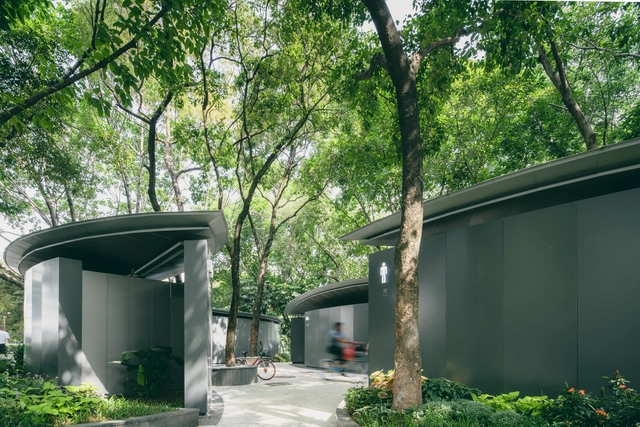
Architects: Onexn Architects
- Area: 9 m²
- Year: 2019
-
Manufacturers: XIN ZHONG YUAN
-
Professionals: Essence Atelier, PUDI


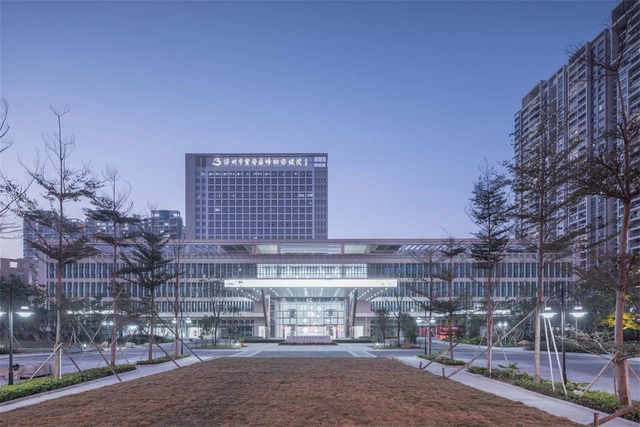
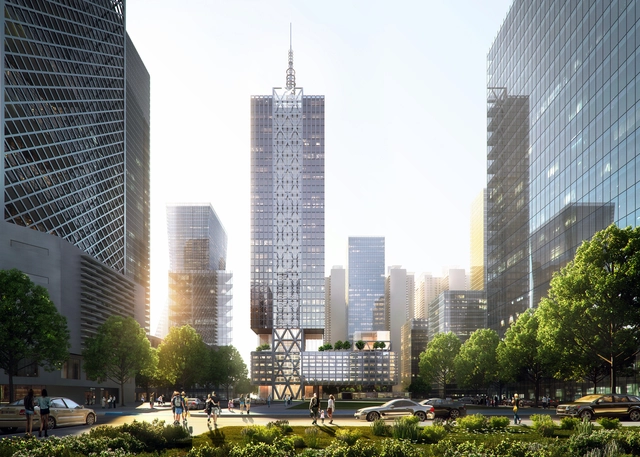
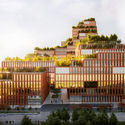
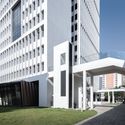
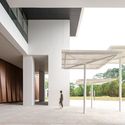
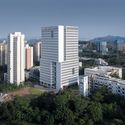
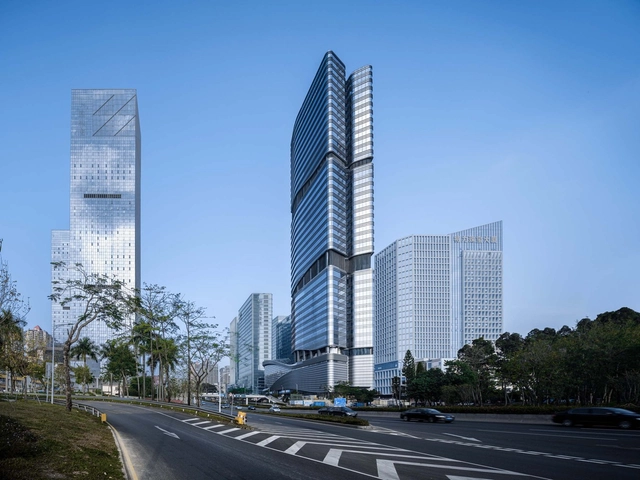
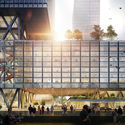
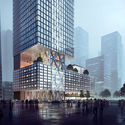
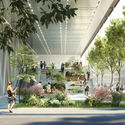
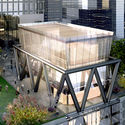
Hytera, one of the world's leading radio and communication systems manufacturers, has selected SOM to design its global headquarters, in Shenzhen, China. Integrated within the context, the project joins other emerging technology enterprises in the city and introduces a new typology of office space, as well as activates the surrounding public space.

.jpg?1594343170)
What happens when the sensor-imbued city acquires the ability to see – almost as if it had eyes? During the 2019 Shenzhen Biennale of Urbanism\Architecture (UABB), titled "Urban Interactions," Archdaily is working with the curators of the "Eyes of the City" section at the Biennial to stimulate a discussion on how new technologies – and Artificial Intelligence in particular – might impact architecture and urban life. Here you can find all the information about the “Eyes of the City” section, curated by Carlo Ratti, Politecnico di Torino, and SCUT - including exhibits, events, and project's blueprints.
For some years now, a key issue in European debate has catalysed the attention of economists, sociologists, technologists, policymakers and trade unionists: Industry 4.0. Established in Germany in 2012 and initially discussed in an almost exclusively technological key, the issue has overwhelmed the political agenda of the main European economies, stimulating industrial policies and state support, but also provoking heated debates on the future of work and on the new relationship between factory and society.
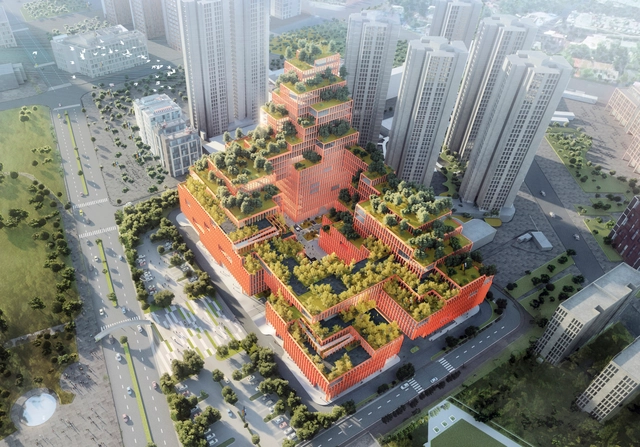
Stefano Boeri Architetti has won the international competition for the construction of the largest and most innovative Rehabilitation Centre in Shenzhen, China. With his Chinese office, SBA was selected by a jury composed of local and international figures such as Peter Cook and Sou Fujimoto. Planned to be built in the next three years, the project will put in place “a set of green terraces and overlapping spaces in a sustainable system combining nature, architecture and biodiversity and including internal gardens dedicated to rehabilitation”.
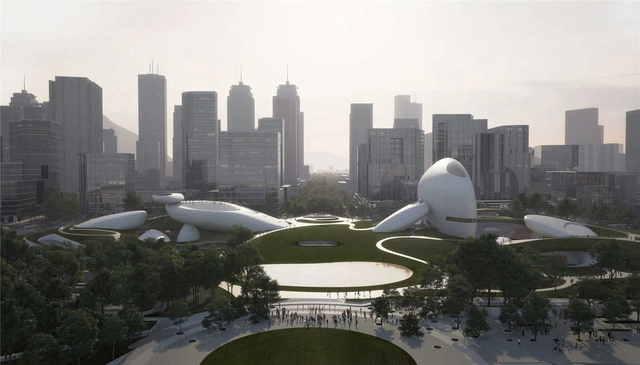
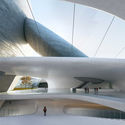
MAD Architects has unveiled its design for the Shenzhen Bay Culture Park along the waterfront in Shenzhen, China. The masterplan puts in place a 51,000 square meters cultural complex that includes the Creative Design Hall, the Shenzhen Science and Technology Museum, and a vast public green space.
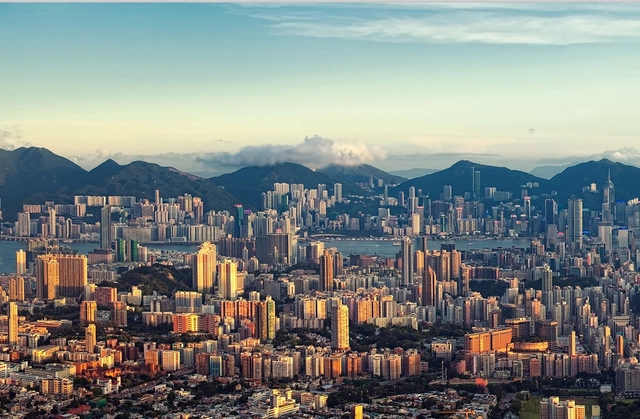
The relevance of the Greater Bay Area within international geo-political assets is steadily increasing. Relying on projections and observations by Li Shiqiao, Rem Koolhaas and Manuel Castells as main bases for his interpretation of this process, Thomas Chung investigates the future layout that president Xi Jinxing’s project will delineate, involving nine urban areas of the Pearl River Delta and the two Special Administrative Regions of Hong Kong and Macao. In order to construct a range of possible futures, the author critically traces the various political turns that affected the Pearl River Delta since the 80s Open Door Policy up to affirming its contemporary role on a global scale.
For the 2019 Shenzhen Biennale of Urbanism\Architecture (UABB), titled "Urban Interactions," (21 December 2019-8 March 2020) ArchDaily is working with the curators of the "Eyes of the City" section to stimulate a discussion on how new technologies might impact architecture and urban life. The contribution below is part of a series of scientific essays selected through the “Eyes of the City” call for papers, launched in preparation of the exhibitions: international scholars were asked to send their reflection in reaction to the statement by the curators Carlo Ratti Associati, Politecnico di Torino and SCUT, which you can read here.
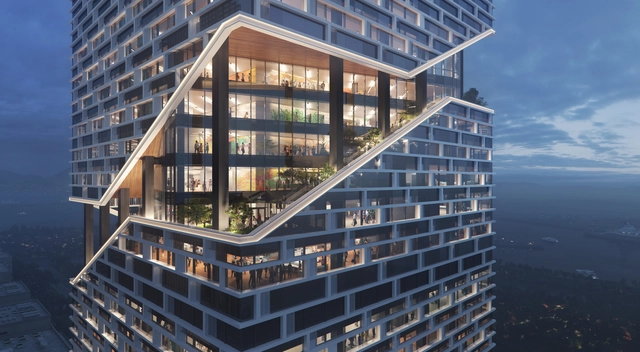
NBBJ has been selected to design the new Vivo headquarters, introducing the next generation of work environments that integrates nature, health, and equal access to amenities. Located in Shenzhen’s Bao’an district, the 32-story spiraling tower highlights an innovative design that embraces the urban-coastal site and reflects the company’s values. Construction began in May 2020 and is scheduled for completion by fall 2025.

Highlighting proposals presented in international competitions, this week’s selection of Best Unbuilt Architecture combines various functions, diverse conceptual approaches, and innovative ideas. Submitted by our readers, these projects include an awarded pavilion in Vietnam, a cantilevered-bridge proposal in New York, and a sustainable botanical center in Poland, amongst others from all over the globe.
With a lot of projects coming in from China, we have compiled in this roundup, a design for a children’s hospital and education building, as well as a national science center encompassing research buildings, laboratories, exhibition spaces, commercial use, and public facilities. On another hand, for the first time, a virtual project is featured, celebrating the LGBTQ community with a vessel of a layered and labyrinthine system of baths, showers, and pools.
 Autonomous vehicles can read Baidu POIs (Point of Interests) and digitally enable a physical interaction between riders and surrounding landscapes. (Image © Shuman Wu, Huai Kuan Chung, Carmelo Ignaccolo for the UABB 2019 “Transforming the landscapes of mobility”)
What happens when the sensor-imbued city acquires the ability to see – almost as if it had eyes? During the 2019 Shenzhen Biennale of Urbanism\Architecture (UABB), titled "Urban Interactions," Archdaily is working with the curators of the "Eyes of the City" section at the Biennial to stimulate a discussion on how new technologies – and Artificial Intelligence in particular – might impact architecture and urban life. Here you can find all the information about the “Eyes of the City” section, curated by Carlo Ratti, Politecnico di Torino, and SCUT - including exhibits, events, and project's blueprints.
From horse-drawn trolley to railways to the automobile, innovations in transportation have shaped not only the way our cities develop but also how people experience the surrounding landscapes while in motion. When in the 5th millennium BCE, Sumerians developed the first freely-spinning wheel with axle mechanism, this invention not only brought significant military advantage during the city-state wars in Mesopotamia but it also boosted the development of cities.



















.jpg?1594343170)