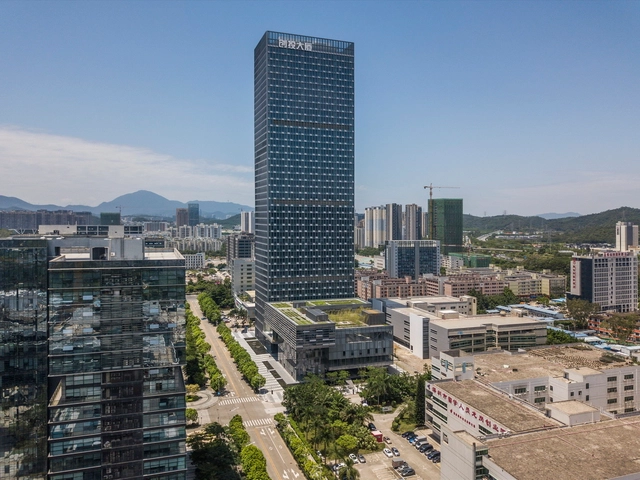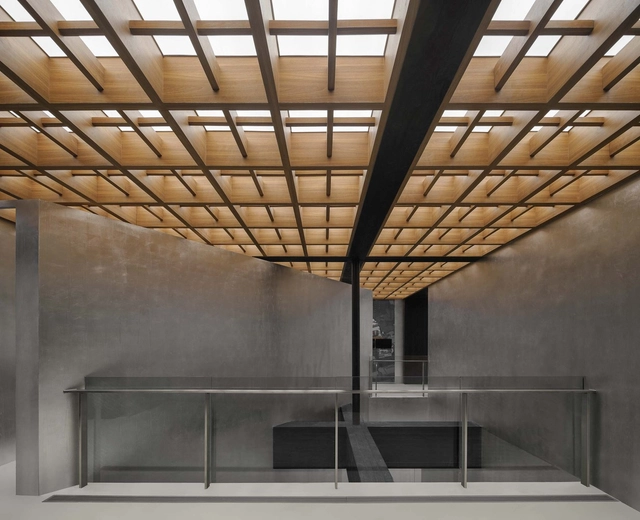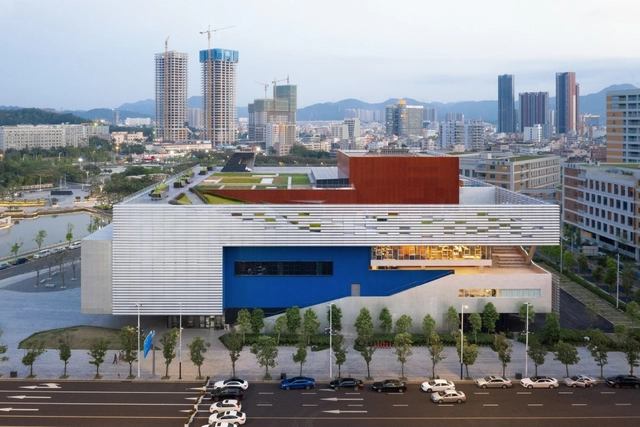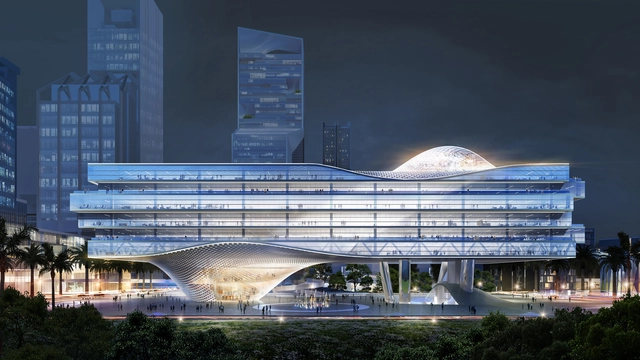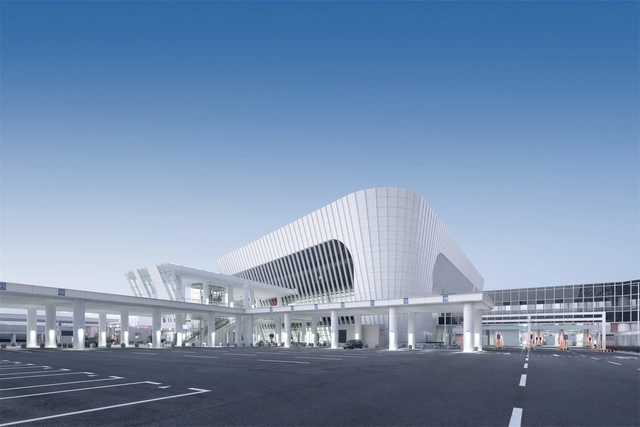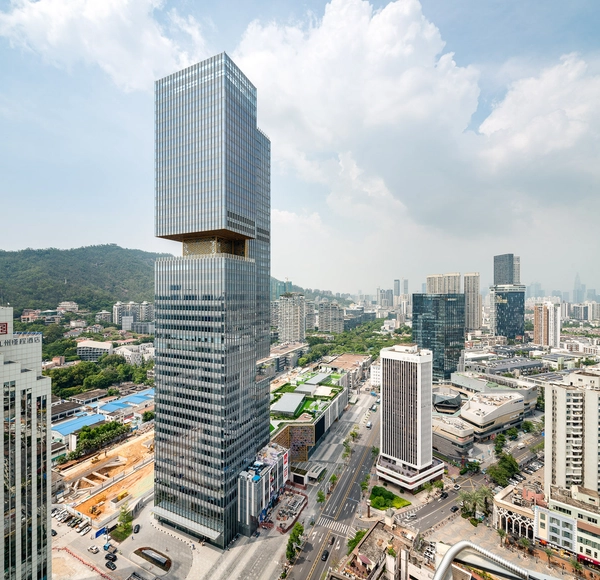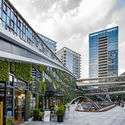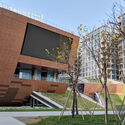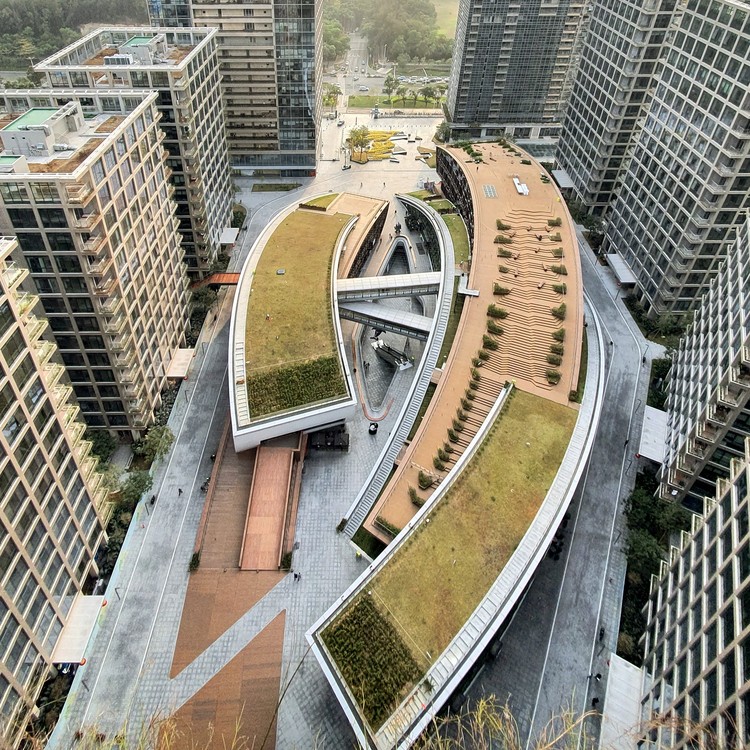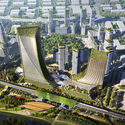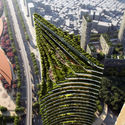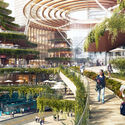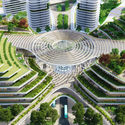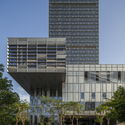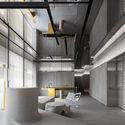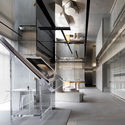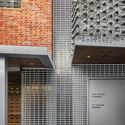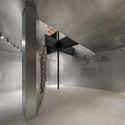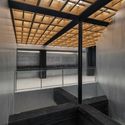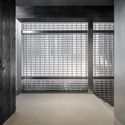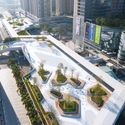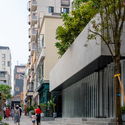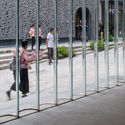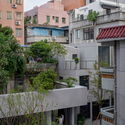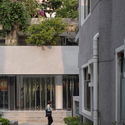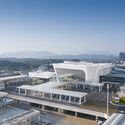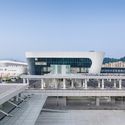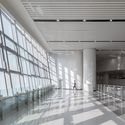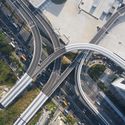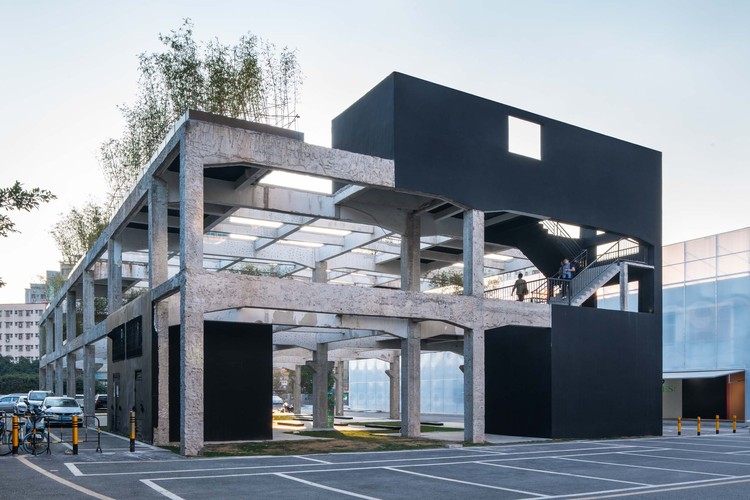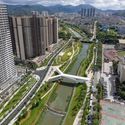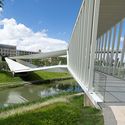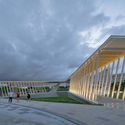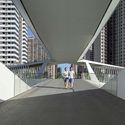

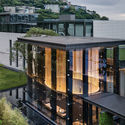


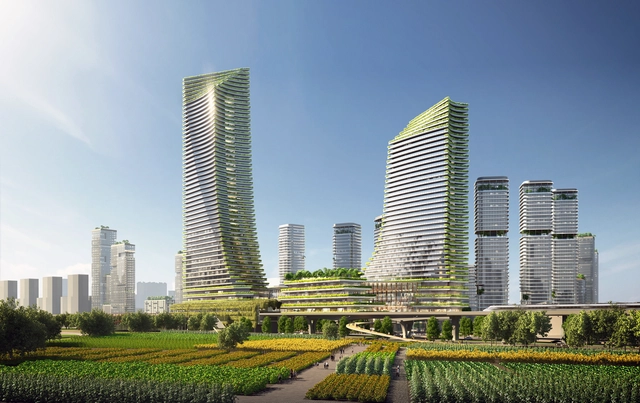
The OMA-Designed CMG Qianhai Global Trade Center has broken ground in Shenzhen. Unveiled during the inauguration ceremony for Qianhai Significant Projects in China, the mixed-used 360,000 square-meter development will create a Micro-City environment, blurring traditional boundaries between building and city.
Our interpretation of the world is mediated through a variety of mechanisms that have been at the center of architectural and urban debate for a long time; the role of hearing in perceiving and recognizing the surrounding environment is fundamental and of growing scientific interest. Studies that investigate the psychological effects of noise produced by large infrastructures, such as airports, highways, railways, are multiplying. Santiago Beckdorf argues that it is possible, through the tools of design, to reverse the paradigm according to which urban development is inevitably connected to a weakening of the natural environment in which it is inserted.
For the 2019 Shenzhen Biennale of Urbanism\Architecture (UABB), titled "Urban Interactions," (21 December 2019-8 March 2020) ArchDaily is working with the curators of the "Eyes of the City" section to stimulate a discussion on how new technologies might impact architecture and urban life. The contribution below is part of a series of scientific essays selected through the “Eyes of the City” call for papers, launched in preparation of the exhibitions: international scholars were asked to send their reflection in reaction to the statement by the curators Carlo Ratti Associati, Politecnico di Torino and SCUT, which you can read here.

Your Real Estate Interior: Noourbanographical Sample of the single bedroom/studio apartment. Source: www.flatchina.com
Can a collective agency, or mind, be traced across the urban condition? And how should we map its effects on the physical matter of our cities? A specific representation of a specific type of ‘home’ is employed as an exercise in defining the impact of a “logic of thinking that is both embodied and distributed, singular and collective.” Hélène Frichot’s proposal for “Noourbanographies” was written as a response to the call for papers of the “Eyes of the City,” well before our domestic interiors became the new public. Looking at the distance between hegemonic collectives and ecologies of subjectivities as space for action, the essay opens up to an articulate range of issues that involve matters of care, diagrammatic thinking and spaces of control.
For the 2019 Shenzhen Biennale of Urbanism\Architecture (UABB), titled "Urban Interactions," (21 December 2019-8 March 2020) ArchDaily is working with the curators of the "Eyes of the City" section to stimulate a discussion on how new technologies might impact architecture and urban life. The contribution below is part of a series of scientific essays selected through the “Eyes of the City” call for papers, launched in preparation of the exhibitions: international scholars were asked to send their reflection in reaction to the statement by the curators Carlo Ratti Associati, Politecnico di Torino and SCUT, which you can read here.
Intro GPS systems and Location Based Services give access to an important amount of data that is currently being used mostly for traffic analysis - but which, if properly processed, could open up infinite possibilities for planning.The access to these Mobility Big Data is no longer a privilege of large cities; on the contrary, it is possible to effectively apply the technologies to increasingly more diverse territories, from mega-regions to contained districts and cities. These data, when retrospectively compared to previously collected ones, lend themselves to multiple applications loosely related to the traffic issue, such as socio-demographic or economical studies. Systematica opens the doors of its laboratory to show us what are the potentials and limits of these tools, starting from a direct experience - a research project, developed in the Los Angeles area.
For the 2019 Shenzhen Biennale of Urbanism\Architecture (UABB), titled "Urban Interactions," (21 December 2019-8 March 2020) ArchDaily is working with the curators of the "Eyes of the City" section to stimulate a discussion on how new technologies might impact architecture and urban life. The contribution below is part of a series of scientific essays selected through the “Eyes of the City” call for papers, launched in preparation of the exhibitions: international scholars were asked to send their reflection in reaction to the statement by the curators Carlo Ratti Associati, Politecnico di Torino and SCUT, which you can read here.
While an overwhelming majority of the world is still fighting against COVID-19, the economic and social situation in China has shown beginning signs of a return to a new normal way of life in recent weeks. In another sign of good news, the Chinese government recently announced that the two hospitals in Wuhan that were built from ground up within 10 days would close on April 15th and the remaining 30 patients will be transferred to other hospitals in Wuhan to receive further treatment. Other regions of China have followed similar steps, also announcing the closure of temporary hospitals, showing a positive sign that the COVID-19 pandemic is finally being defeated where it first began.
We've compiled a list with the temporary hospitals constructed in the first two months of 2020, designed specifically to treat patients with COVID-19 symptoms. In total, China constructed more than 30 temporary hospitals built across the country. The speed at which these medical facilities were built was achieved through the hard work of tens of thousands of people working around the clock.
https://www.archdaily.com/937579/a-closer-look-at-the-chinese-hospitals-built-to-control-the-covid-19-pandemicMilly Mo
"The Blinkg Eye", Viktor Mayer-Schönberger, Karl-Heinz Machat, 2019
We are increasingly accustomed to relying on technologies to read and process data referring to the past, in order to interpret the present and predict the future. At the same time, a growing number of studies show that the number and types of variables governing our societies is in constant change. As the natural world reacts to change by experimenting with the evolution of new species that are not necessarily destined to survive, so we should take momentary distances from the deterministic application of data-driven predictions. Viktor Mayer-Schönberger and Karl-Heinz Machat propose a number of possible scenarios in which the Eyes of the City are made to blink from time to time, allowing for alternative modes of urbanity to be tried and tested. Half strategy, half tactic, these glitches offer the space in which to measure the agency of the unpredictable at various scales.
For the 2019 Shenzhen Biennale of Urbanism\Architecture (UABB), titled "Urban Interactions," (21 December 2019-8 March 2020) ArchDaily is working with the curators of the "Eyes of the City" section to stimulate a discussion on how new technologies might impact architecture and urban life. The contribution below is part of a series of scientific essays selected through the “Eyes of the City” call for papers, launched in preparation of the exhibitions: international scholars were asked to send their reflection in reaction to the statement by the curators Carlo Ratti Associati, Politecnico di Torino and SCUT, which you can read here.
This announcement is hereby issued for the International Competition for Urban Design of Huanggang Port Area at Shenzhen Park of Shenzhen-Hong Kong Science and Technology Innovation Cooperation Zone. Excellent design agencies at home and abroad are invited to join. We desire to solicit the most creative design scheme with the international vision and high standards.
https://www.archdaily.com/936906/call-for-entries-international-competition-for-urban-design-of-huanggang-port-area-at-shenzhen-park-of-shenzhen-hong-kong-science-and-technology-innovation-cooperation-zoneMilly Mo
How does computer programming impact the act of designing? Are digital protocols about to substitute human activity in the project of architecture, or does the human component remain an essential one - through changed paradigms? And if so, which paradigms should we refer to? Charles Driesler and Ahmad Tabbakh retrace these fundamental questions through some recent examples, and propose the application of a GAN protocol for the post-war reconstruction of Aleppo.
https://www.archdaily.com/936364/protocological-architectures-recursive-remembranceCharles Driesler, Ahmad Tabbakh