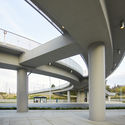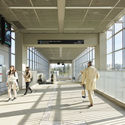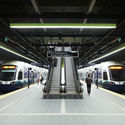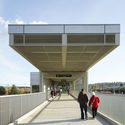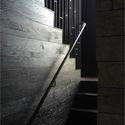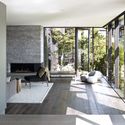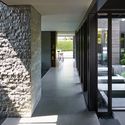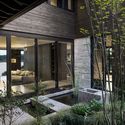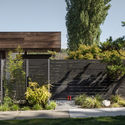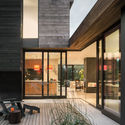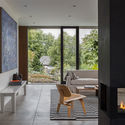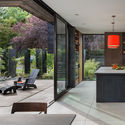



- Area: 19300 ft²
- Year: 2017
-
Manufacturers: AEP Span, Kingspan Light + Air, Kawneer, SMARTci, Thermomass


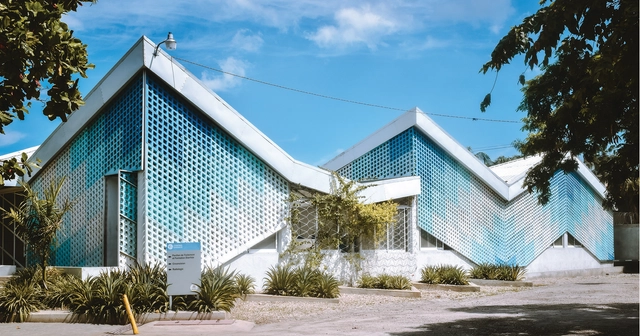
The role of the architect—and even architecture itself—in society today is changing. A lack of interest in critical social issues from a profession that holds such high responsibility within a community is a problem that should no longer be avoided.
In an exhibit currently on show at the Center for Architecture and Design in Seattle titled "In the Public Interest," Garrett Nelli Assoc. AIA challenges the profession of architecture to establish a focus on more community-engaged design. With the help of the 2017 AIA Seattle Emerging Professionals Travel Scholarship, Nelli traveled to Los Angeles, rural Alabama, Haiti, Italy and New Orleans, all the while analyzing how the built environment has the ability to influence social change.
Read on for an edited interview with Nelli about his research and how you can begin to implement elements into your design practice to help promote social change in your own communities.


This article was originally published by Common Edge as "A Seattleite Reflects on the City in the Age of Amazon."
At first, it was just a crane or two, a little urban renewal down on Westlake, a rumor that Paul Allen was cleaning things up, wanted a huge park with bike trails. I thought that might be nice and didn’t think about it again for a while.
No park happened, but one day I went down to the new Whole Foods below where I work and noticed that a whole habitat had sprung up on Westlake, an expensive Mexican chain restaurant and an expensive Italian place and an expensive Thai place, and some expensive after-work bars. I also noticed small groups of men, all white or Indian and all wearing lanyards. These groups moved around the streets, talking animatedly, freshly out of their cubicles and going to lunch, oblivious to whomever else was on the street.

.jpg?1519749758&format=webp&width=640&height=580)
Seattle’s historic KeyArena is set to receive a $600 million renovation that will transform the venue into the region’s “premier sports and entertainment destination” as part of plans to launch the city’s first-ever NHL team.
Designed by Populous, the renovation will open up the arena to its surroundings, specifically the 72-acre Seattle Center, site of the 1962 World’s Fair and home to the currently under-renovation Seattle Space Needle. As part of the project, the sports venue will be rebranded as “The Arena at Seattle Center.”
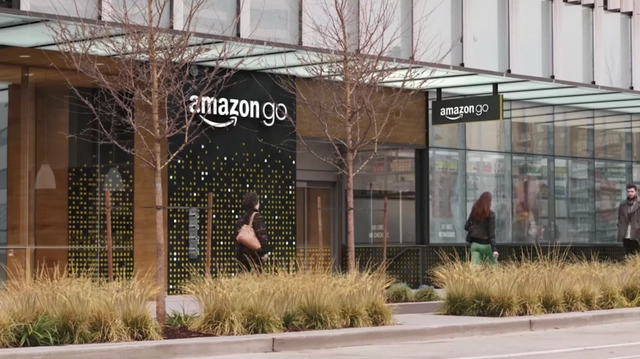
Amazon’s innovative, checkout-free convenience store concept, Amazon Go, has opened to the public in Seattle.
Located in the base of an existing Amazon office building, the 1,800-square-foot (167-square-meter) store offers grocery and convenience items. To begin shopping, customers simply scan an Amazon Go smartphone app and pass through a turnstile.
Using machine learning, computer vision and artificial intelligence technologies (incorporated into the software powering cameras and weight sensors), the store can then track the actions of customers as they remove items from the shelves, creating a virtual shopping list as they go. When a customer is finished shopping, they simply exit the store through the turnstiles and the user’s Amazon account is automatically charged.
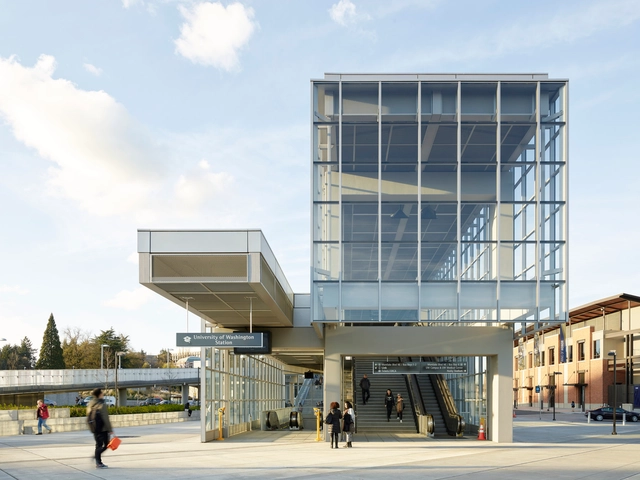
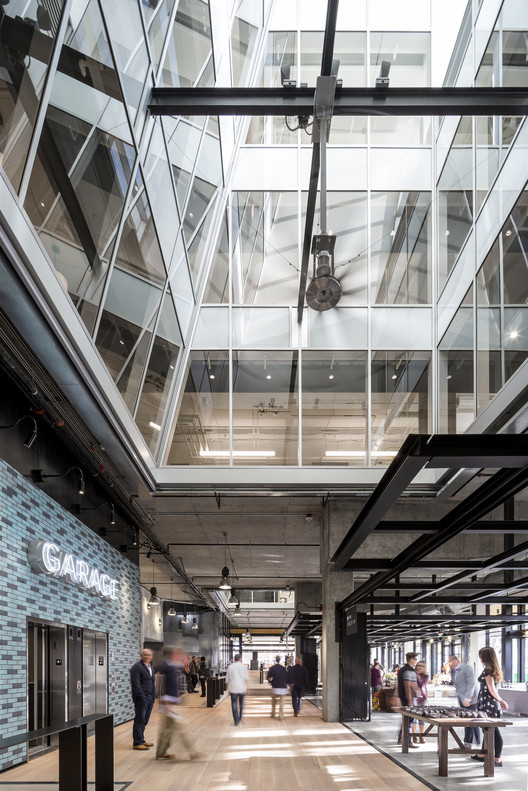

The bidding process for HQ2, Amazon's second headquarters in North America, reached a crescendo last week as the submission deadline drew close. While 238 American cities scrambled to submit proposals and run campaigns in the hope to woo Amazon—or as Slate witheringly described the process, "The Bachelor: Corporate America Edition"—the internet abounded with all sorts of discussions on the project. Does our city have what it takes to house the second headquarters? How would HQ2 affect the selected city? Why are smaller cities submitting proposals when they clearly don’t meet the criteria? Can we predict which cities are more likely to make the cut?
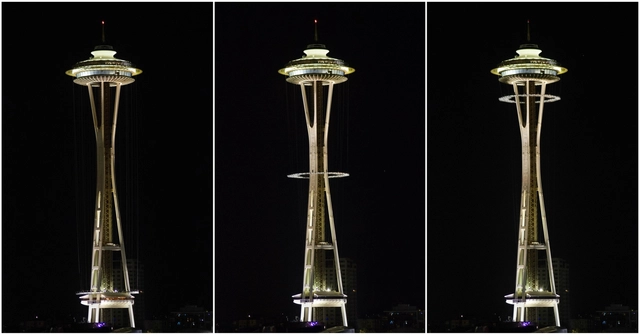
Construction has begun on the Olson Kundig-led $100 million renovation of Seattle’s most iconic structure, the Space Needle.
With work taking place 500 feet above the ground, the project demanded a unique alternative to traditional scaffolding: a 28,000 pound platform surrounding the tower that was hoisted to a position just below the observation Tophouse.
New drone footage shows how this platform, manufactured by scaffolding company Safway, was constructed at 100 feet above the ground, and then lifted into place and secured. According to Century Project, the structure represents “one of the largest lifts of Safway scaffold ever completed and it’s one of the company’s biggest scaffolds in circumference.”


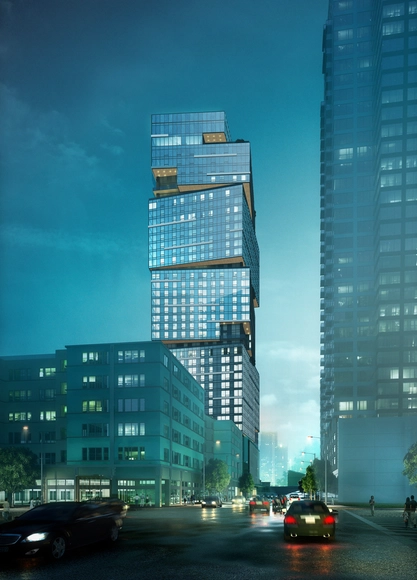
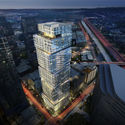
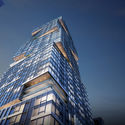
A 440 feet (134 meters) tall stack of twisting cubes, Nexus is an upcoming residential tower planned for the northern edge of downtown Seattle, as the city experiences a shortage of for-sale housing amidst a thriving rental market. Designed by local practice Weber Thompson and commissioned by Vancouver-based Burrard Development, the tower includes 367 residential units and 3200 square feet of retail, aiming to offer one of few residential opportunities in Seattle’s downtown core.
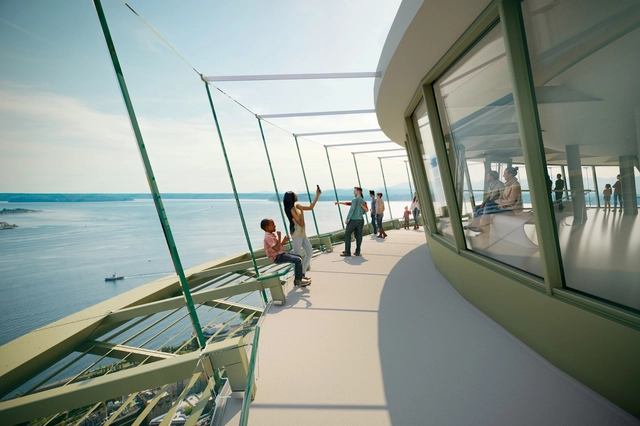
One of the world’s most recognizable landmarks, the Seattle Space Needle, is set to undergo a $100 million renovation project focused on the structure’s preservation and the enhancement of the visitor experience by opening up spaces to dramatically improved views.
Designed by Olson Kundig with interiors by Tihany Design, the scheme will intensify the Observation Deck experience through the addition of floor-to-ceiling glass on both the interior and exterior spaces, creating unobstructed 360 degree views of the Puget Sound and Seattle skyline . The renovation will also reimagine the Needle’s restaurant level by featuring a “first-of-its-kind” rotating glass floor to offer never-before-seen downward views of the structure.

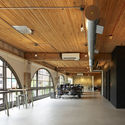

.jpg?1519749538 "Courtesy of Populous")
.jpg?1519749770 "Courtesy of Populous")
.jpg?1519749555 "Courtesy of Populous")
.jpg?1519749669 "Courtesy of Populous")
.jpg?1519749758)