-
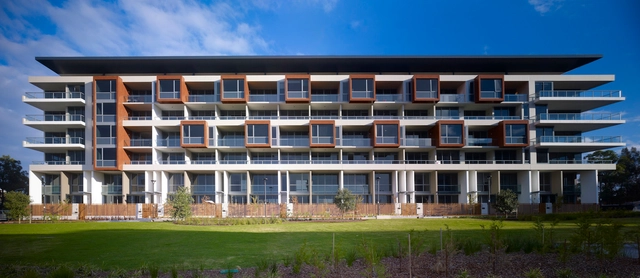
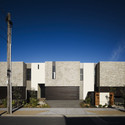
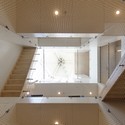
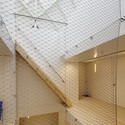
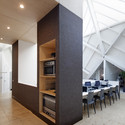
Architects: Elenberg Fraser



Responding to rising sea level predictions and elevated threats of coasting flooding, Perkins + Will design principle Brian Healy has proposed a replicable, floating residential community for Boston’s harbor: Floatyard. In this TEDx, Healy argues that not only would this radical proposal protect coastal housing investments, it could reengage Charlestown’s industrial harbor. In addition to this, Floatyard's architecture would incorporate solar energy and rainwater harvesting on its roof, as well as capitalize tidal energy from the mooring columns which anchor it.


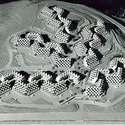
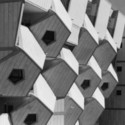
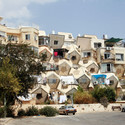
The Ramot Polin neighborhood is a housing project designed by the Polish-born Israeli architect Zvi Hecker, commissioned by the Israeli government in the euphoric aftermath of the Six Day War. The project, which resembles a beehive, is an avant-garde architectural experiment on morphology as well as construction. Since being constructed in the late 1970s, the structure has undergone extensive alteration by its tenants, provoking a debate regarding the capacity of expressive architecture to account for authentic human needs.
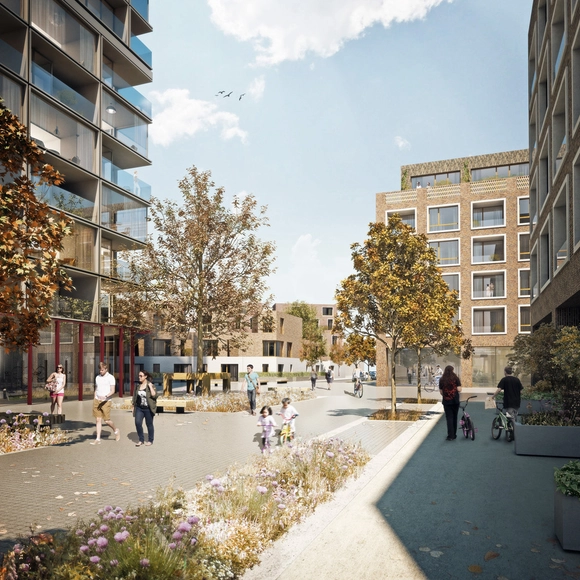
Hawkins\Brown, with Mae Architects and Grant Associates, have been appointed by London Borough of Camden to develop proposals in collaboration with residents for the potential redevelopment of the Agar Grove Estate, a major housing regeneration project for London with an estimated construction value of £55 million. The current proposal being developed includes the demolition of 112 homes and the provision of around 360 new homes, bringing the total number of homes to around 500. A range of unit types has been introduced including family terrace housing and maisonettes with gardens, as well as lateral flats with balconies. More images and architects' description after the break.


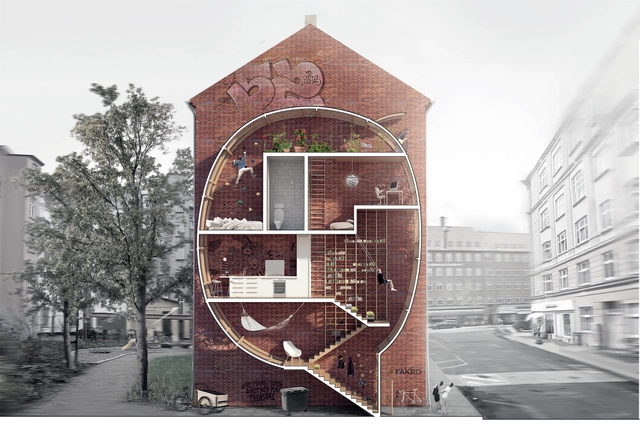
Mateusz Mastalski + Ole Robin Storjohann shared with us their 'Live Between Buildings!' proposal for the New Vision of Loft 2 Competition organized by Fakro, which aims to create a new way of living in the city. Infills between existing buildings that consist almost entirely of Fakro window technology enable a life hyper-close to nature and city life, while on the same time exploiting the qualities of the already existing blind walls of the city. With minimal footprint and facade surface, but a maximum of living quality, the Live Between Buildings! project contributes to a denser, more sustainable city of the future.
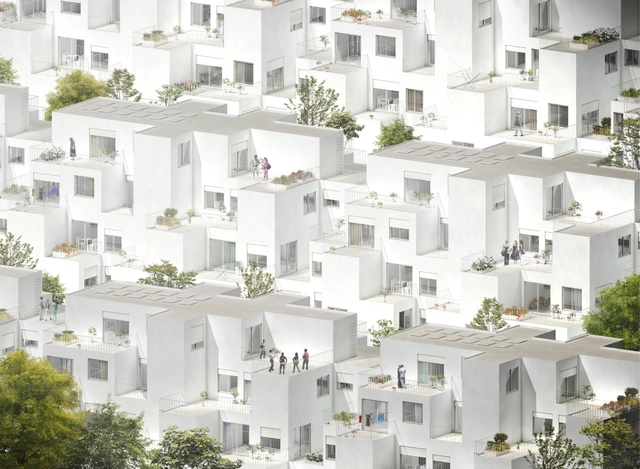
With the challenge of creating a new identity for the "Alvenaria" neighborhood in Lisbon, fala atelier defined a module with variations and multiplications which allowed the dwellings to develop iteratively. As opposed to a static solution, this 2.55m cube module sets ground rules for the organization of the interiors, while providing the flexibility for several possible typologies. More images and architects’ description after the break.













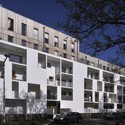
.jpg?1375739360 "© Patrick Miara")
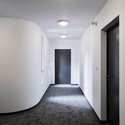


.jpg?1375738052 "© Patrick Miara")
.jpg?1375738161 "© Patrick Miara")
.jpg?1375738232 "© Patrick Miara")
.jpg?1375738251 "© Patrick Miara")