

-
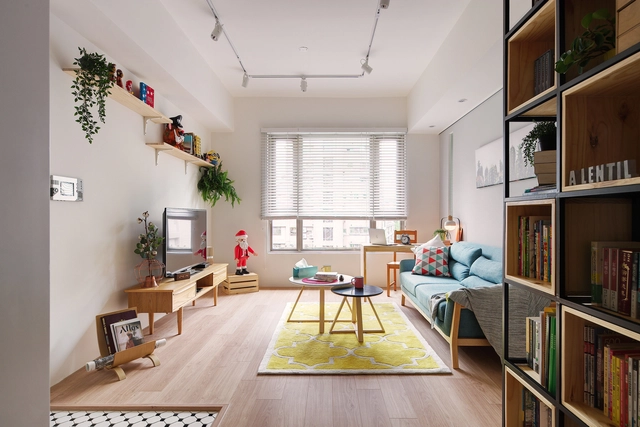
Architects: A Lentil Design
- Area: 62 m²
- Year: 2018


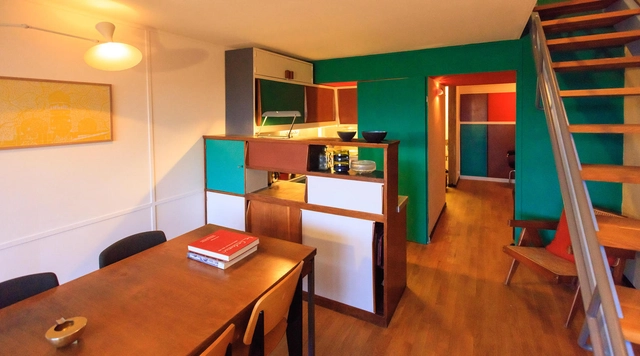
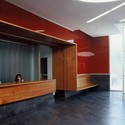
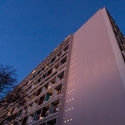
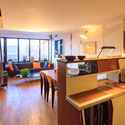
Architect Philipp Mohr has led the renovation of an apartment at Le Corbusier’s iconic Unite d’Habitation in Berlin, carried out to the architect’s original design. Over the course of two years, Mohr’s team engaged with archival research, antique shopping, and the surveying of the Unite d’Habitation Marseille in France.
Mohr purchased the apartment in 2016 and embarked on a journey of demolition, measurement, and extensive renovation including lowering ceilings and moving walls in order to recreate the interior likely envisioned by Le Corbusier.
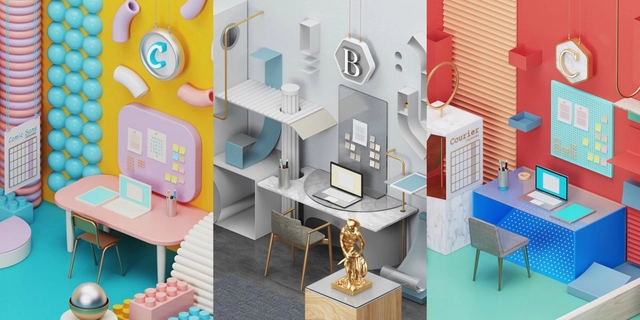
As many architects know, fonts have their own personality - so to use them as inspiration for office decors isn’t as crazy as you might think. Typography has the ability to instantly tell a narrative to the reader before needing to read the words, hence why we can take the decision-making behind which font to use in a project or scheme very seriously. They can hold the utmost importance in graphic design and architecture, as we often find ourselves displeased if the font is inefficient or disproportionate (take comic sans for example).
Seven unique, iconic fonts have been used as a base for each of the interior design projects below. Using their heritage, connotations, and style of the typography, HomeAdvisor have stylised each of the rooms to embody their identities and make us question their character.
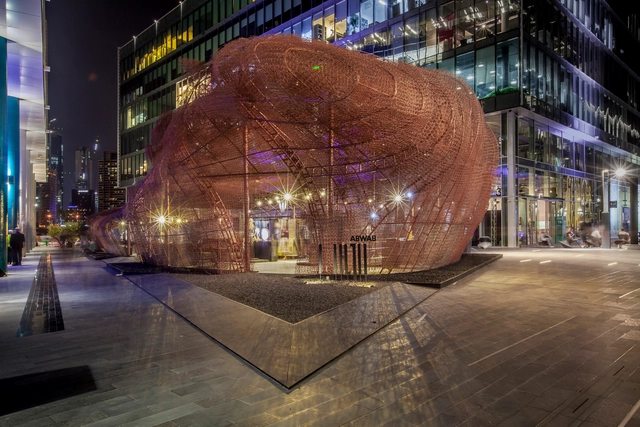
Boutique firm, Fahed + Architects have developed a temporary pavilion for Abwab 2017, the highlight of Dubai Design Week that exhibits designers’ talent from across the Middle East, North Africa and South Asia.
A commitment to the environment is at the core of Fahed + Architects philosophy, so it was necessary to create a structure out of 100% recyclable material from the local waste management company, Bee’ah. The outer skin of the pavilion is a mesh of entwined bedsprings that naturally lends itself to an organic form, floating amongst the surrounding buildings.

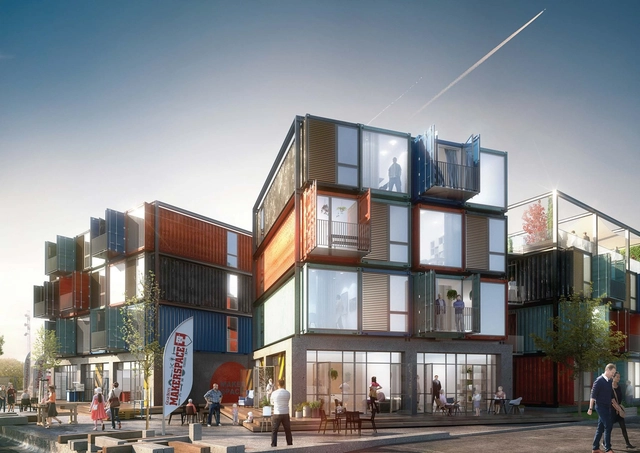
Beat Box: 30 apartments in 48 containers to transform the Danish neighborhood of Musicon, adjacent to the famous Roskilde Festival area. Designed by Arkitema Architects and constructed by Container Living, Beat Box is an integral part of Roskilde’s goal to revamp Musicon over the next 15 years by adding 1,000 jobs and 1,000 homes.
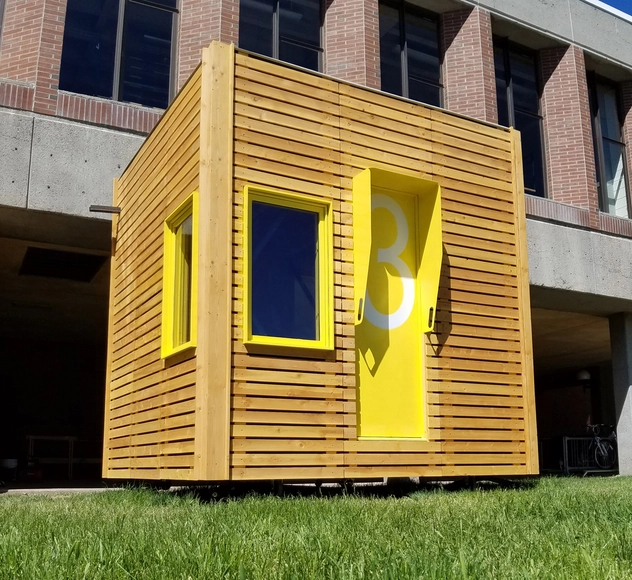
Three M. Arch. candidates at Montana State University, Jonathan Chavez, Kimball Kaiser and Adam Shilling, won an Undergraduate Scholars Program research grant which they used to fund their design-build project: B.O.B., the Backyard Office Box. B.O.B. is a kit of parts which, when put together, create a 150-square-foot dwelling space. The design team, also known as Tr3s, wanted their project to be adaptable to a variety of sites and users. B.O.B. can function as an additional space to already existing projects or standalone as a temporary shelter.

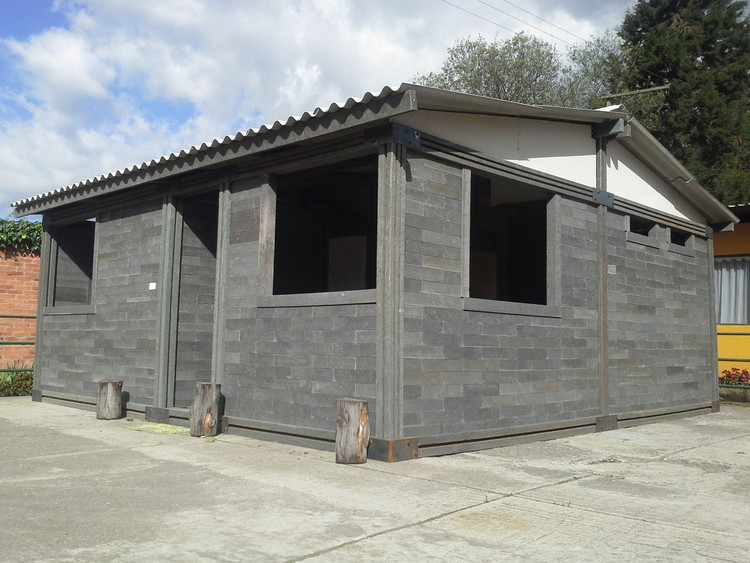
Ten years ago when Colombian Fernando Llanos tried to build his own house in Cundinamarca, he realized that moving the materials from Bogota was going to be very difficult. After mulling it over, he decided to build his house out of plastic, and after a series of trials and errors, he ended up meeting architect Óscar Méndez, who developed his thesis on the same subject, and together they founded the company Conceptos Plásticos (Plastic Concepts) in 2011.
The innovative local company managed to patent its system of bricks and pillars made of recycled plastic, which is then put together like Lego pieces in a construction system that lets you build houses up to two stories high in five days.
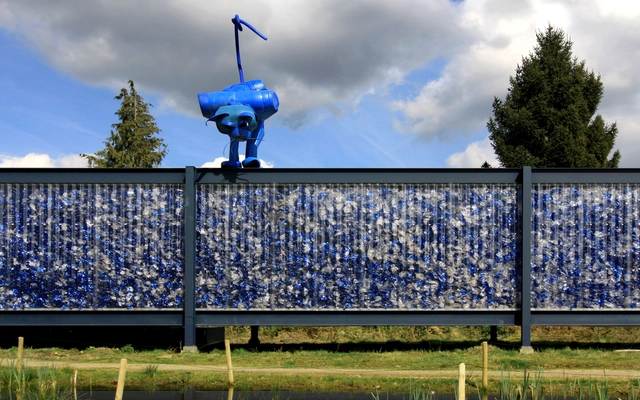
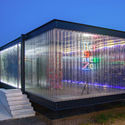
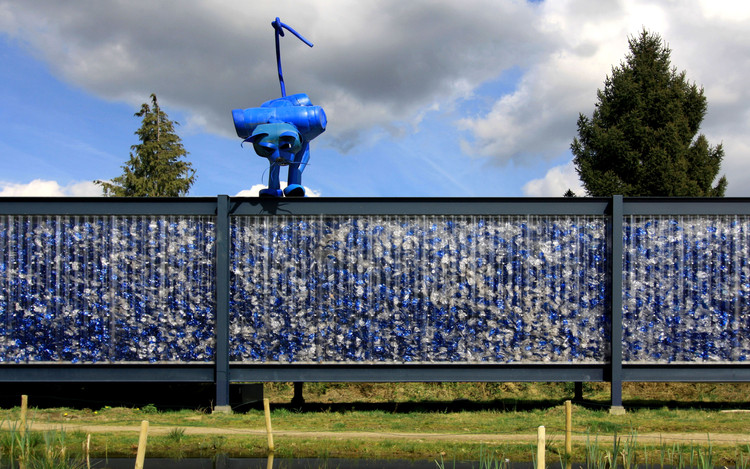
Project.DWG and LOOS.FM have unveiled their PET pavilion, a temporary structure in a community park in The Netherlands that focuses on issues of sustainable building, recycling, and waste by rethinking the ways that buildings are developed, built, and used. Specifically, the pavilion is a study of the use of plastic waste as a building material.
Using the elevated framework of Ludwig Mies van der Rohe’s Farnsworth House, the structure consists of two monumental slabs in a steel framework. “From floor to ceiling, double-walled transparent corrugated sheets hold over 40,000 plastic bottles,” with bottle caps attached to bottlenecks supporting the system.
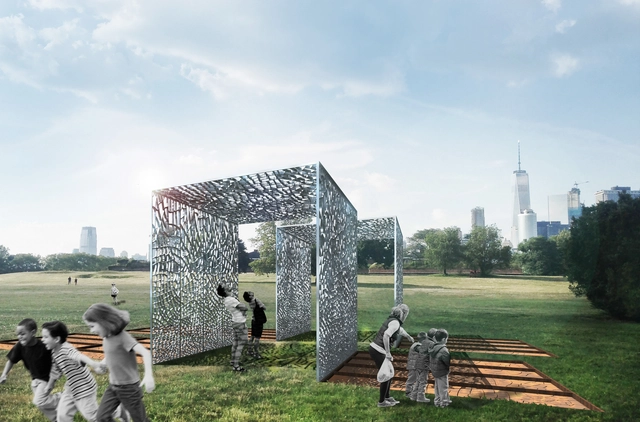
Cast & Place has been announced as the winner of the 2017 City of Dreams competition to create a pavilion for New York City’s Governors Island. Held by not-for-profit arts organization FIGMENT, the AIANY Emerging New York Architects Committee, and the Structural Engineers Association of New York, the competition called for a design to be the hub of FIGMENT’s free community arts festival during Summer 2017, based on questions of the future of New York, how design can confront environmental challenges, and how architecture can be built from recycled or borrowed material.
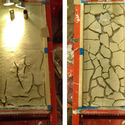
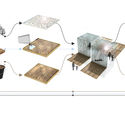
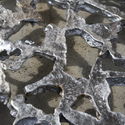
With these questions in mind, Cast & Place was conceptualized as a pavilion made entirely from waste. 300,000 recycled aluminum cans, cast into the cracks of dried clay, will form structural panels that assemble into shaded spaces for performance and play.
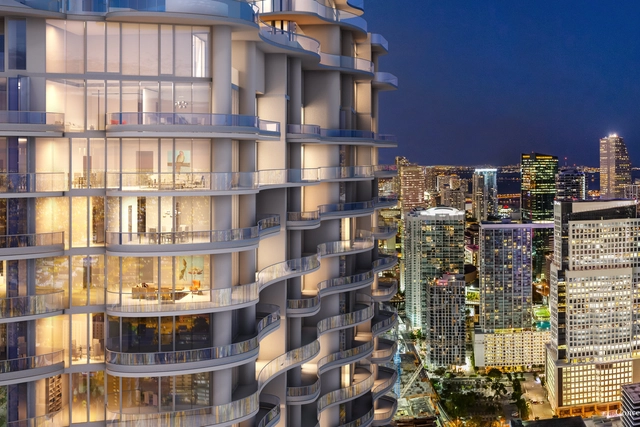
A soaring new skyscraper dubbed the "Brickell Flatiron" is set to rise 213 meters above the skyline in Brickell, Miami. Designed by Luis Revuelta, the tower features an organic floorplate profile with wide elliptical terraces, maximizing sweeping views of Biscayne Bay and downtown Miami.
These curvilinear, flowing lines are complemented by the interiors, designed by acclaimed Italian architect and designer Massimo Iosa Ghini of Iosa Ghini Associati. The Italian craftsmanship and renaissance-revival air of Iosa Ghini's design together with the clean functionality of Revuelta's architecture, presenting two harmonious elements of design in Miami; old school glamor, and contemporary luxury.
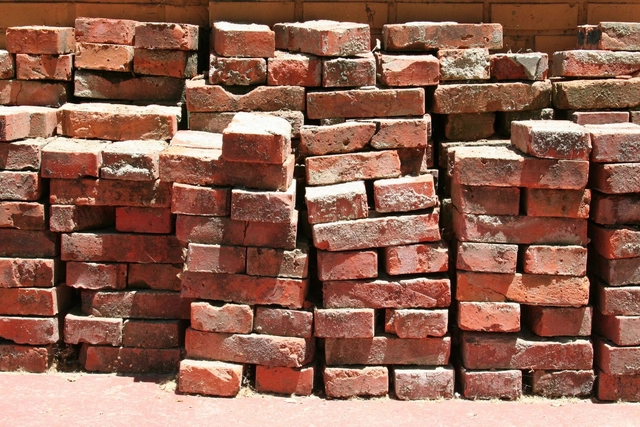
One man’s trash is another man’s building material. Researchers from the Royal Melbourne Institute of Technology (commonly known as RMIT University) have developed a technique for making bricks out of one of the world’s most stubborn forms of pollution: discarded cigarette butts. Led by Dr. Abbas Mohajerani, the team discovered that manufacturing fired-clay bricks with as little as 1 percent cigarette butt content could completely offset annual worldwide cigarette production, while also producing a lighter, more efficient brick.
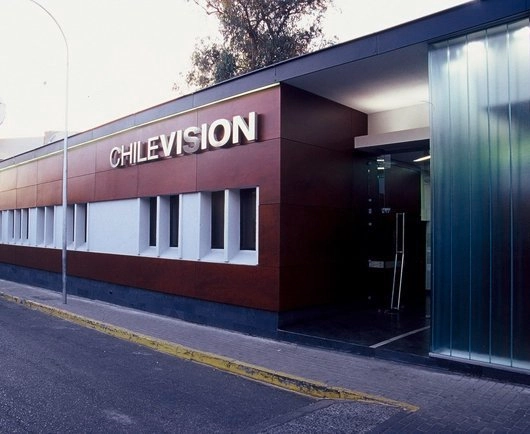
Architects: Elton_Léniz
Associate Architects: Alvaro Ramírez, Germán Rodríguez
Client: Chilevisión
Renovation: 1211m2
Year: 2005-2007
Location: Inés Matte Urrejola 0825, Providencia, Santiago, Chile
Photography: Natalia Vial
Predominant Materials: Madera, Prodema, Vidrio, Piedra pizarra
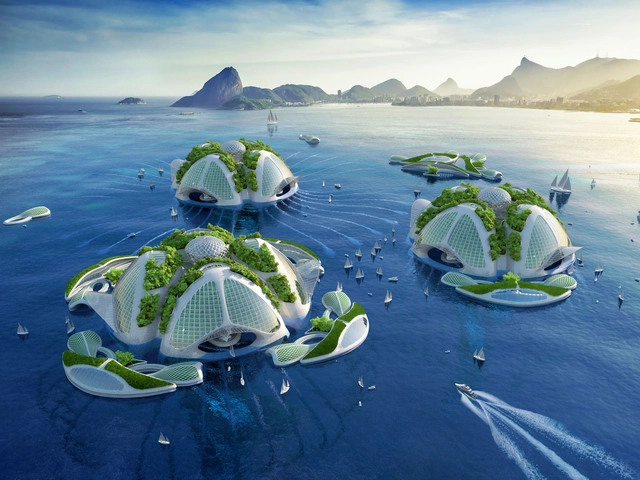
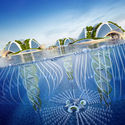
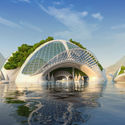
Vincent Callebaut Architectures has envisioned a radical underwater colony for "climate change refugees" 3D printed from recycled materials taken from the ocean's floating garbage patches. This particular proposal of "oceanscrapers" is sited off the shore of Rio de Janeiro. It's aim is to provide a sustainable habitat with 10,000 housing units, office and work space, sea farms, gardens, community orchards and much more, while fostering marine life.



.gif?1521085238)
.jpg?1521083782 "© Zhi Xia")
.jpg?1521083906 "© Zhi Xia")
.jpg?1521083730 "© Zhi Xia")
.jpg?1521083823 "© Zhi Xia")
.jpg?1521083772)