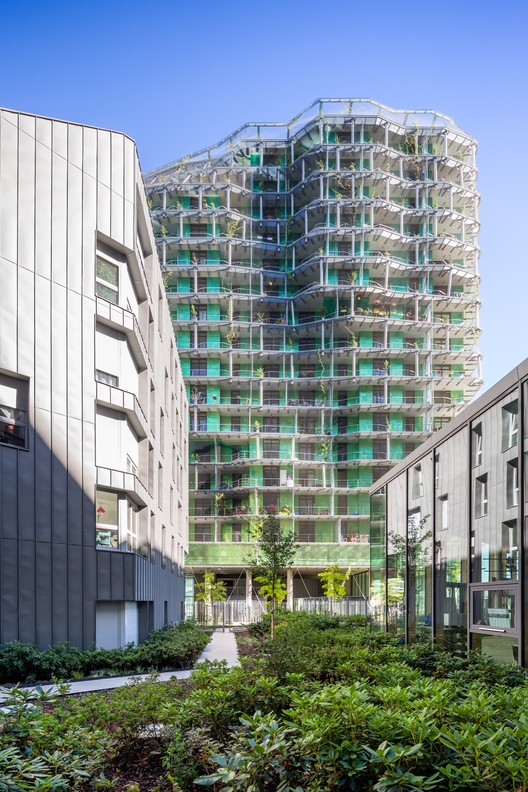
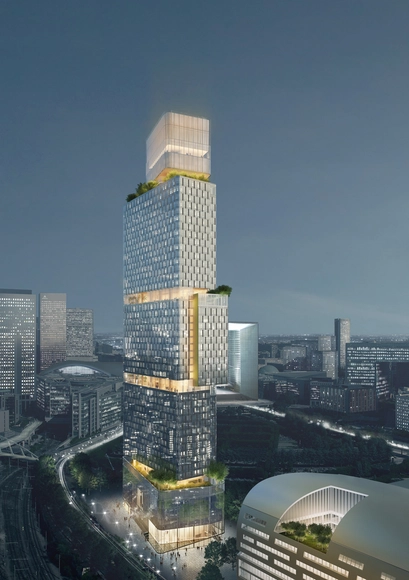
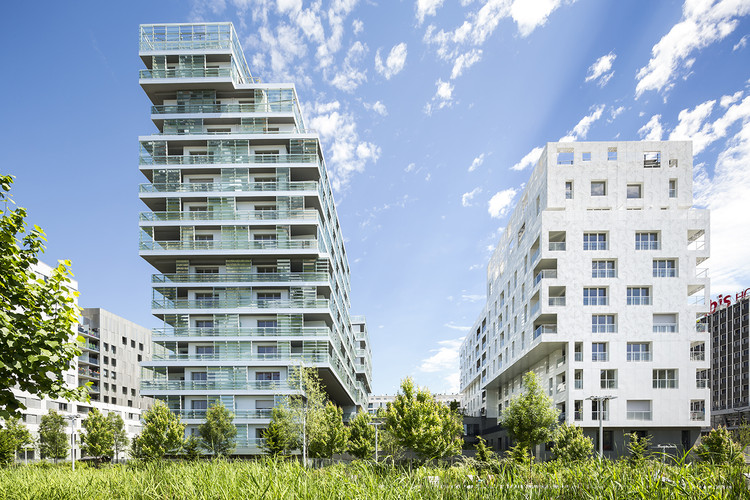
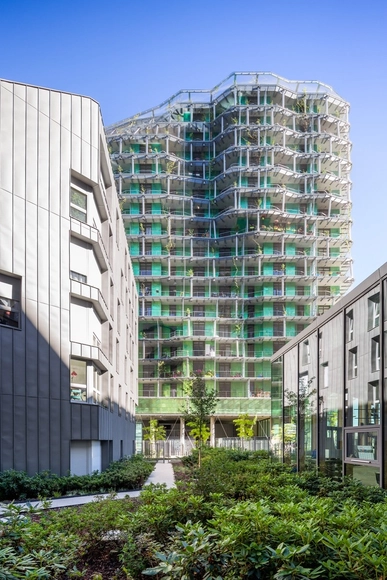
Ateliers 2/3/4/ has unveiled its design for Jardins de l’Arche Tower, a 200-meter-tall building in Nanterre La défense, Paris.
An effort to “extend the great historical axis of Paris,” the 65,000-square-meter tower will feature a series of hanging gardens around superimposed volumes.
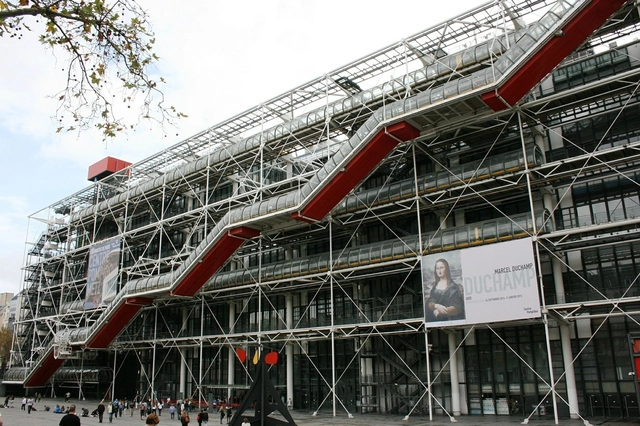
Reviled by Parisians for its shocking inside-out appearance when it first opened in 1977, the Centre Pompidou has reached its 40th birthday, and as a gift, is set to receive to 2-year, $110 million renovation that will preserve the unique structure for years to come.
The Eiffel Tower is set to undergo a massive renovation project: a 15-year, €300 Million endeavor that will preserve the attraction for decades to come.
Built 128 years ago as a temporary structure for 1889 Universal Exhibition in Paris, the tower has since grown into a global icon, attracting nearly 7 million visitors per year and serving as an important symbol of French unity during times of both celebration and tragedy.
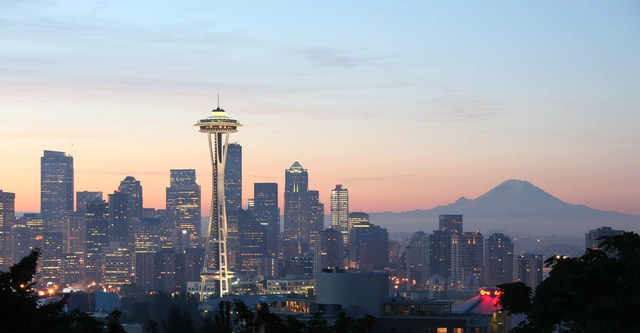
Space Needle / John Graham & Company. Image Courtesy of Wikimedia user Rattlhed (Public Domain)
Buildings, perhaps unlike any other art form or edifice, have a capacity to influence or become part of a place's cultural identity and history. Defining an architectural monument is, however, an ambiguous exercise – most of their ilk only reach this status years after completion. AD Classics are ArchDaily's continually updated collection of longer-form building studies of the world's most significant architectural projects. Here we've assembled five structures and buildings which, often aside from original intentions, embody that most ephemeral feeling: a sense of progress.
https://www.archdaily.com/802463/ad-round-up-5-monuments-to-progressAD Editorial Team
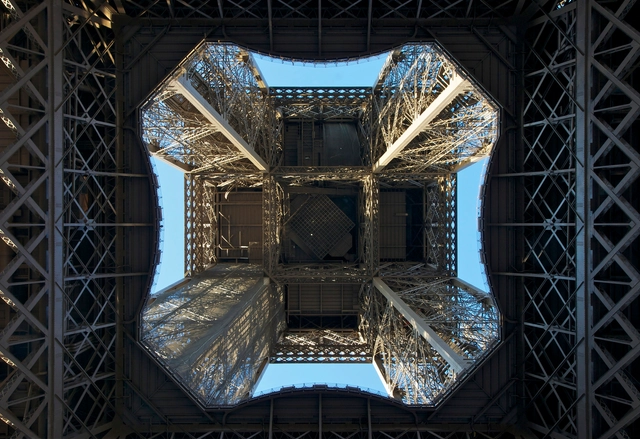
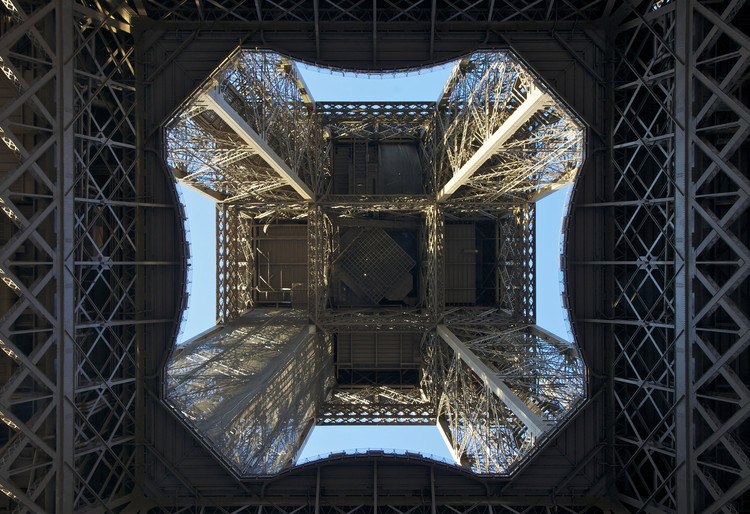
The world had never seen anything like the graceful iron form that rose from Paris’ Champ de Mars in the late 1880s. The “Eiffel Tower,” built as a temporary installation for the Exposition Universelle de 1889, became an immediate sensation for its unprecedented appearance and extraordinary height. It has long outlasted its intended lifespan and become not only one of Paris’ most popular landmarks, but one of the most recognizable structures in human history.
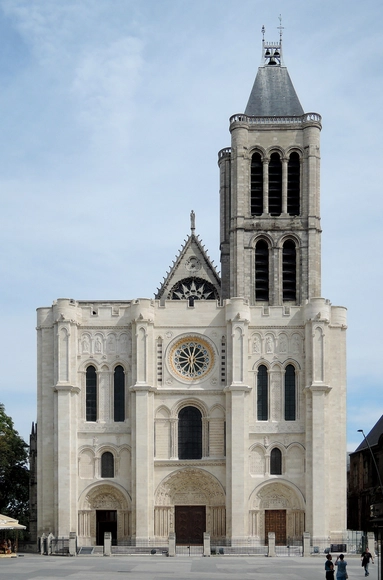
The origin of Gothic architecture, a style which defined Europe in the later Middle Ages, can be traced to a single abbey church in the northern suburbs of Paris. The Basilique royale de Saint-Denis (Royal Basilica of Saint-Denis), constructed on the site of an abbey and reliquary established in Carolingian (800-888 CE) times, was partially rebuilt under the administration of Abbot Suger in the early 12th Century; these additions—utilizing a variety of structural and stylistic techniques developed in the construction of Romanesque churches in the preceding centuries—would set medieval architecture on a new course that would carry it through the rest of the epoch.
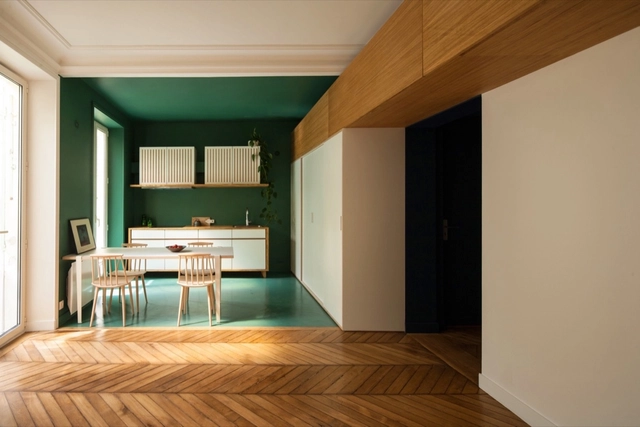
How can we use what is already here, what came before, what can be found nowhere else? How can we perpetuate traces of previous lives, heed the clues the site provides, incorporate the emotions it arouses, its singularity, its materiality? Each locality requires its own solution.
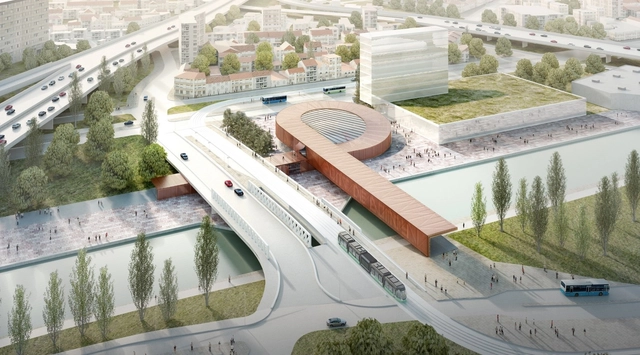
BIG and French studio Silvio d'Ascia have been selected to design the new Pont de Bondy metro station in Paris. The station is the latest design to be announced as part of the Société du Grand París’ Grand Paris Express project, which is seeking to modernize the existing transport network through the addition of nearly 200 kilometers of rail lines and a series of architect-designed stations throughout the city.















.jpg?1480629521)







_%E2%88%8FPierre_L'Excellent.jpg?1479798534 "© Pierre L'Excellent")