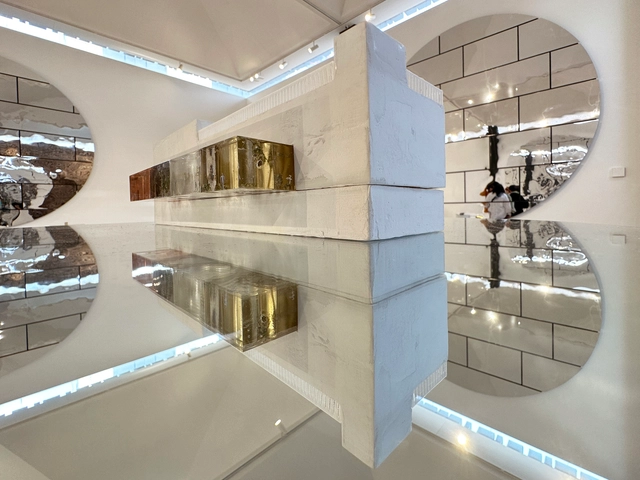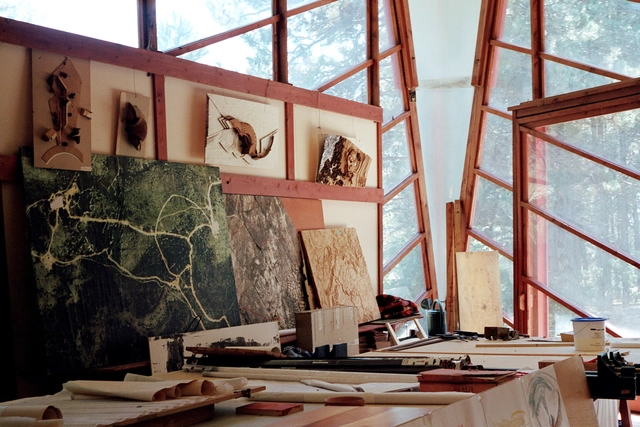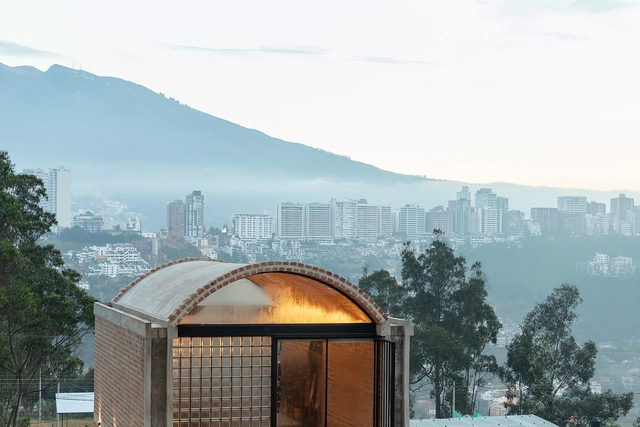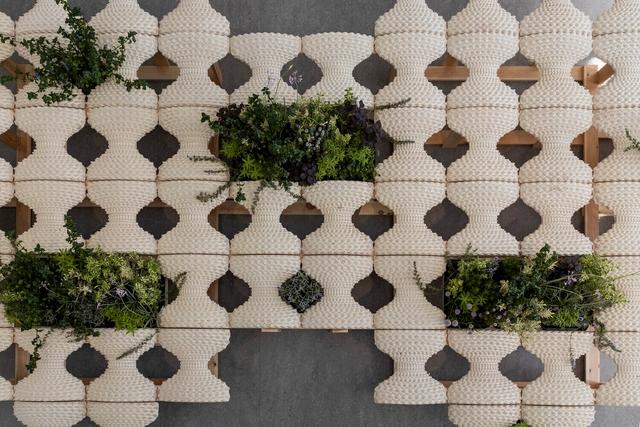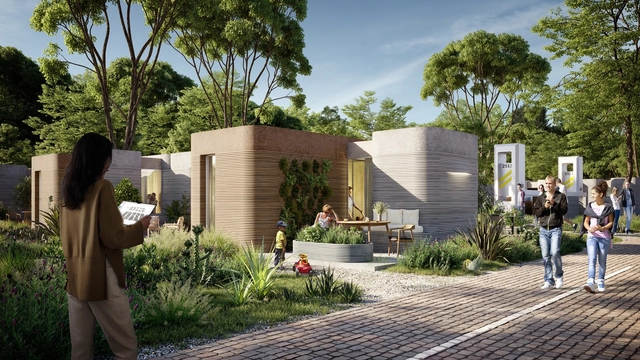
German-based architecture and design studio Beta Realities has developed the “Collective Parts” initiative, a design and technology platform for enabling the construction of affordable 3D printed housing. The project has been recognized as one of the winners of Inititative99by ICON, a global architecture competition aimed at reimagining affordable housing that can be built for under $99,000. The other winners of the open category are MTspace Studio from New Zealand and For Everyday Life from the United Kingdom. The competition also highlights contributions from students as a separate category, featuring Casa Fami by IAAC from Spain, Juan Felipe Molano from Colombia, and Victoria Roznowski from Germany.
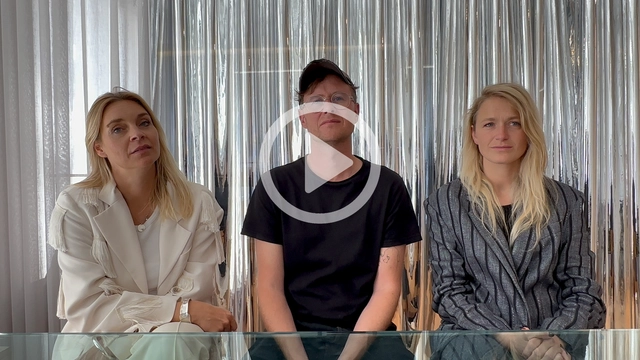
Spacon & X is a Copenhagen-based design and architecture studio that works to create spatial identity across different mediums. Their cross-disciplinary work boasts a fusion between traditionally separated fields, contributing to a holistic physical brand experience. Chosen by ArchDaily as part of our 2023 New Practices, the studio works with an explorative approach to architecture, design, event planning, and production.
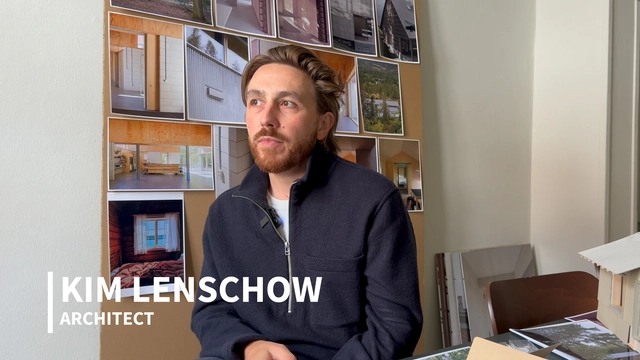
The built environment represents, for most of us, the background of everyday life, and yet, when we look at a building, we rarely understand what it is made of. In doing so, we also fail to understand its impact on us and on the larger systems of nature. Office Kim Lenschow aims to draw attention to this and to provoke critical thinking in relation to architecture and the materials that make it. By focusing on small-scale, mostly residential projects, the office seeks to reveal this hidden narrative of materials and cultivate more awareness and engagement with the structures surrounding us. For their involvement in the exploration of materials and sustainable development, Office Kim Lenschow has been selected as one of the ArchDaily 2023 New Practices. Every year since 2020, ArchDaily has curated and highlighted emerging offices that bring a new perspective to the field of architecture and design.
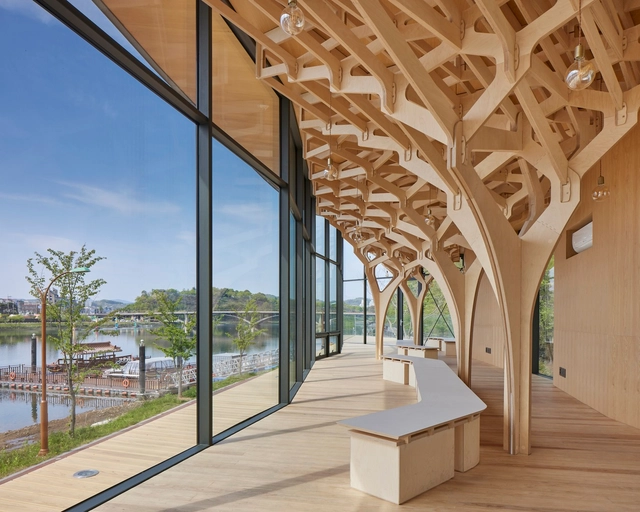
By imagining an alternative reality and rediscovering his cultural background, architect Jae Kyung Kim of JK-AR established his identity as an architect when creating his practice, selected as one of ArchDaily’s New Practices 2023. After studying and working in South Korea and the US, he’d noticed an absence of traditional Asian architecture, which had peaked his interest. He began to thoroughly look at a possibility where the traditional timber buildings of East Asia had still been relevant and continued to evolve.
As tragic as they may be, crises often foster adaptability and resilience. In architecture, they challenge professionals to adapt their production to smaller and less frequent orders. That is the case of Diogo Aguiar Studio, a Portuguese studio based in Porto founded in 2016, in the recovery from a profound economic crisis, which, since its emergence, has been forced to reinvent ways of operating within the field of architecture.
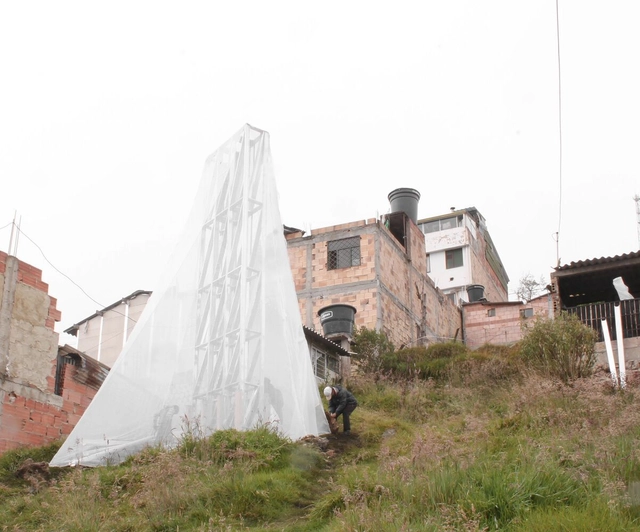
Alsar Atelier, led by Alejandro Saldarriaga, is an architecture and design studio based in Boston and Bogotá. Their practice focuses on the planning and creation of public facilities with an emphasis on social benefit, as well as small-scale residential projects. The studio employs a design approach that prioritizes the use of sustainable materials, cost-effective strategies, and active community collaboration.
Oana Stănescu is a Romanian architect, designer, writer, and educator, based in New York and Berlin, with a diverse portfolio of interventions around the world. Selected as part of 2023 New Practices by ArchDaily, the young architect recognizes the value of architecture as a discipline, but nevertheless acknowledges that architecture cannot single-handedly resolve the complex challenges of our world. “Architecture is most powerful when recognized as part of a larger system, rather than being solely self-serving”, she adds in her conversation with ArchDaily’s Managing Editor, Christele Harrouk. In this way, Oana views architecture as a key player in a broader context, working to address significant societal issues.
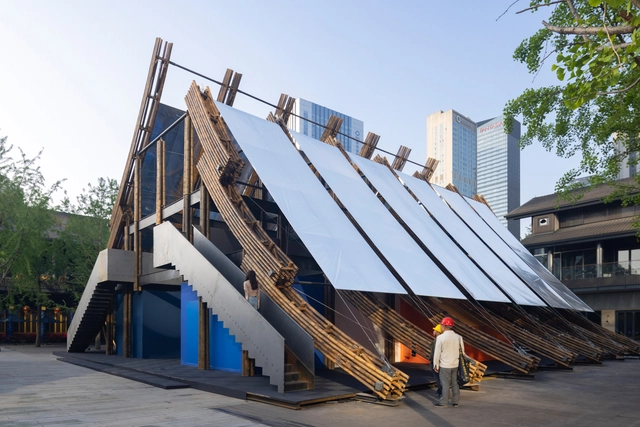
RoarcRenew Architects has been selected for ArchDaily's 2023 New Practices. In two of Shanghai's busiest commercial districts, Anfu Road and Columbia Circle, stores designed by RoarcRenew Architects attract large crowds. Within spaces covering just a hundred square meters, they meticulously design every architectural element, continuously exploring and innovating. Their recent bamboo installation, done in collaboration with Taikoo Li, is a remarkable showcase of sustainable design in commercial spaces.
https://www.archdaily.com/1007358/designing-with-a-sustainable-and-product-oriented-approach-an-interview-with-roarcrenew-architects韩爽 - HAN Shuang
ATELIER XI has been selected for ArchDaily's 2023 New Practices and is one of the few firms still rooted in traditional architectural design. Founded in 2017, ATELIER XI began their practice in Shenzhen, one of the fastest-growing and urbanizing cities in China. Their work represents the current state of a generation of architects, with major projects in small-scale urban architecture, exhibition design, interior design, renovation, and rural architecture. While they may not become urban landmarks, they can still influence the lifestyle of the community through small-scale design.
https://www.archdaily.com/1007149/how-to-challenge-the-design-brief-an-interview-with-atelier-xi韩爽 - HAN Shuang
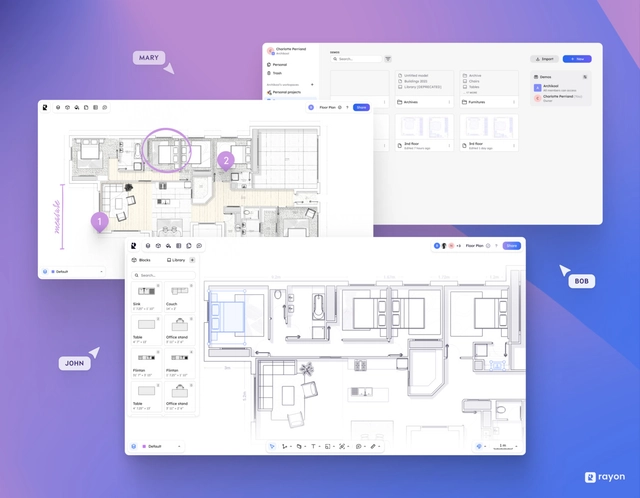
Rayon, an innovative online design tool that aims to create a new collaborative approach to developing "mundane buildings" within the city, has been selected as part of ArchDaily's 2023 Best New Practices. Founded in 2021 by Bastien Dolla and Stanislas Chaillou, it is a collaborative design software that brings together professionals in the architecture, engineering, and construction (AEC) industries. The software company believes that there is a “culture of the ordinary” in architecture. This culture represents an ecosystem of buildings that may seem unremarkable or aren't impressive landmarks in the city. However, these buildings and their construction professionals make up 90% of the urban fabric and contribute to the design culture that collectively gives identity to the city. The founders believe previous software generations have neglected this culture and propose Rayon as a novel tool to fill that gap by enhancing collaboration and user ergonomics.
In 2020, Ahmadreza Schricker (ASA North) completed the Argo Contemporary Art Museum & Cultural Center design. Previously a 1920s beer distillery in the heart of Tehran, it has now been converted into a contemporary art center and is now the new home of the Pejman Foundation.ASA North is a studio based in Tehran that was chosen by ArchDaily as part of the 2023 New Practices. ArchDaily selects those practicing within the broadest definition of architecture and its exercise to share their innovative, fresh, and forward-thinking mission with the community. In the summer of 2023, the foundation hosted an exhibition featuring selected works from ASA North while documenting the transformation of the Argo Factory. The exhibition explored the studio’s practice, developing a commentary on their projects and their self-awareness.
While it is undeniable that the surrounding environment is changing due to human activity, the effects can be difficult to perceive directly, as they are often illustrated with unrelatable pictures of far-away places or overused graphics and statistics. Danish office Tideland Studio aims to change this. Through their work, they aim to bring forth a new type of sensible understanding of the changes happening around us. They work across disciplines, melding research, art, and architecture while employing the newest survey and fabrication technologies to give presence to the abstract phenomena that shape our planet. Because of their practical approach to research and the new perspectives that they open toward extreme environments affected by climate change, ArchDaily has selected Tideland Studio as one of the 2023 New Practices. The annual survey highlights emerging offices that use innovation and forward-looking processes to rethink the ways in which we practice architecture.
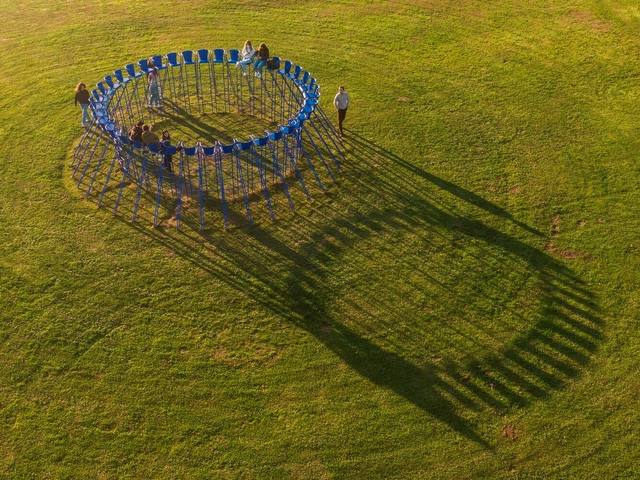
Cantercel, France, 2022. Image Courtesy of forty five degrees
When talking about space-making practices, architects and urban planners are usually thinking about participatory planning and collaborative processes, often overlooking the ways in which the communities themselves can become their own agents of change. As the people poses an intimate knowledge of not only their environment, but also of social and cultural norms, the needs of their communities and latent opportunities within their surroundings, they are often the ones initiating actions, supporting their peers and contributing positively to their locality. Research-focused office forty five degrees set out to explore these grass-roots initiatives, to meet the locals and gather their stories in an effort to gain a better understanding of the complex and diverse cultural territories across Europe. Their journey, organized under the “Radical Rituals” project, follows the 45°N parallel line that transverses Europe from East to West. The office has been selected as part of ArchDaily's 2023 New Practices, an annual survey aimed at showcasing those who adress the ever-growing challanges of our times and take architecture to new directions.
Taller General is a meeting point where Martín Real and Florencia Sobrero, among other members and collaborators, come together daily to pursue their passion: channeling their creativity through architecture while merging all the aspects that shape their lives, from activism to education.
Willow Technologies is a material research and building technology practice that has been selected as part of ArchDaily's 2023 Best New Practices. Founded by Ghanaian-Filipino designer and architectural scientist Mae-Ling Lokko, it operates in the gap between research, development, and diffusion of bio-based building materials. Working with agro-waste and bio-based materials usually incurs technical questions regarding scalability, industrial production, standardization, fireproofing, and mechanical strength. Exploring this data is where Willow Technologies situates itself, but peculiarly through the lens of developing regions in West Africa. Through comprehensive works with coconuts, moringa, rice, and other indigenous crops, Lokko’s practice has been able to investigate and catalog the material character of various crops, their possible by-products, local transformation techniques, and the prospect and challenges of scalability as building materials.
Infraestudio is an architecture and art practice based in Havana that has been obsessed with fiction since its foundation in 2016. Fernando Martirena, Anadis González, and other members and collaborators work from a narrative and discursive approach to experiment with various resources such as buildings, research, exhibitions, writings, and activism. This has allowed them to operate discreetly in a city frozen in time, recounting how contemporary architecture is done in Cuba today.
Sebastián Bravo leads Oficina Bravo, an architectural practice founded in Santiago de Chile that has been developing projects with a clear strategy: to contribute to the city by efficiently using architectural, economic, and constructive resources through renovation and remodeling. Among their projects are spaces that openly interact with the immediate context, including works of patrimonial, administrative, and residential value such as Casa Compañía and Zagreb Office, as well as a large series of gastronomic and commercial spaces such as Felix Café and Apolo Helados.