The controversy surrounding Frank Gehry’s proposal for the Eisenhower Memorial has just reached new heights as the Chicago Tribune’s Blair Kamin has recently published a 1,500-word essay, written by the influential neo-traditionalist architect Leon Krier, that bashes Gehry’s proposal and ideology. Krier calls Gehry a “greatly confused artist” who’s “style is a century old” and “seems “innovative” only to the ignorant”. Kier continues to claim the commission who appointed Gehry’s design “shares his [Gehry’s] intellectual confusion and distaste of classical Washington D.C.” Continue reading for more.
This past Fall, ROMA Design Group proudly announced the completion of the Martin Luther King Jr. National Memorial in Washington D.C. In 2000, ROMA won the international design competition among nearly 1,000 entries. ROMA Design Group worked for several years to develop the design. The memorial has now been built and was officially dedicated by President Obama on October 16, 2011.
Architect: ROMA Design Group Location: Washington D.C., USA Illustrations: Christopher Grubbs Photographs: Courtesy of ROMA Design Group
https://www.archdaily.com/200438/martin-luther-king-jr-memorial-roma-design-groupAmber P
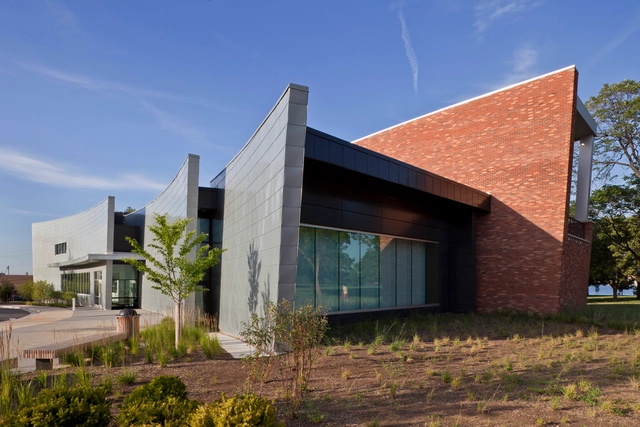
Landscape: PLANT Architect Location: Dublin, Ohio, USA Project Team: Lisa Rapoport, Chris Pommer, Mary Tremain, Lisa Moffitt, Olivia Mapue, Elise Shelley, Jane Hutton, Heather Asquith Project Year: 2009 Photographs: Stephen Evans
Ten years since the 9/11 attacks on the World Trade Center in New York, the National September 11 Memorial was dedicated in a private ceremony with the victims’ families. It was officially opened to the public as of today, September 12th. The opening of the 9/11 Memorial is a first step towards the closing of a long chapter of construction at the World Trade Center site.
As the 10th anniversary of September 11th is upon us, we thought it appropriate to share Amanda Lin Costa’s work-in-progress documentary about memorials built from the steel of the World Trade Center. Hangar 17, an expansive space at JFK Airport, has become the temporary resting place for collected debris from that day….beams, firetrucks, taxis, shoes, etc. Over the past ten years, select pieces have been distributed upon request to create memorials that are now scattered about world, including all 50 States. In her documentary, Costa focuses not only on the design of the memorials, such as those in Ohio, Saratoga Spings, Westchester and New Jersey, but also their experiential and spiritual quality.
Last September, we shared the news of Louis Kahn’s memorial park for the southernmost tip of Roosevelt Island. Kahn had designed the park in the 70s, but after his sudden death, the plan was forgotten until 1992 when the MoMA featured the scheme in an exhibition. Upon learning of Kahn’s thoughtful and architecturally compelling ideas to commemorate FDR and his Four Freedoms speech, the public quickly advocated its completion. As we reported earlier, at the end of Kahn’s axial tree-lined triangular “Garden”, a 72 sqf “Room” will contain excerpts from the text of President Roosevelt’s Four Freedoms speech. This room, contained by 12 foot high granite columns, is meant for contemplation and remembrance as Kahn’s stoic material palette, clear formal attitude, and forced perspective of the skyline will create, what we imagine will be, a quiet and peaceful atmosphere. With Kahn’s simple gestures, the memorial will preserve a time in American history where FDR’s leadership inspired hope to endure the Great Depression and the second World War. We’re excited for the memorial to be completed and we’ll keep you up to date with its progress.
A great sample of construction photos and renderings after the break.
On August 6th, 1945, a B-29 bomber dropped the first atomic bomb in history over Hiroshima, Japan, targeting the intersection of bridges over the Honkawa and Motoyasu rivers. The bomb devastated Hiroshima within a radius of 5 km, resulting in 140,000-150,000 deaths by December of that year.
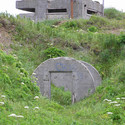
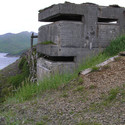
Set against a backdrop typically reserved for postcards, the decaying bunkers of the Aleutian Islands Campaign serve to memorialize a little-known chapter of WWII lore. Read more about these distinctive relics after the break.